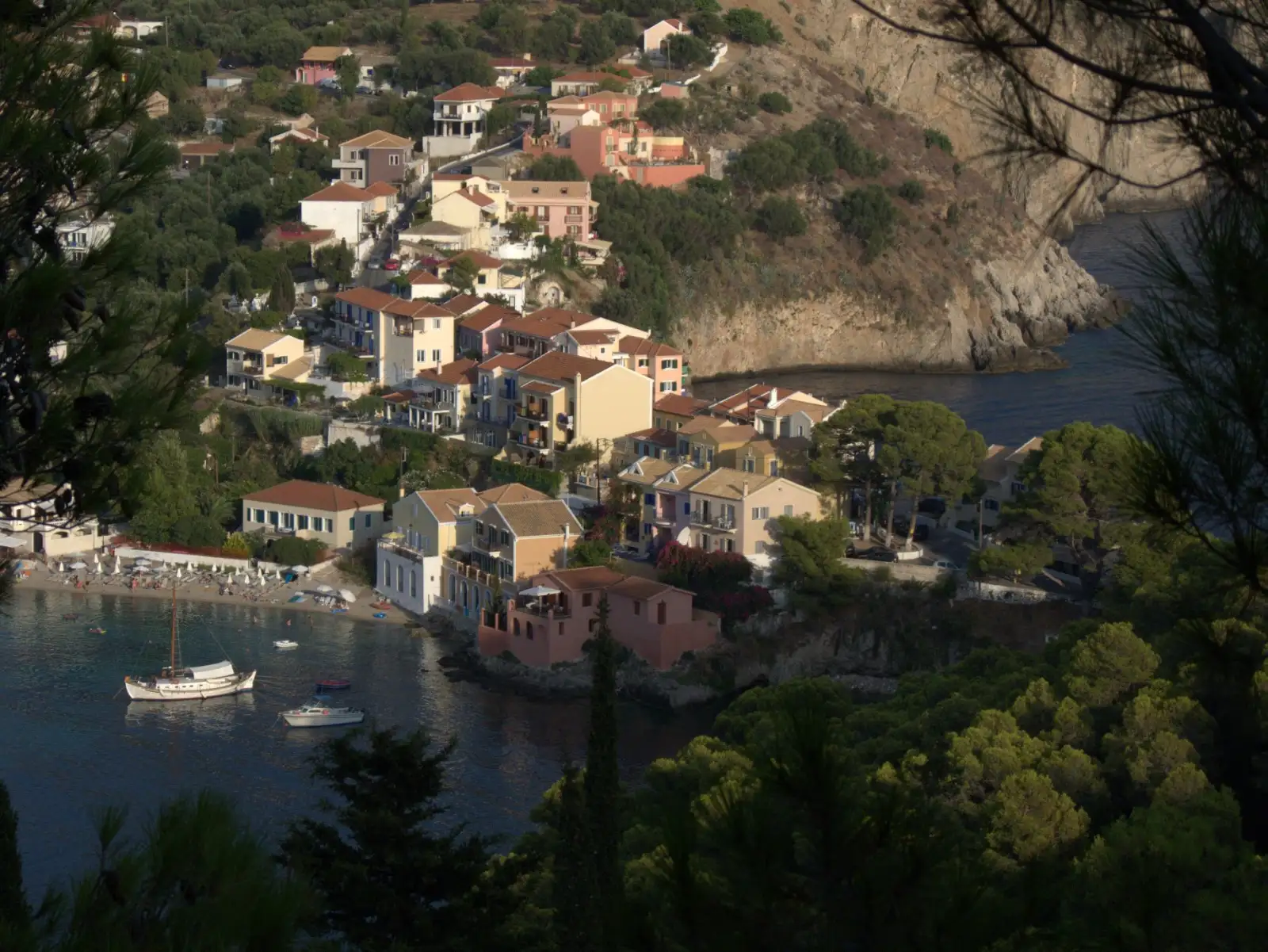
The short answer: which island for which family
The best island for a greece family vacation is the one with a sandy, shallow bay, a short airport transfer, and no cliff-top stairs to drag a stroller up - almost never the most photographed one. Start with your kids’ ages and your tolerance for ferries, not the photos, and this grid does most of the choosing.
| Your family | Islands to shortlist |
|---|---|
| Toddlers and under-5s | Naxos, Paros |
| School-age, 5 to 11 | Crete, Rhodes, Kos, Corfu |
| Teens | Ios, Zakynthos, Crete, Rhodes |
| Want one base and no ferries | Crete, Rhodes, Kos |
| Think twice with little kids | Santorini, Mykonos |
Everything below is how to read it: the four tests that put these islands on the list, the two famous ones to approach with your eyes open, and when to go. Match the island to your family first, and a good family vacation greece trip mostly plans itself.
What actually makes a Greek island family-friendly
A Greek island works for a family when it passes four plain tests: a sandy, shallow, wave-free bay small children can wade into; a short airport transfer with few or no ferries; flat, strollable ground not cliffs and stairs; and one island group you stay inside so every hop stays short. Pass those and the postcard looks after itself.
Take them one at a time, because each quietly rules an island in or out.
The beach test decides most family trips. Young kids want soft sand and water that shelves gently, not pebbles underfoot or open-sea swell, and calm shallow water is simply easier to spend a day beside with a toddler. That is a suitability call, not a safety promise: no beach is guaranteed calm, and the wind can turn an easy morning bay into an afternoon of whitecaps.
The transfer test is about doors, not distance. A short drive from the airport to your base, and few or no ferries to reach it, is the difference between arriving in time for a swim and arriving frazzled after a long crossing.
The terrain test is where the famous islands fall down. Flat, walkable ground takes a stroller; the cliff-top lanes and stairs that make Santorini and Mykonos photogenic do not.
The pace test is a rule about groups: stay inside one island group so the boats between stops are short hops, not day-long crossings.
These four, and not “is it pretty,” decide a Greek family trip because Greece is an archipelago reached by seasonal, island-group ferry networks, and its two most photographed islands are built on cliffs. The deep per-island detail and every climate number live elsewhere: when to go, in full and how the ferries actually run. This page chooses; those pages tabulate.
The islands that suit families best, and who each one is for
Six islands and one island group clear all four tests, and each wins a different kind of family. The best Greek islands for families, in short:
- Naxos - the all-rounder for a mixed-age family
- Paros and Antiparos - easiest with toddlers
- Crete - one base, a direct flight, no ferries
- Rhodes - the simplest logistics for first-timers
- The Ionian (Corfu, Kefalonia, Lefkada, Zakynthos) - calm, green water
- Kos flat and easy, and Ios for teens
Match the island to your family before the photos, and each verdict below tells you which family it is for.
Naxos: the best all-rounder for most families
Naxos wins the beach test outright. The sand at Agios Georgios shelves very gradually, so the water stays shallow a long way from shore and the Chora stays in sight behind you, and Agios Prokopios, Agia Anna and Plaka run on in long stretches of soft sand with tavernas set behind them Behind the beaches is a real town you can walk to the sand from and eat well in, family-run rather than polished, and the big cruise ships do not call.
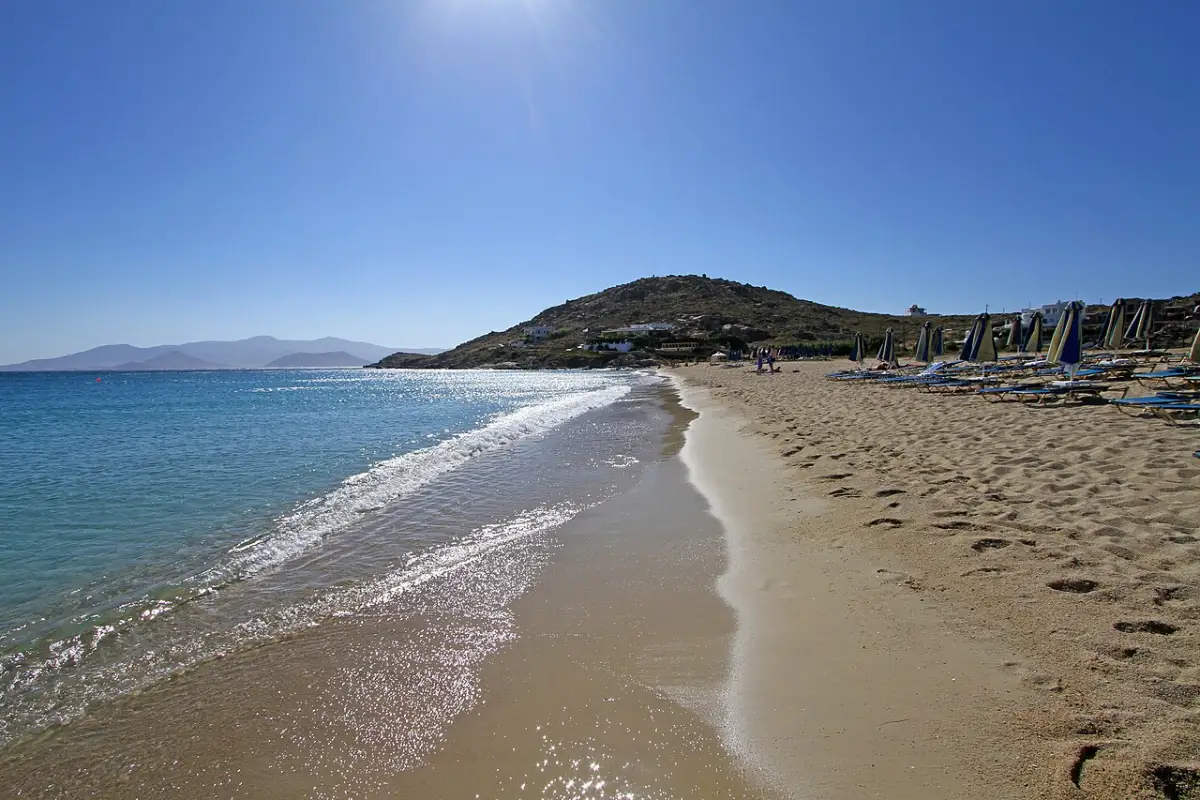
That combination - the best shallow sand in the Cyclades, a walkable base, and an island you can also hop from - makes Naxos the default pick for most families, and the one island that suits a mixed bag of ages at once. Start here if you are choosing blind. See Naxos in full, the family beaches and where to stay on Naxos, plus Naxos with kids.
Paros and Antiparos: easiest with the youngest kids
Paros pairs gentle, sandy beaches with a base that is genuinely easy to walk. Golden Beach, Monastiri, Santa Maria and the granite pockets of Kolymbithres are sand and sheltered water rather than open surf, and Naoussa and Parikia are flat enough to push a stroller through to dinner. It is the same Cycladic package as Naxos, a shade smaller and a shade simpler.
Next door, tiny Antiparos is a short, calm hop across the channel - a second island without a long ferry, car-free lanes and easy coves, and the simplest island-pair in the Cyclades to attempt with little kids. Between them they make the easiest first two-island trip in Greece for toddlers and under-5s. See Paros in full, the family beaches and Paros with kids; Antiparos has no guide of its own yet.
Crete: one base, a direct flight, and no ferries
Crete is the family island for parents who would rather not move. A direct flight lands you straight on the island, skipping Athens and the ferry entirely, and one base on the north coast can fill two weeks: big sandy beaches, family resorts with kids’ clubs and waterparks, and enough real sightseeing - the Minoan palace at Knossos above all - that a too-hot or rainy day still works.
The trade-off is size. Crete is a 250 km island, so you choose one region and stay put rather than trying to see it all, and it wants a week at minimum. For a stay-put family, a bigger group, or anyone who wants resort amenities on tap, it is the easiest option in Greece. See Crete in full, the beaches and family stays, plus Crete with kids.
Rhodes: easiest logistics for first-timers
Rhodes gives a first-time family the lowest-friction trip in the Dodecanese. A direct flight, long resort beaches around Faliraki, and a single base you never have to leave, plus a medieval Old Town the kids will actually walk through - a walled, UNESCO-listed maze rather than a museum - and Lindos saved for one big day out.
For first-timers who want it kept simple, and for families after a mix of beach and a little history without any ferries, Rhodes is the pick. See Rhodes in full, the beaches and the Old Town, plus Rhodes with kids.
The Ionian: Corfu, Kefalonia, Lefkada and Zakynthos
The Ionian sits on Greece’s west side, greener and softer than the Cyclades, with calmer, warmer-feeling water that the summer meltemi never reaches - which is what makes it suit younger kids. Corfu brings shoulder-season warmth and easy day trips, with family beaches on the quieter coasts; Kefalonia has Myrtos and the Melissani cave, though it is big enough that you pick the north or the south, not both; and Zakynthos has the sheltered, shallow sand of Kalamaki, where loggerhead turtles nest and stretches of the bay are roped off through summer. Each of the three has a family page of its own: Corfu with kids, Kefalonia with kids and Zakynthos with kids.
The concrete win for a stroller family is Lefkada: it is joined to the mainland by a causeway, so you drive straight on and skip ferries altogether. Best for families who want calm, green water over stark Cycladic white.
For flat-island ease and older kids: Kos and Ios
Kos is unusually flat, cycle-friendly and lined with long sandy beaches and big resorts on direct flights - an easy single base with almost no hills to fight. The detail is on Kos with kids. Ios is the surprise teen island: dramatic and activity-rich, and if you base away from the party town the evenings stay manageable. If you want to go smaller, Milos and Skiathos also pass the beach test.
The islands to think twice about with young kids
Santorini and Mykonos are the two islands families most want and most regret with toddlers. It is terrain and rooms that make them hard, not danger - neither is off-limits or unsafe, they are simply a different, harder trip with little ones.
Santorini’s draw is its problem. The cliff-top villages everyone comes for - Fira, Imerovigli, Oia - are built as stairs and steep, narrow lanes, which defeat a stroller and wear out small legs; a baby carrier is the honest fix. Rooms lean boutique and two-person rather than family suites, and the famous beaches are hot black pebble, not soft sand. It works far better with older kids, or in the low season when the crowds and the heat both drop.
Mykonos is the most party-and-price-driven of the major islands, and here the reason to think twice is cost and crowds rather than terrain. The nightlife is easy to avoid, and Ornos is a genuinely calm family beach - but you pay more for less space than the sandy islands ask of you.
If you still want either, go with your eyes open. See Santorini in full and its calmer side, Santorini for couples and honeymoons; Mykonos in full and what to skip, the nightlife.
Matching the island to your kids’ ages
The same island scores differently at three and at thirteen, so the question that actually decides your shortlist is how old your kids are, not which island photographs best.
| Kids’ ages | Islands to pick | Why |
|---|---|---|
| Under 5 | Naxos, Paros | Sandy, shallow, wave-free water, short transfers, one easy base |
| 5 to 11 | Crete, Rhodes, Kos, Corfu | Resort amenities, kids’ clubs, waterparks, a little sightseeing, still one base |
| Teens | Ios, Zakynthos, Crete, Rhodes | Activity, snorkelling and boat trips, some life without a full party scene |
Under 5, the beach test outranks everything. A toddler wants sand to sit in and water to wade out through, so Naxos or Paros wins: both put soft, shallow bays a short transfer from a flat town, and both let you stay in one base rather than pack and move.
From 5 to 11, kids can handle more and want more to do. Crete, Rhodes, Kos and Corfu pass the transfer test with direct flights, then back the beach up with kids’ clubs, waterparks and a rainy-day ruin, all run from a single base you never have to leave.
By the teens, the beach alone stops being enough and a stroller-friendly town no longer matters. Ios, Zakynthos, Crete and Rhodes trade in activity instead: snorkelling, boat trips and cliff jumps, with enough evening life to feel like a holiday and, on Ios, a party town you simply base away from. That is the best Greek island for kids reframed as the best one for the kids you actually have.
When to go with kids: June or September, mostly
For a family, June and September are the sweet spot: the sea is warm enough for small children to swim, the heat and the crowds are off their July and August peak, and prices ease at the same time. May and October are lovely for sightseeing, but the sea can be too cold for little ones to enjoy.
The calendar is a trade-off, not a single right answer. Go too early and the air is warm while the water still bites; go in mid-August and you meet the hottest, busiest, priciest fortnight of the year, when Greeks travel en masse and boats sell out weeks ahead. From late October to Easter, most small islands wind down and shutter their hotels and tavernas, so a shoulder-season bargain can mean arriving to closed doors.
If you are tied to the school summer holiday, aim for the first half of June or the very end of August to dodge the worst of the peak. If you can travel off the calendar, September is the easier month all round.
All the actual figures - temperatures, sea warmth and rainfall by month - live on the weather pages, not here. See the full best-time breakdown and temperatures and sea by month.
How to pace a family trip: one island group, short hops
The mistake that wrecks family trips is too many islands too far apart. The fix is a rule: pick one island group, keep the hops few, and when the kids are small, stay in one base.
Two islands is plenty for a week; two or three for ten to fourteen days. Whatever you choose, stay inside one island group - the Cyclades, or the Ionian, or the Dodecanese - so each ferry is a short hop rather than a day at sea. Cross between groups and you are back to a flight or a long, wasted crossing, which is exactly the friction you came to avoid. For toddlers, drop hopping altogether: one base with day trips out of it is calmer than any route.
A few ferry habits make the boats easy. Pick a larger conventional ferry over a high-speed catamaran if anyone in the family is prone to motion sickness; the big boats ride steadier and are pulled from the schedule less often when the meltemi blows. Build one slack day into a summer trip so a cancelled sailing costs you a beach afternoon, not a connection. And spend a night or two in Athens on the way in rather than racing a tired family straight to the port.
This page decides which islands and how to pace them; the day-by-day plan lives next door. For a ready-made route with the nights, the beaches and the two ferries already sequenced, follow the 10-day Greece-with-kids route. The mechanics of booking - how the ferries run and island-hopping step by step - sit on their own pages, and two days in Athens with kids covers the stopover.
Choose your island group, book one base per island in the order above, and the short hops between them fall into place. Plan this trip.
Practical notes that make a Greek family trip easier
A handful of on-the-ground habits remove most of the friction of Greece with kids.
Tavernas genuinely welcome children and serve all day, so a late, unhurried family dinner is normal rather than a battle - nobody minds a five-year-old still at the table at ten. If you rent a car, book the child seats when you book the car, not at the desk on arrival, because they are limited and go early in summer. Pack water shoes: much of the Ionian and the Dodecanese is pebble-and-rock rather than sand, and small feet notice. Pharmacies are widespread and well stocked for the usual small holiday scrapes, and pharmacists advise freely.
One honest note on the water. Greek beaches are largely unlifeguarded, so supervision is yours - the calm, shallow bays this guide favours are simply easier to watch a child in, which is a matter of practical convenience, not a safety guarantee.
For the family budget, see what a Greece trip costs; for the direct-flight islands that keep the logistics simple, flights to Greece.
So which island should your family pick?
If you want one recommendation to book against, take Naxos. For a first family trip it is the best all-round Greek island: soft, shallow sand, a walkable town, family-run food, and one base that still hops to Paros for a second island. Paros itself is the pick for the very youngest. Choose Crete or Rhodes if you would rather have a direct flight and no ferries at all, and the Ionian - Corfu, Kefalonia, Lefkada or Zakynthos - if you want calm, green water over stark Cycladic white. Whichever you choose, go in June or September.
And keep the honest line in view: Santorini and Mykonos are a different, harder trip with little kids, not a ruined one. Do them later, with older children, or in the low season when the stairs are yours alone.
From here, build the day-by-day route, compare all the islands side by side, or pin down exactly when to go.
Common questions about a Greece family vacation
What is the best Greek island for a family?
For most families, Naxos is the best all-round choice: wide, sandy, shallow beaches, a walkable town, family-run tavernas, and an easy hop to Paros next door. Paros suits the youngest kids, while Crete and Rhodes suit families who want a direct flight and no ferries at all.
What is the best Greek island for toddlers and young kids?
Naxos and Paros. Both have soft, shallow, wave-free sand - Agios Georgios on Naxos, Golden Beach and Monastiri on Paros - with short transfers and flat, strollable towns. The Ionian (Corfu, Lefkada, Zakynthos) is the calm-water alternative, and for under-5s one base beats hopping.
Is Santorini good for families with young children?
Not easily. Santorini’s clifftop villages mean stairs and steep lanes that defeat a stroller, rooms are often boutique and two-person rather than family suites, and the beaches are hot black pebble. It is a harder trip with toddlers, not a dangerous one, and works better with older kids or in the low season. See Santorini in full if you still want to go.
What is the best time to visit Greece with kids?
June and September are the family sweet spot: the sea is warm enough to swim, the heat and crowds are off their peak, and prices ease. May and October suit sightseeing but the sea can be cold for small kids; avoid mid-August above all. If you are tied to the summer holiday, aim for early June or the very end of August.
How many Greek islands should we visit with kids?
Two is plenty for a week, and two or three for ten to fourteen days. Stay inside one island group so each ferry is a short hop - crossing between groups means a flight or a long day at sea - and with toddlers, consider one base with day trips instead of hopping at all.
Are the Greek islands kid-friendly?
Genuinely, yes. Children are welcome, tavernas serve all day and accommodate them, and many islands have sandy, shallow beaches. But “kid-friendly” varies island to island, so use the four tests - beach, transfer, terrain, pace - to choose. Note that Greek beaches are largely unlifeguarded, so supervision is always yours.
Ferry or flight to reach the islands with kids?
Fly for long distances or with very young children, and take ferries for the short hops within an island group; if anyone gets seasick, prefer a larger conventional ferry over a high-speed catamaran. Direct flights to Crete, Rhodes, Corfu and Kos skip the Athens-and-ferry step entirely. How the ferries work and getting around Greece cover the rest.
Which Greek islands should families avoid or skip?
No island is off-limits, but Santorini and Mykonos are the hardest with young kids - stairs and strollers on one, party and price on the other - and tiny islands with skeleton services can be awkward in the shoulder months. If you have little ones, start from the sandy shortlist: Naxos, Paros, Crete, Rhodes and the Ionian.
Booking
We sell nothing and book nothing for you. Every guide on this page tells you how to arrange each piece yourself - which ferry operator, when to book, what to prebook and what to leave loose.