Rhodes
Beaches in Rhodes
Rhodes has two coasts, and the wind sorts them. The east is the sheltered, sandier, bus-served side where most people swim. The west takes the prevailing summer wind, which is bad news for a lazy float and very good news for anyone on a board. Nearly every beach decision on this island falls out of that one split.
So read this page by coast first and by what you want the day to be second.
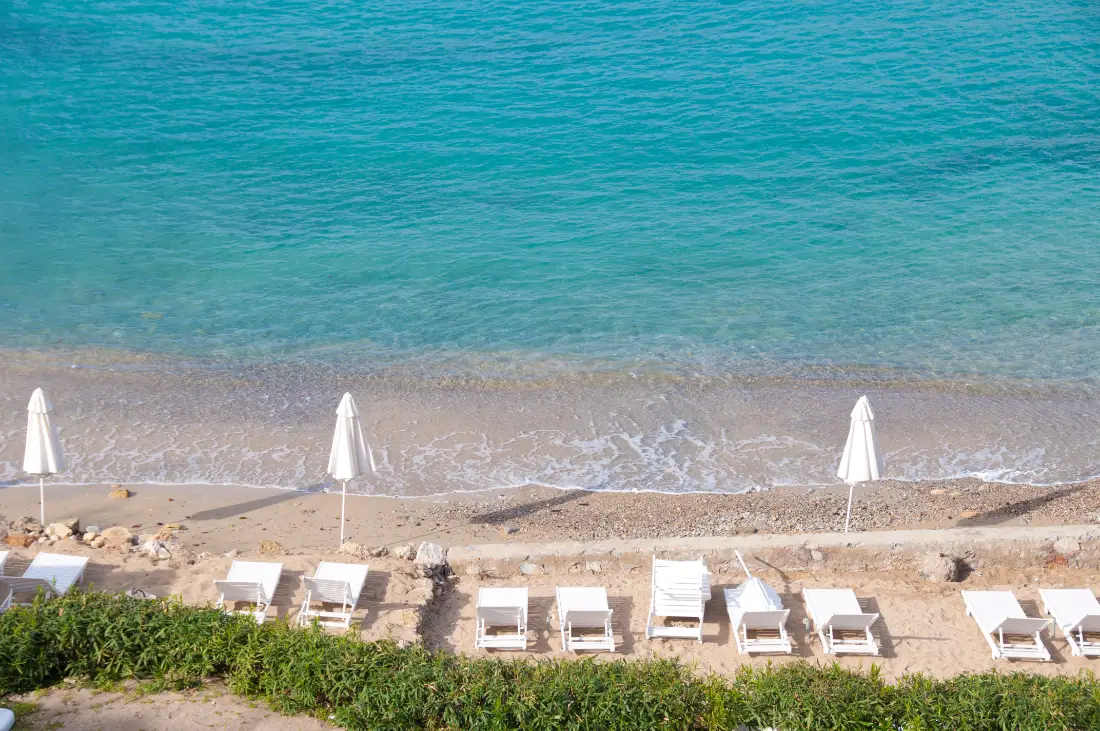
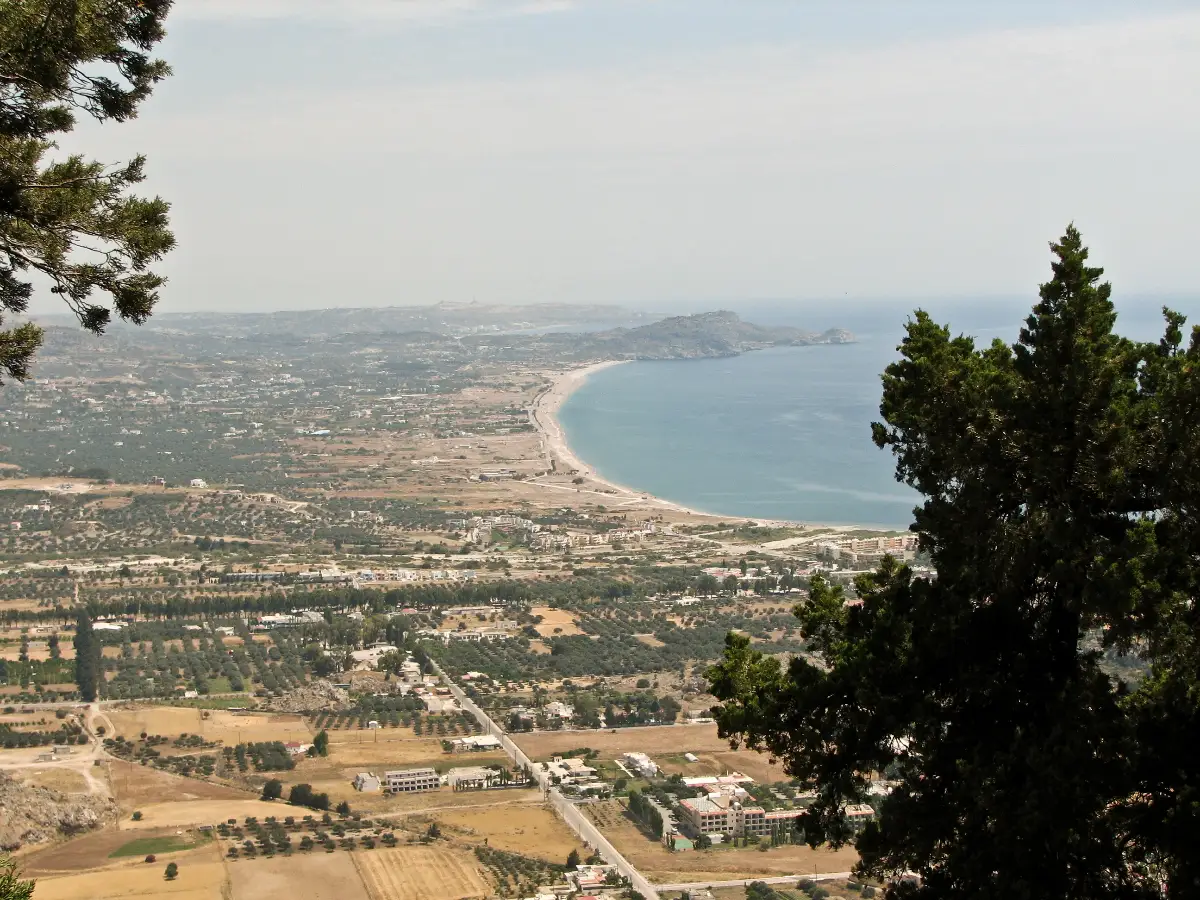
The sheltered east. This is where the sand is and where the buses go. Tsambika is the long golden one under its clifftop monastery, and Agathi and Afandou fill out the same coast with wide, easy stretches. Faliraki is a long sandy resort beach with hotels and a small harbour behind it, and its famous bar strip is at the other end of the resort rather than on the sand, which is worth knowing whichever of the two you are booking for. Kalithea Springs is the odd one out: a swim in a small rocky bay wrapped in restored Italian-era spa architecture, so half of what you go for is the building. And at the southern end of this coast, under the Lindos acropolis, St Paul’s Bay is the near-enclosed cove that everybody photographs from the walls above it.
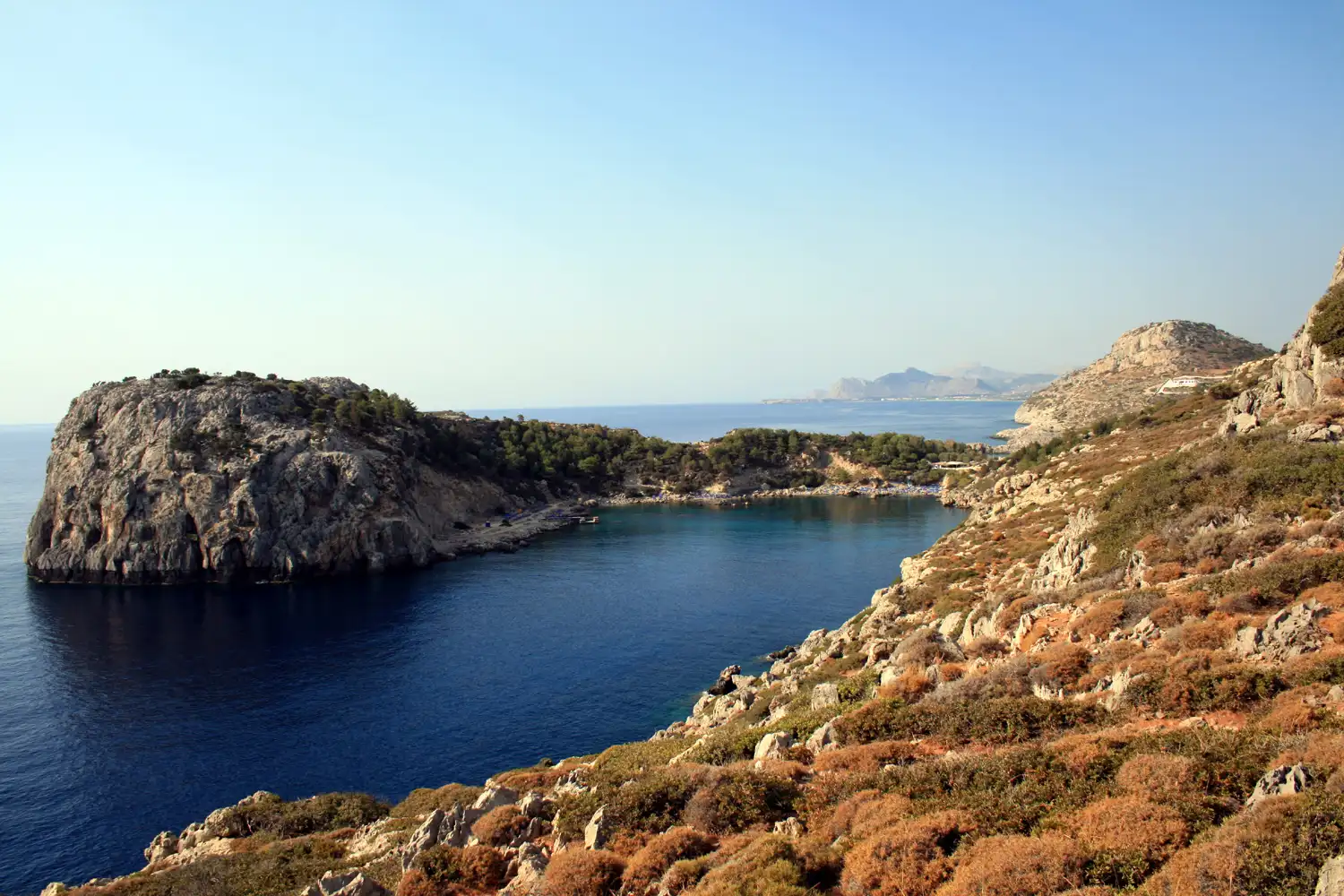
The small rocky one. Anthony Quinn Bay is the cove people ask about most and the one that surprises them most. It sits beside Ladiko, south of Faliraki, cut into a pine-backed headland, and it is a good deal smaller than the photographs suggest. The shore is pebble, shingle and flat rock rather than sand, so you get in and out over stone, and most visitors wish they had brought water shoes. The trade is clarity. A rocky bottom means you can see the bottom, which is why a cove this small has a snorkelling reputation out of all proportion to its size.
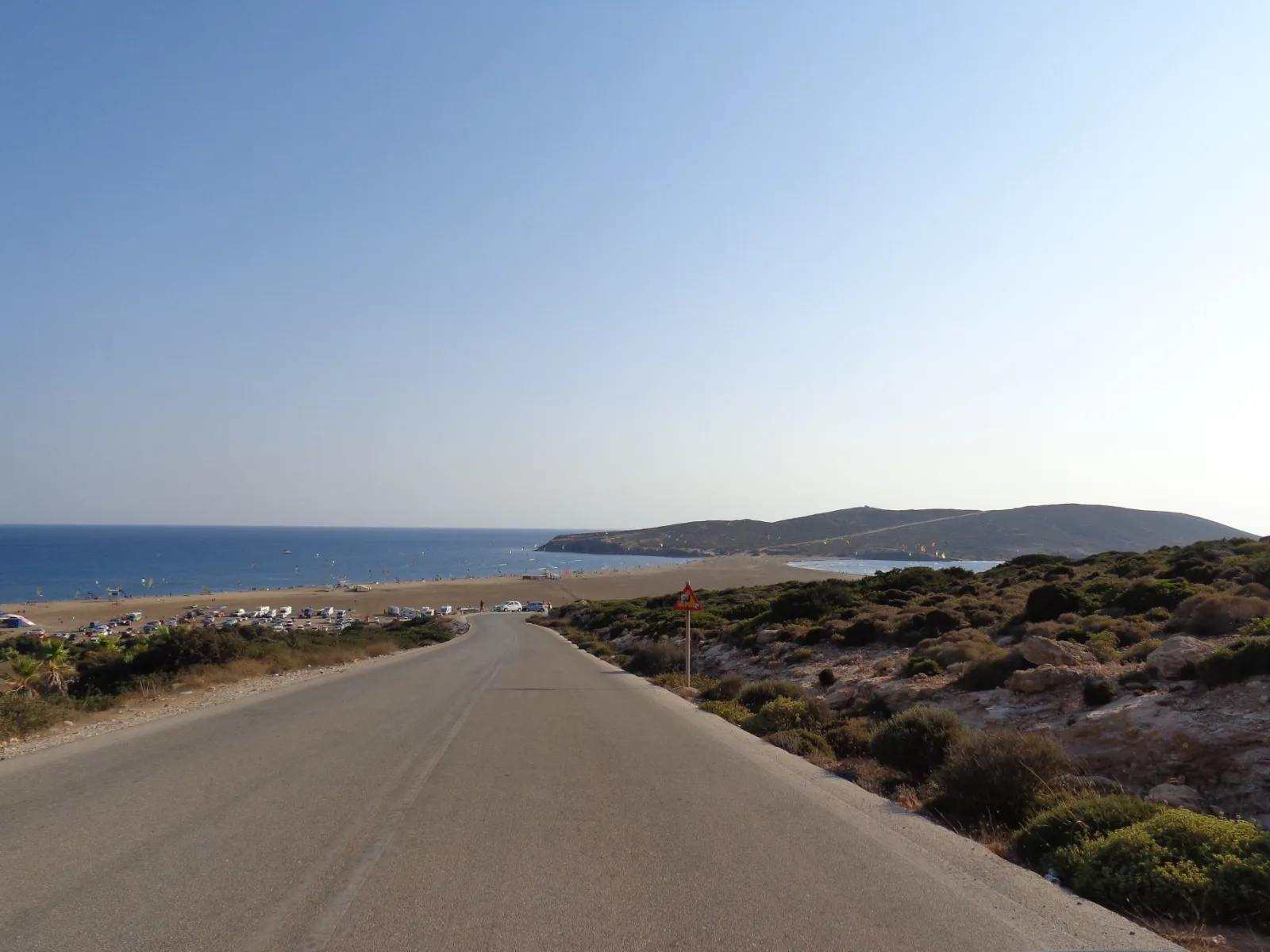
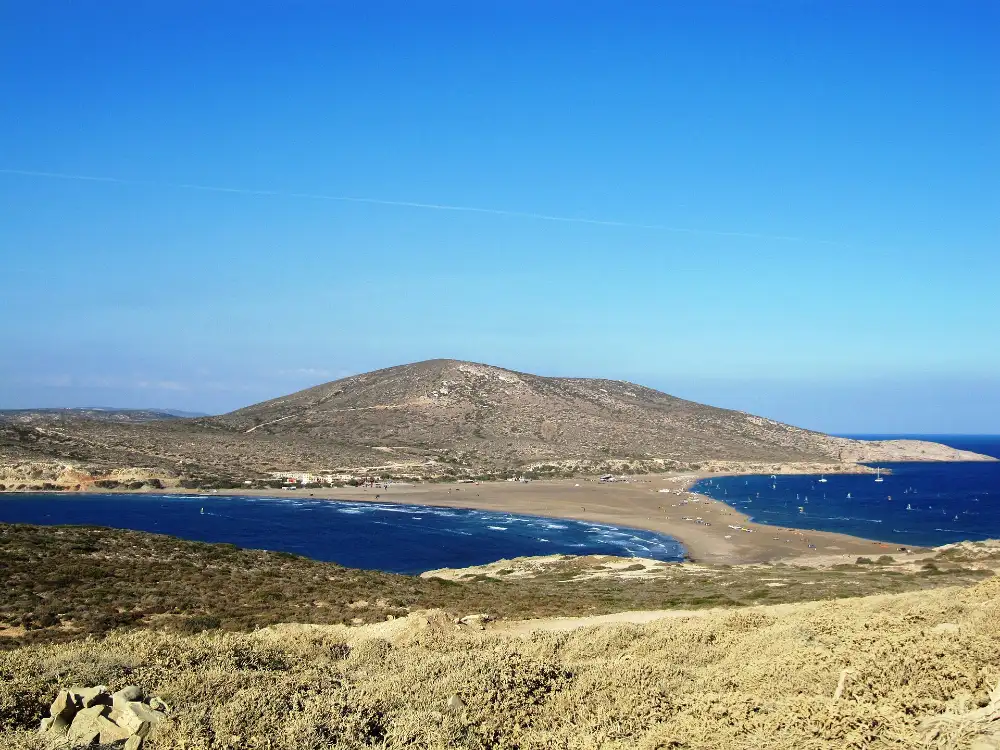
The windward west. The west coast is pebblier and open, and in July and August it is the side the meltemi chops up. That makes it the board coast rather than the sunbed coast, and it builds to Prasonisi at the island’s southern tip, where the Aegean and the Mediterranean meet across a sandbar and windsurfers and kitesurfers gather for some of the most dependable wind in Greece. It is a genuine drive from anywhere you are likely to be sleeping.
Two practical notes to finish on. Buses out of Rhodes Town run the east coast reliably, while the west and the far south are the half of the island that argues for renting a car in Greece, so your beach range is really decided at the rental desk. And sheltered is a direction rather than a promise: it describes which way a coast faces, not what the sea is doing on the morning you arrive.
We do not rate water on any page of this site, and you will find no sunbed rate, parking charge or facilities inventory here either, because those are seasonal trades that go quietly wrong on a travel page. The pages below describe the ground and leave the day to you. The wider island is on the Rhodes guide, and the resorts after dark are in Rhodes nightlife.