Corfu
Beaches in Corfu
Corfu is big enough that “which beach” is the wrong first question. The island has three coasts that behave differently, and once you know which one you are on, the beach mostly picks itself.
The northeast faces a channel, not an ocean. From Dassia and Gouvia up through Ypsos to Kalami and Kassiopi, the coast looks across a narrow strait towards the mainland rather than out into the Ionian, and it is bay after bay rather than open shore. That is the whole reason the villas and the family resorts collected here. What the water is doing on the day you stand in it is still the water’s business and not ours, but the shape of the coast is a fact you can plan around, and it is a different fact from the one the west coast offers.
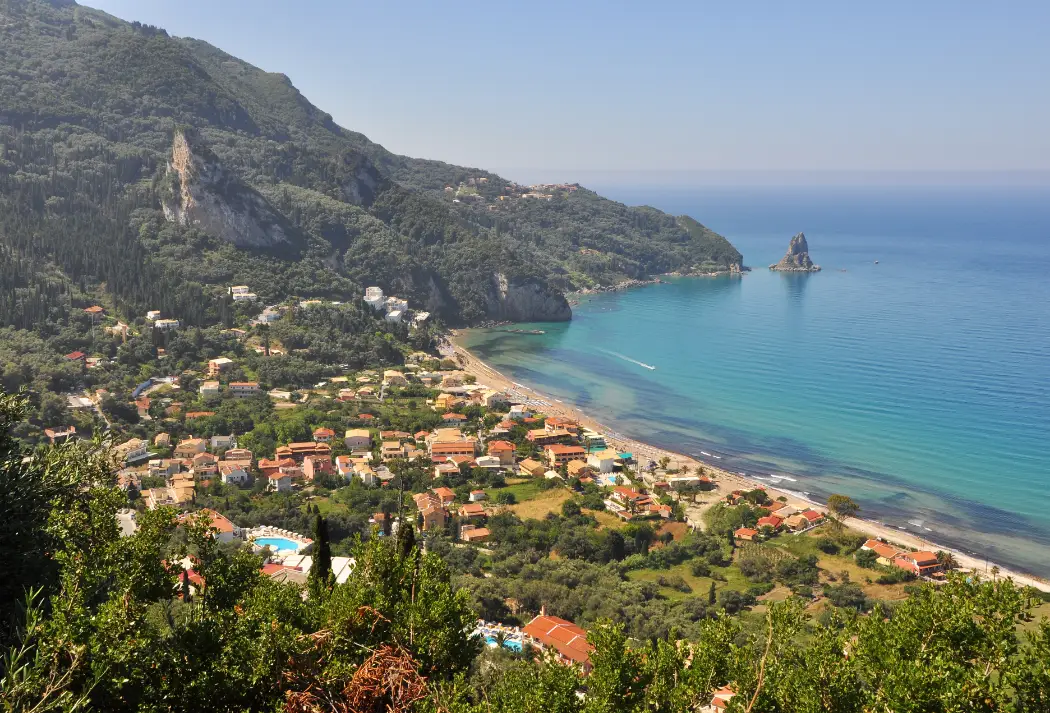
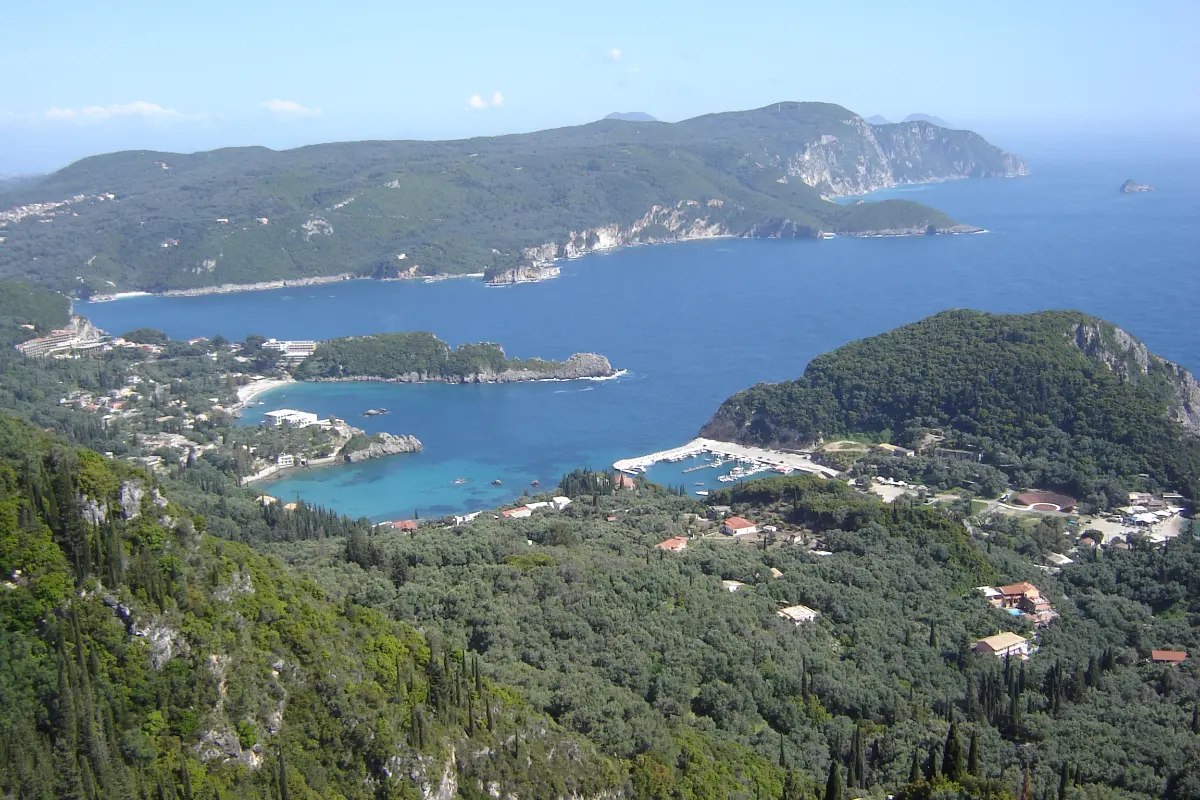
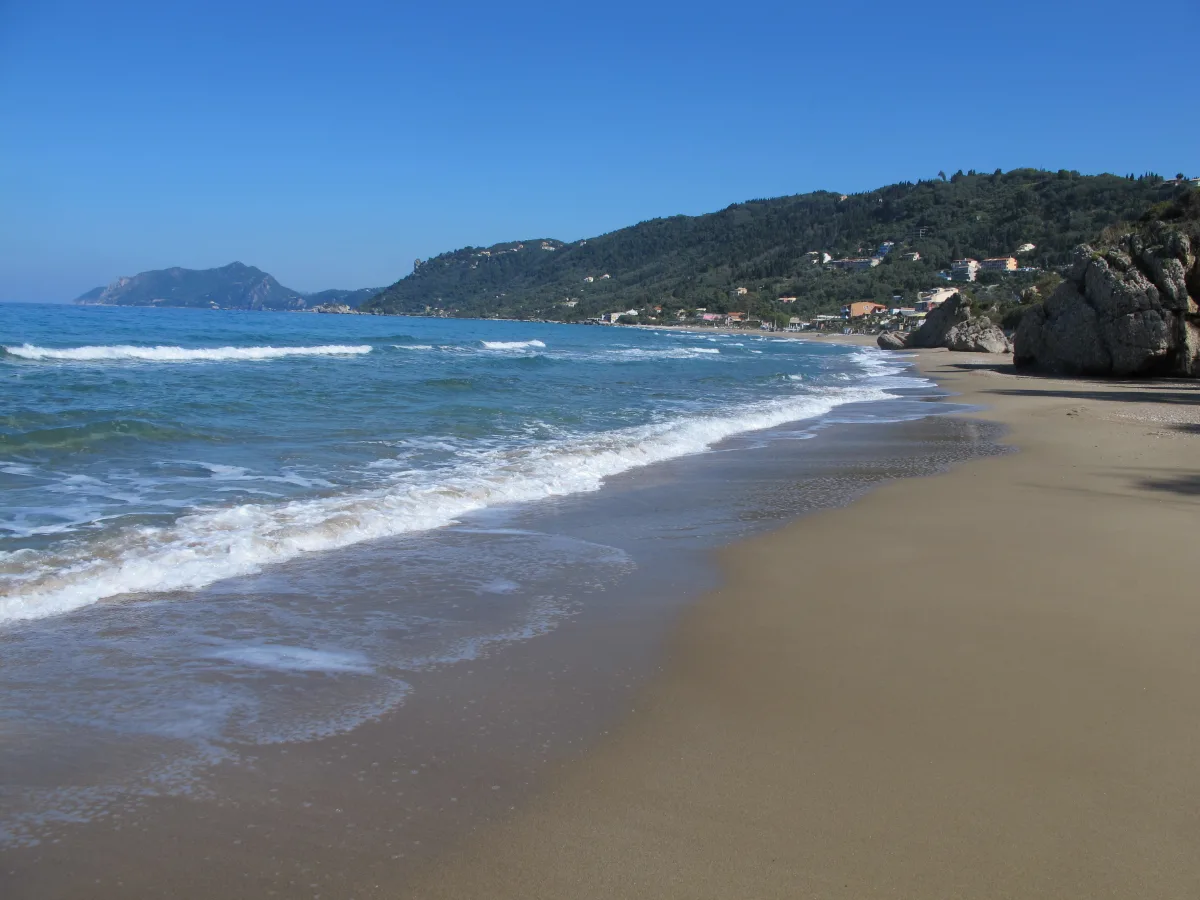
The west and northwest take the open sea. This is the side people photograph: green headlands stacked over coves, sunsets, and a swell that arrives from a long way off. Paleokastritsa is the headline, and it is not one beach at all but a run of small coves cut into the headlands with a single road along the back of them, which is why people arrive looking for a beach and end up in a boat. South of it, Agios Gordios is one long bay at the bottom of a green bowl with a single street down to the sand and the Ortholithi rock standing offshore. Two things follow from being west-facing. The water here has a reputation for running cooler than the east’s, Paleokastritsa’s especially. And a flat morning and a rough afternoon are the same beach, so look at the sea before you commit a day to it rather than after.
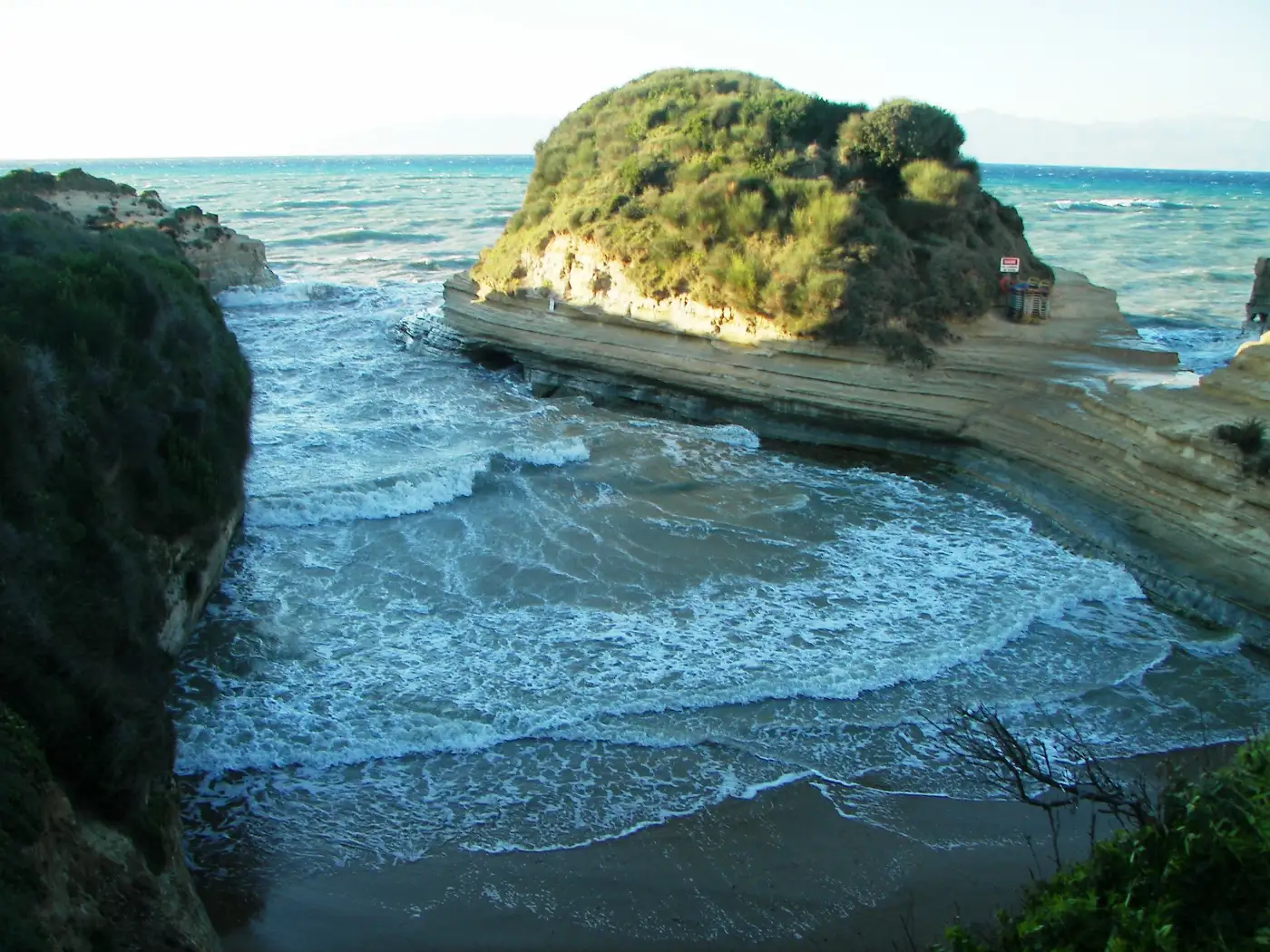
The north corner is where the sand runs out. At Sidari the coast turns to soft bedded rock, cut by the sea into fins, coves and one narrow channel. The Canal d’Amour is the famous piece of it, and the single most useful thing to know before you go is that it is rock rather than sand: most of the disappointment recorded about the place is somebody arriving with a beach towel and a plan that needed sand. It is also actively eroding, which is a real caution against trusting any photograph of it, including ours.
The south is flatter and emptier than its reputation. No mountain drama, longer beaches, thinner crowds. The dune-backed sand around Lake Korission, at Issos and Halikounas, is the part that surprises people who were told the south was a write-off.
Two practical things the coasts decide for you, and they are the ones worth deciding early.
The first is the car. A town base puts the Old Town on your doorstep and a proper beach behind a bus or a boat. A northwest base is the opposite trade. Corfu works through the bases properly, and which islands need a car sets out how that decision goes across Greece.
The second is that this page does not rank Corfu’s beaches against each other, and will not pretend to. There are more than a hundred of them, we have not surveyed them, and a ranking assembled out of other people’s rankings is just a rumour with a number on it. What is written above is the geography, which is checkable and stable, and which is what you are actually choosing between. The pages below cover the ground in detail.
You will not find sunbed prices, beach-bar names or bus times here either. Concessions are retendered, bars change hands every few seasons, and a page built on those is wrong by next summer. For how Corfu compares with its neighbour before you book anything, Corfu against Kefalonia takes the two side by side.