Paros
Beaches in Paros
One rule sorts every beach on Paros, and once you have it you can stop reading ranked lists. When the meltemi blows, the south and west coasts stay calm while the north and east belong to the sails. Check the forecast rather than a top ten, and the island almost always has a good beach day somewhere on it.
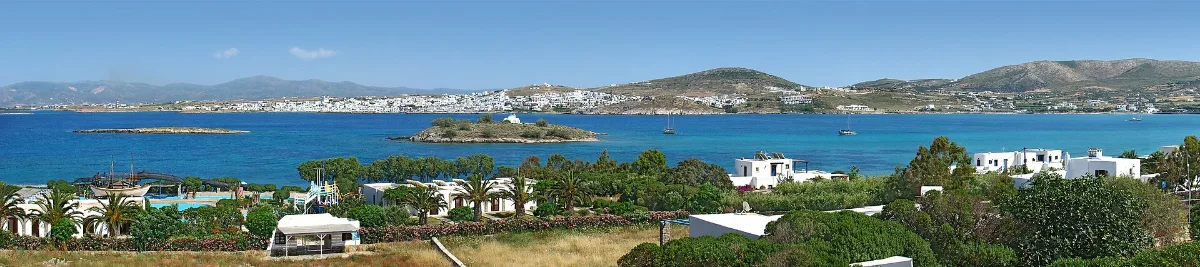
The second rule is geographic and decides where you stay. Paros has two harbours, and the beaches sort around them: Naoussa in the north, Parikia in the west, with the long open sands down the east coast and a quiet run along the south.
The rock one, on Naoussa bay. Kolymbithres is the beach people come to Paros having already seen. It is granite, which is the surprise on an island famous for marble, worn into rounded pillows and basin-shaped hollows that split the shore into a string of small enclosed coves rather than one sweep of sand. That shape decides the day there. A large group does not sit together, bags go on rock as often as on sand, and shelter is settled cove by cove, so walking two pockets along can change your afternoon more than driving anywhere else would. It is small, which means it fills sooner than a long beach does, and in August the choosing stops. Monastiri, the enclosed cove next door, is the quieter neighbour on the same water.
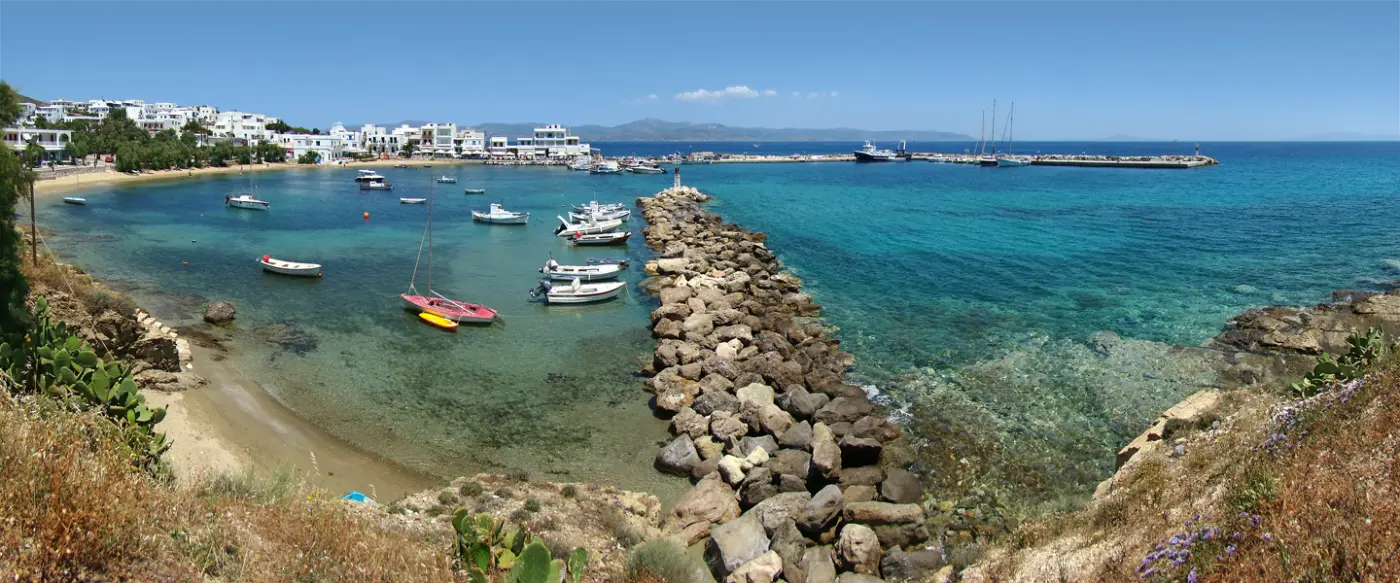
The Parikia side. Across the other bay, Marcello and Krios do for the capital roughly what Kolymbithres and Monastiri do for Naoussa: close to town, sheltered when the wind is in the usual quarter, and busy in season for exactly that reason. If your base is the port town, these are the beaches you can reach without organising a day around them.
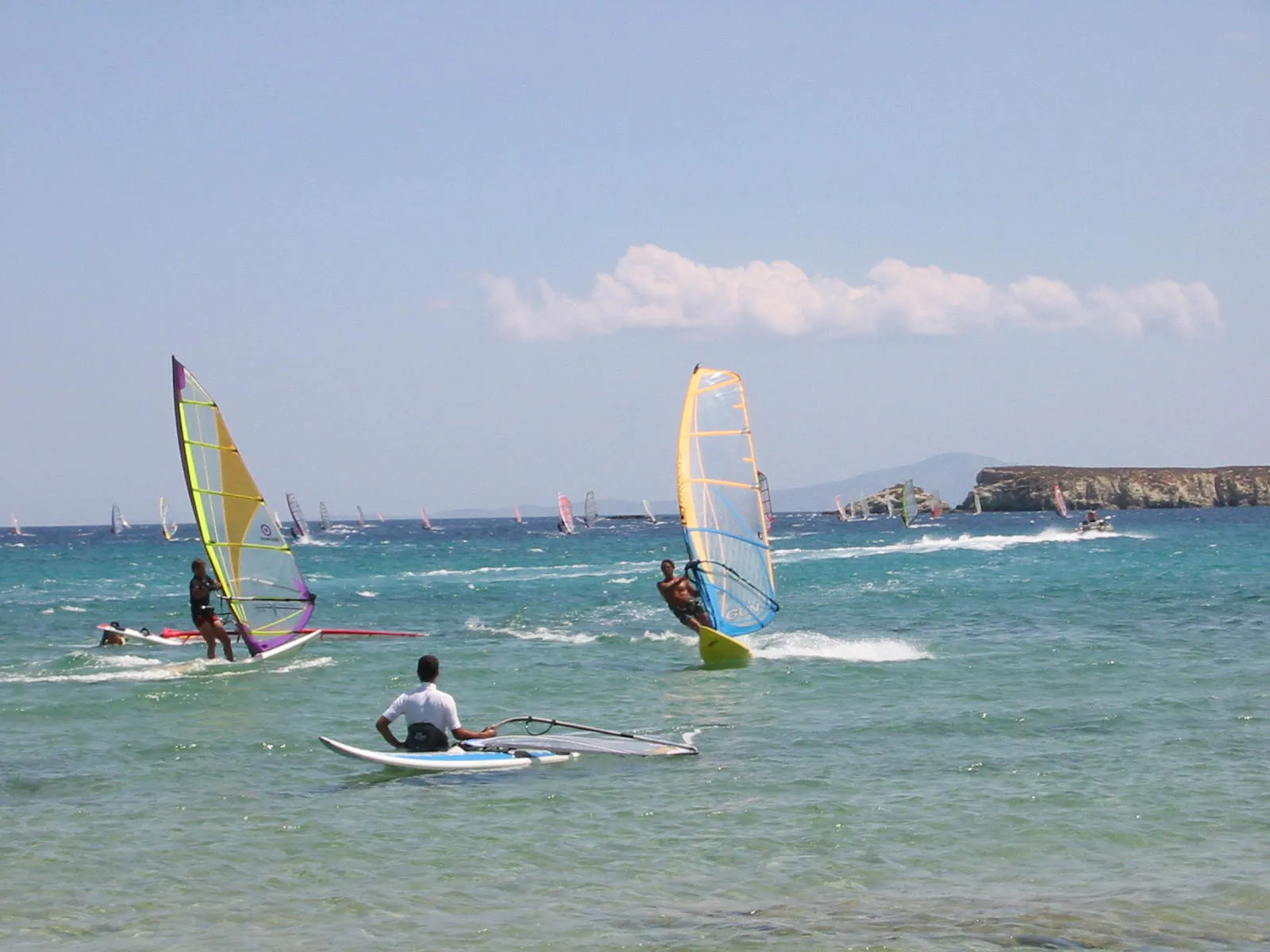
The wind coasts, and why that is a feature. Golden Beach, which you will also see as Chrissi Akti, and New Golden Beach are the long sands of the southeast, and when the meltemi runs they become the island’s windsurfing arena. Pounta Bay, on the west channel facing Antiparos, is the kitesurfing base. The same afternoon reads as a ruined beach day or a perfect one depending entirely on whether you brought a board. On a still day these are the softest sands on the island; on a blowing one, cross to the other coast and let the boards have them. Santa Maria in the northeast is the open sandy option nearer Naoussa, with watersports in calm spells.
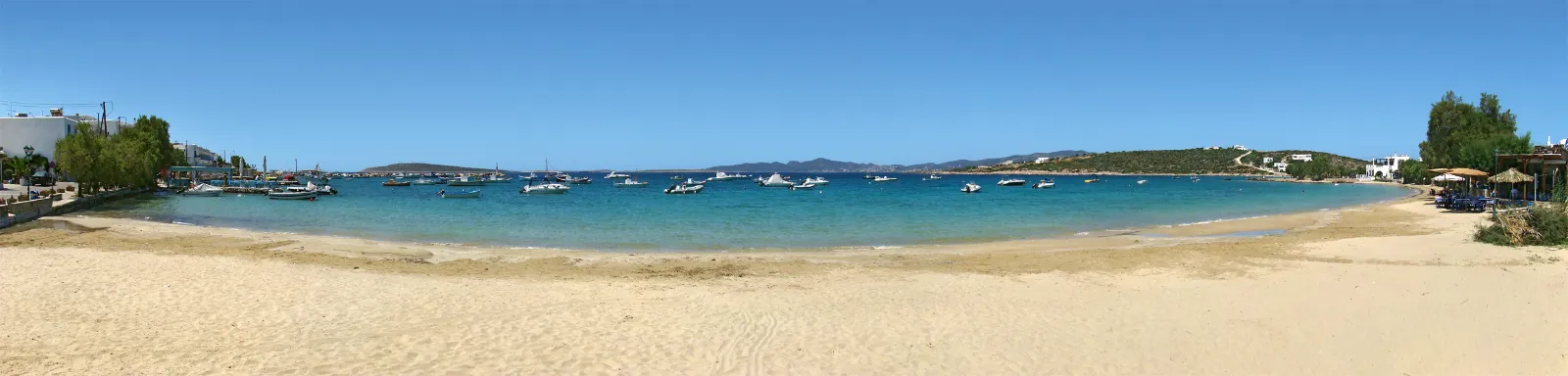
South and quiet. Faragas and Aliki round out the calm end of the island, away from both harbours and both scenes. This is where you go when the north is blowing and you want sand rather than spectacle.
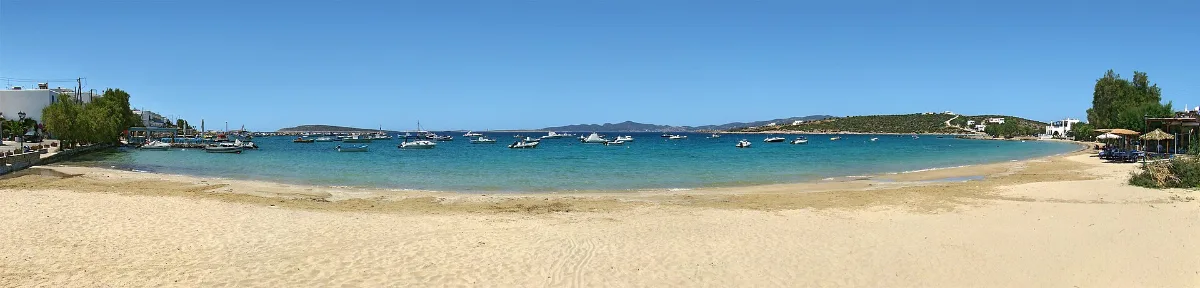
A word on what a beach day costs. The organised stretches here run on concessions: somebody sets out the loungers and umbrellas, and you pay for them. A charge exists at the developed ends of these beaches. We print no figure and name no business, because a beach concession is a seasonal trade and any list of them is wrong within a year. What you pay for is the lounger and the umbrella, which is worth knowing before you assume the whole beach is ticketed.
Paros is also one of the very few Cyclades islands where the buses genuinely reach the places you want to go, which is worth knowing before you hire anything. Routes, fares and the rest of the island are in our Paros guide, and if you are still deciding between here and Naxos across the water, Naxos versus Paros is the comparison in full.