Island group
Cyclades (South Aegean, Greece)
Airport
Santorini (Thira) Airport - IATA code JTR
Ferry from Piraeus
~5 hrs by high-speed catamaran; ~7.5–8 hrs by conventional ferry (slow budget ferries can run 10–11 hrs)
Best months
May–June and September–October (shoulder-season sweet spot; July–August is hottest, priciest and most crowded)
Travel details last checked July 2026.
The two Santorinis: caldera rim and volcanic interior
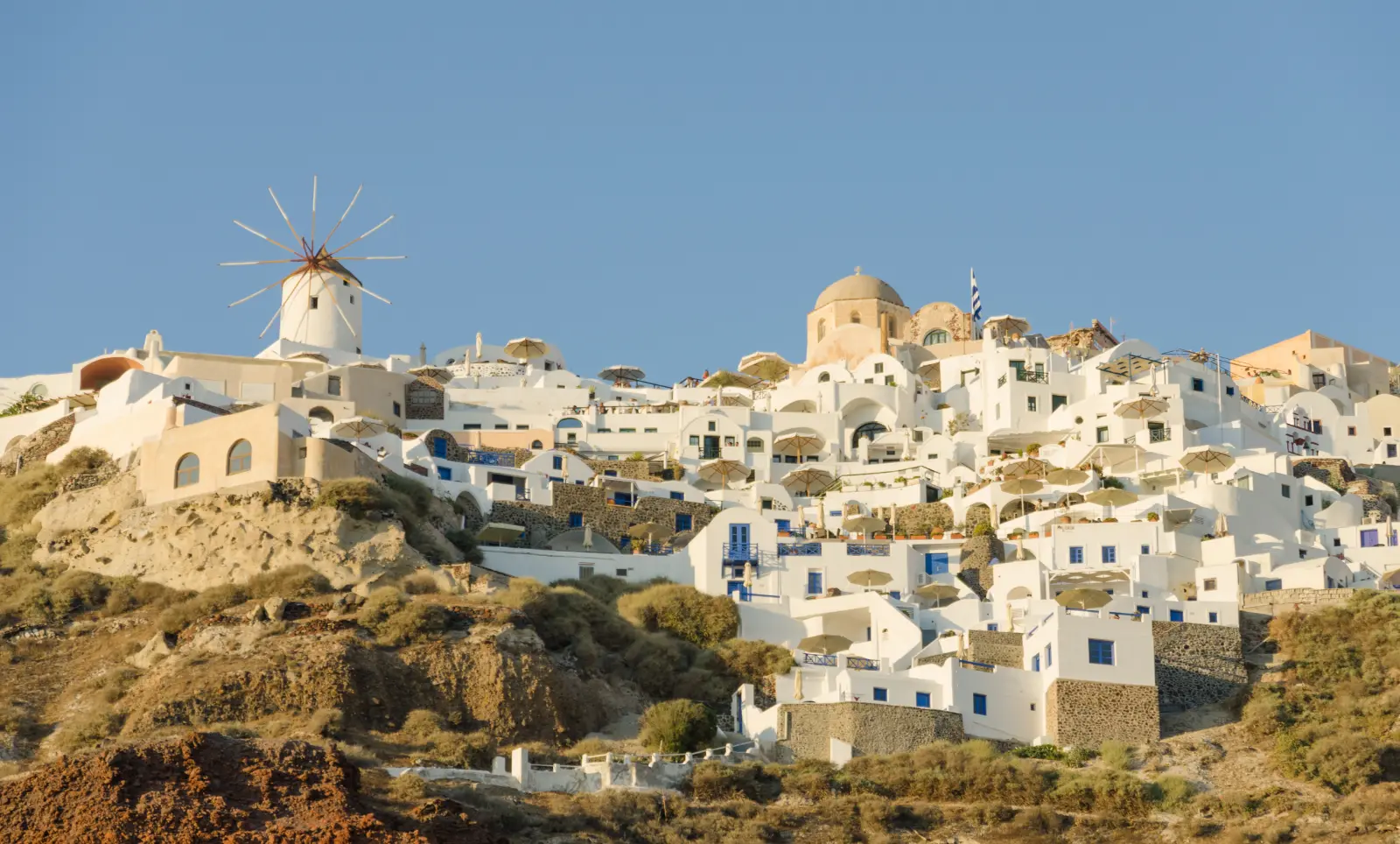
Santorini is the rim of a drowned volcano. Around 1600 BC a massive eruption - the Minoan eruption - blew out the centre of a round island and let the sea flood the crater. What survived is the crescent you see today: cliffs falling a couple of hundred metres to the water, with white Cycladic villages strung along the top edge. That flooded crater is the caldera, and it explains almost everything about the island.
The official name is Thira; Fira, confusingly, is the capital town on the same island. Santorini sits in the Cyclades, in the South Aegean, roughly 200 km southeast of Athens.
Most visitors only ever see one Santorini - the caldera rim. Fira, Firostefani, Imerovigli and Oia sit shoulder to shoulder along the cliff, and that is where the photographs, the sunset crowds and the priciest hotels all concentrate. The white cubic houses and blue-domed churches you picture are Cycladic architecture, whitewashed against the heat and the dark volcanic rock.
The other Santorini is the flatter interior behind the rim: vineyards on black soil and older villages - Pyrgos, Megalochori, Emporio, Akrotiri - where the island still feels lived-in rather than staged. Give it a day and Santorini stops being a viewing platform and starts being a place.

Diagram by Greece Trips. Free to reuse with credit - CC BY 4.0.
How many days Santorini actually needs
Four or five days is the sweet spot. Two or three covers the rim highlights and works if the island is one stop on a longer hop; seven or more only pays off if your budget is relaxed, because you will be paying caldera prices to slow down.
Here is what each length actually buys you.
Two to three days gets you Fira, the walk to Oia, one sunset, and either a caldera boat or a beach afternoon. It is enough to say you have seen it, and it is the right call if you are hopping through the Cyclades and Santorini is a single leg.
Four to five days is where the island opens up. You keep the rim highlights and add the parts most people miss: a day in the interior and the wineries, a caldera boat tour to the volcano, a real afternoon on a black-sand beach, and enough slack to eat a long lunch without watching the clock.
Seven days or more suits slow travellers who want to settle in - but the island is expensive, and a week here costs more than a week almost anywhere else in Greece.
One honest warning: first-timers routinely over-plan, cram three viewpoints and two boat trips into every day, and burn out. Build in gaps. For a day-by-day version, see the Santorini itinerary; to slot the island into a wider route, start with Cyclades island hopping.
When to come - and when to stay away
Come in late spring or early autumn. May, June, September and early October give you warm days, a sea still swimmable in September, thinner crowds and lower room rates than the summer peak - the clearest single win in planning a Santorini trip.
July and August are the opposite of that. It is the hottest stretch (regularly above 30°C ), the most expensive, and the most crowded: cruise ships dock most mornings and push thousands of day-trippers into Fira and Oia around midday. The meltemi, the dry north wind of the Aegean summer, can also pick up and chop up boat trips and ferry crossings. If you must come in peak season, book accommodation months ahead.
Winter is mild but quiet in the literal sense - many caldera hotels and restaurants close from early November and do not reopen until around Greek Easter in April, and ferry sailings thin right out. The views are still there; half the businesses that frame them are not.
| Season | Crowds | Prices | Weather |
|---|---|---|---|
| May–Jun | Moderate | Mid | Warm, sea warming |
| Jul–Aug | Heavy | Highest | Hot, windy spells |
| Sep–early Oct | Moderate | Mid | Warm, sea still swimmable |
| Late Oct–Apr | Light | Lowest | Cool; most caldera businesses closed until April |
The same shoulder-season logic holds across the country; see the best time to visit Greece and Greece weather month by month.
Getting to Santorini: fly or ferry from Athens
You have two ways in from Athens, and they suit different trips.
Flying is fast: Athens (ATH) to Santorini (JTR) takes about 45 to 50 minutes, and it is worth the fare when your days are tight. The ferry from Piraeus is slower, cheaper and more scenic - a high-speed catamaran runs the crossing in around 5 hours, a conventional car ferry in about 7.5 to 8 hours, and the cheapest slow boats in 10 to 11 hours (durations from operators SeaJets and Blue Star Ferries via Ferryhopper; confirm current schedules before you book).
| Mode | Duration | Arrives at | Choose it if |
|---|---|---|---|
| Flight (ATH→JTR) | ~45–50 min | Santorini airport | Time is tight; you want a day back |
| High-speed ferry (Piraeus) | ~5 hrs | Athinios port | You are island-hopping or want deck views |
| Conventional ferry (Piraeus) | ~7.5–8 hrs | Athinios port | You want the lowest fare and don’t mind the time |

Diagram by Greece Trips. Free to reuse with credit - CC BY 4.0.
Wherever you land, you do not land in a caldera village. The airport is a short drive from the towns, and ferries dock at Athinios port, about 10 km below Fira on a switchback road - arrivals there are a scrum of transfer vans, buses and hire-car desks. Pre-book a transfer, or know that public buses meet the main ferries; sorting this before you sail saves the worst of the arrival stress.
More on the mechanics in Greek island ferries and flights to Greece.
Getting around once you’re there
Everything radiates from the KTEL bus station in the middle of Fira. From there, public buses run to Oia, Kamari, Perissa and Akrotiri - cheap, reasonably frequent, and the backbone of getting around without a car. Two catches: fares are cash-only (the routes you will use run roughly €2.20–2.70 a ride ), and the Oia buses are jammed around sunset, when everyone on the island wants the same trip at the same time.
Rent a car for one day if you want the interior and the beaches on your own schedule - expect from about €30 a day in season. You do not need one for a Fira-and-Oia trip; you would spend more time parking than driving.
Skip the quad bikes and ATVs, however fun they look. The cliff roads are busy, fast and unforgiving, and rented quads and scooters are a common cause of holiday injuries here.
Taxis are the island’s weak spot - there are famously few of them, and on cruise and sunset hours you can wait a long time or not get one at all. Inside Fira and Oia, walking is simply the way; both are small, stepped and closed to through traffic. For the wider picture, see getting around Greece.
Which village to base in
Where you sleep shapes the trip more than any other single choice, and there are really four options.
Fira is the practical base. It is the transport hub, it has the most restaurants, shops and (low-key) nightlife, and it is the easiest place for first-timers and anyone relying on buses. The trade-off is that it is the busiest of the caldera towns and has no beach. Pick Fira if you want convenience and don’t mind crowds.
Oia is the one on the postcards - the most beautiful and the most expensive, with the famous sunset and the steepest prices. Two honest caveats: not every Oia hotel actually has the caldera view you are paying for, and the village fills with day-trippers from late morning. Pick Oia if the view is the point and the budget allows.
Firostefani and Imerovigli sit just north of Fira along the same cliff - the same caldera views, calmer streets, a short walk or bus from the action. This is the quiet-romance compromise and the usual honeymoon pick. Choose them if you want the view without the crush.
Kamari and Perissa are the black-sand beach towns on the far side of the island. No caldera view, but more space, better value and a proper beach on your doorstep. Choose them for a relaxed, cheaper stay.
| Village | Vibe | Best for | Trade-off |
|---|---|---|---|
| Fira | Busy, central | First-timers, buses, nightlife | Crowded, no beach |
| Oia | Postcard, pricey | The view, the sunset | Most expensive, day-trippers |
| Firostefani / Imerovigli | Quiet caldera | Couples, honeymoons | Less convenient |
| Kamari / Perissa | Beach town | Value, families, swimming | No caldera view |

Diagram by Greece Trips. Free to reuse with credit - CC BY 4.0.
Which specific hotel, in which village, is the real decision - we break it down by area in where to stay in Santorini.
What to actually do - caldera walk, Akrotiri, wine, and the sunset
The best single thing to do on Santorini is free: the cliff-top walk from Fira to Oia. It runs roughly 10 km along the caldera edge through Firostefani and Imerovigli and takes about 3 to 4 hours, with almost no shade - go early morning or late afternoon, and wear real shoes, not sandals.
The Oia sunset is the island’s headline event, and it is worth being honest about. The light really is that good; it is also genuinely mobbed. Crowds start staking out the old castle ruins well before the sun drops, and if you arrive late you will watch it over the backs of other people’s phones. The fix is simple: get there early, or take the same sky with room to breathe from Imerovigli or Firostefani, or from a boat on the water.
A caldera boat tour is the classic half-day out - most sail to Nea Kameni, the black volcanic islet in the middle of the bay, where you walk up to the still-steaming crater, then on to the warm sulphur springs off Palea Kameni for a swim.
Inland, ancient Akrotiri is a Minoan town buried and preserved by that same eruption - the “Pompeii of the Aegean,” and the island’s most substantial sight. Around it, the interior wineries pour Assyrtiko, the crisp white grown in low, basket-woven vines called kouloura that shelter the grapes from wind and sun on dry volcanic soil.
Nightlife is deliberately low-key next to Mykonos; Fira has the bars and a handful of clubs, and that is about the ceiling. For the full list, see things to do in Santorini and Oia in depth; for interior tavernas and wineries, where to eat.
Beaches worth the trip
Set your beach expectations before you arrive: Santorini has no soft golden sand. Its volcanic origin gives it black and red beaches instead, and they are for a swim and a fish-taverna lunch, not for the kind of beach day you would plan a Cyclades trip around.
The swimming beaches are on the flatter east and south coasts - Kamari, Perissa and Perivolos, long stretches of black volcanic sand and pebble with organised loungers and tavernas behind them. The much-photographed Red Beach near Akrotiri is dramatic, ringed by rust-coloured cliffs, but the access path is frequently roped off for rockfall risk and has seen repeated closures; check its current status before you make the trip, and be ready to view it from the platform above or from a boat.
Beaches here are a supporting act, not the headline - we cover which are worth your time in the best beaches in Santorini.
Day trips: the volcano, Thirassia, and the next island
Santorini’s day trips come in two tiers, and the closest one is inside your own view.
In the caldera itself, small boats run from the old port below Fira out to the volcanic islets: Nea Kameni, where you walk up to the crater, and Palea Kameni, where you swim in the warm springs. Thirassia - the quiet inhabited island across the water, the piece of the old rim that faces the main crescent - makes a calm half-day away from the crowds, with a few tavernas and almost no traffic.
The second tier is a short ferry hop to the next island. Ios is the closest popular one, about 30-plus minutes by high-speed ferry; Naxos is around an hour and a quarter; quieter Folegandros and Anafi round out the options for a slower day (times via Ferryhopper - check current schedules).
This is where Santorini stops being a single destination and becomes one stop on a route. Most people who love their trip here did not treat the island as an endpoint. They hopped.
What Santorini costs, and other things to know before you go
Santorini is one of Greece’s most expensive islands, and it is honest to say so up front. The premium sits on the caldera view - a room facing the crater in Oia or Imerovigli can cost several times the same standard of room in Fira, the beach towns or the interior. You cut the bill by trading the view for location, eating away from the rim, and using the buses. The full picture is in what a Greece trip costs.
A few island quirks catch first-timers out:
- Don’t drink the tap water. Santorini has no natural fresh water and runs on desalination; buy bottled or bring a refillable filter.
- It is all stairs. The caldera villages are built on steep, stepped, polished cobbles - hard going with wheeled luggage, and worth knowing if anyone in your group has mobility limits.
- Buses are cash-only, so keep coins and small notes on you.
- Book peak-season rooms months ahead; the good-value places go first.
- Check the EU entry rules. The Entry/Exit System (EES) began a phased rollout in October 2025 and became fully operational at Schengen borders in April 2026; the separate ETIAS travel authorisation is expected to follow in late 2026. Confirm what applies to your passport and the current fee before you travel. See visas and entry requirements.
Where Santorini fits in a bigger Greece trip
Santorini works best as a leg, not the whole holiday. Three or four nights suits most people, and the island gains from being part of a route: a few days here after Athens, one stop in a Cyclades hop, or the middle of an Athens–Santorini–Crete run.
If you are choosing between islands, the short version is that Santorini is for scenery, the caldera and romance, while Mykonos is for beaches and nightlife - and a high-speed ferry links the two in roughly 2 to 3 hours, so plenty of travellers do both. We weigh them head to head in Santorini vs Mykonos.
Get your season, your village and your days right, and the rest is booking in the right order.
Browse all our Greece destinations to build the trip Santorini belongs to.
Santorini FAQ
How long do you need in Santorini?
Two to three days covers the caldera-rim highlights - Fira, Oia, the sunset and one boat or beach. Four to five is the sweet spot, adding the interior, a wine day and a proper beach afternoon; seven-plus only if the budget stretches. See the day-by-day plan.
What country is Santorini in?
Santorini, officially named Thira, is a Greek island in the Cyclades, in the South Aegean Sea. It lies roughly 200 km southeast of the Greek mainland and is reached by plane or ferry from Athens.
What is the best time to visit Santorini?
May–June and September–October. You get warm days, a sea still swimmable in September, thinner crowds and lower prices than the July–August peak, when cruise-day crowds and heat are at their worst. Winter is mild but many hotels and restaurants close. More in best time to visit Greece.
Is Santorini expensive?
Yes - it is one of Greece’s priciest islands, especially caldera-view hotels in Oia and Imerovigli. You cut costs by staying in Fira, Firostefani or the beach towns of Kamari and Perissa, eating in the interior villages, and using the cash-only public buses. See what a Greece trip costs.
How do you get around Santorini without a car?
The KTEL public buses run from the main station in Fira to Oia, Kamari, Perissa and Akrotiri - cheap, frequent and cash-only, though packed at sunset. Taxis are scarce; walking covers Fira and Oia. Rent a car only for an interior or beach day. More in getting around Greece.
What is the closest island to Santorini?
The closest inhabited island is Thirassia, a short boat hop across the caldera, along with the volcanic islets Nea Kameni and Palea Kameni. The nearest popular island for a day trip or onward hop is Ios, about 30-plus minutes by high-speed ferry.
Santorini or Mykonos - which is better?
Choose Santorini for scenery, caldera views and romance; choose Mykonos for beaches and nightlife. Many travellers do both in one Cyclades trip, since a high-speed ferry links them in roughly two to three hours. We compare them in Santorini vs Mykonos.
Plan by category
The Santorini guides
6 guides, each scoped to a decision you actually have to make.
 Attractions
Things to do
See the attractions →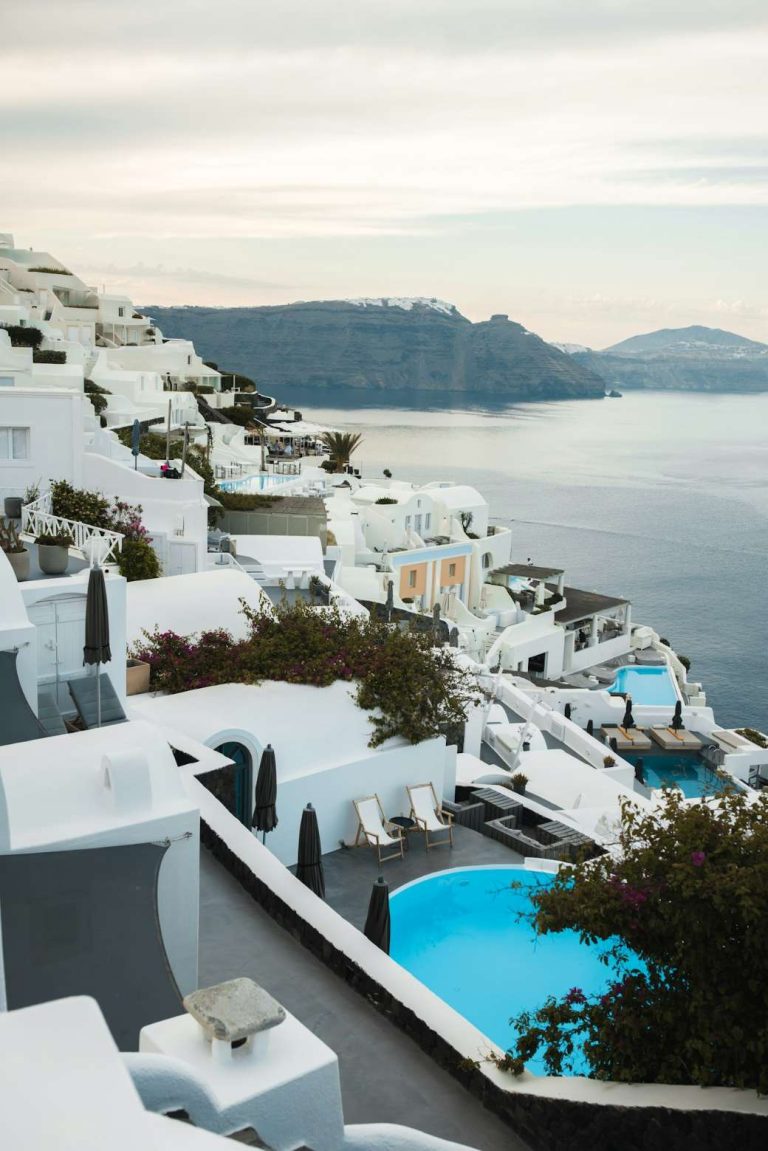 Hotels
Where to stay
Compare the areas →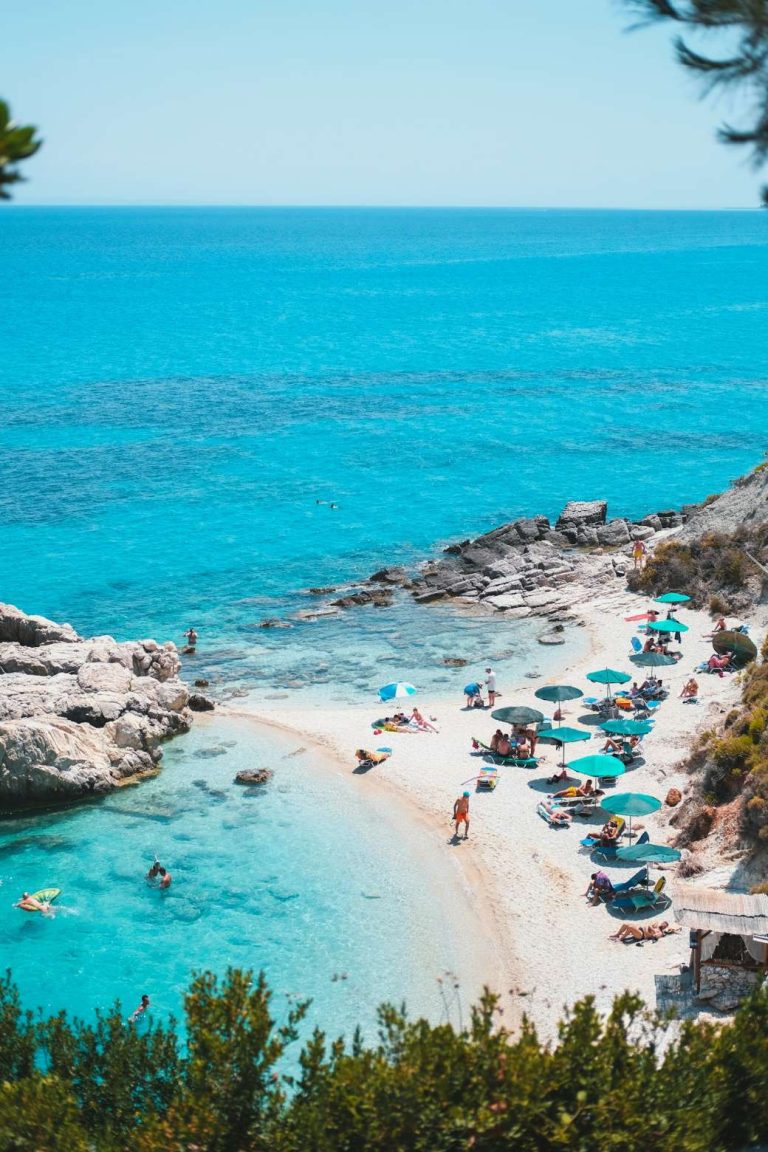 Beaches
The beaches
See the beaches → Restaurants
Where to eat
See where to eat → Itinerary
Day by day
See the itinerary → Day trips
Day trips
See the day trips →
Booking
We sell nothing and book nothing for you. Every guide on this page tells you how to arrange each piece yourself - which ferry operator, when to book, what to prebook and what to leave loose.