The shape of a day in Athens that children survive
Athens, Greece is not a difficult city for children. It is a hot one built on bare marble, and it rewards a fixed daily shape more than a long list.
| When | What you do |
|---|---|
| Early, 08:00 to 11:00 | One ancient thing, ideally the Acropolis at opening |
| Middle, 11:00 to 17:00 | Indoors or in water: the Acropolis Museum, a child-scaled museum, or the coast |
| Late, 17:00 to 20:00 | Somewhere to run, then a taverna dinner |
The things to do in Athens with kids that reliably work, in the order to do them:
- The Acropolis in the first hour after the gate opens
- The glass floor and the LEGO Parthenon at the Acropolis Museum
- The National Garden playground, five minutes from Syntagma
- Water jets and free summer kayaks at Stavros Niarchos
- The Museum of Illusions when the afternoon turns furnace-hot
- The Changing of the Guard at Syntagma, ten free minutes
- A souvlaki, eaten a few streets back from the sights
Run the day in that order and the problem stops being what to see. It becomes the heat, the marble and the pacing.
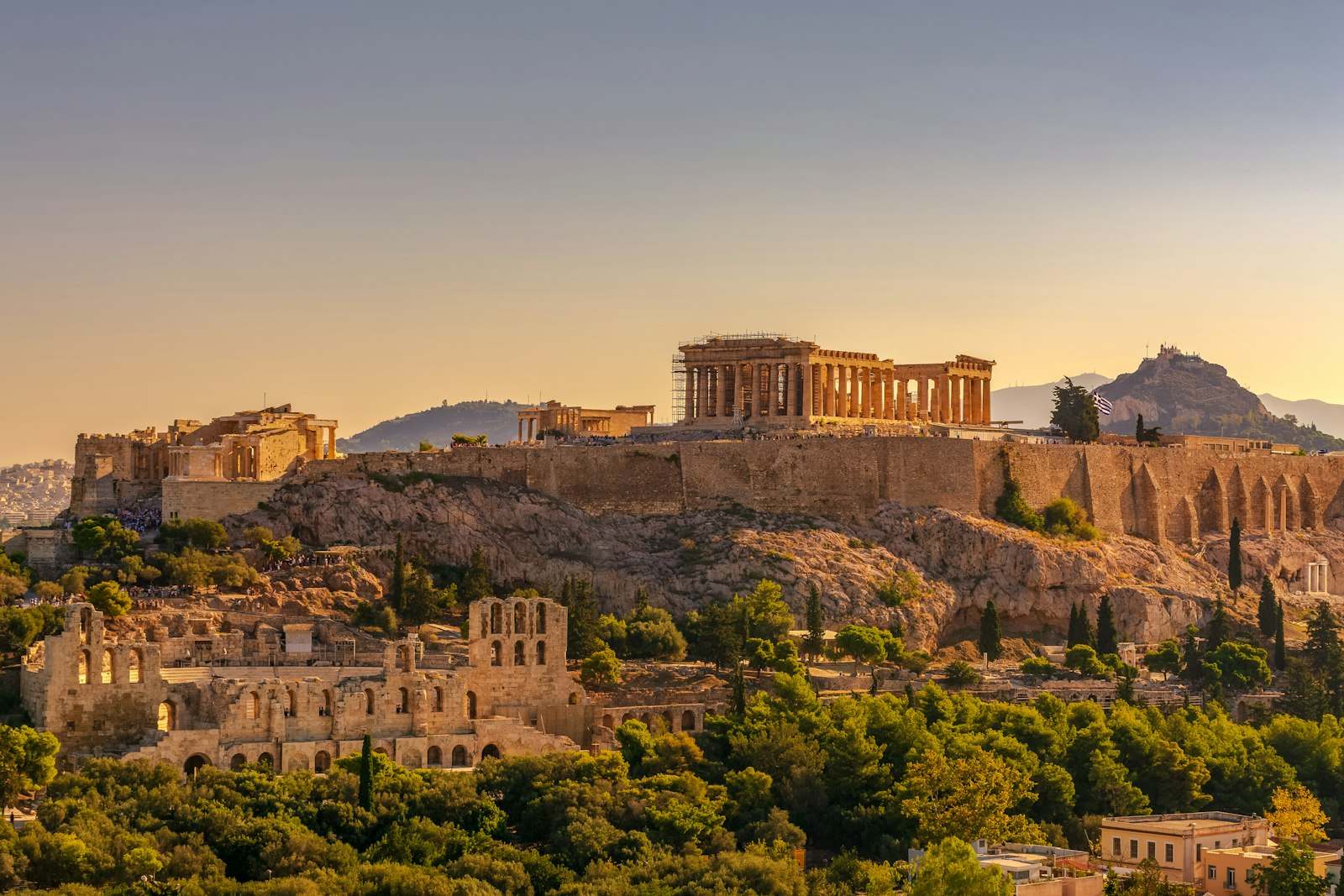
The Acropolis with kids: you get the first hour
The Acropolis works with children if you are at the gate when it opens, allow an hour to ninety minutes on the rock, carry the small ones because strollers are not allowed inside, and put everyone in shoes with grip. Opening hours are seasonal and the summer and winter timetables differ, so take the time from the official site the night before rather than from any travel page. The marble up there is polished slick by several million feet..
The climb is a steady ramp, then steps, and it is short. What it is, is exposed: no shade worth the name on the summit, stone worn smooth and genuinely slippery when damp, loose gravel in the gaps. Parents on the Athens forums tell each other the same thing thread after thread, which is what makes it worth repeating: expect to carry a toddler a fair amount, and watch their feet the whole way round.
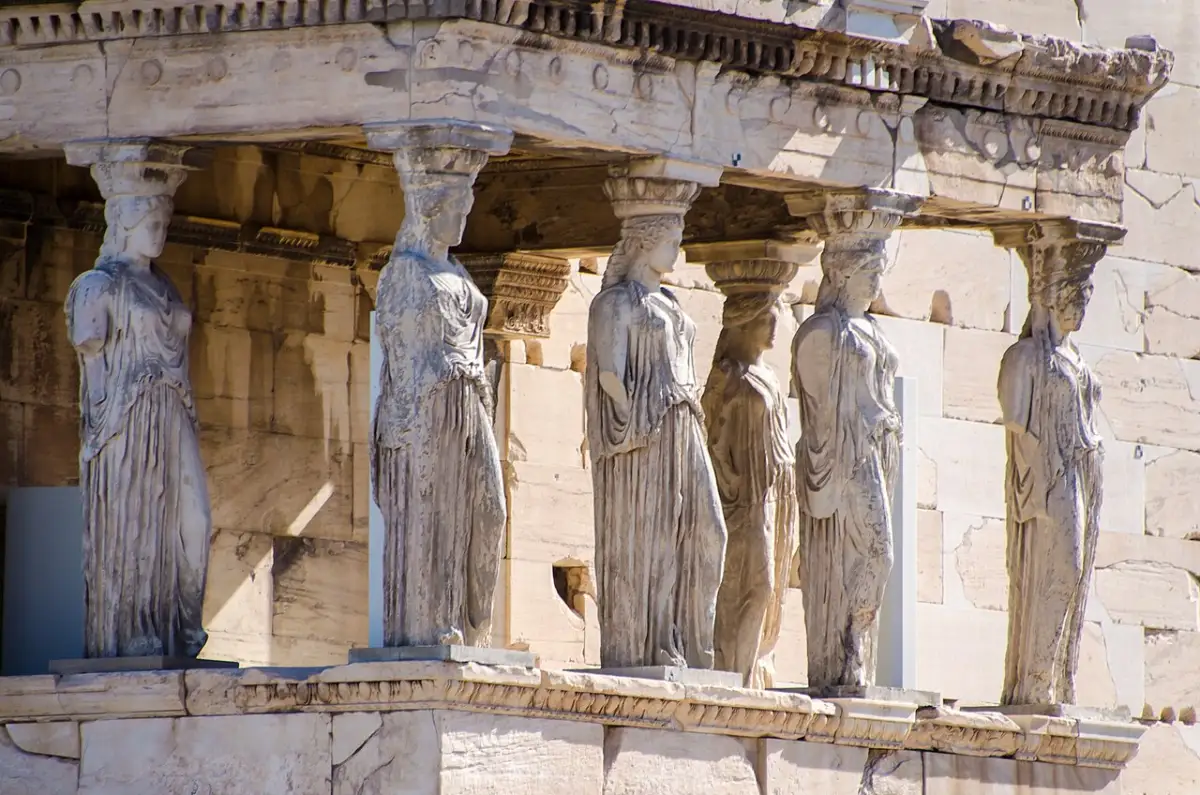
What children react to up there is not the archaeology. It is the Odeon of Herodes Atticus, a whole stone theatre seen from above; the caryatids on the Erechtheion, six women holding a porch up on their heads; the city laid flat in every direction. And it is the story, so tell them on the way up how Athena and Poseidon competed for the city, then let the ruins be the proof.
The honest read by age. Toddlers are a carry and a hand on the smooth patches, and one parent going up while the other has a coffee below is a respectable answer. From about five or six a child can walk it and take the story. Teenagers are fine, and bored if you stretch it past an hour.
Heat here is a scheduling input, not a scare. The rock holds warmth and there is nowhere to step out of it, which is the whole reason for the opening-hour rule. Visitors report water fountains on site and a water-only rule at the gate, so carry empty bottles rather than full ones and expect to fill them once you are through; toilets are near the entrance.
Then there is the closure. In recent heatwaves the Culture Ministry has shut the Acropolis and other central archaeological sites through the hottest part of the day, for a few days at a time. That is not a published opening hour and it may not happen on your day. It is a measure the ministry takes when the heat is extreme, and it is why a ruin in the middle of a July day is not really a plan. The site detail lives on the Acropolis and Parthenon pages; this is the child-sized version.
Strollers: banned on the rock, lent at the museum
Strollers are not allowed inside the Acropolis. You leave yours in the storage by the entrance and you carry the child up. Visitors also report baby carriers available to borrow there against an ID, which is worth asking about but not worth planning around.
Two hundred metres away, the Acropolis Museum lends strollers at its ground-floor cloakroom and keeps a parents’ room for babies and small children on the first floor. Same hill, opposite rules.
Now the lift, honestly, because plenty of pages imply otherwise. There is one on the north face of the rock, and it is an accessibility provision rather than a shortcut: it is described as serving wheelchair users and visitors with reduced mobility, it is arranged in advance rather than joined on the day, and it is reported to stop running in high wind or rain. Confirm the eligibility and the booking route with the site itself before you build a morning on it. It is not a stroller shortcut for a healthy family, and turning up hoping to queue for it costs you the cool hour.
Below the rock the city is kinder. The metro is lift-served across much of the network, which makes it unusually usable with a pushchair; the catch is Line 1, the old green line, where the platform gap is wide enough to matter and staff will bring a ramp if you ask. Check step-free access for your own stations before you rely on it, and ask at the ticket office how children are fared, because the rules differ by age. The transport basics are in getting around Greece.
The verdict: a carrier for the ancient core and Plaka’s stepped lanes, a stroller for the flat city, the museums and the parks. If you can bring only one, bring the carrier.
The child ticket is free, and you still have to book it
Children get in free at the relevant ages, and that free ticket is still a booked, timed, zero-euro ticket issued on the official heritage portal, with the child’s passport or ID checked at the gate. Parents who assume free means walking in are the ones stopped at security.
Be careful with the age itself. The published age and nationality rules changed recently and third-party sites now contradict each other, some still quoting a discount the ministry has abolished. Take no number from a blog, this page included: book on the official portal, read the free-entry category as it stands on the day, and select the children’s zero-euro option in the same transaction as your own timed slot.
Buy from the official Greek heritage ticketing portal rather than a lookalike reseller. The adult landscape changed too, with the old combined ticket discontinued and sites now bought individually, and the Athens hub does that arithmetic in full.
Practical rule: book the opening slot, book the children’s tickets in the same basket, and carry the passports you booked them with.
The museums that actually hold a child’s attention
Three museums in Athens are built to work on children. The rest are adult museums that a child endures, and knowing the difference is worth an afternoon.
The Acropolis Museum: the glass floor does the work
| Museum | Best ages | How long | Booking | Open through the hot middle |
|---|---|---|---|---|
| Acropolis Museum | 4 and up | 2 hours | Book online in peak season | Yes, and late on Friday |
| Hellenic Children’s Museum | 0 to 12 | 60 to 90 minutes | Reservation required, slots are limited | Friday evening and weekends |
| Museum of Illusions | 5 and up | About an hour | Check before you go | Indoors, so yes |
You walk in over a glass floor laid across a real excavated Athenian neighbourhood, and children stop dead on it before they have seen a single statue. That, and the LEGO model of the Acropolis upstairs, are the two things they remember.
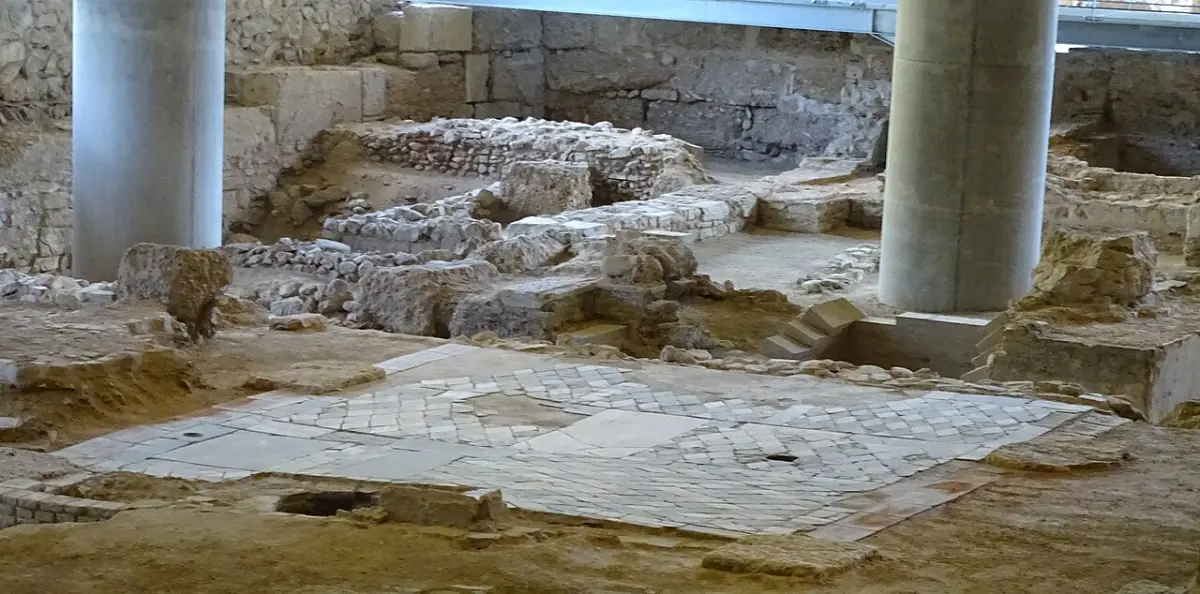
The family kit is free and badly advertised: family backpacks, family trails and a family audio guide, all lent at no charge from the visitor services desk. Add the borrowed stroller, the parents’ room, a cafe over the excavation, and summer opening that runs into the evening and later still on Friday, and this is the one museum in the city designed around a family’s day.
One piece of pacing the guides miss: do not put the rock and the museum in the same morning with a young child. Split them across two days, or take the museum in the hot middle of the same day, which is what it is for. The full inventory is on things to do in Athens.
The Hellenic Children’s Museum: free, and only open when it is
Entry costs nothing, the exhibits are hands-on for children up to twelve, and there is a playspace for the under-threes. It sits on the ground floor of the Athens Conservatoire by Evangelismos metro, and an hour to ninety minutes is the whole visit.
The constraint every listicle omits is that you cannot simply arrive. Visits are reservation-led, booked through an online platform ahead of time, and the public slots the museum publishes are a Friday evening and weekend daytimes.
So the decision is calendar-first. If your Athens days hold no Friday evening and no weekend, do not build an afternoon around this place. Take the Museum of Illusions or Goulandris instead.
Museum of Illusions and the hot-afternoon bench
Every family needs one indoor hour that asks nothing of a child, and Athens keeps a short bench of them a metro stop apart. The Museum of Illusions, in the centre near Monastiraki, is small, air-conditioned and about an hour long: rooms that tilt the floor under you, and a playroom of brain teasers to lose a seven-year-old in. Check its hours and tickets on its own site before you set off.
The rest of the bench, with the child each one suits. Goulandris Natural History has life-size dinosaurs and games pitched at four to eight year olds. The Benaki Toy Museum is for younger children and for rain. Technopolis and its Industrial Gas Museum are for the older child who would rather climb a thirty-metre tower than look at another statue. All three sit on the city’s own family shortlist at thisisathens.org.
Be honest about what they are. None of them is Greece. They are the pressure valve that buys you a second morning of ancient stone with a child who is still speaking to you.
Where kids can run: the Garden, the park and the hill
Athens has three genuinely good places to let children burn an hour, and they are not interchangeable.
The National Garden is the central one: shaded paths, duck ponds and a playground, five minutes downhill from Syntagma, and the right answer when you need green space without a journey. It also holds a small animal enclosure that is dated and tight-caged, and parents who have been say so plainly. Walk past it, take the playground.
Stavros Niarchos, the SNFCC park down towards the coast, is the one worth the tram ride: free to walk into, open long hours, with real playgrounds, a musical garden, and a sea breeze central Athens does not get. It also runs seasonal programmes children remember, water jets to run through and boat loans on the canal among them, though which are running in any given week is worth checking on the centre’s own site before you make the journey. It is the best late-afternoon move in the city with children, and most guides bury it at number 24 of 31.
The hills are the free alternative. Filopappou is twenty minutes up through pines, with the Acropolis opposite, no ticket and the shade the rock does not have. Lycabettus is higher and steeper, and the funicular removes the climb for whatever it charges at the kiosk.
The Changing of the Guard at Syntagma is the ten-minute free set-piece worth timing a day around, and there is a longer, more elaborate version once a week. Confirm the current timings locally, because they are the sort of thing that shifts. The quiet part: the big version is crowded and shadeless, which weighs more with a four-year-old on your shoulders than the spectacle does.
The pairing rule holds all of it together. One running-around place per day, late, after the sight and the cool hour. Lead with it and the ancient half of your day quietly dies. If the children have had enough of the city entirely, the day trips from Athens are the release valve.
Planning the hot middle of the day
In an Athens summer the middle of the day is not a window you fill. It is a window you plan around, and the city closes its own ancient sites to make the point: in recent heatwaves the Culture Ministry has shut the Acropolis and other central sites through the hottest hours. It is event-driven rather than a timetable, so it may or may not land on your day, and you build the day as though it might.
What follows is the shape at the top of this page. The ancient half happens between opening and late morning. The middle belongs to the Acropolis Museum and its long hours, a child-scaled museum, a slow lunch in the shade, or the sea. The city becomes pleasant again after five.
The kit is short: refillable bottles, hats, routes chosen for shade rather than distance, and a real siesta if your children still nap. Athenian families do exactly that, which is why the streets empty and then refill.
If you have any choice of month, bring children in late April to early June, or in September: the same city, the same money, and it asks nothing of them. Families locked to the school holidays get August, and this page is built so that August still works. The month-by-month picture is on when to go and Greece weather by month.
The coast is the other escape. The tram runs south from the centre to the Athens Riviera, where the free public beaches are honestly mixed, often crowded and thin on facilities, while the paid beach clubs charge for a lounger and a clean shower.
Eating in Athens with children is the easy part
Greek dinner runs late and the taverna does not mind your children. That single cultural fact turns the meal most parents dread abroad into the easiest hour of the day: a nine o’clock table on a square, with a child drifting between the chairs and the paving while the adults finish, is ordinary here rather than rude.
The food does the rest. Souvlaki and gyros solve the pickiest eater, because anything wrapped in flatbread is familiar. Grilled chicken and chips is on almost every menu. Tzatziki and bread is the safe starter that buys you twenty minutes. Loukoumades, honey doughnuts eaten hot, are the bribe that ends a long museum day. Order mezedes, the small plates, and a child grazes instead of committing to a plate they will reject.
Three practical moves. Eat a few streets out of the Acropolis’s shadow, because the tavernas ringing the sights charge for the view and cook accordingly. Pick a pedestrian square rather than a road, so a restless child has somewhere to be. Treat lunch as the long, shaded, air-conditioned part of a hot day rather than a pit stop.
One caution, about suitability rather than warning you off: the Central Market is loud, meat-heavy and hosed down between deliveries. Some children find it the most interesting hour of the trip and some find it upsetting. You know which one you have. The picks are on where to eat in Athens.
What to skip in Athens with young children
Nobody publishes a skip list, which is why so many family days in Athens die of a second ruin. Here is ours, with the reason each time.
Skip the third ancient site of the day. After the Acropolis, one more is the ceiling for most children under ten, and the Ancient Agora earns it: grass, shade, and the Temple of Hephaestus still whole enough to read as a building rather than as rubble.
Skip the paid rubble. The Roman Agora, Kerameikos and the Temple of Olympian Zeus read to a six-year-old as broken stones behind a fence, and the Temple of Olympian Zeus is legitimately viewable from the railings, which is what experienced family travellers do instead of paying. Buy any site ticket you do want on the official portal, because how the central sites are ticketed has changed and travel pages have not all caught up.
Skip the National Archaeological Museum with under-eights. It is a long, object-dense adult museum, and it is the fastest way to spend a morning arguing. Save it for the mythology-obsessed nine-year-old or the teenager, when it turns into one of the best afternoons in Greece.
Skip the animal enclosure in the National Garden, and skip the far-flung attractions the listicles pad with, the Playmobil park and the zoo out at Spata, unless you have a fourth day and a reason. They cost you the city you came for.
None of this is a verdict on the places. They are calls about what a child absorbs in one hot day, and the full attraction list is there for the days when the appetite is bigger.
Two days in Athens, paced for children
Two nights and two mornings is the right size of Athens for a family: enough for the rock, one museum and a park, and short enough that nobody is dragged anywhere.
| Morning | Middle | Late afternoon | |
|---|---|---|---|
| Day 1 (arrival) | Metro in, drop bags | Rest, then Plaka’s car-free lanes | Early taverna dinner on a square |
| Day 2 (the day that counts) | Acropolis at opening, Ancient Agora if they are willing | Acropolis Museum: glass floor, LEGO Parthenon, borrowed stroller | National Garden playground, then dinner |
| Day 3 (optional) | One thing, chosen by the children | Water jets at Stavros Niarchos, or a boat | Home late, and no ruins |
Treat day one as a write-off on purpose. Children arrive off a flight with nothing left, and the evening’s only jobs are a walk through Plaka, a plate of something familiar, and booking tomorrow’s timed Acropolis tickets with the children’s zero-euro slots in the same basket.
Day two is the day the trip is built around, and it is built around the opening hour. Do not add to it.
Spend a third day out of central Athens rather than in it: Stavros Niarchos and the water jets, the Museum of Illusions if the sky turns, or a day at sea in the Saronic islands, where car-free Hydra is a little over an hour from Piraeus and children can run the harbour front.
The two-night rule matters more than it sounds. One night in Athens means either a jet-lagged child on the Acropolis or no Acropolis at all, and both are worse than paying for the extra hotel night. The hour-by-hour version of these days is the Athens itinerary; the family-room question belongs to where to stay in Athens.
One rock, one museum, one park, and the flight out
Athens for families rewards planning the day rather than the list. Be at the rock when the gate opens, own the hot middle with a museum or the sea, let the children run at five, eat late. Two nights. A carrier, not a stroller, for the ancient core, and a free child ticket booked like any other.
From here, the Athens hub has the city itself, which Greek island suits your family makes the decision that comes after Athens, and the 10-day Greece with kids route puts the whole trip in order.
Book the timed Acropolis tickets on the official portal the night before, put the museum in the middle of the day, and the rest of the plan holds itself up.
Common questions about Athens with kids
Is Athens worth visiting with kids?
Yes, for two days. Athens gives children one genuinely great ancient site, a museum built to entertain them and parks to run in, as long as you take the Acropolis at opening and give the hot middle of the day to shade, water or a museum. It is a hot, hard-surfaced city, so Athens for families rewards pacing more than enthusiasm.
Can you take a stroller to the Acropolis?
No. Strollers are not allowed inside the Acropolis. There is storage at the entrance, and visitors report baby carriers available to borrow there, but plan to carry small children up. The Acropolis Museum, minutes away, does the opposite: it lends strollers at the cloakroom and has a parents’ room. The lift on the rock is an accessibility provision arranged in advance, not a stroller route, and it is reported to stop in wind or rain; confirm who may use it with the site itself.
How long does the Acropolis take with children?
About an hour to ninety minutes on the rock, including the climb, which is also roughly the ceiling of a child’s attention in full sun. Do not stack the Acropolis Museum onto the same morning with a young child: split them across two days, or keep the museum for the hot afternoon. Be at the gate at opening either way.
Are Acropolis tickets free for children?
Children get free entry at the relevant ages, but the free ticket is still a booked, timed, zero-euro ticket on the official heritage portal, and the child’s passport or ID is checked at the gate. The published age and nationality rules changed recently and third-party sites disagree, so book on the official portal and confirm the current rule there. The adult ticket maths is on the Athens hub.
What can you do in Athens with kids when it is too hot?
Build the middle of the day indoors or on the water: in a heatwave the Culture Ministry has closed the Acropolis and other central sites through the hottest hours, so a ruin at noon is not a plan. The Acropolis Museum has long summer hours and opens late on Friday, the Museum of Illusions and Goulandris are indoors, Stavros Niarchos runs water play in summer, and the tram runs to the coast.
How many days do you need in Athens with kids?
Two nights and two mornings. One night means either a jet-lagged child on the Acropolis or no Acropolis at all, and a third day is better spent out of the centre: Stavros Niarchos, the coast, or a Saronic island. The 10-day Greece with kids route shows how the stopover fits the wider trip.
Are Athens tavernas OK with young children?
Genuinely, yes. Greek families eat late and bring their children, so a taverna table on a square with a child drifting between courses is ordinary here rather than an imposition. Two moves make it easy: eat away from the tourist ring under the Acropolis, and pick a pedestrian square rather than a road. Souvlaki, grilled chicken, tzatziki and loukoumades are the reliable order, and where to eat in Athens has the picks.
Booking
We sell nothing and book nothing for you. Every guide on this page tells you how to arrange each piece yourself - which ferry operator, when to book, what to prebook and what to leave loose.