Best months
May–June and September; July–August is peak everything but the water stays calm because the meltemi barely reaches the Ionian; winter is wet and green, and Corfu Town stays lived-in year-round
Travel details last checked July 2026.
Corfu is the un-Cycladic Greece: green, Ionian, layered
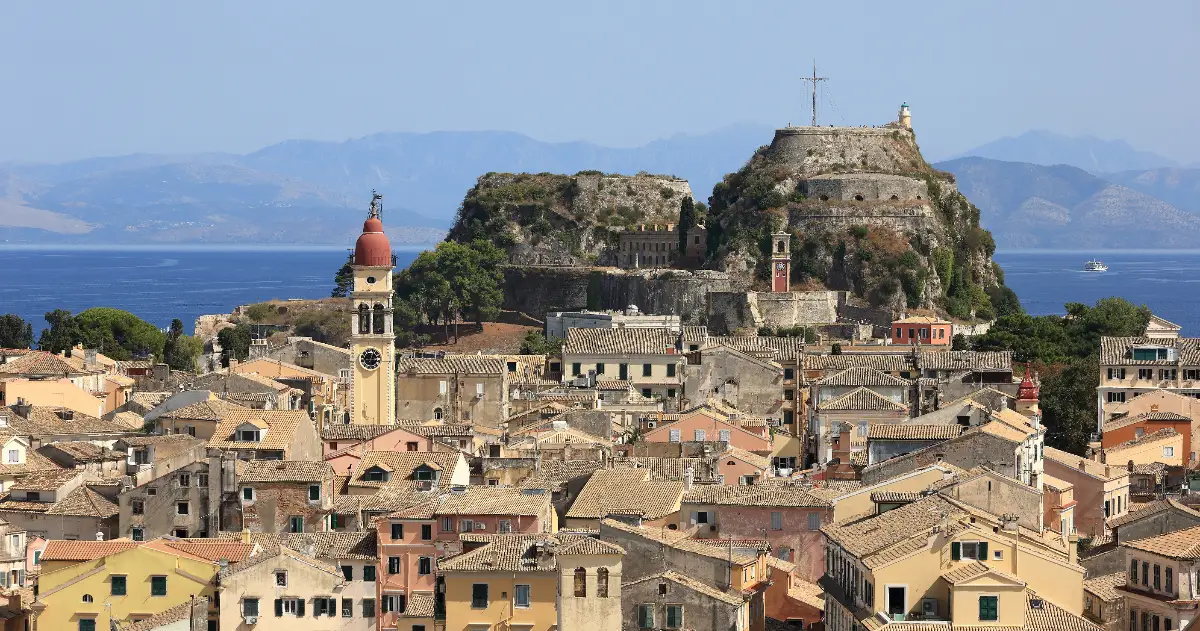
Corfu is a Greek island, but not the one on the postcard. It sits in the Ionian Sea off the country’s northwest coast, facing Albania and Italy rather than the Aegean, it is the greenest of Greece’s famous islands, and its UNESCO-listed Old Town was built under Venetian, French and British rule, with not a whitewashed dome in sight.
Those layers are not a brochure line. Venice held the island for four centuries and left two fortresses and a tangle of tall alleys the locals call kantounia; the French added the Liston, an arcaded promenade beside the vast Spianada square; the British governed for half a century and left cricket on that same square, plus a local ginger beer called tsitsibira that cafes still pour. The Old Town section below cashes each of those in.
The island’s shape drives every decision that follows. The north is mountainous, rising to Mt Pantokrator at 906 m; the south runs flat and low-key down to a party strip at its very tip. The east coast faces the mainland across a narrow, sheltered channel, so its water sits calm; the west takes the open Ionian and gets the drama. A different sea from the Cyclades, different weather, a different history, and, as you are about to see, a completely different way to arrive.
How many days Corfu actually needs
Four to five days is the honest sweet spot: the Old Town without rushing, one full coast, and a boat or inland day. Two or three days covers the town and a nearby beach at a push; a week adds the second coast and a Paxos day trip.
Here is what each length buys. Two to three days works when Corfu is one leg of a bigger trip: the Old Town, a swim at a nearby east-coast bay, and little margin for anything else. Four to five days is where the island opens up: town at your own pace, the whole northeast or the whole northwest, and a day on a boat or up Pantokrator. Seven days means you stop choosing between coasts and simply have both, with Paxos on top.
One honest note for package travelers: a north-coast resort week is its own good trip, and nobody needs permission to spend it by the pool. The case for extra days, or for leaving the resort at all, is the Old Town after the day-trippers drain out, and the coast you did not book. Those are the two things a sunbed cannot show you.
Getting to Corfu: fly in, or cross from Igoumenitsa
Start with the correction that saves the most planning time: Corfu’s sea link is a mainland crossing from Igoumenitsa in the northwest, not a long sailing out of Piraeus. Searching for an Athens boat is the wrong search, and it is the one that costs people an afternoon. The Igoumenitsa crossing takes roughly an hour and a quarter to an hour and a half, runs year-round with Kerkyra Lines and Kerkyra Seaways, and has a secondary route to Lefkimmi in the island’s south. Take current times from the operators.
So the real decision is air versus overland, and flying wins for almost everyone. Corfu International Airport “Ioannis Kapodistrias” (CFU) sits just south of Corfu Town, and the run into town is one of the shortest in Greece. The Athens flight takes about an hour, and from roughly April to October seasonal directs connect CFU with cities across the UK and Europe, so most visitors never touch Athens at all. A single-island Corfu week is the clearest case going for a seasonal nonstop, as the flights to Greece guide argues.
| Route from Athens | Roughly | Choose it if |
|---|---|---|
| Fly (ATH→CFU) | About 1 h in the air; the airport is just south of town | Almost everyone; time matters |
| Overland + ferry (via Igoumenitsa) | Roughly 4.5 h bus or drive, then a crossing of about an hour and a quarter to an hour and a half, year-round | You have a car, or you are already in western Greece |
One line of texture: Corfu also connects by sea to Saranda in Albania and to Italian ports, which is why it works as the first or last stop of a bigger Mediterranean route. Operators and seasons on those routes change, so check before you plan around one. Crossing mechanics live in the Greek island ferries guide.
Getting around: buses trace the coast, a car opens the island
The rule: base in Corfu Town without a car and you can still have a good trip, built from the town itself, the busy east-coast resorts on the local buses, and a boat day. Rent a car the moment you want Paleokastritsa, the northwest capes, Pantokrator or the inland villages, because the bus network thins out fast beyond the main corridors.
Every guide worth reading lands on that same verdict, and the forums agree: public transport covers the Corfu Town and east-coast runs and little else. The car is not for the town, where parking is a chore and the lanes belong to feet; it is for the island.
One practical note on the driving itself: the panoramic routes earn their name with mountain bends in the north and village lanes barely wider than your mirrors, so read the road rather than the map app. The wider mechanics, from rentals to fuel, are in getting around Greece.
Where to base: Corfu Town, the two north coasts, or Kavos on purpose
The base decision on Corfu is really a coast decision, and it shapes the trip more than any hotel pick will.
Corfu Town is the UNESCO base: walkable, lived-in year-round, the best choice without a car, and the only base with the island’s history on your doorstep at breakfast. The trade is that a proper beach means a bus or a boat.
The northeast coast, from Dassia, Gouvia and Ypsos up to Kalami and Kassiopi, faces the narrow channel towards the mainland rather than the open Ionian, and it is bay after bay rather than exposed coast. That geography is why the villas and the family resorts are here, with an upmarket-British character in its northern coves. What any given bay is doing on any given day is the beach’s own business rather than ours, and families base here for the shape of the coast.
The northwest, meaning Paleokastritsa, Agios Georgios Pagon and Sidari, is the drama: cliff-backed coves, monastery views and the island’s sunsets. It wants a car, and its open-Ionian water runs cooler than the east’s; Paleokastritsa’s has a reputation for being bracing even in August. Couples who rate scenery over convenience base here, or take a boutique stay in Corfu Town.
Kavos, at the far southern tip, is a British 18-25 party strip: cheap, loud in season and quiet by day. It is a base you choose on purpose because the strip is the trip; the south section below says the rest.
| Base | Vibe | Best for | Trade-off |
|---|---|---|---|
| Corfu Town | Historic, walkable, year-round | First-timers, no-car trips | Beaches need a bus or boat |
| Northeast coast | Channel-facing, bay after bay, villa country | Families, resort weeks | Less drama than the west |
| Northwest coast | Cliffs, coves, sunsets | Couples, scenery-first | Needs a car; cooler water |
| Kavos | Party strip | 18-25 groups, nights out | You chose the strip, not the island |
Which hotel, in whichever of these you pick, is the next decision down; where to stay in Corfu breaks that one out area by area.
Corfu Old Town: Venetian streets, a French arcade, British cricket
The Old Town is the un-Cycladic claim made solid. Four centuries of Venetian rule, ending at the close of the eighteenth century, built the Old Fortress on its eastern promontory, the New Fortress above the harbour, and the kantounia, the tall Italian-feeling alley grid between them. The French added the Liston, the arcade where the town takes its evening coffee. Britain governed through the first half of the nineteenth century, until union with Greece in 1864, and left the Spianada, where local teams still play cricket, along with tsitsibira and a taste for palaces. The Old Town is on the UNESCO World Heritage List.
The living details are half the pleasure. The church of Agios Spyridon holds the relics of the island’s patron saint, which is why so many Corfiot men answer to Spyros, and kumquat liqueur, the local citrus oddity, glows orange in the shop windows along the lanes.
Two add-ons round out an Old Town day. Kanoni, on the peninsula just south of town, looks down on the Vlacherna monastery and Mouse Island, the most photographed water on Corfu. And at Gastouri, a short drive further, stands the Achilleion, the palace built for Empress Elisabeth of Austria, Sisi, and later owned by Kaiser Wilhelm II. The palace has been under a long restoration, with the gardens and grounds open while interior works run, so check the official site for current status, hours and tickets before you build a half-day around it.
One rhythm to know: the Old Town sits close enough to the cruise port to reach on foot, so its lanes fill with ship and day-tour crowds through the middle of a season day and empty again by evening. Staying in town buys you the calm hours. The Greece map places everything named on this page in one view.
The north: Paleokastritsa, Kassiopi and the Durrell coast
The north is why you came, and it splits neatly along the ridge. On the west side, Paleokastritsa stacks green headlands over a string of coves, with its clifftop monastery above the bays and the Byzantine castle of Angelokastro higher still. Beyond it, Porto Timoni’s double beach hangs below the village of Afionas, and the island’s top corner runs through the white cliffs of Cape Drastis, the sandstone channels of Canal d’Amour at Sidari, and the sunset cliffs at Loggas. Which of those deserves your swim time is worked through in the best beaches in Corfu; this section is about what each coast is for.
The sheltered northeast is a different island. Kassiopi is its harbour village, pebble coves run down the coastline, and at Kalami the White House still stands at the head of the bay: Lawrence Durrell lived in it from 1936, Prospero’s Cell is the book that came out of it, and the building has since become a taverna below with the upper floor let as a villa. His brother Gerald’s My Family and Other Animals, and the ITV series it inspired, keep sending British travelers down this coast, and the calm channel water is exactly as the books describe it.
The north also holds the island’s walking. The Corfu Trail runs the island’s full length, roughly 150-180 km depending on the variant you count, and Mt Pantokrator, the 906 m summit, is reachable by road or on waymarked trails, with views across the strait to Albania from the top.
The south: Kavos is a choice, and the rest is the quiet half
The south gets dismissed too easily, sometimes by locals. It is flatter and less photographed than the north, and it has no mountain drama at all, but that is not the same as having no point: the beaches run longer, the crowds run thinner, and travelers who want space over spectacle do better here than the hearsay suggests. The dune-backed sand around Lake Korission, at Issos and Halikounas, runs wide and stays empty in a way little else on the island manages.
Kavos, at the very tip, deserves a straight answer rather than a sneer. It is a British 18-25 party strip: cheap, loud in season, asleep by day, and ten minutes north of it the coast is quiet again. If the strip is your trip, base there on purpose and it delivers exactly what it promises; it is a base you choose, not the island’s character. The planning detail, and how it compares with Laganas and Malia, lives on the Greece party islands page.
For everyone else, the south is a day out, not a write-off, and its sand ranks with the rest in the best beaches in Corfu.
When to go, and the rain that keeps Corfu green
May, June and September are the months to aim for: green hills, warm swimmable sea and room to move. July and August bring peak heat, crowds and prices, but the water stays calm, because the meltemi, the wind that chops the summer Aegean, barely reaches the Ionian.
The green is bought with rain, and it is honest to say so. The Ionian is the wet side of Greece, its winters are genuinely wet, and that is exactly why olive groves run to the waterline here while the Cyclades turn dust-brown by July. If guaranteed bone-dry heat is the brief, the Cyclades answer it; if you want green over dust, Corfu does. Every number behind that trade, from rainfall to sea temperature, lives on the Greece weather by month page.
The season in one strip:
- April–May: the island at its greenest; the sea is still waking up, the paths and villages are at their best.
- June: warm sea, long days, crowds still sane.
- July-August: peak everything; the Ionian is out of the meltemi’s path, and the afternoons are humid and still enough to feel hotter than the numbers say.
- September: the all-round winner: warm sea, thinning crowds, softer prices.
- October: a gamble that often pays; rain risk rises and seasonal places begin to close.
- Winter: wet, green and quiet; Corfu Town stays lived-in while the resorts sleep.
That last line matters. Unlike the small Cyclades, Corfu has a real year-round town, so an off-season visit holds up. Where this window sits against the rest of the country is the job of the best time to visit Greece.
Where Corfu fits: Ionian day-hops, not a Cyclades stop
The question this page gets asked most, answered plainly: Corfu to Santorini is a connection through Athens rather than a hop, by air or by sea, and you should budget about half a day door to door for it. The reason is the map: the Peloponnese sits between the two seas, and the Ionian and Aegean ferry networks never meet. The same answer holds in reverse, from Santorini to Corfu.
What does work from Corfu is the Ionian itself. Paxos, with Antipaxos beside it, is the classic day trip by boat in season; schedules and operators change year to year, so check current timetables rather than an old blog post, and Paxos has its own page. Saranda in Albania is the offbeat international hop, on crossings whose operators and season are worth confirming before you count on one. And southward runs the whole chain, Lefkada, Ithaca, Kefalonia, Zakynthos, though the links between them are seasonal and thinner than the Cyclades grid; the Ionian islands page maps the group, and the island hopping guide explains the network honestly.
So plan Corfu one of three ways: a one-island week on a seasonal nonstop, the opening or closing leg of an Ionian route, or the green half of a fly-connected pairing with the Cyclades. Honeymooners weighing it against the caldera are trading the icon shot for calm green water, a decision the Greece honeymoon guide settles properly. And when you are ready to place Corfu inside the bigger trip, start from all our Greece destinations.
Corfu FAQ
Is Corfu worth visiting?
Yes, if the Greece you want is green, calm-watered and layered with history: a Venetian UNESCO Old Town, sheltered swimmable bays and a real year-round town. It is the wrong island only if your Greece means whitewashed Cycladic villages and guaranteed bone-dry heat; the wetter climate behind the green is quantified in Greece weather by month.
How many days do you need in Corfu?
Four to five days is the sweet spot: the Old Town, one full coast and a boat or inland day. Two or three days covers the town plus a nearby beach at a rush, and a week adds the second coast and a Paxos day trip without hurrying anything.
How do you get to Corfu from Athens?
Fly: it is about an hour from Athens to Corfu’s Kapodistrias airport (CFU), which sits just south of Corfu Town. By sea the route is a mainland one, not a Piraeus one: a roughly four-and-a-half-hour bus or drive to Igoumenitsa, then a crossing of about an hour and a quarter to an hour and a half that runs year-round. The Greek island ferries guide has the detail.
Can you travel from Corfu to Santorini?
Yes, but only via Athens: no direct ferry and no direct flight connects them, because Corfu is Ionian and Santorini is Aegean, with the Peloponnese in between. Fly Corfu to Athens to Santorini and plan about half a day door to door. The same holds in reverse; the far end is covered on Santorini.
What is Corfu famous for?
Its UNESCO Old Town, with Venetian fortresses, the French-built Liston and a British-era cricket ground; the green, mountainous north and Paleokastritsa’s coves; the Durrells’ Corfu at Kalami; the Achilleion palace; Corfiot dishes like sofrito, pastitsada and bourdeto; and, at the far southern tip, the Kavos party strip.
Is Corfu good for families?
Yes, and the northeast coast is the reason: Dassia, Gouvia and Ypsos sit on the narrow channel towards the mainland rather than on open sea, which is why the family resorts cluster there. Corfu is also an Ionian island, so it is out of the meltemi’s path, and it does not get the August wind that shapes a Cyclades trip. What a particular beach is doing on the day you are standing on it is the beach’s own business, so read the flags and the local advice rather than a guide. Kavos in the far south is the one area to skip with kids. Wider planning sits in Greece with kids.
What can you do in Corfu from a cruise ship?
The Old Town is the shore day: it sits within reach of the port on foot, and the fortresses, the Liston and the kantounia lanes fill a morning. With more hours, a taxi adds the Kanoni viewpoint over Mouse Island, or the Achilleion’s gardens, checking the palace’s restoration status first. The wider framing is in Greek islands by cruise.
Plan by category
The Corfu guides
6 guides, each scoped to a decision you actually have to make.
 Attractions
Things to do
See the attractions → Hotels
Where to stay
Compare the areas → Beaches
The beaches
See the beaches → Restaurants
Where to eat
See where to eat →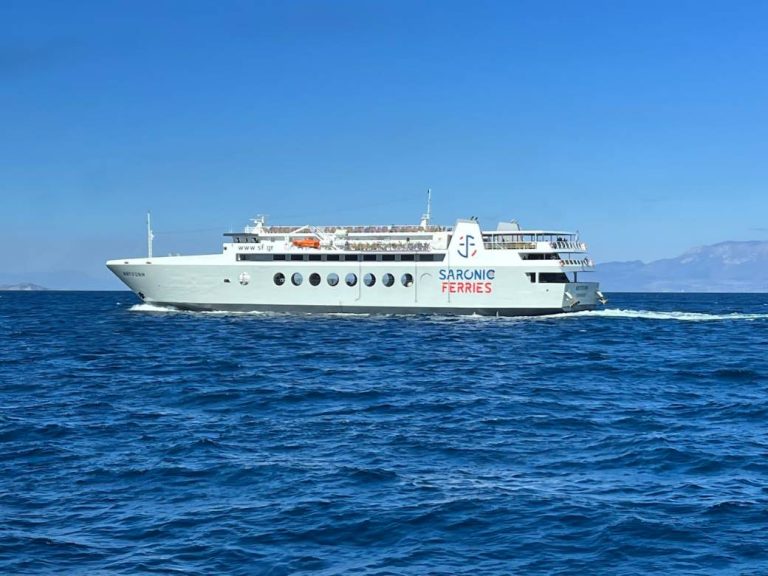 Itinerary
Day by day
See the itinerary → Day trips
Day trips
See the day trips →
Booking
We sell nothing and book nothing for you. Every guide on this page tells you how to arrange each piece yourself - which ferry operator, when to book, what to prebook and what to leave loose.