Naxos
Beaches in Naxos
Naxos does not really have beaches in the plural. It has one long west coast that changes name as it runs south, and once you read it that way the planning problem mostly solves itself.
The order matters more than the names. Start at Naxos Town, head south, and the coast sorts into a gradient: shallowest, most organised and easiest to reach at the top, wilder and windier the further down you go. Choose your position on that gradient and you have chosen your beach.
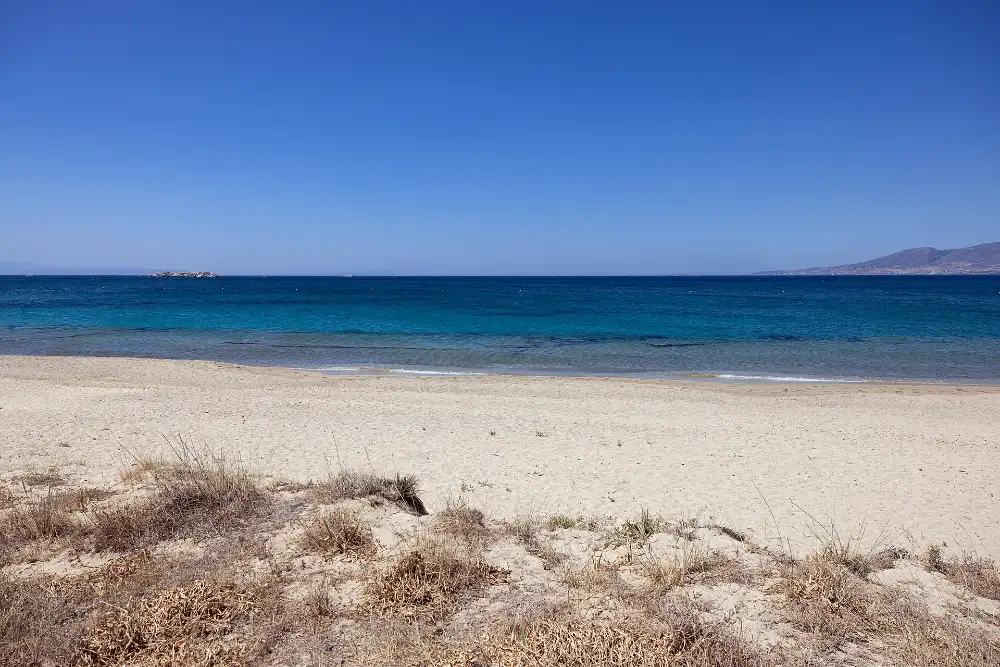
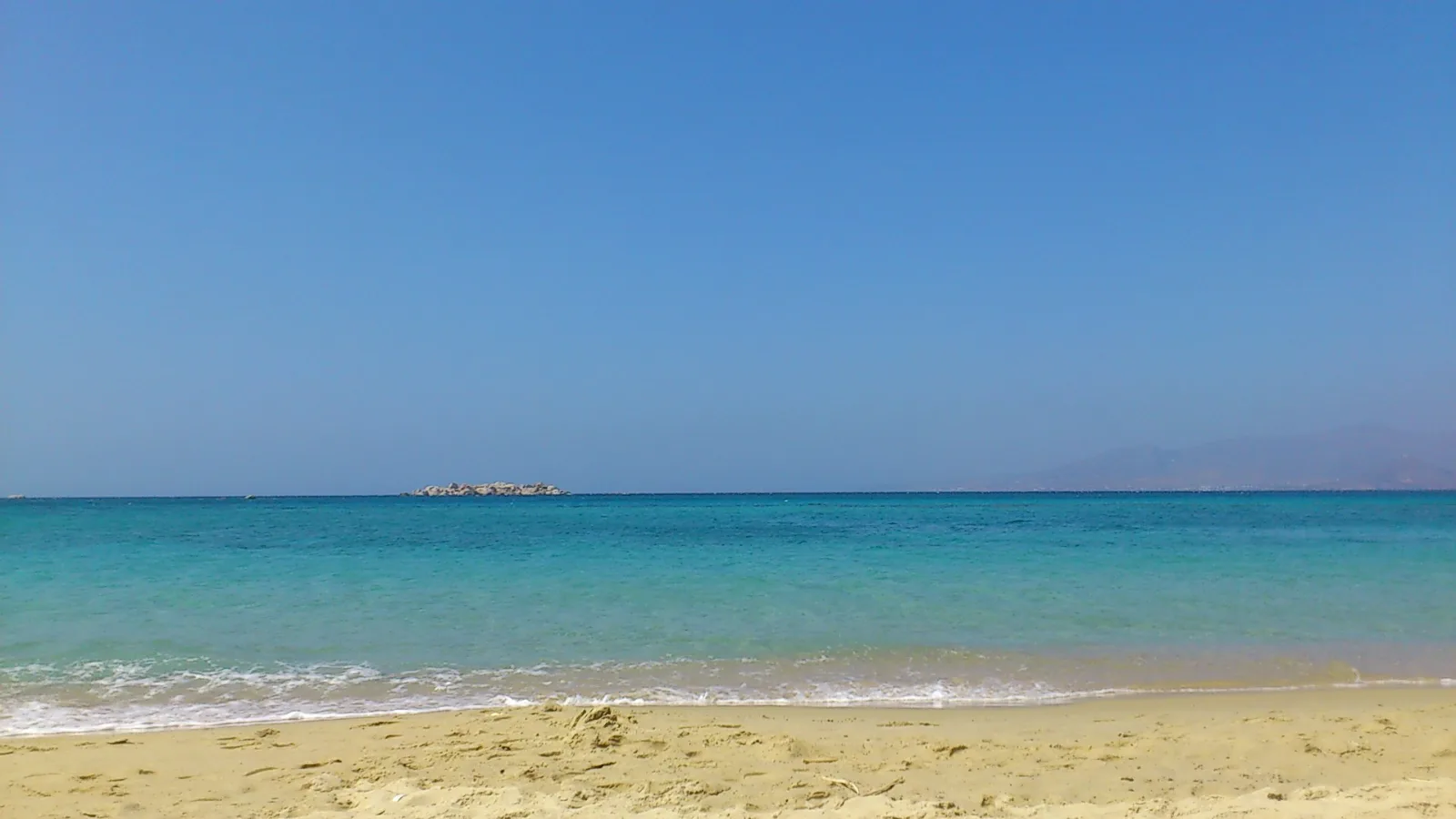
The town end. Agios Georgios begins at the southern edge of the Chora, close enough that you can finish a swim and be back among the Kastro lanes without transport. It shelves gently, so the shallow water runs a long way out, which is why families gather on it and why it is the default when you arrive with no plan. It is also the town’s own beach, with everything that implies in August.
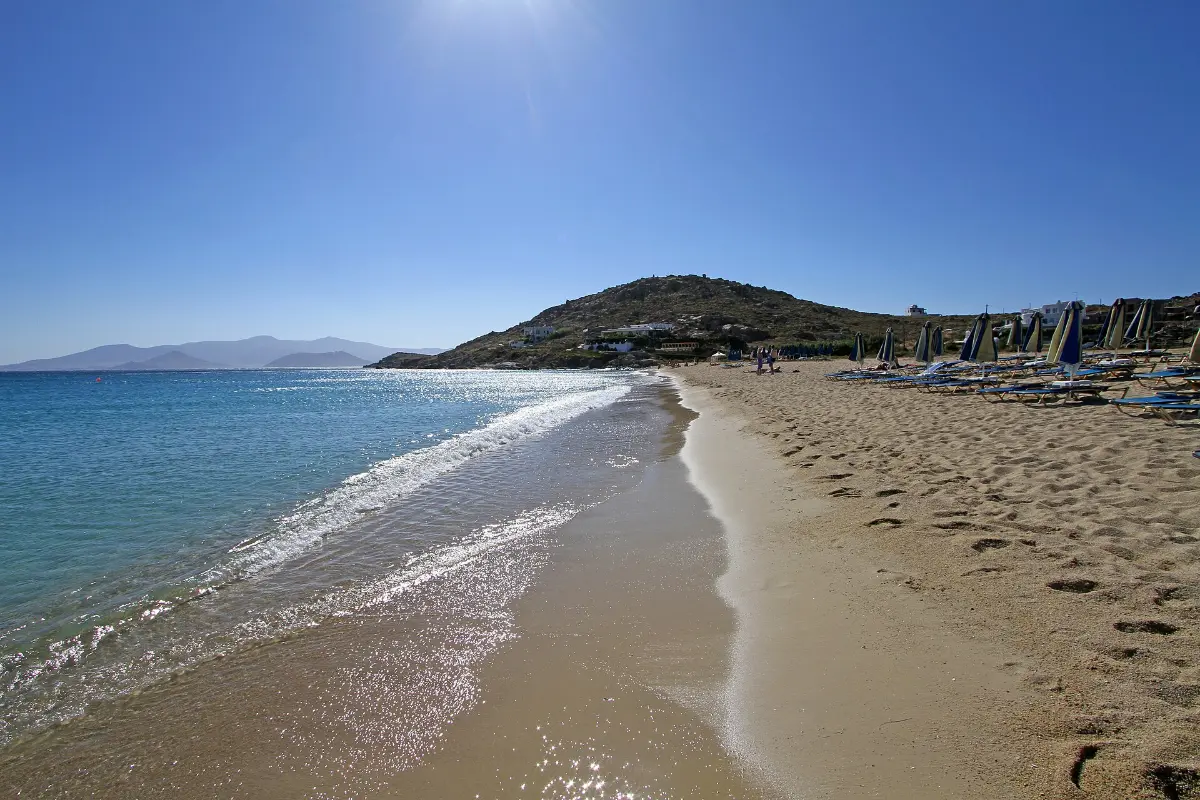
The organised middle. Agios Prokopios and Agia Anna are one run of pale sand divided by a low rocky point and a small fishing harbour, a few kilometres down the coast and on the west-coast bus route. This is where the umbrellas, the tavernas and the rooms are thickest. If you want a day where lunch, shade and a lift home are all solved before you sit down, it is here.
The long one. Plaka picks up where Agia Anna stops and runs for kilometres behind a line of dunes. It is organised at its northern end and progressively less so as you walk, and it is long enough that getting away from people is a plan rather than a hope.
Where the wind becomes the point. At Mikri Vigla a rocky headland splits the beach in two, and the two halves get different days out of the same weather. The northern side takes the meltemi as it accelerates through the strait between Naxos and Paros, which is why the kite and windsurf schools sit on that side. The southern side lies in the lee of the same rock.
The far south. Kastraki and Alyko close the sequence: longer to reach, thinner on facilities, and backed near Alyko by the cedar woods that grow straight out of the dunes. This is your-own-wheels territory, and the reason people chasing the quietest end of the Greek islands drive past the first four beaches without stopping.
The catch, and it is a real one. The same wind that makes Mikri Vigla one of the better kite spots in the Cyclades can take a beach day apart everywhere else on the coast. A meltemi week means blown sand, chop on the water and umbrellas that will not stay put, and in a forecast it looks like nothing worse than a breeze. So do not book a beach and hope. Check the wind in the morning and use the gradient: the town end and the sheltered flanks of the headlands hold up better than the open middle, and a bad day at Plaka can be a good day at Agios Georgios.
One more thing the gradient decides, which is easy to miss until you are standing there. Facilities thin out as you go south, and so does shade. The northern beaches hand you an umbrella; the southern ones expect you to have brought one.
What this page will not do is print sunbed prices, bus times or the name of whoever is running the beach bar this season. Those change every year, and a page built on them is wrong by the next summer. The Naxos guide covers how the bus and the rental-car decision work across the island. The pages below cover the ground itself.