The short answer
For most first trips, the best Greek island for first time visitors is Naxos: the easiest all-rounder, with sandy beaches, real villages, good food, simple logistics and no sticker shock. Pair it with Santorini if you want the postcard view.
Then let the shape of your trip decide the rest. This page routes seven first-timer islands by what you actually came for - the iconic view, an easy all-rounder, everything in one place, ancient sites with a beach, beaches with a night out, green and easy-going, or a trip with kids.
One honest thing up front: Santorini is the island everyone pictures, but it is expensive, crowded in high summer, and its beaches are volcanic pebble rather than soft sand. That makes it the iconic choice, not automatically the easy one, so it is not where every first-timer should start.
Start with Naxos for an easy, good-value first island. Add Santorini if the caldera view is the reason you are going. Choose Crete instead if you want one island and no ferries.
At a glance: the first-trip island decider
The whole decision fits in one table. Each row is an island, what it is best for, and the one catch worth knowing before you book - the column the glossy listicles tend to leave out.
| Island | Pick this if | The catch | Go deeper |
|---|---|---|---|
| Naxos | You want one easy, good-value, well-rounded first island | Quieter name than the postcard islands, which is mostly the point | Naxos |
| Santorini | The caldera view and the romance are the whole point | Pricey, crowded in high summer, beaches are volcanic pebble | Santorini |
| Crete | You want everything on one island and no ferry days | Large; wants a week and a hire car to do it justice | Crete |
| Rhodes | You want ancient sites plus a beach week, with flights in | Spread out, and very hot at the height of summer | Rhodes |
| Paros | You want Naxos’s ease with a little more buzz | Busier and a touch pricier than Naxos in peak season | Paros |
| Mykonos | Beaches by day and a real night out are the point | Expensive and party-led, not a quiet or budget trip | Mykonos |
| Corfu | You want a green, gentler, non-Cyclades Greece | Its own Ionian ferry system, not a Santorini add-on | Corfu |
In one line: the easiest all-rounder is Naxos, the iconic view is Santorini, and everything in one place is Crete - which is the short version of which Greek island to visit first for most people.
The full island catalogue, every group and not just the first-timer picks, lives on the Greek islands index. Decide your first trip here; browse everything there.
The iconic first trip: Santorini and a Cyclades hop
Santorini is the Greece on the postcard, and if the view is the whole point of the trip, it is the one to book. The island is the rim of a flooded volcano, so its main villages, Fira and Oia, sit along a cliff hundreds of metres above the water, facing the caldera and the sunset. For scenery and romance, no single Greek island matches it, and for a lot of first-timers that settles the question before any trade-off is weighed.
Weigh the trade-offs anyway. Santorini is among Greece’s priciest islands, the lanes of Oia are genuinely shoulder-to-shoulder at the sunset in July and August, and its beaches are volcanic black and red pebble on the east and south coasts at Perissa and Kamari - dramatic to look at, and a different swim day from the soft-sand bay many first-timers are picturing. That is the ground as it is, not a mark against the island.
So the verdict is conditional. Pick Santorini if the view and the romance are the reason you are going and you can accept the cost and the crowds, and pair it with an easier island so the whole trip is not lived on a cliff edge. Start with Santorini, set honest expectations on its volcanic beaches, and sequence the pairing with a Cyclades island-hopping route. If your real choice is Santorini or Mykonos, compare them here rather than deciding it in this section.
The easy all-rounder: Naxos, with Paros close behind
This is the pick to make when you do not yet know what to pick. Naxos gives first-timers the Greece they came for without the parts that overwhelm: long sandy beaches on the west coast at Agios Prokopios and Plaka, a real working port town in Chora with a Venetian castle above it, and green mountain villages behind, where the island grows its own food and pours its own wine. It is good value in a way the headline islands are not, and it sits in the middle of the Cyclades, so onward boats to Paros, Mykonos and Santorini are frequent. That makes it both a base you can settle into and a hub you can move on from, rather than a dead end.
The support for this is broad, not one blog’s opinion. The Greece specialists and the traveller forums land in the same place, naming Naxos the easiest all-round first island time after time. We are describing that pattern, not quoting a figure.
Paros sits right beside it as the near-twin. It is a touch more polished and social, equally easy to reach and get around, and a little livelier in the evening - the pick if you want more buzz than Naxos without the intensity or the cost of Mykonos.
Pick Naxos if you want one easy, well-rounded, good-value first island you will not outgrow in three days. Pick Paros for the same ease with a bit more energy. Go deeper on Naxos and its beaches, or on Paros and its beaches.
Everything in one place: Crete, if you would rather not ferry-hop
Crete is the first trip for people who want variety without repacking every three nights. It is Greece’s largest island, big enough to feel like a whole country rather than a stop, so you base yourself and drive instead of island-hopping. In a week you can string together Venetian harbour towns like Chania, the Minoan palace at Knossos, headline beaches at Elafonisi and Balos in the far west, and a gorge walk in the mountains, all without boarding a ferry between them.
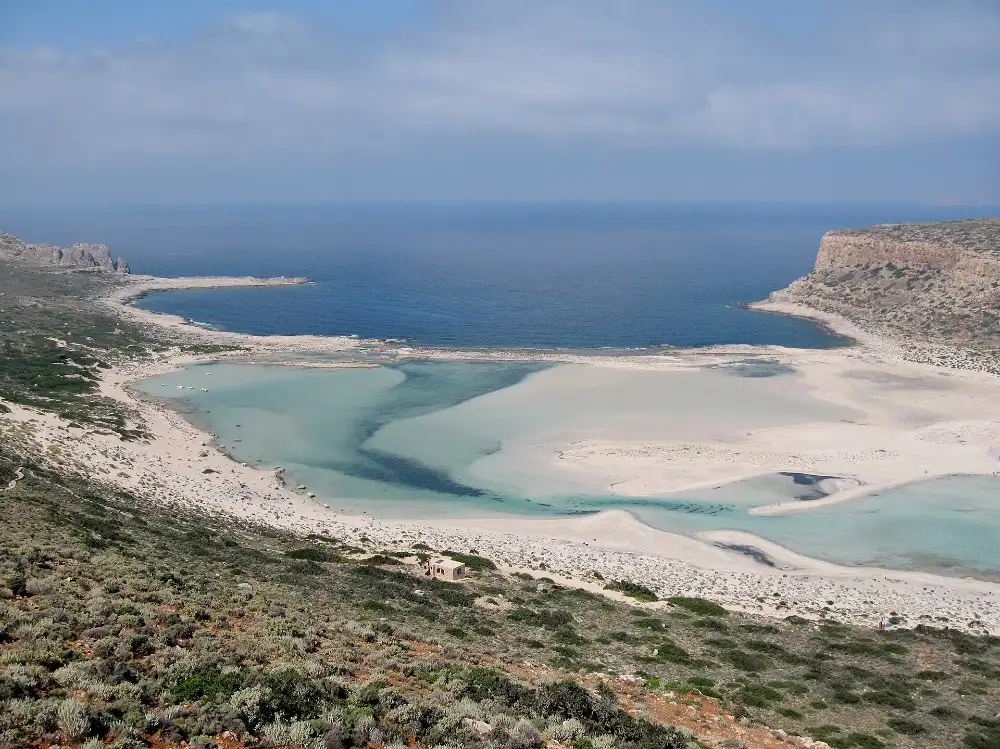
The catch is scale. Crete rewards a week or more and it really wants a hire car; a two-night taste of it misses the point of an island this size, and you would spend the trip driving past the things you came for. That is a description of how big Crete is, not a rule we invented - the same steer runs through every honest guide to the island, and it is the reason many locals and long-stay travellers send a first-timer here for a whole trip rather than a hop.
Pick Crete if you have a week or more, want range over a single postcard, and would rather drive one island than sail between three. Go deeper on Crete, its beaches and things to do, and see how the days fall into place with a Crete itinerary. Whether you need a car anywhere in Greece is a broader question than this page settles; here, on Crete, the answer is yes.
Ancient sites and a beach holiday: Rhodes
Rhodes suits the traveller who wants real history to walk through with a beach week attached. Its medieval Old Town is one of the best-preserved in Europe and a UNESCO World Heritage Site, and you can sleep inside the walls; down the east coast, the acropolis above Lindos looks over swimmable bays, and the resort strips give a straightforward beach holiday. This is the Dodecanese, not the Cyclades, so most people reach it by direct flight rather than the Athens ferry spine.
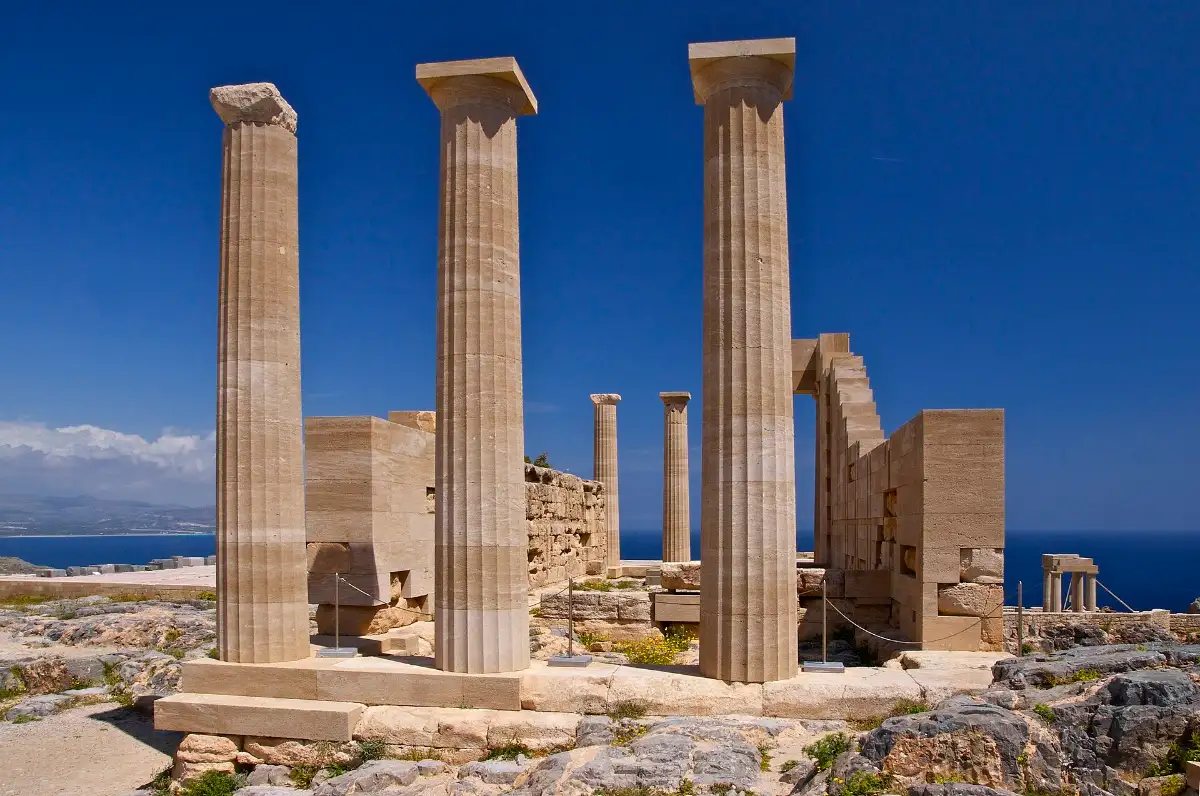
The catch is that Rhodes is large and spread out, so you will want a car or a planned pair of bases, it gets very hot at the height of summer, and the resort strips can feel package-built. The reward is the split stay, not the strip.
Pick Rhodes if you want ancient sites and a beach holiday on one island with simple flights in, and do the split - the Old Town first, then the south - rather than staying put on a resort beach. Go deeper on Rhodes, what to see and its beaches. If your shortlist pairs it with nearby Kos, Kos vs Rhodes settles that one.
Beaches and a night out: Mykonos
Mykonos earns a first trip when sandy beaches by day and a real night out are the actual point, not a nice-to-have. It has the genuinely sandy, organised bays and the Mediterranean’s headline beach-club and nightlife scene, and its whitewashed main town is walkable and stylish. If the trip is built around swimming, tanning and going out, this is the one to lead with.
The catch is money and mood. Mykonos is expensive, the beach clubs and dining rooms are where the spend runs away, and it is at its most crowded and priciest in peak summer - not the island for a quiet or budget first trip. Say that out loud before you book.
Pick Mykonos if beaches plus nightlife are the reason you are going; otherwise Naxos gives you the same kind of sandy beaches for less. Go deeper on Mykonos and its beaches, or settle a straight Santorini vs Mykonos call before you commit.
Green and easy-going: Corfu
Corfu is the first trip for a softer, greener Greece and a different feel from the Cyclades. It is Ionian, not Cycladic: lush and wooded rather than white-and-blue, with Venetian, French and British layers stacked into its old town and an unhurried pace to match. It is a common first Greek island for travellers arriving from Italy or western Europe, because it sits on the west side of the country with its own direct flights.
The catch is that Corfu runs on a separate ferry system from the Cyclades, so you do not combine it with Santorini on a short trip, and parts of the coast are heavily developed resort territory - choose your base with care.
Pick Corfu if you want green landscapes, a gentler pace and a non-Cyclades feel, or if you are flying in from the west rather than through Athens. Go deeper on Corfu, and see how it fits its group on the Ionian islands page.
A first trip with kids
With children, the first-island question is really about sand, shallow water and short travel days, and that points straight back to the easy all-rounders rather than the postcard. Naxos and Paros lead here: long sandy beaches that shelve gently, walkable towns, and none of the logistical friction that turns a family day into a slog. Crete is the strong alternative if you have a week and want a base-and-drive holiday with room for everyone.
Santorini is the hardest first island with small children, and geography is why: the cliffs, the stepped villages and the pebble beaches make the everyday parts, getting to the water and walking to dinner, more work with a pushchair or a toddler than they are on a flat, sandy island. That describes the terrain, not your family.
This page only picks the island. The full family plan - which ages suit what, where to base, what to do on a rainy afternoon - lives on the Greece with kids guide, so name your island here and carry on planning there.
How to choose: days, season, beaches or sights, and getting there
Four questions settle the choice faster than any ranking. Answer them in order and the island usually names itself.
- How many days you have. A first trip wants roughly a week or more, and a useful rule of thumb is about one island per three nights - so a week is Athens plus one or two islands, not four. A ferry day eats a half-day at each end, which is why fewer places done well beats a blur of ports. For the pace and a route you can copy, see how island hopping actually works and a ready 7-day or 10-day plan.
- When you are going. Late May into mid June and September into early October give warm days, swimmable sea and thinner crowds than July and August, when the popular islands are at their hottest, busiest and priciest. The month-by-month detail is on the best time to visit Greece.
- Beaches or sights. If soft-sand swimming matters most, lean Naxos, Paros, Crete or Mykonos. If scenery and romance matter most, Santorini. If ancient sites matter most, Rhodes or Crete.
- How you are getting there. Most first trips fly into Athens and take a ferry, or fly direct to the bigger islands - Crete, Rhodes, Corfu, Santorini and Mykonos - in the summer season. The ferry mechanics are on Greek island ferries, and your arrival options on flights to Greece.
Work down those four and the shortlist collapses to one or two islands, which is the whole job of this page. If a week feels like a lot to plan around one island, a 14-day route shows how much room a longer first trip really buys.
The classic first-timer route
If you would rather have the decision made for you, the classic first trip pairs the easy all-rounder with the postcard: a couple of nights in Athens, then down the Cyclades to Naxos, or Paros, for the sandy, easy Greece, and on to Santorini to finish on the view. Because it flies out the far end, the boats only ever carry you forward and you never sail back over water you have already crossed. The order is an editorial call - let your onward flights decide it.
The day-by-day belongs elsewhere, so pick it up ready-made: a 7-day Greece route, a 10-day route, a sequenced Cyclades hop, or build your own from the itineraries hub. And the alternative still stands: if you would rather not move at all, Crete on its own for a week is the no-ferry version of the same first trip.
Our pick for a first trip
Match the island to the trip you actually want and the choice stops being a list of two hundred and starts being a short one. For most first-timers the low-risk, high-reward default is Naxos, with Santorini added for the view if the postcard matters. If you want one island and no ferries, it is Crete. If beaches and a night out are the real reason you are going, it is Mykonos. Each of those is a decision you can defend, because you can name the condition it turns on.
From here, go deep on Naxos, Santorini or Crete, or browse the whole catalogue on the Greek islands hub. And if what you are really after is a quieter first trip than the popular names offer, the quietest Greek islands points the other way.
Quick answers
Which Greek island should you visit first?
For most first trips, start with Naxos: the easiest all-round island, with sandy beaches, real villages, good food and simple logistics. Add Santorini if you want the iconic view, or choose Crete instead if you would rather stay on one island and not ferry-hop. Naxos wins the first trip because it is easier, cheaper and less crowded than the postcard islands, with better swimming than Santorini. The full island catalogue lives on the Greek islands hub.
Is Santorini a good island for first-time visitors?
Yes for the view and the romance, but go in with eyes open: Santorini is among Greece’s priciest islands, mobbed at the Oia sunset in summer, and its beaches are volcanic pebble rather than soft sand. It is the iconic first island, not the easiest one. Pair it with an easier island like Naxos or Paros rather than making it the whole trip, and consider the shoulder months for fewer crowds. Go deeper on Santorini, or weigh it against Mykonos on the Santorini vs Mykonos page.
How many days do you need in Greece for a first trip?
Roughly a week is the practical minimum for a first island trip, and about 10 days lets you add a second island or a couple of nights in Athens without rushing. A useful rule of thumb is one island per three nights. The mechanism behind it is simple: a ferry day costs you a half-day at each end, so a few islands done well beats a blur of half-seen ports. Sort the pace on how island hopping works and a ready 7-day route.
Santorini or Naxos for a first trip?
Naxos for an easier, cheaper, more well-rounded first island with real swimming beaches; Santorini for the iconic view and the romance if you can accept the cost and the crowds. The split is simple - all-round ease against postcard scenery. The classic first trip does both, Naxos first and Santorini to finish. Line them up on Naxos and Santorini, and sequence the pairing with a Cyclades hop.
What is the best Greek island for a first trip with kids?
For a first trip with children, the sandy, shallow, low-logistics islands win: Naxos and Paros first, with Crete strong if you have a week and want a base-and-drive holiday. Santorini is the hardest with small kids, because of the cliffs, the steps and the pebble beaches. Name your island here, then plan the rest - ages, bases, what to do - on the Greece with kids guide.
Should a first-timer island-hop or stay on one island?
On a week, one or two islands done properly beats three or four half-seen. If you want variety without the packing, Crete on its own is the one-island answer; if you want the classic hop, keep it to two easy Cyclades stops linked by a single short ferry. The design rules - pace, order, which boats connect - are on the island hopping guide, and copyable routes on the itineraries hub.
When is the best time for a first trip to the Greek islands?
Late May into mid June and September into early October are the sweet spot: warm days, swimmable sea and thinner crowds than the July-to-August peak, when the popular islands are hottest, busiest and priciest. A shoulder-season recommendation is hard to get wrong; a temperature promise is easy to. The month-by-month detail is on the best time to visit Greece.