What two weeks buys that ten days can’t
Two weeks is the first Greece trip with room for a second act. A week gets you Athens and a taste of two islands; ten days is that same trip done unhurried; two weeks is the first length long enough to either go wide across the Cyclades or add a whole second region. This 14 day Greece itinerary spends that room on one thing done well rather than a longer list of stops: three nights in Athens with a real day trip, then a four-island Cyclades hop chosen for contrast, flown home from Santorini so the line never doubles back.
So take the honest answer first. Two weeks is enough for Athens plus a proper four-island Cyclades hop with real time on each, or for Athens plus two islands and a whole second region like Crete or the mainland. It is not enough to see all of Greece, and trying to is the two-week mistake.
The reason to resist a fifth and sixth island is arithmetic, not caution. Every stop you add spends most of a day on itself - the packing, the checkout, the wait at the port, the boarding, the crossing, the arrival, and another check-in at the far end. A calendar that reads “six islands in fourteen days” nets far less beach-and-town time than it promises, and the travelers who run that route come home describing ferry ramps. The two-week trap is the ten-day trap scaled up: a relay of one-night stands.
So spend the second act on one more thing done properly - a genuine fourth island, or a second region - never on two extra islands. That single rule runs the whole page. If a week is all you have, the seven-day route is Athens, Naxos and Santorini on one line; if you have ten days and would rather go slow than wide, the ten-day route adds a fourth island or a slower three. This is the roomier trip that keeps Athens and earns a second act, and the general question of how many islands is too many lives on the island-hopping guide.
The route at a glance: Athens and four islands, south and no backtrack
The canonical route runs one way south, so every ferry moves you forward and you never double back:
| Stop | Nights | Why it earns them | Fly |
|---|---|---|---|
| Athens | 3 | Arrival buffer, the Acropolis at opening, a full day out to Delphi or Cape Sounion | In (ATH) |
| Mykonos | 2 | The boat to Delos, the one sacred island nothing else on the route reaches | |
| Naxos | 3 | The biggest, most self-sufficient island: mountains and beaches both | |
| Milos | 3 | The volcanic change of scene, unlike anything else on the line | |
| Santorini | 3 | The caldera finale, and the airport you fly home from | Out (JTR) |
That table is the whole plan: a Greece itinerary 14 days long, about fourteen nights across five stops, a fortnight with both travel days counted. The line runs roughly north to south down the Cyclades, so each crossing carries you toward the next stop rather than back toward the last.
The move that makes it work is the open-jaw ticket. Buy a multi-city flight - into Athens (ATH), home from Santorini (JTR) - so your last morning is a caldera breakfast and a short flight rather than a ferry back to Piraeus to catch a plane. The honest caveat: long-haul nonstops, especially from North America, usually run only through Athens, so flying out of Santorini can mean a European connection on the way home. The open-jaw still saves the wasted day a return-to-Athens loop costs; it may just add a connection rather than a nonstop. How open-jaw tickets into Greece work covers the booking, and which islands have their own airport helps if you would rather end somewhere other than Santorini.
If your fourteen days include the flights and you want a strict twelve nights, drop a Mykonos night and one fourth-island night before you drop a whole stop. Losing a night makes one place slightly quicker; losing a stop costs a ferry and an entire island.
Athens: three nights and a day trip before the ferries take over
The extra days over a shorter trip land first in Athens, which finally earns three nights instead of a jet-lagged one-and-out. The arrival day is a write-off by design: land, drop your bags in Plaka or Koukaki, eat, sleep. One morning belongs to the Acropolis at opening, before it bakes and fills by mid-morning, and a timed entry is required year-round with the first slot the first to sell out. The third night is what the seven- and ten-day routes never have room for: a whole day out of the city.
That day is the cheapest second act of all. Delphi gives you the ancient oracle in its mountain amphitheatre, a real taste of the mainland most Cyclades routes skip; Cape Sounion trades the history for a cliff-edge temple at sunset over the Aegean. Either one is the buffer that a delayed long-haul eats into without costing you an island, which is the practical case for three Athens nights over two.
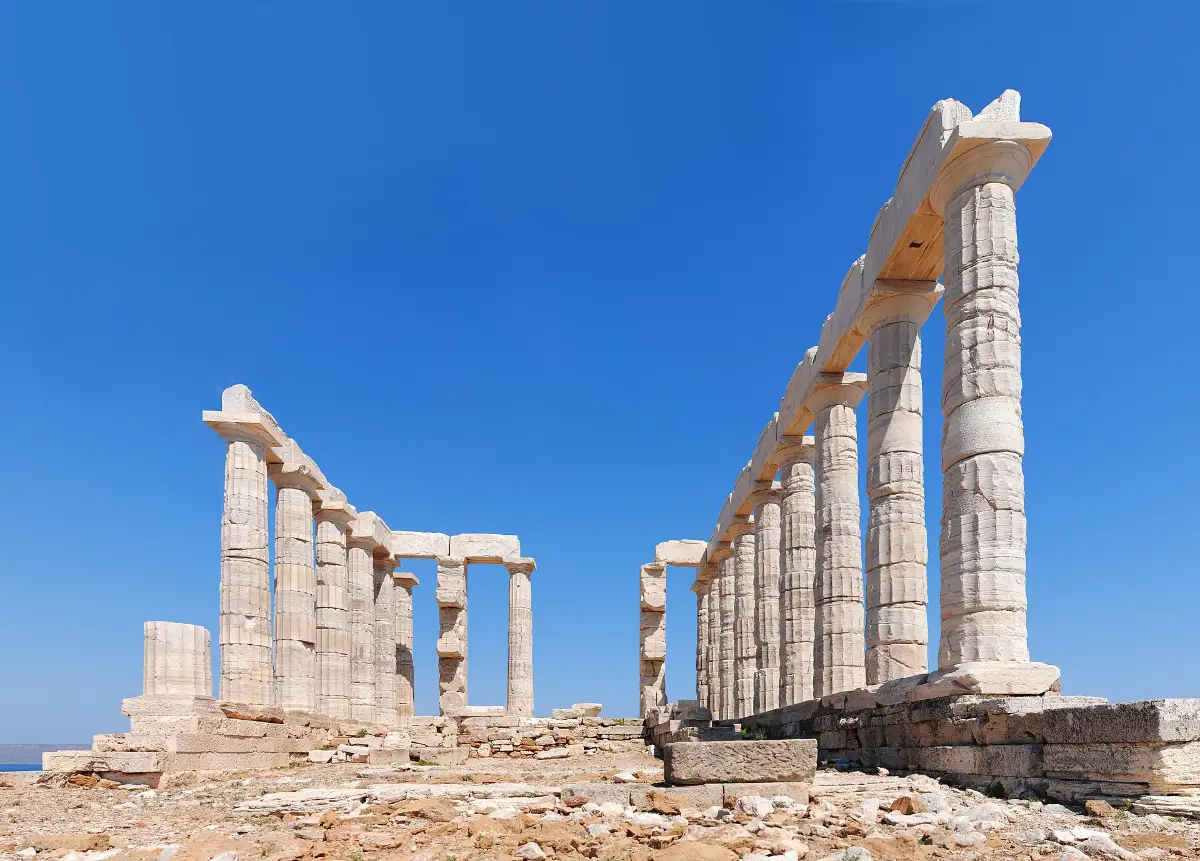
The in-city sights are the Athens pages’ job, not this one’s. Athens in two to three days has the neighbourhoods, the museums and the base decision, and timing and booking the Acropolis has the tickets. Book the timed entry and any guided day trip before you arrive, and check the current site hours close to your dates.
The Cyclades hop, chosen for contrast not repetition
Four islands over eleven nights only works if each one is a different Greece. Four similar central-Cyclades islands back to back is the mistake the long menus make: long stays, no payoff. The fix is contrast - a cosmopolitan icon done briefly, the big self-sufficient island, the volcanic change of scene, and the caldera finale, never two versions of the same island in a row.
Four Cyclades islands plus Athens is the comfortable two-week maximum with real time on each; five is the ceiling if you keep moving; six or more is a relay of one-night stands. Fewer, different islands beat more of the same, because every island you add loses most of a day to packing, ports and another check-in.
Mykonos: two nights for Delos, then move on
| Island | Nights | What makes it different |
|---|---|---|
| Mykonos | 2 | The icon, and the only boat to Delos |
| Naxos | 3 | Big and self-sufficient: mountains and beaches |
| Milos | 3 | Volcanic and lunar, off the central ferry line |
| Santorini | 3 | The caldera finale you fly home from |
Mykonos earns two nights for one thing almost nothing else on the route can give you: the boat to Delos, the ancient sacred island just offshore, a half-day among ruins you reach from here and nowhere else on this line. Be honest with yourself about the rest. Mykonos is the crowded, expensive end of the Cyclades, and two nights plus the Delos boat is the right dose. If crowds and cost are not your thing, this is the first island to swap.
Naxos: the island that rewards the most time
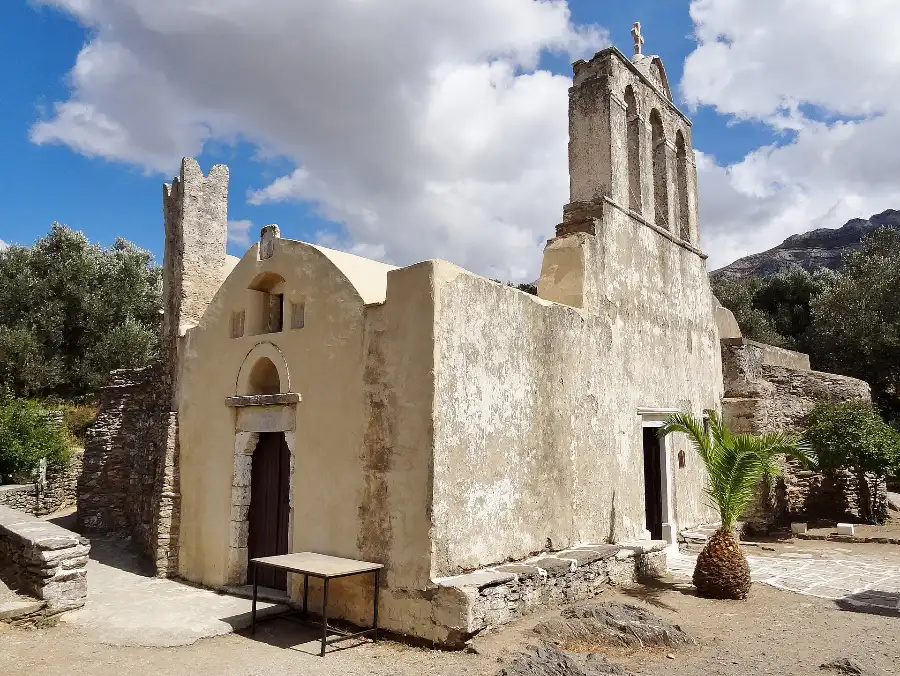
Naxos is the biggest and most self-sufficient of the Cyclades, which is why three nights never feel long. You climb into the interior - the marble villages of Halki and Apiranthos - on one day, give another entirely to a west-coast beach, and watch the sun set through the Portara, the great marble doorway on the islet by the port. It is the stop a rental car unlocks, and the one that most rewards the extra time two weeks buys.
Milos: the volcanic change of scene
Milos looks nothing like Naxos or Santorini, which is exactly why it earns three nights. Its coast is a volcanic strangeness: the wind-carved white rock of Sarakiniko, which reads more like a moon than a beach, and the sea-caves of Kleftiko, reached only by boat. The catch is the ferry. Milos sits on the western Cyclades line, not the central spine the rest of the trip runs on, so its connections are thinner and need locking first. Two weeks has the slack to absorb that, which is why a western-line island is more defensible here than on a shorter trip.
Santorini: the caldera finale you fly home from
Santorini is the finale, and it is worth keeping and worth being honest about. The caldera is genuinely spectacular and genuinely mobbed, both at once. Base on the rim rather than down by the port, walk the path from Fira to Imerovigli for the same view with room to breathe, and skip the Oia sunset crush for a quieter rim spot. Three nights leaves your last morning free for a slow breakfast before an easy fly-out from JTR. Keep it as the finale; do not let anyone talk you out of it, or oversell it to you either.
The ferries: five stops, four crossings, and the two to lock early
Five stops means four crossings, and they are not equal. Most run down the busy central spine, where boats are frequent and missing one costs an afternoon rather than a day. Two leave that spine, and those are the ones to book first.
The central-line legs are the well-served ones. Piraeus down to the Cyclades and Naxos on to Santorini are the frequent, reliable crossings: Piraeus to Naxos runs about 3h20m to 4h20m on a high-speed catamaran or 5 to 5.5 hours on the Blue Star conventional, and Naxos to Santorini is roughly 1 to 1.5 hours fast or about 2 hours conventional. Those are the same numbers the shorter routes run on.
The two to lock are the off-spine legs: the hop out to Mykonos at the top, and, above all, the crossing to and from Milos. Milos sits on the western Cyclades line, the corridor through Serifos, Sifnos and Kimolos, so its connections to the central islands are thinner and less frequent than the spine, and they move with the season. Build those two legs first, on a ferry aggregator, and fit the rest of the trip around them rather than the other way round. This page states no crossing time for either off-spine leg on purpose: look up the actual sailing before you commit dates to it.
The reliability rules from the ferries guide hold, and they matter more with four crossings than with two: sail in the morning before the wind builds, take the conventional boat over the high-speed on any leg you cannot miss, and remember that the meltemi, the dry north wind strongest from July into September, cancels the high-speed boats first. How Greek island ferries actually work has the mechanics, the base ferry sequence is on the seven-day route, and what to do when a ferry is cancelled is worth reading before you go, not after.
The second act, if you’d rather have a region than a fourth island
If a fourth Cyclades island starts to feel like more of the same, spend the second act on a different Greece instead. The rule stays the same: keep Athens and two or three islands, then swap the fourth island for one region, not both regions plus the islands. There are three honest versions, and each hands off to a page that does it properly.
Add Crete, and you trade an island for a country-sized one with its own airports and its own two-week case. Drop Milos or Mykonos and end on Crete instead of Santorini - this is the two-week trip a lot of people actually mean when they say “Greece.” It is a route in its own right, so let the dedicated Athens, Santorini and Crete itinerary settle the ferry and the Cretan base rather than rebuilding it here. If you can only pick one big island, Santorini versus Crete works through it.
Add the mainland, and you trade the single Athens day trip for a proper loop. Keep three Cyclades islands but open the trip with Delphi’s oracle and Meteora’s cliff-top monasteries, with Nafplio as the handsome base for the Peloponnese. This is the ancient history most Cyclades routes skip, and after Athens itself it is the cheapest second act there is.
Go wider in the Cyclades, finally, if you truly want islands over regions - but add a fifth Cyclades island rather than a region, and know that this is island-hopping, which a dedicated Cyclades route sequences better than a bolted-on fifth stop would.
The honest trade in one line: a second region buys a completely different Greece at the cost of a fourth island and a longer travel leg; going wider in the Cyclades buys more of a good thing at the risk of the relay this whole page is built to avoid.
The best months for two weeks in Greece
May to June and September to October are the months this route wants. Late spring and early autumn mean warm days, a sea still worth swimming in, ferries still running often, thinner crowds, and caldera rooms below their August price - and the more crossings a trip strings together, the more it leans on frequent sailings to hold together.
That dependency is the two-week-specific point. Five stops and four crossings ride on the timetable even harder than a shorter route does, so in a shoulder month the two off-spine legs, Mykonos and Milos, are the ones to check hardest. The upside is that two weeks also carries slack a week never does: a single cancelled boat is usually a lost afternoon you can absorb, not a lost flight. Push into winter, though, and Greece in two weeks stops working as five stops, because the sailings that connect them thin to the point of breaking.
One date to avoid outright is mid-August, when ferries sell out weeks ahead, the caldera runs at its hottest, most crowded and most expensive, and the peak is simply the priciest version of this trip. The wider picture is in the best time to visit Greece and Greece weather month by month.
What to book ahead over two weeks
A two-week route has more moving parts than a week, so lock the handful of things that sell out or fix the line, and leave everything that rewards flexibility for when you are there.
Book ahead:
- The open-jaw flight - into Athens, home from Santorini. It defines the whole trip, and a multi-city fare is easier to price and hold early than to assemble late.
- Every ferry sailing. Four crossings, and the off-spine Milos and Mykonos legs first, because their thinner schedules are the ones most likely to force your dates.
- The Santorini caldera-view nights. Rim rooms are the biggest single line in the trip and the first thing to sell out, so reserve early or decide on purpose to drop the view.
- The Acropolis timed entry and the Athens day trip. Morning slots go first, and a Delphi or Sounion day is easier locked before you land than arranged on a groggy morning.
- A room on the fourth island before its smaller bed-base fills in season.
- A rental car only where a stop needs one - a couple of days on Naxos, or the mainland loop - not for the whole trip.
Leave loose: restaurants, beach days, the Naxos choice between an inland day and a boat, the Santorini sunset spot, and the Delos boat time. These reward reading the wind and the crowd on the day.
No single headline number captures the cost, and the levers move a two-week trip further than any total would: the season, whether you sail high-speed or conventional, the caldera-view premium, and now a fifth stop’s extra nights and a fourth crossing. Plan around those. What a Greece trip actually costs breaks them down, caldera-view rooms compared covers the biggest one, and the full what-to-book-ahead guide has the rest.
This page is the plan: settle the fork, then lock the open-jaw ticket, the ferries and the caldera nights in the order above, and the rest falls into place. Plan this trip.
What breaks this route
Two weeks is more forgiving than a week, but it fails in three predictable ways, and it is fairer to name them before you book than after. Each has a fix, and two of the three are self-inflicted.
The six-stop relay. This is the one you do to yourself. Bolt a fifth and a sixth island onto the route and, once the travel days come out, you are down to roughly one to two full days per island, a check-in every other morning, and no rest anywhere. The fix is the whole argument of this page: four islands, or three plus a region, and no more.
A cross-line island. Drop Milos, or any off-spine island, into a rigid, pre-booked plan, and its thinner western-line connections can strand you when they do not line up with your dates. The fix is to book that leg first, keep a night of slack around it, or take a central-spine island like Paros instead.
The shoulder-into-winter collapse. The route leans on frequent boats, and that frequency falls away out of season: the Naxos-to-Santorini leg runs up to around eight sailings a day in high summer but drops to roughly five a week from October to May, and every extra crossing raises your exposure to it. The fix is a central-spine route with fewer forced connections, or moving the trip into the shoulder months.
The honest counterweight is that two weeks carries more slack than the shorter routes, so a single wind-cancelled sailing is usually something this route absorbs - a lost afternoon, not a lost flight. That cushion is itself the argument for spending the extra days on depth and one good second act rather than a sixth boat. Santorini fails in its own way too: booked in the August peak with no rim room reserved, the finale disappoints, and the fix is the shoulder season and a rim base, or ending on a quieter island if crowds are the dealbreaker. A slower, family-paced trip trades variety for room, how ferry frequency changes with the season shows exactly what thins and when, and the quietest Greek islands are there if the caldera crowds are a step too far.
Quick answers
Is two weeks enough for Greece?
Yes. Two weeks is enough for Athens plus a proper four-island Cyclades hop with real time on each, or for Athens plus two islands and a whole second region like Crete or the mainland. It is not enough to see all of Greece, and the two-week mistake is trying to. The risk is never too little time; it is too many stops.
How many islands can you visit in two weeks in Greece?
Four Cyclades islands plus Athens is the comfortable two-week maximum with time on each; five is the ceiling if you keep moving; six or more is a relay of one-night stands. Fewer, different islands beat more of the same, because every island you add loses most of a day to packing, ports and another check-in.
What is the best two-week Greece route for a first trip?
Athens for three nights, then a southbound Cyclades hop - Mykonos two nights for Delos, Naxos three, Milos three and Santorini three - flying home from Santorini so you never backtrack. Swap the fourth island for Crete or the mainland if you would rather have a second region. The open-jaw ticket, into Athens and out of Santorini, is the move that saves a day.
Should you add Crete or the mainland to a two-week Greece trip?
Add one, not both. Choose Crete if you want a whole second, country-sized island with its own airports, and follow the dedicated Athens, Santorini and Crete route; choose a Delphi-and-Meteora mainland loop if you want the ancient history most Cyclades routes skip. Keep the rest of the trip in the Cyclades either way.
Is Santorini worth including, or is it too crowded?
Keep it as the finale - the caldera is genuinely spectacular - but it is also genuinely mobbed, so base on the rim, walk the Fira-to-Imerovigli path, skip the Oia sunset crush for a quieter view, and travel in the shoulder season. If the crowds are a dealbreaker, end on a quieter island instead. It is a trade, not a verdict.
Do you need to rent a car for a two-week Greece trip?
Not for the whole trip. Athens and Santorini work on foot and transit, and the ferries connect the islands, so rent only where a stop rewards it - a couple of days on Naxos, or the mainland loop through Delphi and Meteora. Book any car ahead in peak season, when island fleets sell out.
How is this different from the 10-day Greece route?
The ten-day route is Athens plus two or three Cyclades islands done slowly; this two-week version is the roomier trip that adds a fourth island or a whole second region. The extra days buy a second act, not just a slower pace. The 10-day page has that shorter plan in full.