Santorini
Beaches in Santorini
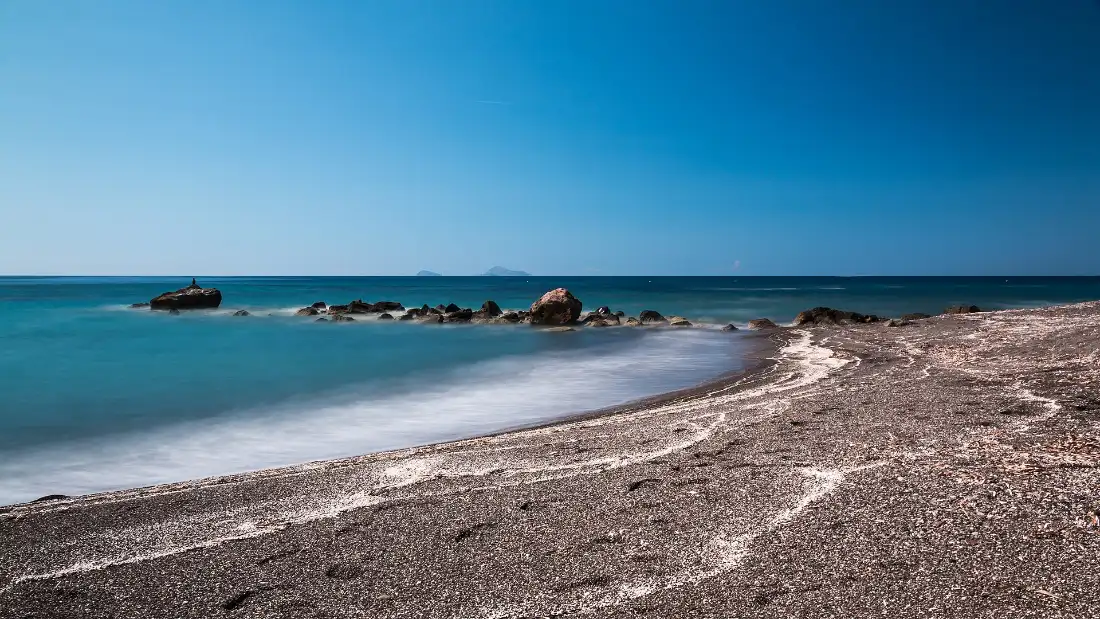
Santorini’s beaches are made of a volcano, and that single fact sorts the whole coast for you. The island has no soft golden sand. What it has instead is black, grey and red: coarse volcanic grit, pebble, and in one famous place the broken-down cliff itself. Set that expectation before you arrive and this coast becomes interesting rather than disappointing.
The geography explains the rest. The caldera rim, where the photographs and the hotels are, is a cliff top over deep water, so a beach day starts with a bus or a car to the flat side of the island. The Santorini guide carries the bus network.
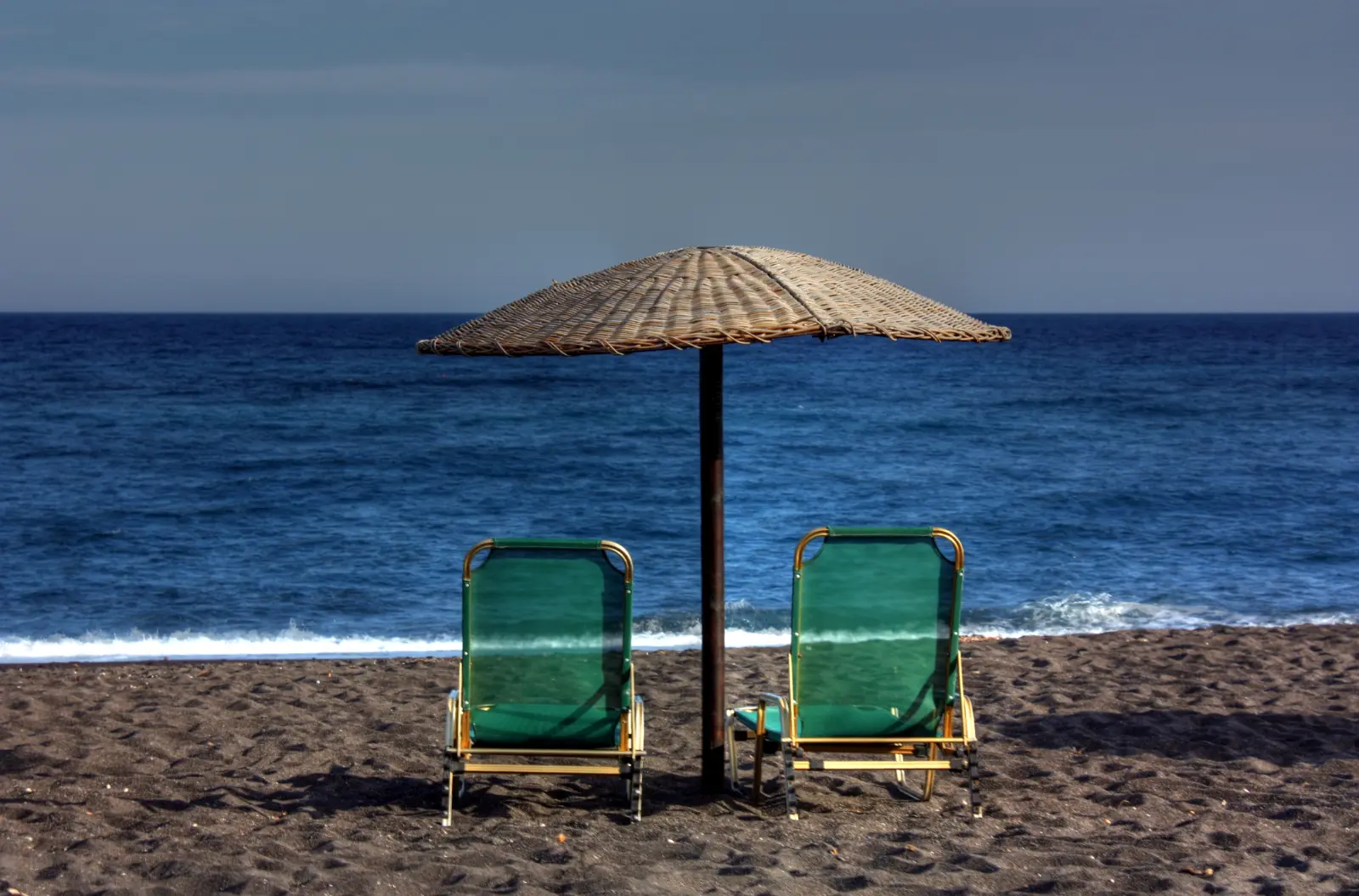
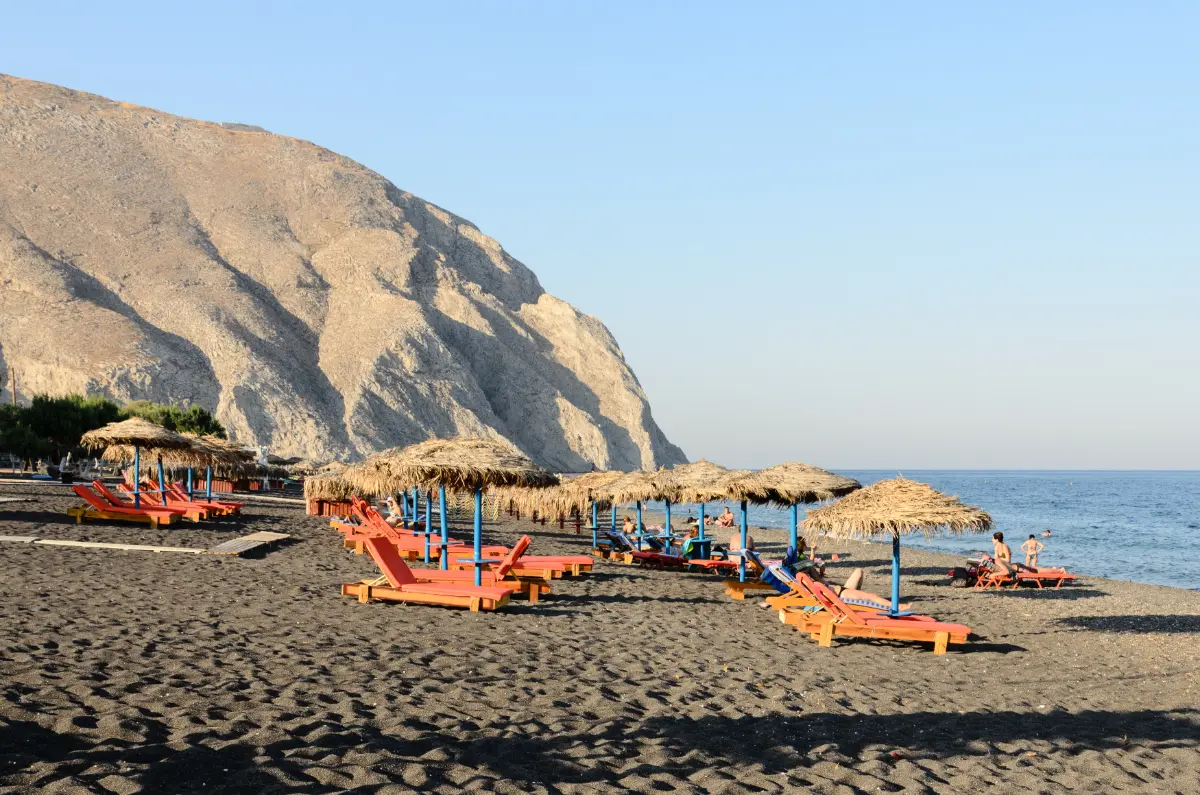
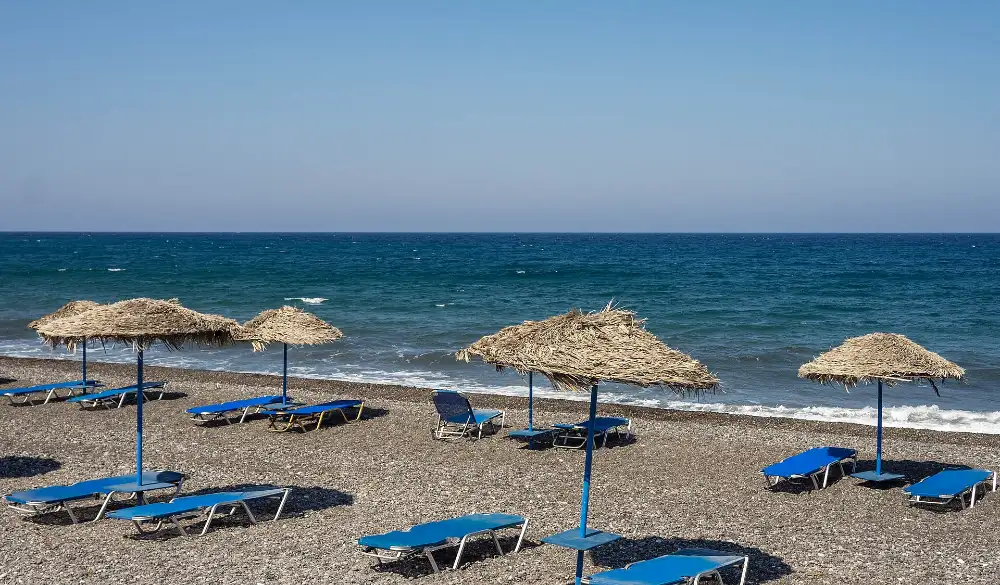
The long black coast, which is where the swimming is. Perissa, Perivolos and Agios Georgios run into one another as a single strip of black sand and pebble along the southeast shore, with Kamari on the far side of the rock of Mesa Vouno. All of it is organised beach: sunbeds, umbrellas, tavernas and bars behind the sand. This is also where the island stops being expensive. Perissa is the younger, looser end and merges south into the more designed beach bars of Perivolos; Kamari is tidier, has a promenade rather than a strip, and sits nearer the airport. Two things apply to all of it. Dark volcanic sand absorbs heat instead of reflecting it, and by mid-afternoon in high summer it is punishing underfoot. Bring something you can walk to the water in and leave on the pebbles. And Perissa and Kamari are not joined by a road around the base of Mesa Vouno, so crossing between them means going inland or walking the path over the rock.
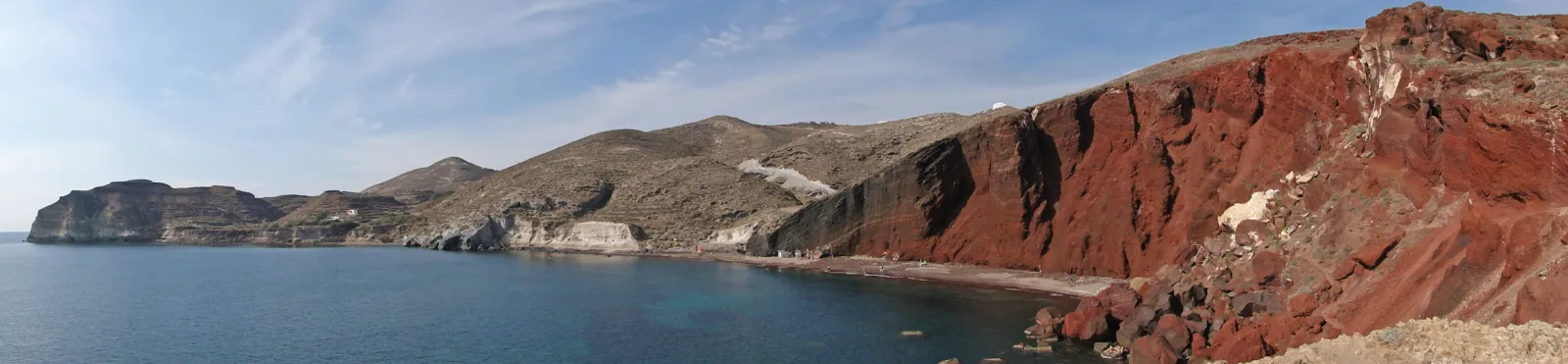
The red one, which is a viewpoint before it is a beach. Red Beach, out past Akrotiri, is the most photographed shore on the island and the one to read about before you drive to it. The colour is oxidised iron in the cliff behind, and the beach is made of what falls off that cliff. It is why the municipality prohibited access in 2013 after a landslide, and why warning signs have stood on the approach since. Falls are documented in 2013, 2018 and 2025. This page will not tell you what the situation is on the day you go, because it has changed repeatedly. Read the signage in front of you and take it at face value. The image everyone recognises is taken from the headland above the cove rather than from the sand, which is worth knowing if the photograph is the point.
The odd corners. Vlychada, further along the same coast, sits under pale cliffs that wind and water have cut into something closer to sculpture than shoreline, and it is quieter than the Perissa strip. Monolithos, on the flat eastern shore, is the plain one families tend to be pointed towards. The pockets of white and black shingle beyond Akrotiri are reached from the water rather than the road, which is why the south-coast boat trips string them into one circuit.
What this page will not print. No sunbed rate, bus fare, lifeguard season or opening hour appears here. Those are set by businesses, by the municipality and by the season, and a number that has gone quietly wrong is worse than no number at all. Nor will we rate the water on any of these beaches. The sea moves, and the flag flying on the day, the lifeguard post if one is staffed and any municipal notice know more about your afternoon than an article can.
If a beach holiday is the point of the trip rather than a part of it, be honest about that while you are still choosing islands: Santorini’s coast rewards a swim and a long lunch rather than a week of lying down. Santorini against Mykonos is the comparison that settles it, and when to come settles the month.