What actually makes a Greek island quiet
A Greek island stays quiet for three reasons you can control. Reachability filters the crowd before it arrives: a long ferry or no direct flight thins out casual visitors and cruise day-trippers. Season empties even popular islands in the shoulder months. And your base decides the rest, because a village stays calm while the port and the one famous beach do not.
There is an honest catch in the first lever, and it runs through this whole page. As a rule, the quieter the island, the more it costs you in ferry hours or connections to reach it. The least touristy Greek islands are the ones the boats reach last, so treat quiet as a spectrum you pick your spot on, not a prize handed to the deserving. This inverse trade-off is the thing every “less touristy but not too quiet” forum thread is really asking about, and it is the one lists never say out loud.
Then there is the folk rule you will hear on every forum: any island with an airport is touristy. It is a useful first filter, and it is not a law. Karpathos, Samos, Chios, Ikaria and Kefalonia all have their own airports and all stay quiet, because size, distance from Athens and the absence of a marquee sight matter far more than a runway. A big island a long way out absorbs its flights without ever feeling full. The runway just makes it easier to get to, which for a crowd-averse traveller is a feature, not a warning. Which islands have an airport sorts them out.
The cruise ships work the same way in reverse. The circuit is built around a handful of marquee ports - Santorini, Mykonos, Rhodes - so an island off that route meets most of its visitors by ferry, and ferry passengers arrive as a trickle rather than a wave. Understanding how the ferries actually work is half of understanding why some islands stay empty.
Quiet Cyclades: close enough to be easy, empty enough to matter
The Cyclades hold the best quiet-for-your-effort ratio in Greece: islands a few hours from Athens that the Santorini crowd never bothers to reach. This is the reachable end of the spectrum, the non touristy Greek islands a first-timer can actually pull off without a week of ferry planning.
Folegandros is the one to beat. Pick it if you want a cliff-top chora as good as any in the Cyclades without the crush that comes with the famous ones - the town sits high above the sea, the pace is slow, and the island is small enough to feel like one long evening. Folegandros rewards people who came to do very little.
Amorgos is for going further. Pick it if you will trade a longer crossing for the remote, dramatic eastern edge of the Cyclades, all cliffs and monasteries and deep water. The ferry is the filter here: the hours that put casual visitors off are exactly what keep it calm. Amorgos is the secluded end of this group.
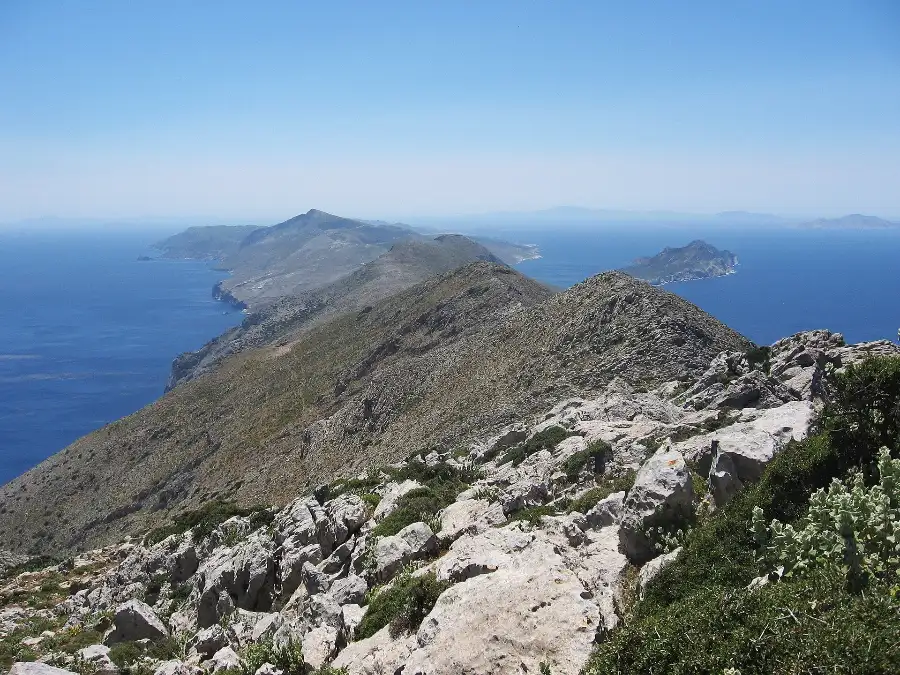
Tinos is a working, mountainous island of villages and marble craft that most foreign visitors skip. Pick it if you want that, and go outside the one week it fills: the church of Panagia Evangelistria draws a national pilgrimage around 15 August, a genuine annual event that packs the port town and leaves the rest of the year calm. Tinos is quiet for eleven and a half months.
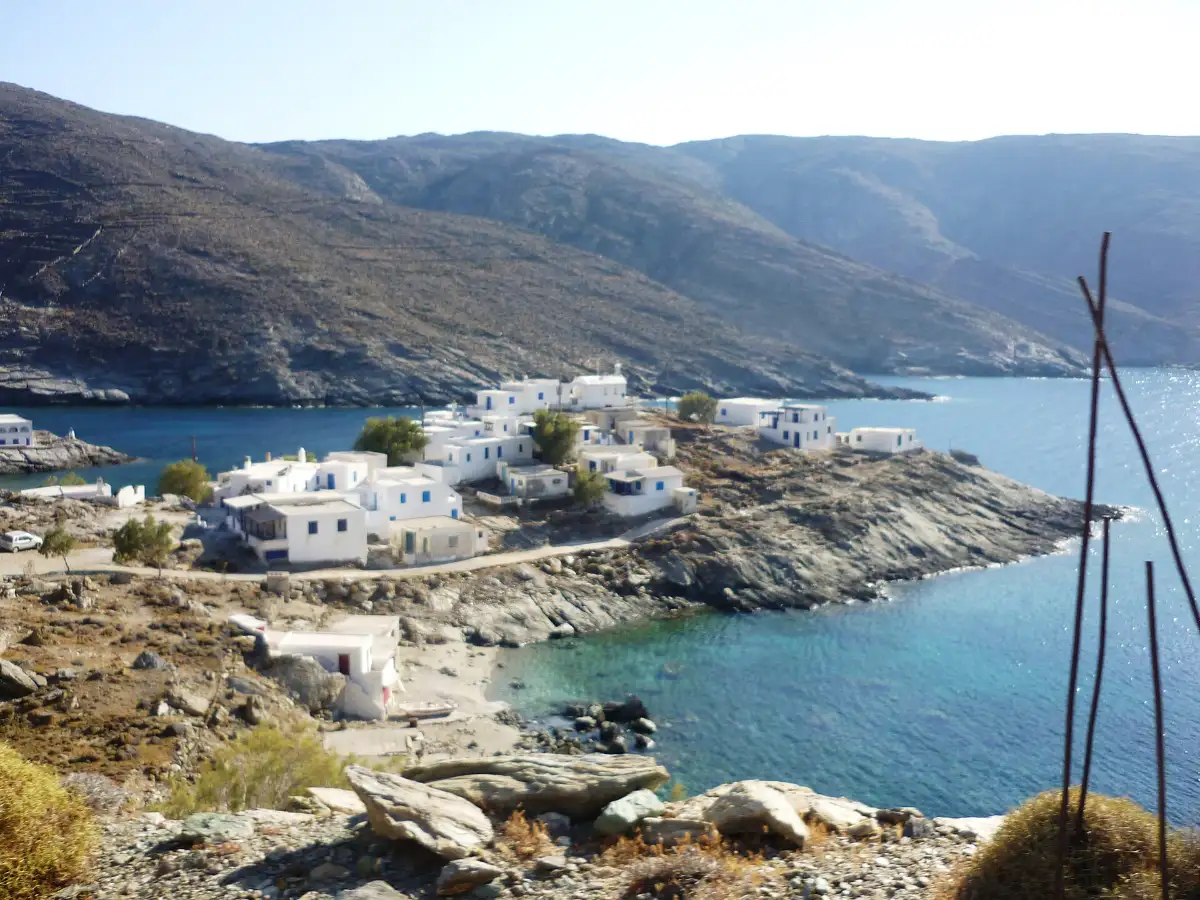
Kea and Andros are the closest quiet islands to Athens and the best for walking. Kea is a weekend escape Athenians drive and sail to, low-key and largely undeveloped; Andros is a hikers’ island threaded with old stone paths and running water. Pick either if you want quiet without a long haul - Kea for the short hop, Andros for the trails.
Naxos and Paros are the move most lists miss: take the quiet side of a popular island. Both have busy ports and one famous beach each, and both go calm the moment you head inland - Naxos into its mountain villages and green valleys, Paros across the channel to quieter Antiparos. Pick Naxos for a big island with room to hide, Paros for an easy base you leave by day; the two compared settles which.
Milos earns an honest caveat. Pick it for the surreal coastline and the coloured rock, but know it is the busiest name on this list and, on our reading, the one whose crowds have grown fastest. Milos is still worth it in shoulder season; in August it is no longer a quiet island.
If you want quieter still and will do the legwork, Sifnos, Serifos and Kythnos sit on the same western line, and the Small Cyclades - Koufonisia, Schinoussa, Donousa, Irakleia - are about as far off the beaten path as this group goes. The full Cyclades lays them out.
Quiet Dodecanese: the long-ferry islands the crowds skip
The Dodecanese stay quiet by geography. They run down the Turkish coast in the far eastern Aegean, a long way from Piraeus, so only the deliberate reach them - and they pay you back with big, empty beaches the Cyclades cannot match.
Karpathos is the headline counter-example to the airport folk rule. Pick it if you want vast, wind-scoured beaches and a mountain interior where old dress and dialect still survive, on an island that has a runway and stays underrated anyway. It is remote enough that the flights never fill it. Karpathos is our pick for the most underrated island in Greece, and the rest of this page has to argue with that.
Patmos is the overnight-not-day-trip lesson in one island. Pick it if you want somewhere calm and dignified rather than sleepy: cruise passengers come by day for the Monastery of Saint John and the Cave of the Apocalypse, a UNESCO World Heritage site, and by late afternoon the day boats have gone and the hill towns belong to the people staying. Patmos at 7pm is a different island from Patmos at noon.
Symi works the same trick. Its harbour, a bowl of neoclassical houses in ochre and pastel, is one of the most photographed in Greece and is day-tripped hard from Rhodes; stay the night and you get the painted town to yourself once the boats leave. Pick Symi for the harbour, and sleep there to earn it.
Further out, Astypalea, Lipsi, Leros and Kalymnos are quieter still for travellers who want the far end of the group. The full Dodecanese shows how they string together.
Quiet Ionian: a greener, softer sea
The Ionian is a different sea on the west side of the country, reached from the western mainland rather than Athens. The water is greener and calmer, the islands are wooded, and the famous names - Corfu, Zakynthos - are genuinely busy while their less touristy neighbours are not. Quiet here means standing in a big island’s shadow.
Paxos is the smallest and the most filtered. Pick it if you want a tiny Ionian island with no airport, reached only by boat from Corfu or the mainland - that single fact does most of the crowd control for you. Paxos is boat-only and better for it.
Ithaca trades on a different kind of quiet. Pick it if you want the calm that comes from hiding behind a bigger island: Ithaca sits in Kefalonia’s shadow, small, low-key and mythic as Odysseus’s home, with just enough going on. Ithaca is the one people mean when they say off the beaten path in the Ionian.
Kefalonia is the room-to-spread-out option. It is a big island with a busy headline beach and a great deal of empty everywhere else, so pick it and base in the quieter north or the mountainous interior while the day-trippers cluster on the one famous cove. Kefalonia rewards the quiet side, and Corfu against Kefalonia weighs it against its louder neighbour.
Lefkada is the one you can drive to. A causeway and a short bridge join it to the mainland, so most people arrive by car rather than by cruise ship or plane, and its celebrated west-coast beaches stay lower-key than their reputation would suggest. Pick Lefkada if arriving by car and skipping the ferry queue sounds like the holiday. Kythira, far to the south, is a further-flung quiet option again.
The full Ionian lays the group side by side.
Quiet North Aegean and the Sporades: Greece for Greeks
The big islands of the eastern North Aegean stay quiet for the plainest reason of all: they are lived-in, working islands where tourism is a side note rather than the economy. They sit far from the Cyclades circuit, they are large and agricultural, and travelling here feels like travelling where Greeks travel, not through a resort. This is where “unspoilt” actually earns its keep.
Ikaria runs on its own clock. Pick it if you want the island that famously does not hurry: it is one of the world’s Blue Zones, the handful of places studied for how long their people live, and the slow rhythm is real rather than marketed. It has an airport and it has stayed quiet regardless. Ikaria is the clearest proof the runway rule is soft.
Samos is green mountains, wine and space. Pick it if you want a full-size island - hills, forest, vineyards and a long coast - that simply never fills up the way a small one can. Samos absorbs its visitors without effort.
Chios is the connoisseur’s choice. Pick it for the mastic villages of the south, medieval stone architecture found almost nowhere else, and a visitor mix that stays overwhelmingly Greek. Chios is about as far from touristy as a large Greek island gets.
Different sea, same idea: the Sporades - Skopelos, Alonissos, Skyros - are green, pine-covered and reached from the mainland at Volos or Agios Konstantinos. The Sporades round out the quiet map. Between them, Ikaria, Samos and Chios make the strongest case that an airport and a quiet island are not a contradiction.
How to keep an island quiet once you have picked it
The island is only half the decision. The other half is a short list of moves that keep almost any island quiet, and they matter more than the name on the ferry ticket. Apply these to whichever island you chose:
- Go in shoulder season. Late May into June, and September into early October, empty out even the popular islands while the sea is still warm and the boats still run often. Avoid mid-August, and the 15 August weekend above all, when the whole country travels at once. Shoulder season makes the case, and the best time to visit takes it month by month.
- Base in a village, not the port. The port takes the ferries, the cruise tenders and the through-traffic; the inland villages take almost none of it. This is the single most reliable move on the list, and it works even on a busy island: the harbour and a village twenty minutes uphill are two different holidays.
- Stay the night; do not day-trip. The day boats leave by evening, so islands that feel mobbed at noon - Symi, Patmos, Hydra - hand themselves back to the people staying over by dinnertime. You only meet the quiet island if you sleep on it.
- Skip the crowd magnets at their peak. Santorini and Mykonos in July and August are the exact crowd you are trying to escape; they are calmer in shoulder season, and if it is only their look you are after, a quiet neighbour gives you the Cyclades without the crush. If you go anyway, go early or late in the day, because the cruise ships and the day-trippers both keep office hours.
- Check the ferry frequency before you commit. The thin, seasonal connection that keeps an island quiet is the same one that can strand a tight plan, so confirm the boats run when you need them. How the ferries work is where to check a route before booking it.
Do all five and the same island becomes a quiet family base or a quiet romantic one with no further effort. The moves do the work; the island just has to be one you can reach.
Choosing by the quiet you will actually get
Work it in that order and the decision makes itself. First pick your trade-off: a reachable island you keep quiet with timing and a village base, or a remote one that stays quiet on its own but costs you a day of travel each way. Then pick the sea group that suits the trip. Then apply the moves that keep it quiet - shoulder season, a village base, an overnight stay - to whatever you chose.
If you just want the answer, here it is: for a first quiet trip, take a reachable Cyclades island - Folegandros, the quiet side of Naxos, or Tinos outside mid-August - go in the shoulder season, and sleep in a village rather than the port. That combination is quiet by design, not by luck.
From here, browse the island groups to see how your pick connects, or, if you are not yet sure quiet is what you want, weigh it against the best island for first-timers. The island you can reach and will actually relax on beats the emptier one you spend the trip regretting.
Common questions about quiet Greek islands
What is the least touristy Greek island?
No single island holds the title, because “least touristy” trades directly against “reachable”. Among islands you can still get to without a major effort, Folegandros, Amorgos and Karpathos are the honest picks; Sifnos and Astypalea are the names that recur most across traveller forums. The genuinely least-visited islands, the Small Cyclades and Fournoi, are also the hardest to reach - you cannot have empty and easy in the same island. Karpathos is the reachable end of that trade.
Which quiet Greek islands have good beaches?
For big, empty sand, Karpathos and Lefkada lead; for classic Cycladic coast, Naxos and Milos; and for a full-size island’s worth of coastline you rarely have to share, Ikaria and Samos. Beach quality here is durable geography - the shape of the coast - rather than a ranking, and the quieter islands trade organised beach clubs for space. Lefkada is the standout for pale-cliff west-coast beaches.
Which quiet Greek islands are easiest to reach?
The easiest are the ones with an airport or a short ferry: Naxos, Paros and Kea for quick Cyclades hops, and Karpathos, Samos, Chios, Ikaria and Kefalonia for a direct flight. That ease is the catch - an island you can reach in an afternoon is one where you have to choose your season and your village more deliberately to find the calm. Which islands have an airport sorts the flyable ones.
What is the most underrated Greek island?
Our pick is Karpathos: an airport island with vast, wind-blown beaches and a mountain culture all its own, that the crowds skip for no good reason. Andros, Ikaria and Tinos are close behind. That is an editorial judgment, not a measured fact - “underrated” is a matter of opinion - but it is the one we would defend hardest. Andros is the runner-up we would send you to first.
Do quiet Greek islands stay quiet in August?
Mostly not fully. August is peak, and even a quiet island’s port and headline beach fill up, especially around 15 August when Greeks travel en masse. The islands that hold their calm best are the hard-to-reach ones, where distance keeps doing its work; on any island, a village base and an overnight stay still buy you quiet. For the alternative, shoulder season is the better bet.