Location and group
North Aegean, Greece; off the coast of Asia Minor, a narrow strait from Cesme, Turkey
Size
one of the largest Greek islands, 842 km2
Main town and base
Chios Town (Chora), on the east-central coast; the port and the airport are here
Airport
Chios Island National Airport, “Omiros”, about 4 km from Chios Town; short domestic flights from Athens all year on more than one carrier
Getting there
ferry from Piraeus 6-7 days a week year-round (Blue Star), around eight hours direct and half a day or more on the multi-stop routing; short flight from Athens; Cesme (Turkey) ferry 20-30 minutes, year-round, 5-7 days a week, busiest July to September
Mastic PDO
EU Protected Designation of Origin, registered January 1997 under Commission Regulation (EC) No 123/97, category “natural gums and resins”
Kampos
a district of roughly 200 walled estates with citrus orchards, mansions, cisterns and monumental gates, laid out under the Genoese after 1346
UNESCO Intangible Cultural Heritage
the know-how of cultivating mastic on Chios, inscribed 2014
UNESCO World Heritage
Nea Moni, inscribed with the monasteries of Daphni and Hosios Loukas as a single property. No year and no criteria are printed
Nea Moni founded
1042 (11th century)
Best months
May, June and September, with early September the pick; August hot and busy, largely with domestic and diaspora visitors.
Travel details last checked July 2026.

Diagram by Greece Trips. Free to reuse with credit - CC BY 4.0.
Where Chios sits, and why it is a driving island
The island of Chios sits in the North Aegean, hard against the coast of Asia Minor, with only a narrow strait between it and Cesme on the Turkish mainland. It is one of the largest of the Greek islands, covering roughly 840 square kilometres, and that size is the single most important thing to grasp before you plan. Chios is not an island you hold in your head as one town and one beach. It is a landscape of distinct regions, and the things worth seeing sit a long way apart.
The south is the green half: low hills of mastic groves and citrus, where the medieval mastic villages cluster and, closer to Chios Town, the Kampos district holds around two hundred walled estates, each a mansion behind a high wall with its own citrus orchard, cistern and monumental gate, a plan the Genoese laid down after they took the island in 1346 and the Ottomans left largely intact. The north is rougher and more mountainous, emptier, and slower to cross. Chios Town, the capital that locals call Chora, sits on the east-central coast and is the practical base: the port is here, the airport is just to the south, and most services concentrate in and around it.
Hold those three facts together - a big island, its draws scattered across the south and interior, its one real town on the east coast - and the core recommendation writes itself. You cannot see Chios on foot or from a single base. The distances between the villages, the monastery and the good beaches are the reason a car matters, which the getting-around section returns to.
You can place Chios against every other Greek island on the full island index.
The mastic villages, and why the resin grows nowhere else
The mastic villages, the mastichochoria, are the reason to come, and to understand them you have to start with a shrub. Mastic is the resin of Pistacia lentiscus var. chia, an evergreen relative of the pistachio. The plant itself grows around much of the Mediterranean, but it weeps usable resin in commercial quantity only in the south of Chios, where a particular combination of limestone soil, dry summers and mild winters draws the tears out of it. That terroir is the whole story: it is why the resin is Chios-specific, why the villages that harvest it grew up exactly here, and why the product carries an EU Protected Designation of Origin, registered in January 1997 under Commission Regulation (EC) No 123/97, in the category of natural gums and resins. Mastic is not famous-for-Chios by accident of marketing. It is a crop that, in commercial terms, grows in one place.
The villages were built to defend it. When mastic was worth more than the ground it grew on, the medieval villages of the south were laid out as fortresses against pirates and raiders, and two of them are worth planning a day around.
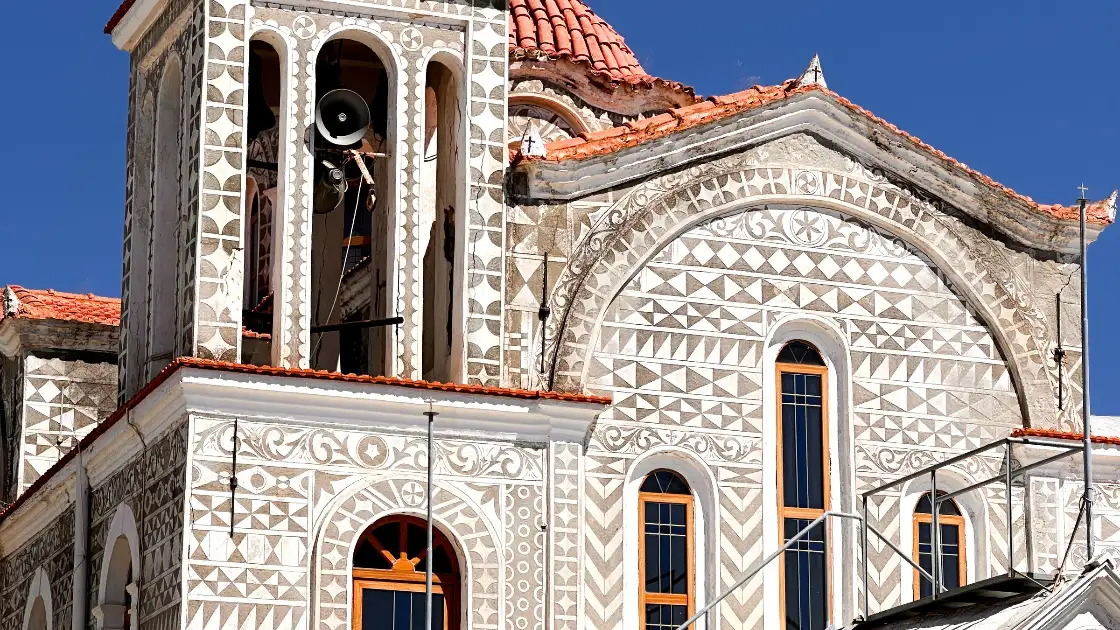
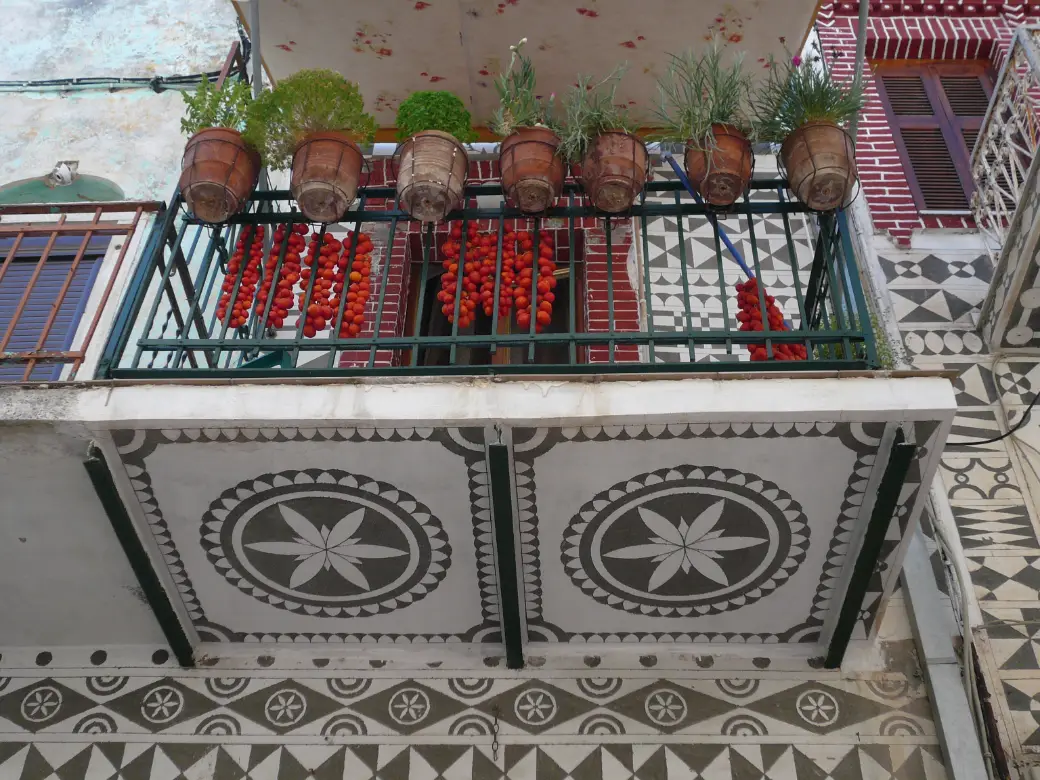
Pyrgi is scratched all over. Its houses wear xysta: black-and-white geometric plasterwork made by carving through a dark top coat to the white beneath, so whole facades are covered in a dense grid of triangles, diamonds and stripes. There is nothing else quite like a Pyrgi street in Greece, and the technique is durable in the truest sense. It is plaster, not paint, and it has been redone the same way for generations.
Mesta is the fortified maze. It was built as a closed pentagon of houses whose outer walls formed the village’s defensive perimeter, with the alleys inside deliberately narrow, dim and confusing to slow anyone who breached them. Walk it now and you lose your bearings within a minute, which is exactly what it was for. Olympi, nearby, keeps the same fortified plan, and the mastic villages as a group sit only a short drive apart, roughly twenty minutes from one to the next, which makes them a natural half-day loop by car.
You may catch the harvest itself in late summer: growers score the bark so the resin weeps out in “tears” that harden on the ground, then clean and sort them by hand. That know-how, the cultivation of mastic on Chios, is itself on a UNESCO list, but a different one from Nea Moni. It was inscribed in 2014 on the Representative List of the Intangible Cultural Heritage of Humanity, which protects living practices rather than buildings. Keep the two straight: the mastic listing is about the skill of growing and harvesting the crop, while the monastery’s listing, covered next, is a World Heritage one about the place itself.
How that resin reaches the table, in the spoon sweets, the liqueur and the local baking, is part of a wider story in Greek food and drink.
Nea Moni, the massacre, and the island’s deeper history
Chios carries a Byzantine masterpiece and an old wound, and both are part of what the island is.
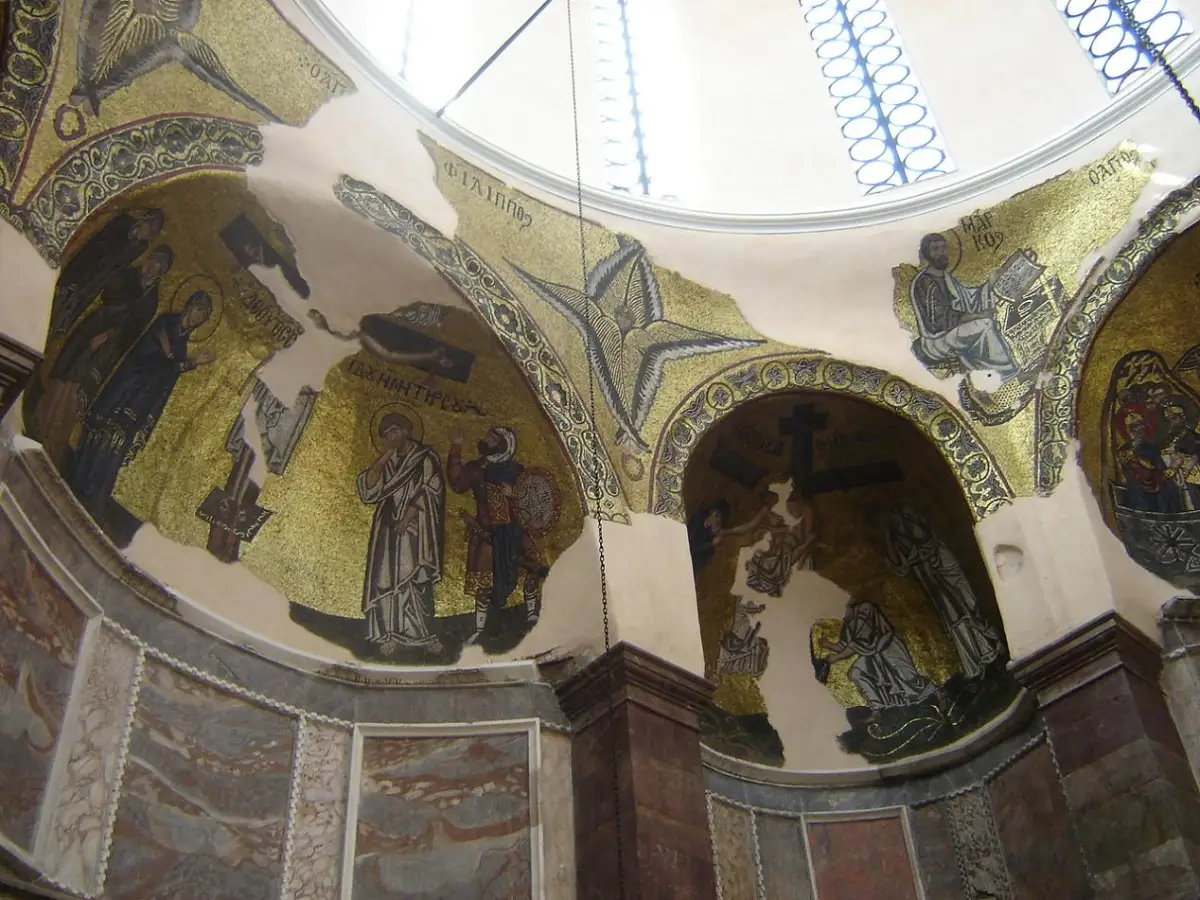
Nea Moni is the masterpiece. The monastery was founded in 1042, in the eleventh century, not the fifteenth as some guides still print, and its church holds some of the finest surviving mosaics of what art historians call the second golden age of Byzantine art. They are gold-ground works, figures set against fields of gold tesserae, and they are why the monastery sits on the UNESCO World Heritage list, inscribed together with the mainland monasteries of Daphni and Hosios Loukas as a single property. This is a different UNESCO listing from the mastic one, and the distinction is worth holding: one is World Heritage, for a building and its art; the other is Intangible Cultural Heritage, for a living craft.
The monastery stands up in the hills inland, west of Chios Town and a short drive out of the capital. Entry is free, it is an active religious site, and modest dress is expected. Go for the mosaics. They are the point.
The wound is the massacre of 1822. During the Greek War of Independence, Ottoman forces killed or enslaved much of the island’s population in reprisal, the event Delacroix painted as The Massacre at Chios, which carried the island’s name across Europe. You feel its aftermath most at Anavatos, a village on a cliff in the interior that was largely abandoned and now stands as a near-empty grey shell above the plain. It is a sombre place, and it belongs in any honest account of Chios rather than being tidied out of it.
The island also keeps a louder tradition. At Vrontados, near Chios Town, two rival parish churches stage the rouketopolemos, a “rocket war” on the night of Orthodox Easter Saturday: each side fires thousands of homemade rockets at the other’s bell tower across the valley. It is a genuine, long-running local event, and timing a spring trip to it puts you in front of something you will not see elsewhere. Its scale and its organisation are settled locally, close to the night itself, and both have changed in recent years, so check what is planned before you build a trip around the exact date.
Getting to Chios: the long ferry, the quick flight, and the Turkey hop
There are three ways onto Chios, and the island stays quiet partly because none of them is a fast hop from Athens:
- The long ferry from Piraeus. The conventional boat from Athens runs six or seven days a week all year, and how long it takes depends entirely on the routing: roughly eight hours on the faster sailings, and half a day or more on the long multi-stop run that calls at Syros, Mykonos, Ikaria and Samos on the way, often landing you in Chios in the small hours. Book a cabin rather than a deck seat if you want to sleep, and reserve vehicle space well ahead in high summer.
- The short flight from Athens. Chios has its own airport, Omiros (Homer), named after the poet the island claims as a son, about four kilometres from Chios Town. It takes short domestic flights from Athens all year on more than one carrier. This is the fast way in, and the sensible one if your time is tight.
- The ferry from Cesme, in Turkey. The strait crossing from Cesme, near Izmir, to Chios Town takes twenty to thirty minutes and runs year-round, five to seven days a week, with several operators and far more sailings from July to September than in winter. That makes combining Chios with a Turkish leg genuinely practical in any season, though you should still confirm the day’s sailings before you rely on one.
Durations, frequencies and fares all move with the season and the operator, so treat the table below as a shape to confirm, not a timetable to trust:
| Route | Type | Rough shape |
|---|---|---|
| Piraeus to Chios | Conventional ferry, year-round, 6-7 days a week | Around eight hours direct, half a day or more on the multi-stop routing |
| Athens to Chios | Domestic flight, year-round | A short hop |
| Cesme (Turkey) to Chios | Ferry, year-round, 5-7 days a week, busiest July to September | Twenty to thirty minutes across the strait |
Two practical notes. Do not pin a same-day onward connection to a single ferry, because a cancelled or weather-delayed boat can cost you a day. And book early for August and the mid-month holiday, when both the flights and the cabins fill.
The mechanics of Greek ferries in general are in how Greek island ferries work; for the plane option, see flying within Greece and which Greek islands have an airport.
Getting around: why Chios is a rental-car island
A rental car is the practical answer on Chios, and the reason is the geography from earlier: the villages, the monastery and the best beaches are scattered across a large island, and the roads that link them are quiet and easy to drive. Two things keep the driving low-stress. Traffic is light once you leave Chios Town, and the villages offer free municipal parking rather than the paid scramble you get on the busier islands.
The bus network exists, and it is worth knowing what it is for. The KTEL buses link Chios Town with the main towns and some of the villages on a timetable built around people who live here, not around sightseeing, so they move you between a handful of points rather than knitting the island together the way a car does. If you plan to lean on them, check the current KTEL timetable close to your trip and build your days around it, not the other way round. Taxis are available in Chios Town and the larger towns as a fallback for a specific run.
One paperwork note: drivers on a non-EU licence may need an International Driving Permit to hire a car, and whether you do depends on your nationality, so check before you travel.
The wider case for and against your own wheels is in renting a car in Greece and which islands actually need a car.
When to go, and what August really means on Chios
Late spring and early autumn are the island’s sweet spot. May and June give you warm days, a sea that has warmed enough to swim, villages and tavernas fully open, and thin crowds; September does the same on the way down, and early September is the pick of the year, with the summer heat easing, the water still warm, and the August rush gone.
August is the month to understand rather than avoid. Chios does fill up, and popular beaches like Mavra Volia get busy, but the crowd is a particular one. The island fills around the 15 August holiday, Dekapentavgoustos, largely with Greek families and diaspora Chians coming home rather than international package tourists. It feels lived-in-busy, not resort-busy, which is a different and often better thing, though the heat is real and rooms book up early.
One trade-off holds all season: the North Aegean sea runs cooler than the southern islands and the Cyclades. For a swimmer used to the warm Cycladic bays that is a genuine difference, and it is worth knowing before you build a beach-heavy trip around Chios.
At the edges of the calendar, spring brings Orthodox Easter and the Vrontados rocket war, worth timing a visit around, and winter turns the island quiet and authentic, with many tourist services closed, though the ferry, the flights and the working capital carry on all year. Neither is the easy choice, but both are the real Chios.
The wider seasonal logic is in the best time to visit Greece and why shoulder season wins on the islands; the holiday weeks that reshape a trip are in Greek Easter and August.
What Chios is like, and who should go
Chios rewards one kind of traveller and disappoints another, and it is more useful to say which than to sell it to everyone. It is a large, lived-in, working island, with a real economy, a year-round population and a capital that is a functioning town rather than a stage set, and it sees far fewer international visitors than the Cyclades. That is the appeal for some and the deal-breaker for others.
The beaches are durable geography rather than a ranked list. The one people come for is Mavra Volia on the south coast, a run of black volcanic pebbles under clear water that drops away steeply and fast: dramatic to look at and to swim, but deep close in and not the easy paddling beach for small children. Sandier, gentler bays sit elsewhere on the island for families, and the northern coast is quieter and cooler again. Pick the coast to match who is swimming.
Who Chios suits: travellers who want medieval villages, Byzantine history and quiet swims over nightlife; slow and shoulder-season travellers; couples and families comfortable behind a wheel; anyone hopping the eastern Aegean; and Chians coming home to family. Who it does not: the party crowd, the single-beach-resort crowd, and anyone with only two nights to give it. That last one matters. Chios is too big and too spread out to do justice in a weekend, and trying will leave you feeling you saw a car park and one beach.
So what do you do with it? Give it four days and a car. Base in or near Chios Town if you want the port, the airport and the shortest transfers, or in one of the mastic villages if you want stone alleys and quiet nights over convenience. Either works. They just answer different questions.
How Chios fits a bigger Greece trip
Chios is a poor add-on and a strong anchor, and knowing which saves you a bad plan. It is the wrong island to bolt onto a Cyclades hop for two nights: the ferry geography runs the wrong way, and you would spend the time you saved simply getting there.
Where it works is an eastern-Aegean line. Paired by ferry with its North Aegean neighbours, Samos to the south, or Ikaria on the way down toward the Dodecanese and Patmos, it becomes one deliberate stop on a route through the quieter side of the Aegean, well away from the Santorini crowds.
Its other move is one few islands can make. The Cesme ferry turns Chios into a real bridge between a Greek island trip and a Turkish one, so a route that takes in Izmir and Ephesus on one side and the mastic villages on the other is genuinely doable from here.
How to sequence any of this, which crossings connect and how much slack to leave, is in the island-hopping guide.
The short version
Come to Chios for stone and resin, not for a beach club. The two things it does that nowhere else does, the fortified mastic villages of the south and the gold-ground mosaics of Nea Moni, are worth the longer journey, and the rest of the island keeps the same slow pace: quiet coves, a working town, a cooler sea, an easy drive between them all. Give it four days and a rental car, aim for the villages over a single beach, and come in late spring or early autumn if you can. It is not the island for everyone, not for the party crowd and not for a two-night dash, and that, in the end, is the point of it. When you are ready to place it in a route, browse the rest of the Greek islands.
Chios FAQ
What is Chios famous for?
Chios is famous as the only place on earth where mastic is commercially grown, in the fortified medieval villages of its south such as Pyrgi and Mesta, and for Nea Moni, the eleventh-century monastery whose Byzantine mosaics are on the UNESCO World Heritage list. It is a large, uncrowded North Aegean island close to the Turkish coast, toured by car rather than walked from a single beach.
Is Chios worth visiting?
Yes, if you want medieval villages, Byzantine history and quiet beaches over nightlife and resorts. Chios is a large, authentic North Aegean island that most international tourists skip, which rewards slow, culture-minded travellers and disappoints anyone after a party or a single-beach-resort week. Expect a cooler sea than the southern islands, and plan to rent a car to see it properly.
How many days do you need in Chios?
Plan about four days with a rental car: one for the mastic villages of the south, one for Nea Moni and the interior, and one or two for beaches and Chios Town. Give it longer if you want to slow down or add the small island of Oinousses offshore. It is too big and spread out to do justice in a two-night stop.
How do you get to Chios?
Reach Chios by ferry from Piraeus, which runs six or seven days a week and takes around eight hours direct or half a day on the multi-stop routing; by a short domestic flight from Athens to the island’s airport; or by the twenty-to-thirty-minute ferry from Cesme in Turkey, which runs year-round. Book ferry cabins and any vehicle space ahead in peak season, and confirm current times close to your trip.
Do you need a car in Chios?
Effectively yes. The mastic villages, Nea Moni and the best beaches are spread across a large island, and the KTEL buses run infrequently and thin out at weekends, so a rental car is the practical way to see Chios. Driving is easy here, with light traffic and free parking in the villages. Taxis in the main towns cover the occasional trip.
When is the best time to visit Chios?
May, June and September are the sweet spot: warm days, a swimmable sea, open villages and thin crowds, with early September the pick. August is hot and busy, but mainly with Greek and diaspora families around the 15 August holiday rather than international tourists. Spring adds Orthodox Easter and the Vrontados rocket war for anyone who can time it.
Can you get to Chios from Turkey?
Yes. The ferry between Cesme, near Izmir, and Chios Town crosses the strait in twenty to thirty minutes and runs year-round, five to seven days a week, with several operators and daily sailings through the summer peak. That makes combining Chios with a Turkey trip genuinely practical in any season. Winter frequency drops sharply, so check current sailings before you plan a route around it.
Plan by category
The Chios guides
5 guides, each scoped to a decision you actually have to make.
 Attractions
Things to do
See the attractions →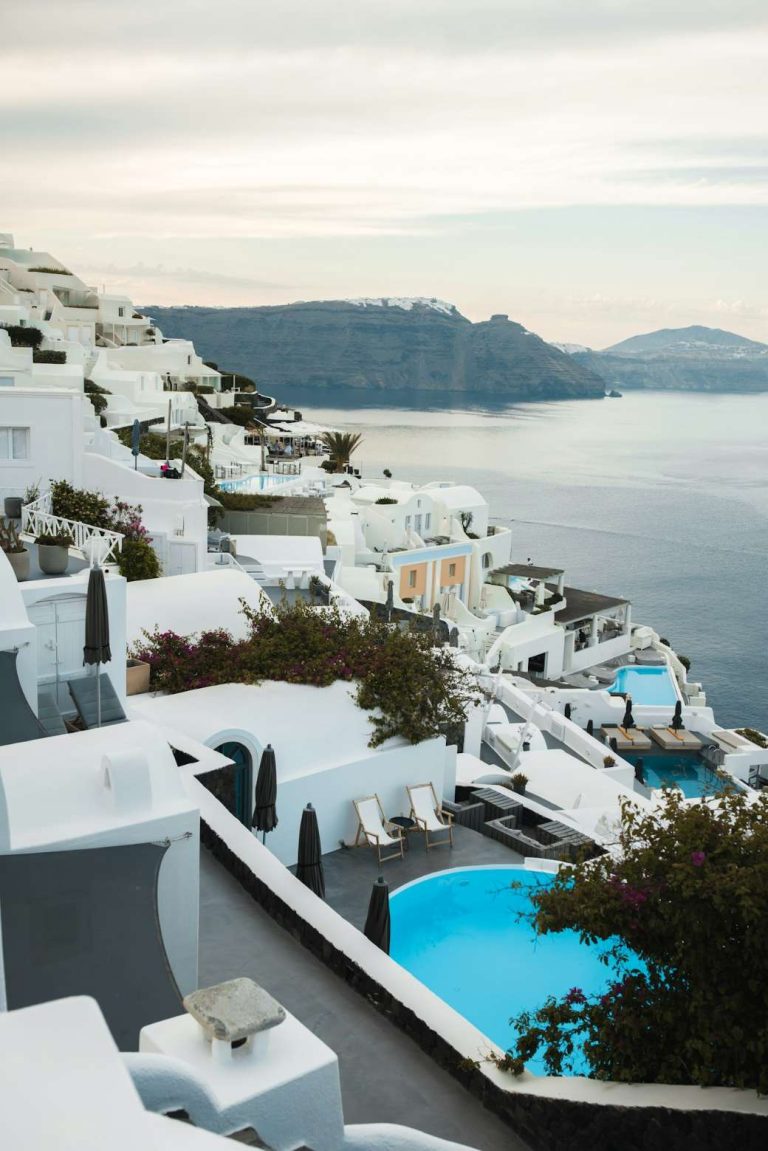 Hotels
Where to stay
Compare the areas →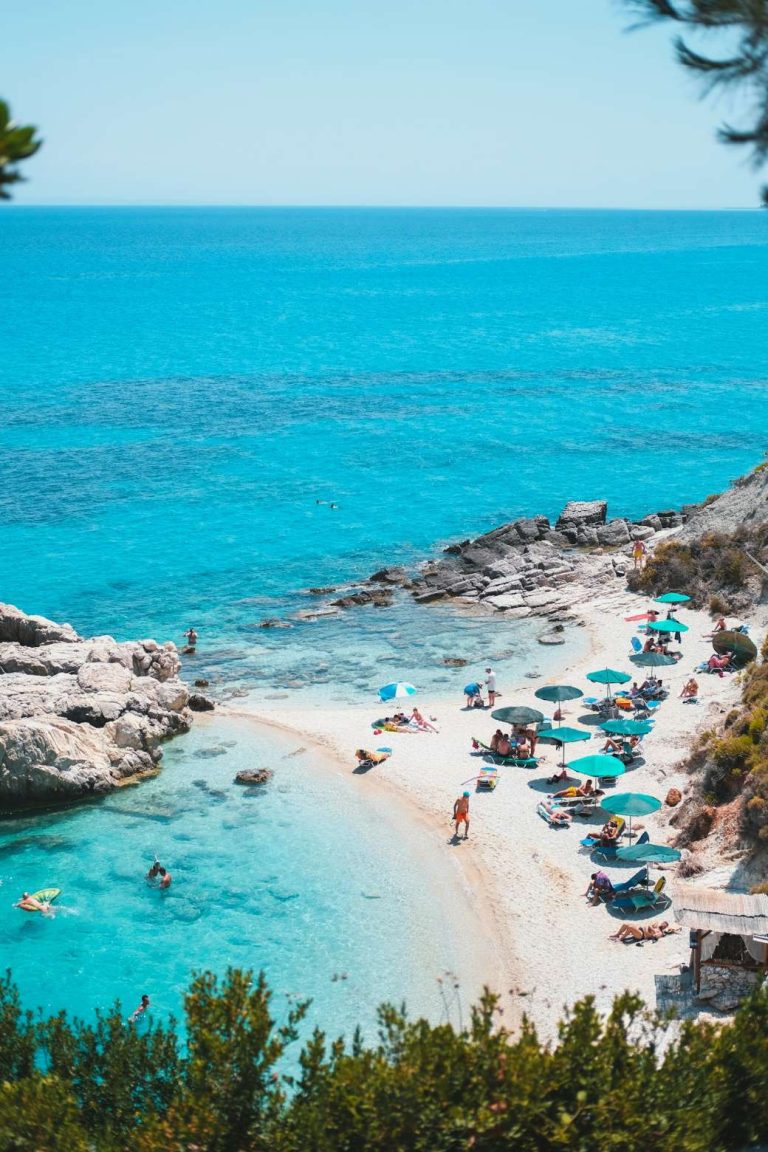 Beaches
The beaches
See the beaches →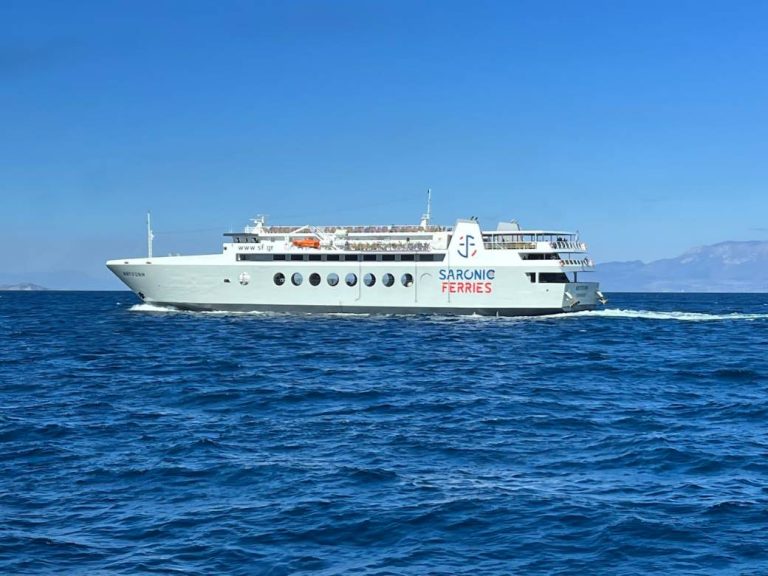 Itinerary
Day by day
See the itinerary →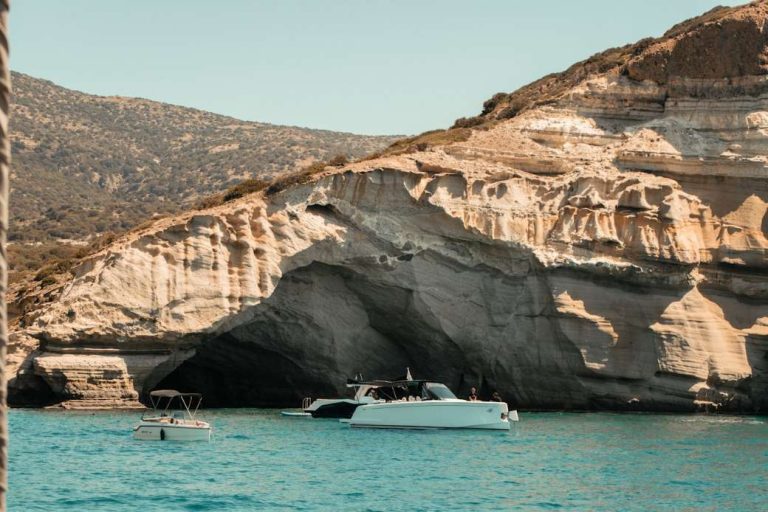 Day trips
Day trips
See the day trips →
Booking
We sell nothing and book nothing for you. Every guide on this page tells you how to arrange each piece yourself - which ferry operator, when to book, what to prebook and what to leave loose.