The short answer
Choose Santorini if the caldera view is the reason for the trip, because nothing on Naxos replaces it. Choose Naxos for beaches, value, space and an island you can settle into for a week. On about a week, do both, and give Naxos the longer half.
That is the honest answer to Santorini or Naxos, and it is asymmetric on purpose. Santorini vs Naxos is not authentic versus Instagram; it is one question with a hard edge, because one island sells you a landform and the other sells you a week. This page settles the axes you actually weigh: the view, what Naxos has instead, beaches, cost, crowds and evenings, getting around, and who each island suits.
Choose Santorini for the caldera view, the sunset and a short, high-impact trip. Choose Naxos for beaches, value, space and everyday ease. Do both if you have roughly a week, with Naxos as the longer half.
Santorini vs Naxos at a glance
Here is the whole decision in one view. Most rows fall to Naxos, and the few that fall to Santorini are the ones that define a particular kind of trip.
| What you’re deciding | Santorini | Naxos | Verdict |
|---|---|---|---|
| Best for | The view, the icon, a short bright trip | Beaches, value, space, a whole week | Depends on why you’re going |
| What kind of trip | See-it-once, high-impact | Settle in, a bit each day | Different trips |
| The view | Villages on a flooded-crater rim | Portara, harbour, mountain views | Santorini, and nothing replaces it |
| Beaches | Black and red volcanic shore | Long pale sand, gently shelving | Naxos |
| What fills the days | The rim, wine, the ancient sites | Beaches, mountain villages, food | Both, different registers |
| Cost and value | Higher, view-driven | Lower, a farming island | Naxos |
| Crowds and cruise calls | Big cruise ships call; midday crush | Big cruise ships don’t call | Naxos, quieter |
| Families | Cliffs, steps, volcanic shore | Flat town, shallow sand, space | Naxos |
| Couples and honeymoons | The iconic Greek honeymoon | Relaxed, better-value week | Santorini for the icon |
| Getting around | Small, buses and feet, but steps | Bigger; coast by bus, interior by car | Depends on the car question |
| Evenings | Rim bars in Fira, low-key | Harbour and Chora-lane dinners | Neither is a party island |
| Ideal length of stay | A short leg | A longer stay | Naxos the longer half |
The read-out is short: Naxos takes beaches, value, space, families and everyday ease; Santorini takes the view, the sunset and the iconic romance. The Verdict column is our editorial call rather than a score, so if you weight the view more heavily than we do, read the table your own way.
This page compares the two at a decision level only. For every beach, base, attraction and season, go deep on the Santorini guide and the Naxos guide.
What only Santorini has: the caldera
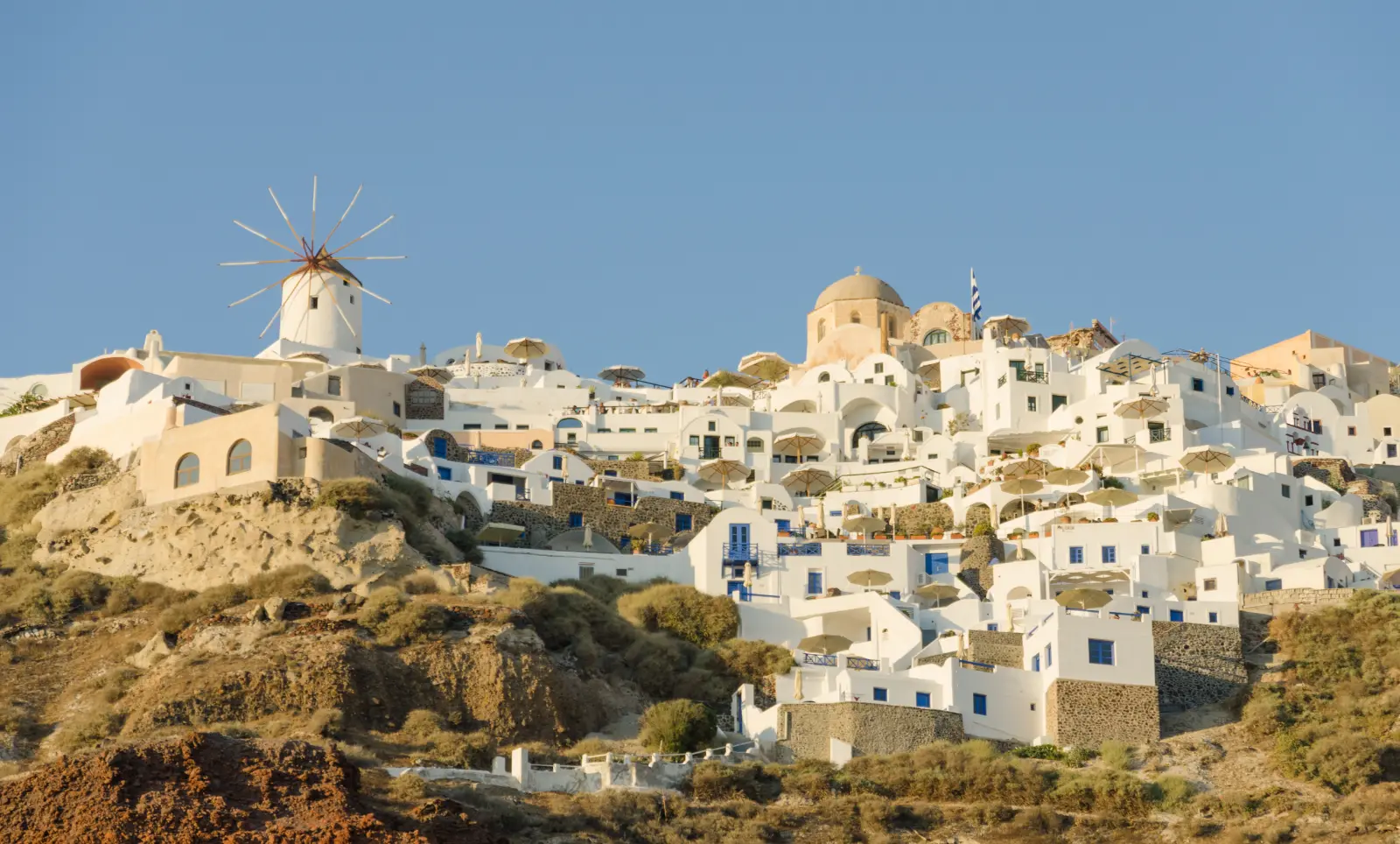
Choose Santorini if the caldera view is a reason for the trip rather than a bonus. The reason nothing else on your shortlist substitutes for it is physical: Santorini is the rim of a flooded volcano, so the villages of Fira, Firostefani, Imerovigli and Oia sit along a cliff a couple of hundred metres above the water, facing the crater and the sunset. That is not a mood or a filter. It is a landform, and the geology behind it belongs to the Santorini guide.
This is the one thing on the shortlist that does not transfer. A quieter island can give you white villages, better sand and lower prices; it cannot give you a village on the rim of a drowned crater. Ferryhopper’s own Santorini-alternatives guide lists Naxos among the substitutes and claims a caldera view for none of the islands on it, so the boundary is theirs, not a line we invented.
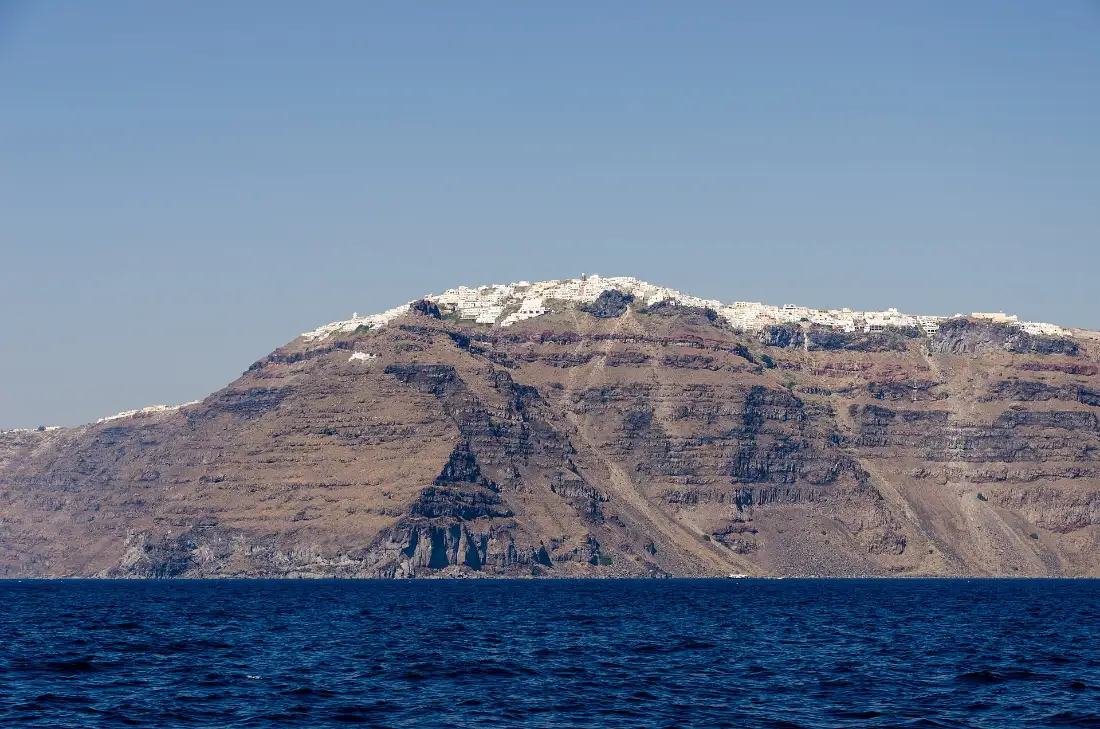
The trade-offs are the flip side of the same geology. The cliff is why the island is stairs and steep, polished cobbles, why the rim rooms cost what they cost, and why the sunset viewpoints stand shoulder to shoulder in July and August.
None of that means there is only a view to look at. The Bronze Age town at Akrotiri, the interior villages and the Assyrtiko wineries are a second Santorini most people skip, and things to do in Santorini and Oia start there. Santorini also owns the iconic Greek honeymoon, for the same reason it owns the rest: the geology. Plan that on a Santorini honeymoon.
Choose Santorini if the caldera view is the reason you are going, and accept the cost, the steps and the crowds that come attached to it.

Diagram by Greece Trips. Free to reuse with credit - CC BY 4.0.
What only Naxos has: a working island
Choose Naxos if you want an island to settle into rather than a viewpoint to visit. Naxos is the largest and greenest island in the Cyclades and the group’s farming exception: olive valleys and grazing herds under Mount Zas, the marble villages of the Tragea at Halki and Apeiranthos, and the Portara, the free-standing marble gateway that frames the sunset above the harbour. The depth lives on the Naxos guide; the shape is what matters here.
The mechanism the whole page rests on is economic: Naxos grows what it serves. A working island charges less, stays open past October and keeps a real town behind the harbour front. That is not atmosphere - it is why the bill is different. The island’s own cheese, its protected-name potatoes and the citron liqueur distilled at Halki are the same story on a plate.
Be honest about the trade, because it is true by construction rather than an invented absence. Naxos does not do clifftop theatre. There is no caldera and no sunset amphitheatre, and that is what you give up for the best sand in the Cyclades.
Santorini’s shape gives you the view. Naxos’s shape gives you the beach.
Choose Naxos if a week on a real island beats a viewpoint you photograph and leave. Start with the Portara and things to do on Naxos.
Beaches: black volcanic shore, or the best sand in the Cyclades
If beach days are a real reason for the trip, Naxos wins the water itself, and it is not close, because the two islands are made of different rock. Santorini’s beaches are for the look; Naxos’s are for the swim.
Santorini has no soft golden sand. Its volcanic origin gives it black and red pebble and coarse dark sand along the east and south coasts at Kamari, Perissa and Perivolos, with the much-photographed Red Beach under its rust-coloured cliff near Akrotiri. The dark stone holds the heat, and the shore tends to drop away more steeply than soft sand does. The Red Beach access path has seen repeated closures for rockfall risk and is frequently roped off, so check its current status before you make the trip and be ready to view it from the platform above or from a boat.
Naxos’s west coast is effectively one beach that changes name as it runs south, from Agios Georgios at the town’s edge through Agios Prokopios, Agia Anna and Plaka to Mikri Vigla and Alyko. It is coarse pale sand over a seabed that shelves gradually, and it gets emptier and windier the further south you go.
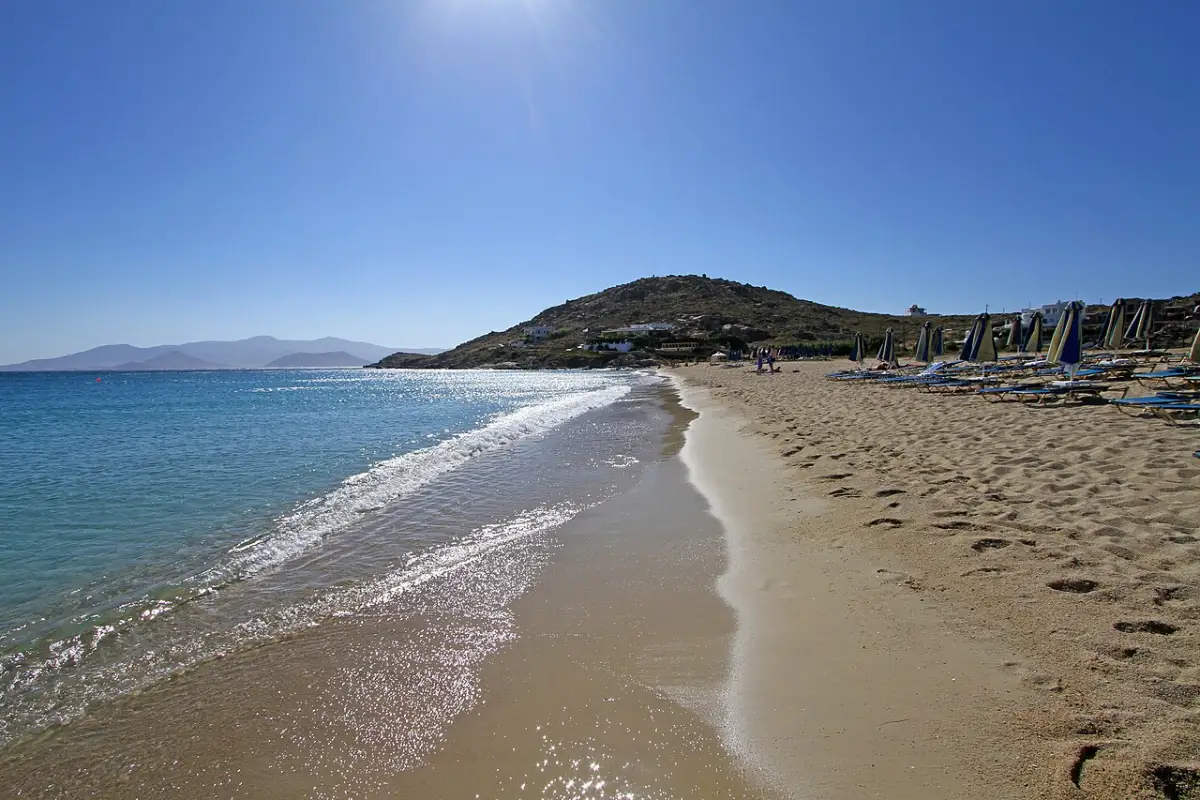
What the sea does on any given day is weather, not a fixed property of a beach, so read the ground and check the conditions rather than trusting a rating - what the sea is like covers that.
Choose Naxos if swimming and sand days are the point; choose Santorini if you want the beach as scenery on an island you came to for other reasons. The detail sits on Santorini beaches and Naxos beaches.
Cost: the gap is structural, not seasonal
Naxos is the cheaper island, and every source in the field agrees. The useful part is why, because the reason is built into the two islands, so shifting your dates narrows the gap without ever closing it.
Santorini’s premium is the view. Caldera-edge frontage is a finite length of cliff, and it meets permanent cruise-and-honeymoon demand, so the rim room is the single biggest line in most Santorini budgets. The island also has no natural fresh water and runs on desalination, and it imports most of what it serves, which holds everyday costs up.
Naxos is the other case: a bigger farming island that grows its own food and is not boutique-driven, so rooms, taverna meals and car hire all sit lower, and a longer stay gets cheaper rather than more painful.
Here is the part worth planning around. Most of the Santorini premium is a view premium, and you can decline it. Staying off the rim, eating away from it and using the buses cuts the bill sharply. So the honest framing is not that Santorini is unaffordable, but that on Santorini you are choosing whether to buy the view.
Every plannable figure lives on what a Greece trip costs, which runs the Santorini-money-versus-Naxos-money comparison in full. This page carries the mechanism and no numbers.
Choose Naxos for the cheaper all-round week and the better value on a longer or family stay. Choose Santorini if the view is what you are buying, and decide deliberately whether you are paying for it.
Crowds, cruise calls and what the evening is like
The two islands differ less in how many visitors they get than in when those visitors arrive and where they stand, and that is the part you can plan around. Choose Naxos if crowds are a deal-breaker; choose Santorini and plan around the clock if the view is worth the work.
Santorini’s crowd has a shape and a clock. Cruise ships dock most mornings and push day-trippers into Fira and Oia around the middle of the day, and the sunset viewpoints fill in the hour before sunset. That is plannable: early and late are a different island from midday.
The big cruise ships do not call at Naxos. Published cruise schedules show it taking small and mid-size vessels rather than the mainstream mega-ships, so the harbour never empties a few thousand day passengers into town at once.
Evenings are a matter of register, not of more versus less. Santorini concentrates its evening variety in Fira, with rim bars and a handful of clubs, and it is deliberately low-key next to Mykonos. Naxos runs to harbour-front dinners and bars in the Chora lanes. Neither island is a party island, and neither pretends to be. Which bars and rooms are open changes every season, so plan by the area rather than a name.
One thing separates them on timing: shoulder months thin the Santorini crowd far more than the Naxos one, because Naxos was never carrying the same load - see shoulder season in Greece. For the two sides of the cruise question, there is Santorini nightlife and Greece by cruise.
Getting there, and the axis the guides disagree on
Both islands are easy to reach on the same ferry line. They both have airports and both sit on the Cyclades corridor out of Piraeus, Naxos about halfway down the spine and Santorini at its southern end. Santorini also takes international summer flights, while Naxos’s airport is domestic only, so an overseas trip there connects through Athens. Take the times for your dates from the Greek island ferries guide.
Which is easier once you land is the one axis where the sources genuinely split, and saying so is more honest than inventing a winner. One guide scores it for Santorini: small, a bus network out of Fira, plenty of visitors who never rent a car. One scores it for Naxos: a flat coast road, a useful bus down the west strip, a walkable Chora and cheaper hire. A third calls it a tie. Treat any single winner as low-confidence and self-select on the condition instead.
The condition is a difference in kind. Santorini is small enough for buses and feet, but the caldera villages are stepped and steep, taxis are famously scarce, and the arrival at Athinios port is a scrum. Naxos is far bigger: its west-coast strip works well by bus for a beach stay, but the mountain interior wants a car for two or three days. Our Santorini guide also notes that rented quads and scooters are a common cause of holiday injuries on the cliff roads, so weigh that rather than treating any road as a given.
Choose Santorini if you want a small island you can manage without a car and you are fine with steps; choose Naxos if you want more island to cover and will rent a car for part of the stay. Sort the vehicle question on which islands need a car, and place the pair with the Cyclades.
Which should you pick? By traveller type
The same two islands score differently depending on who is going, and for several traveller types this stops being a close call. Match the island to the traveller:
- First-timer with one island: Naxos, for the easier, better-value, better-rounded trip; Santorini if the postcard is the reason you booked Greece at all. That is the same split our best Greek island for first-timers page reaches.
- Families: Naxos, and it is not close. Sand that shelves gradually, a flat walkable town, family-run food, and the big cruise ships do not call. Plan it on Greece with kids.
- Couples: conditional. Santorini earns a short off-peak stay for the view rather than a whole trip, while Naxos is the default relaxed-value week - the call our Greece for couples page already makes.
- Honeymooners: Santorini for the icon, though our house recommendation is a pairing rather than one island. Shape it on Greece honeymoons.
- Beach, budget, or a longer stay: Naxos, every time - the sand, the value, and an island that gets cheaper the longer you settle in.
- Shoulder-season travellers: either, but Santorini changes more between peak and shoulder, so the off-season upside is bigger there.
- Anyone with a stroller, small children in tow, or mobility limits: Naxos, on the ground rather than a rating - Santorini’s caldera villages are stepped, steep and polished, while the Naxos coast strip is flat. Read accessibility in Greece before you commit either way.
- Photographers and one-setting slow travellers: Santorini, for the one view you came to sit in front of.
Read it top to bottom and Naxos takes most rows; the ones that fall to Santorini are the ones where the view, or the postcard, is the actual reason for the trip.
Can’t choose? Here’s how to do both
On about a week, the better answer is usually not to choose. The two islands sit on the same ferry line and they complement each other almost exactly, so pairing them is the house recommendation - the shape our Greece honeymoons and best Greek island for first-timers pages already use for a first Cyclades trip.
Give Naxos the longer half, because it is the island that rewards settling in - three days is its honest minimum and four to five the sweet spot - and treat Santorini as a short, high-impact stop, where three or four nights suits most people. Take those as a shape, not a timetable.
The order has a practical answer: run the Cyclades line southbound, so every boat carries you forward and you fly home from Santorini rather than sailing back over water you have already crossed. It is a recommendation, not a rule, so let your flights decide - the seven-day Athens, Naxos and Santorini route and the Cyclades island-hopping itinerary both run that way, and the island-hopping guide covers stringing more islands on.
As for day-tripping from Naxos to Santorini, travellers report that a same-day return on the scheduled ferry is tight and depends entirely on which sailings run on your date, which is why organised day cruises are the route many people take instead. If Santorini matters enough to cross for, a night usually beats a dash. Take the timing from the ferries guide, and, because peak-summer sailings and rim rooms fill, book the crossing and the Santorini nights ahead.
Our pick, if you make us choose
Forced to one island, book Naxos. For most first trips, families, beach travellers and anyone watching the budget it is the one to take: better sand, more room, better value, an island you can live in for a week rather than photograph and leave. That is the verdict our first-timers, family and couples pages already reach, and it does not drift here.
Give Santorini its due without hedging. Book it when the caldera view is a reason for the trip rather than a bonus, keep it short, and go off-peak if you can. Neither choice is a mistake; they answer different questions. One island sells you a landform; the other sells you a place to live for a week. And on about a week, the honest move is to stop choosing and take both, with Naxos as the longer half.
From here, go deep on the Naxos guide or the Santorini guide, or step back to the Cyclades. If your shortlist is really a different pairing, the same decision spine runs through Santorini vs Crete, Naxos vs Paros and the rest of the island comparisons.
Quick answers
Is Naxos or Santorini better?
Neither is better outright, and Santorini vs Naxos turns on one thing. Santorini has the caldera, the cliff villages and the sunset, and no other island replaces that. Naxos has the better beaches, more space, lower prices and an island you can settle into. Pick the one that matches why you are going. The short version: the view goes to Santorini, and almost everything else goes to Naxos.
Is Naxos cheaper than Santorini?
Yes. Santorini’s premium sits on a finite length of caldera-edge frontage meeting steady cruise-and-honeymoon demand, on an island that desalinates its water and imports most of what it serves; Naxos is a bigger farming island that grows what it serves, so rooms, tavernas and car hire all run lower. Much of the Santorini premium is a view premium you can decline by staying off the rim and using the buses. The plannable breakdown sits on what a Greece trip costs.
Is Naxos or Santorini better for families?
Naxos, for most families. Long sandy west-coast beaches on a seabed that shelves gradually, a flat walkable town, family-run food, better value, and the big cruise ships do not call. Santorini is harder work with young children, since it is cliffs, steps and a volcanic shore, though it still appeals to older ones for the sights and the boat trips. Plan the trip on Greece with kids.
Is Naxos bigger than Santorini?
Yes, and by a wide margin. Naxos is the largest island in the Cyclades and Santorini is one of the smaller ones, which is why Naxos takes days to see and Santorini can be covered in a couple. That size gap is also why Naxos has room for a farmed mountain interior and a long sand coast that Santorini simply does not have the ground for.
Can you visit both Santorini and Naxos in one trip?
Yes, and on about a week it is usually the better answer. They sit on the same Cyclades ferry line, they complement each other, and the house shape is Naxos as the longer half with Santorini as a short, high-impact stop. Run the line southbound so every boat carries you forward and you fly out of Santorini, and let your flights decide if they say otherwise. The ready-made versions are the seven-day Athens, Naxos and Santorini route and the Cyclades island-hopping itinerary.
Can you day trip from Naxos to Santorini?
Travellers who have done it report that a same-day return on the scheduled ferry is tight and depends entirely on which sailings run on your date, which is why organised day cruises are the route many people take instead. If Santorini matters enough to cross for, a night usually beats a dash, and the crossing is short enough that a night costs you very little. Take the timing from the ferries guide.
Is Santorini or Naxos better for couples and honeymooners?
Santorini for a first, iconic honeymoon, because the caldera suites and the sunset are the setting most couples picture; Naxos for a relaxed, better-value week with beach time and real dinners. Our actual house recommendation is a pairing rather than a single pick: a few nights on the icon and a longer stretch on the quiet island. Plan it on Greece honeymoons, a Santorini honeymoon or Greece for couples.
Does Naxos have anything like the Santorini caldera view?
No. The caldera is a flooded volcanic crater with villages along its rim, and Naxos is not a volcano. What Naxos has instead is the Portara framing the sunset above the harbour, a Venetian old town on its hill, and mountain villages with long views inland. So if the caldera is what you want, no cheaper island substitutes for it; the honest saving is to keep Santorini short rather than to swap it out. Ferryhopper’s own Santorini-alternatives guide lists Naxos among the alternatives and claims a caldera view for none of them.