Santorini
Things to do in Santorini
Almost everything people come to Santorini for is a consequence of one eruption. The crescent shape, the cliff, the black soil, the buried town and the wine all come out of the same event, and once you see the island that way it stops being a list of viewpoints and becomes one story with several entrances.
So read this page as a shape rather than a running order. What follows sorts into four kinds of thing, and the kind matters more than the sequence.
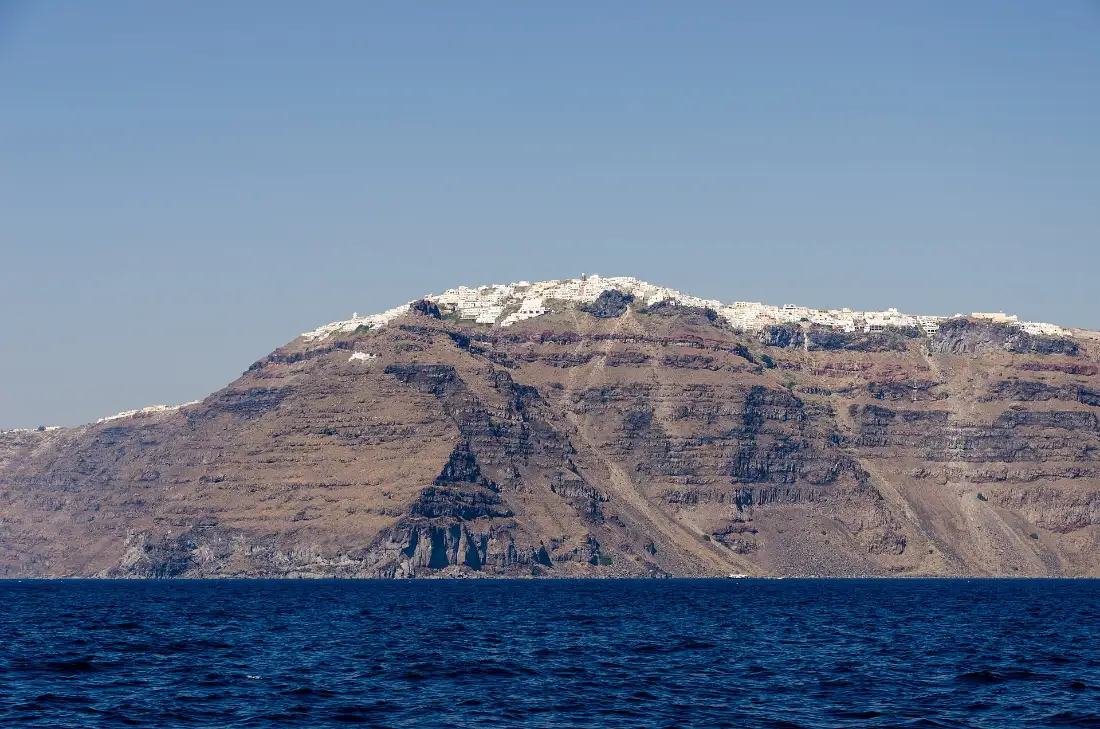
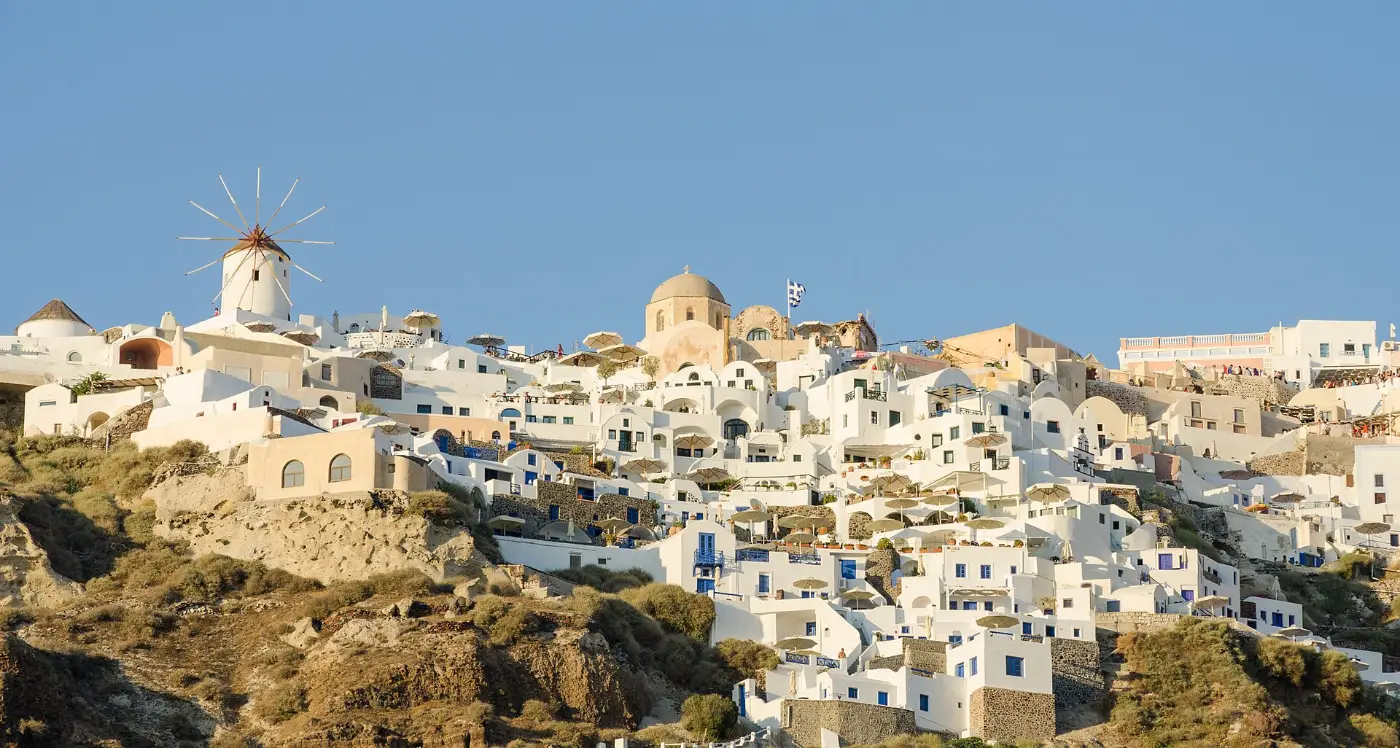
The rim. Fira, Firostefani, Imerovigli and Oia stand shoulder to shoulder along the top of the cliff, and they are one continuous edge rather than four separate destinations. Fira is the working capital: the bus station, the museums, the banks and ferry agents, the least village-like and the most useful. Oia is the postcard and the sunset, which is a crowd before it is a view, and it is worth arriving with a plan for where you will stand. Firostefani and Imerovigli sit between them, with the same caldera in front of them and a fraction of the pressure. The best single thing on the island is free and joins the whole line together: the clifftop path from Fira to Oia, roughly ten kilometres of exposed volcanic ground with almost no shade, which is a morning or a late afternoon and not a midday idea.
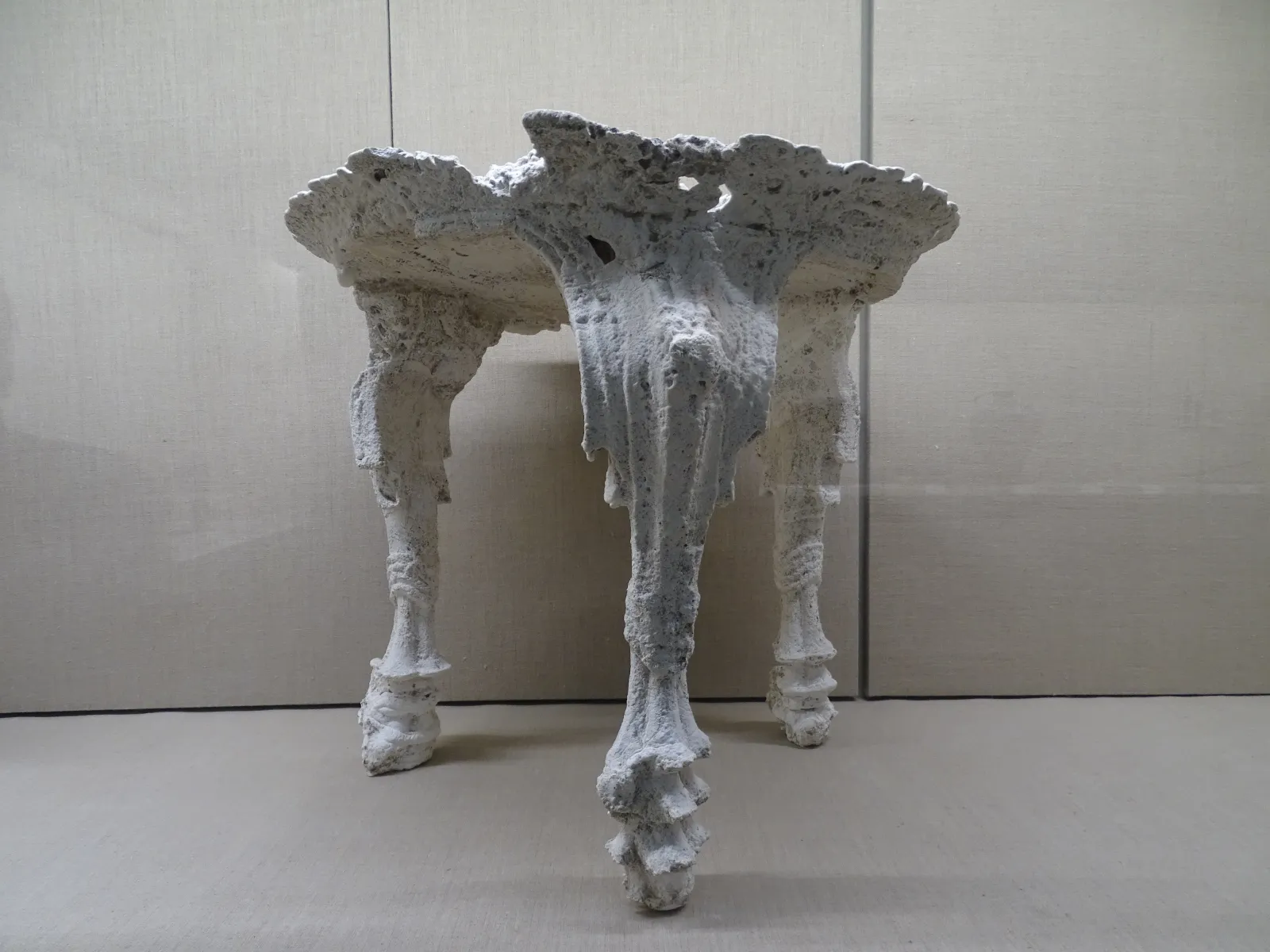
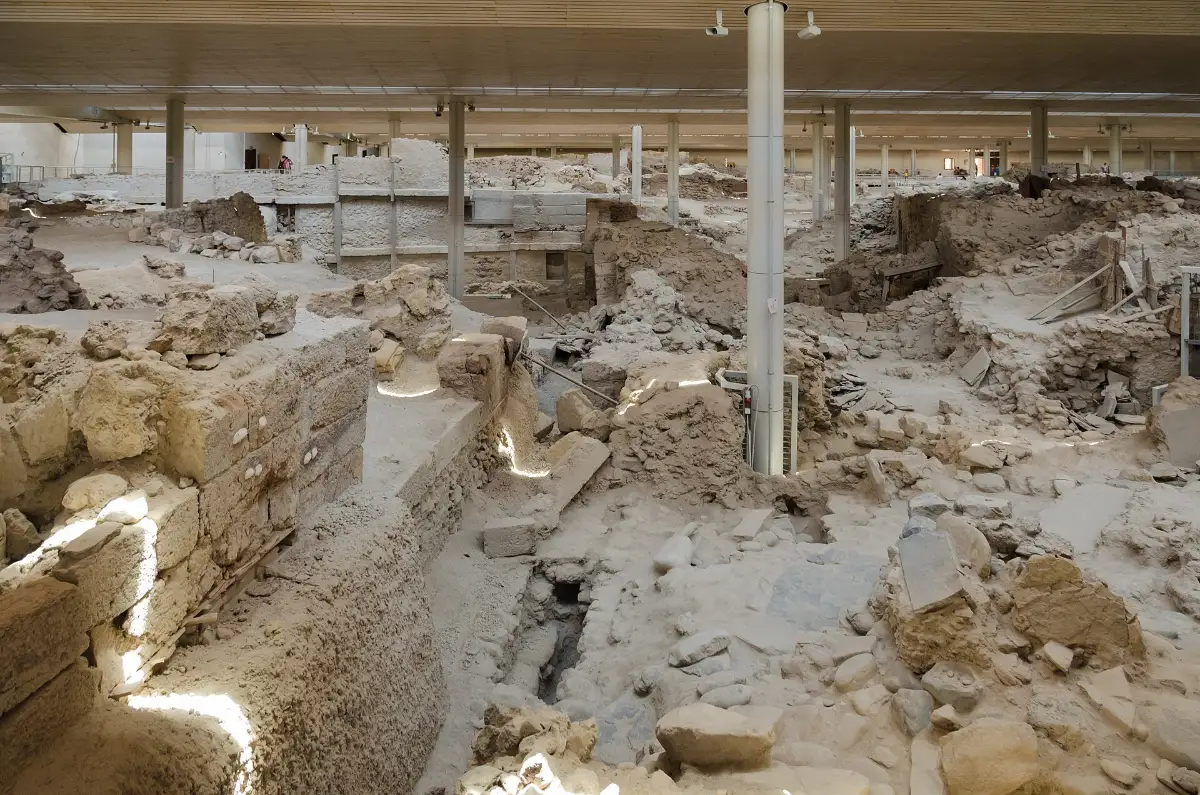
The excavations, which are two separate places and get confused. Akrotiri is a Bronze Age town buried by the eruption and preserved by it, and you walk it indoors, on raised walkways under a roof. Ancient Thera is something else entirely: a later city on the ridge of Mesa Vouno, open to the sky, reached on foot up from Perissa or by road from the Kamari side, and its argument is the position as much as the stones. The third piece belongs to neither and completes both. The Museum of Prehistoric Thera, in Fira, holds the finds from Akrotiri, the wall paintings included. Doing the excavation without the museum is the commonest mistake on this island and the easiest to avoid.
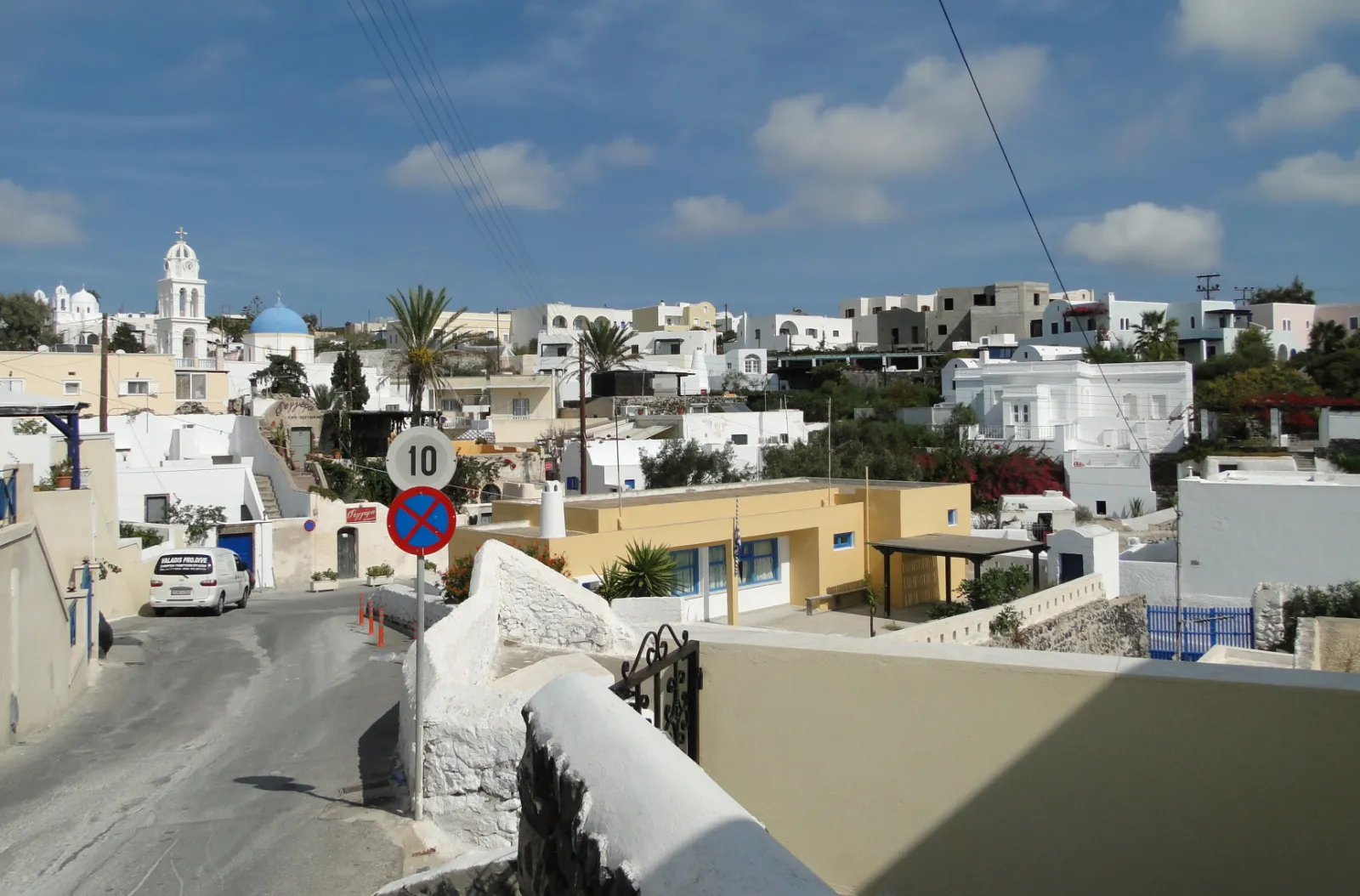
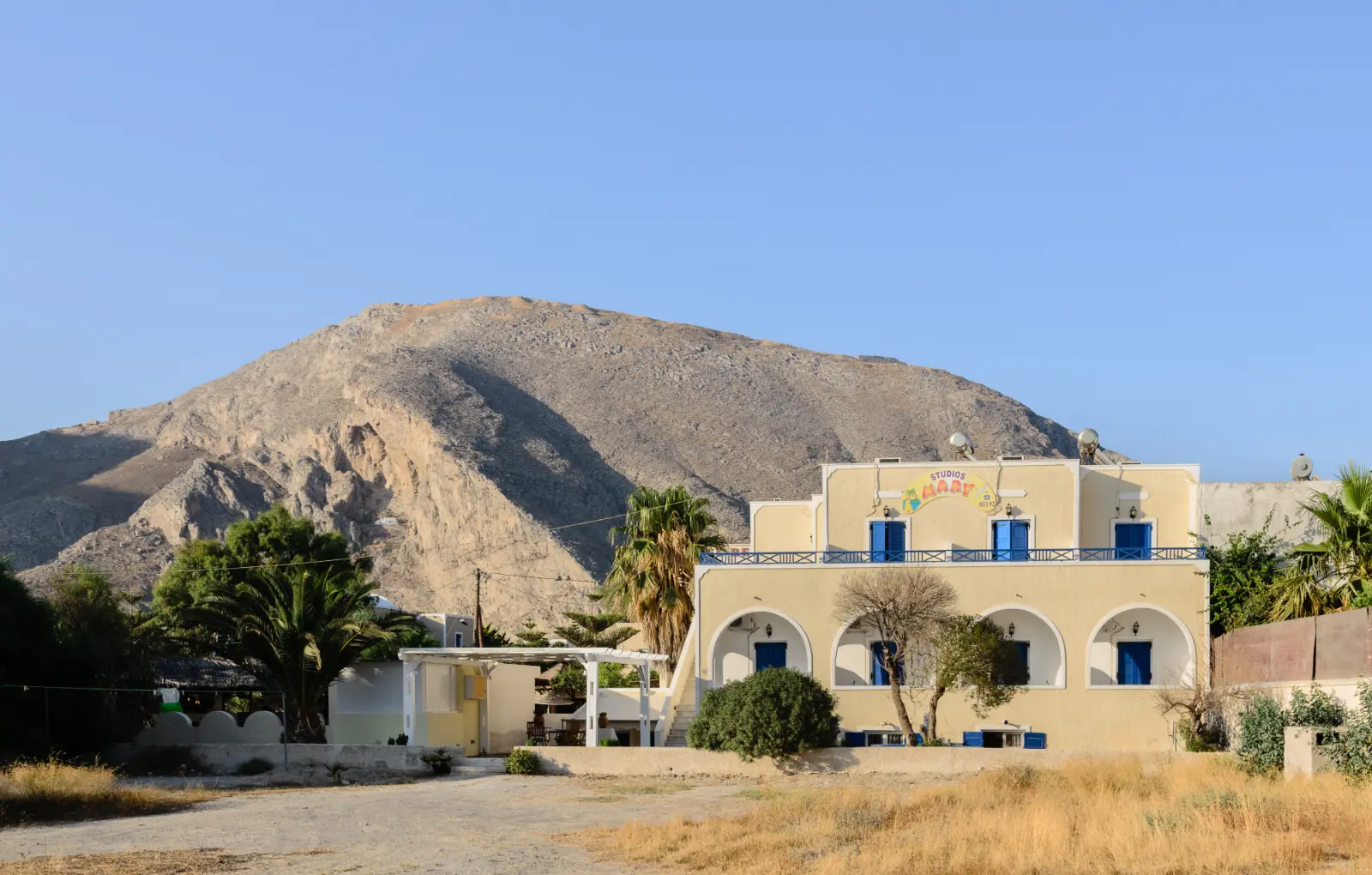
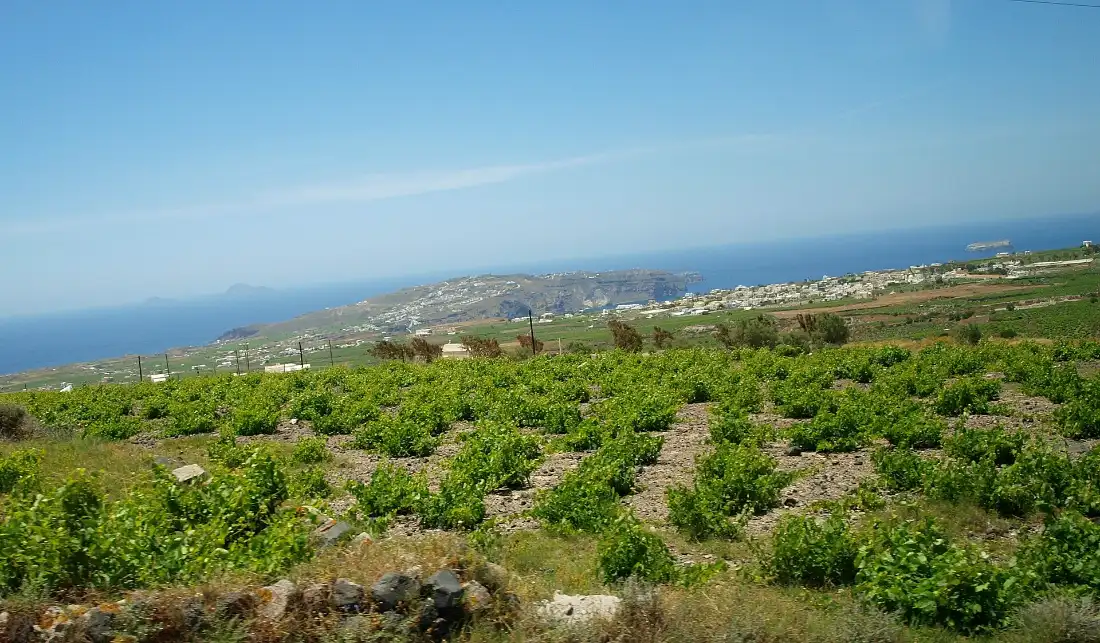
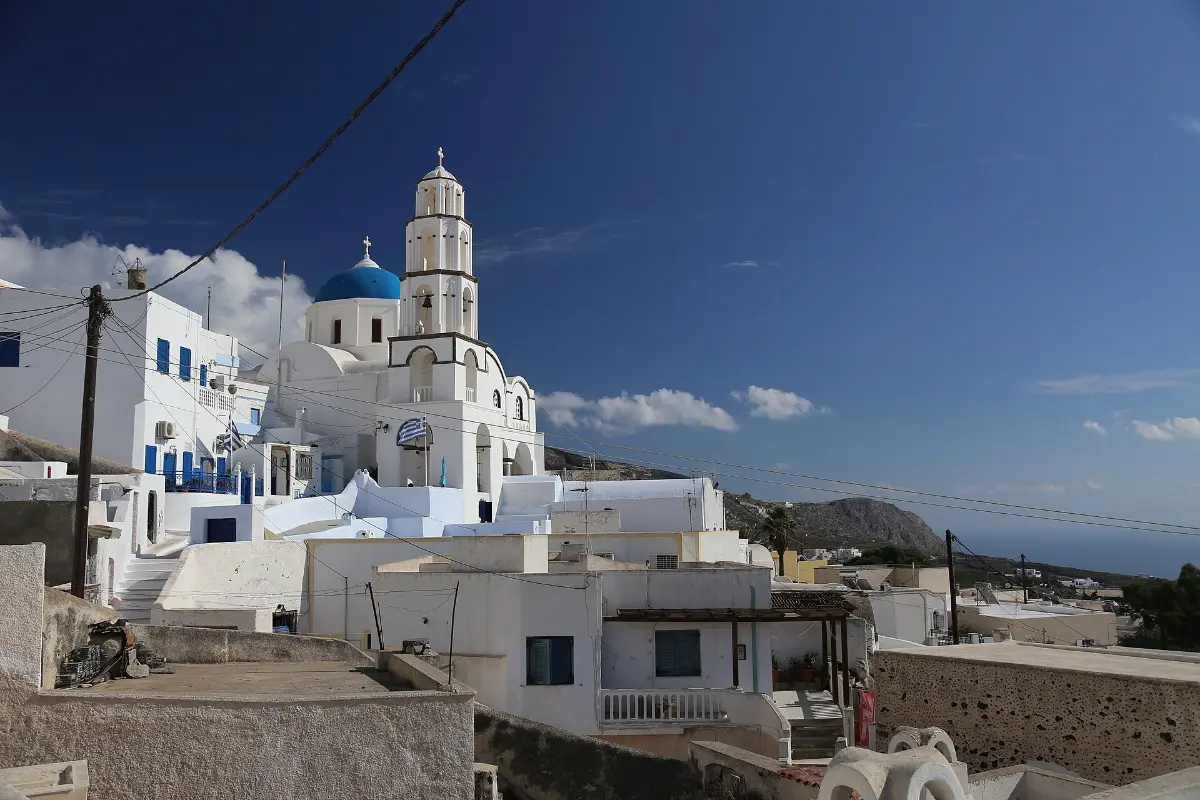
The inland island. Behind the rim, the ground flattens into vineyards on black soil and older villages that were never built for a view: Pyrgos on its hill, Megalochori, Emporio with its medieval core. This is also the wine country. Assyrtiko is the crisp white grown here in low basket-woven vines called kouloura, coiled on the ground so the fruit sits inside the basket, out of the wind and the sun. A half-day inland is the thing most first-time visitors leave out and most returning visitors put first.
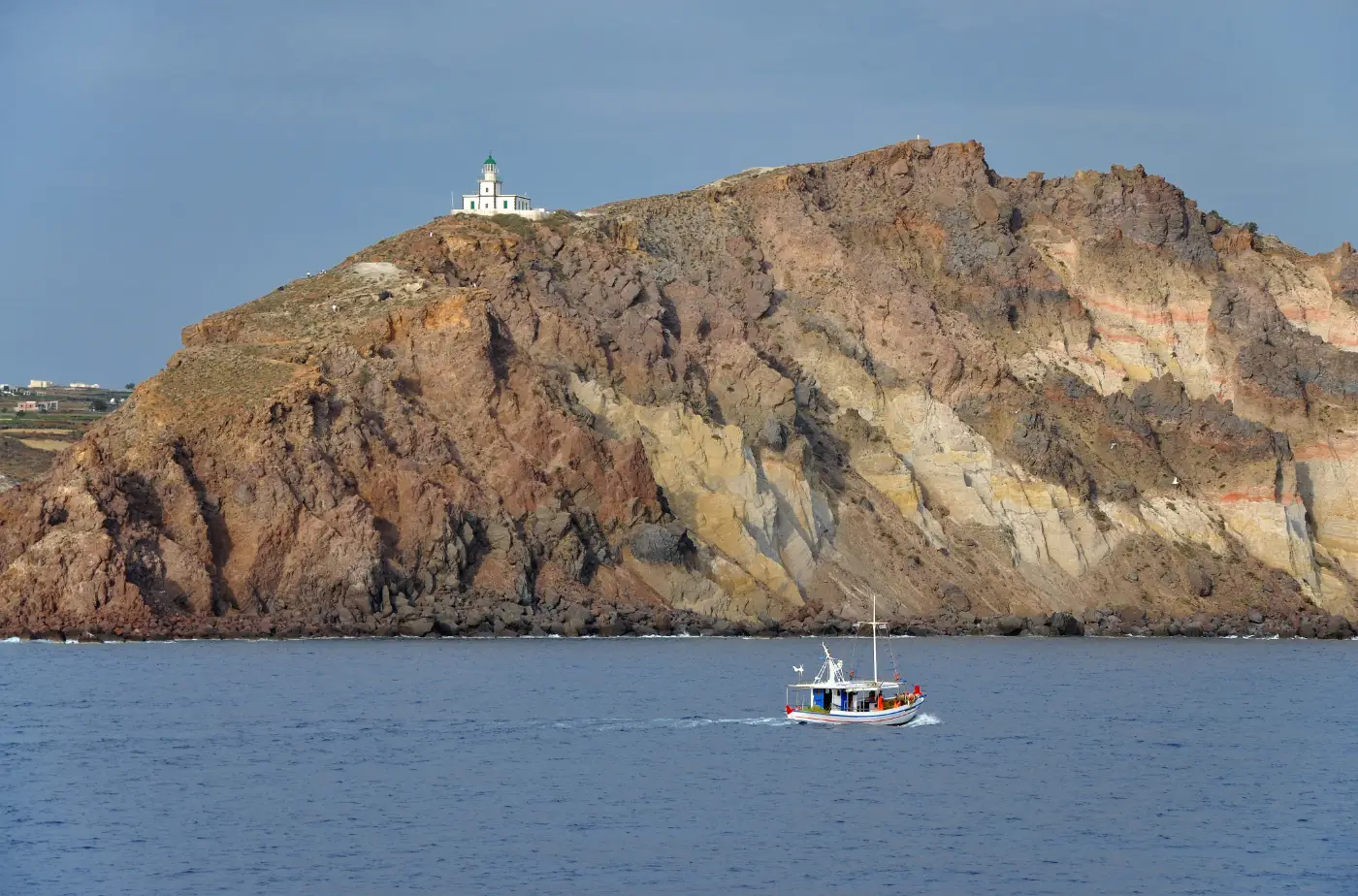
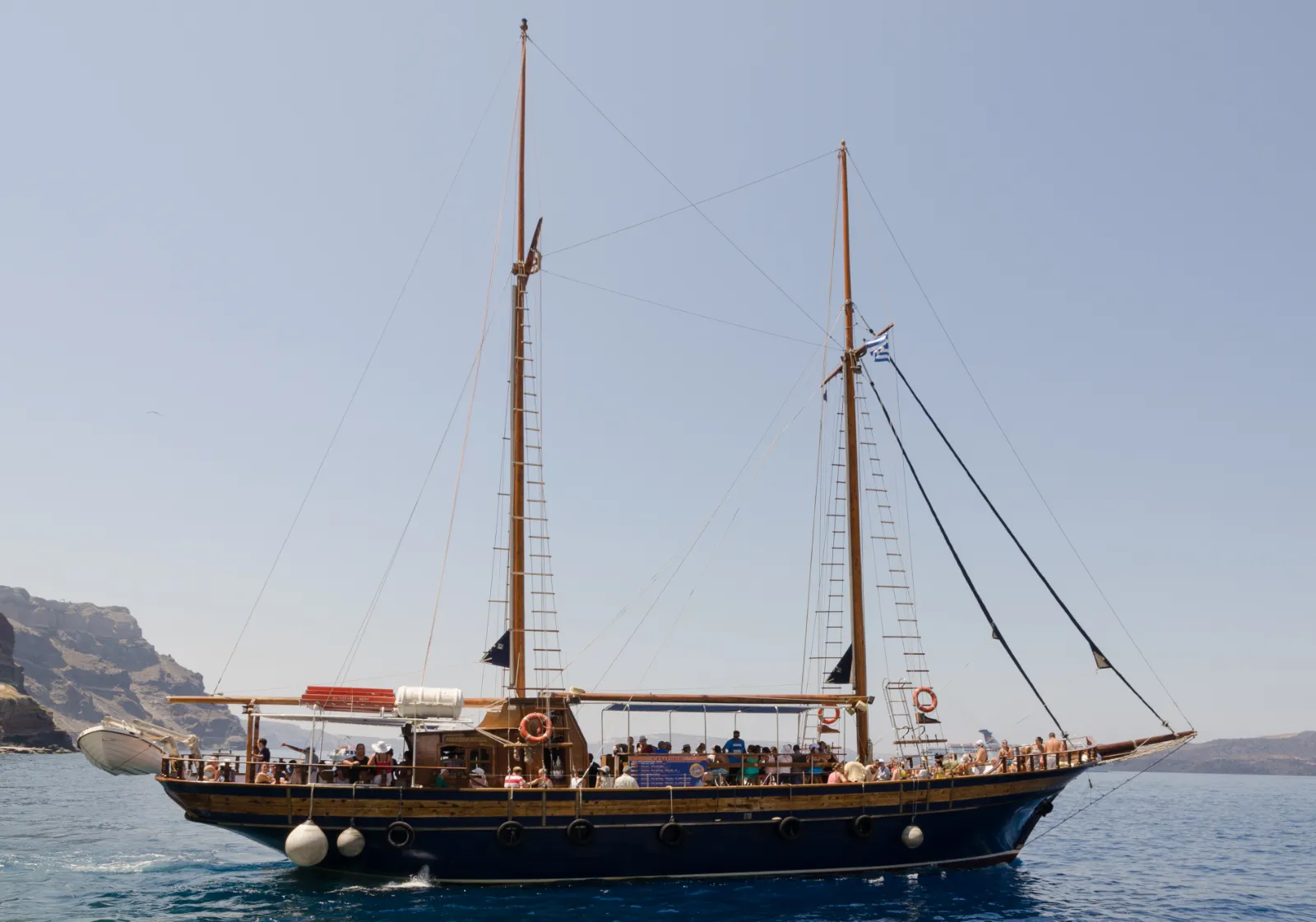
The water. The caldera reads differently from below, and the boat trips cross to the burnt islands in the middle of it, Nea Kameni and Palea Kameni, where the volcano is still the active part of the landscape and the hot springs come off it. Boats also work the south coast under the red and white cliffs, and the little harbour at Ammoudi below Oia is one of the places they leave from.
A note that applies to all of it, and that this page will not resolve for you. Opening hours, closed days and ticket structures at the state sites are set by the ministry and change with the season, sunset times move by a couple of hours across the year, and boat schedules belong to operators. Every page below tells you the mechanism and sends you to the source for your own date. Hours rot faster than anything else on a travel page, and on an island most people give three days to, a wasted morning is expensive.