Naxos
Things to do in Naxos
Naxos is the big fertile one. It is the largest island in the Cyclades and the greenest, it grows its own food on a scale its bare neighbours never could, and Mount Zas stands over the middle of it at just over 1,000 m. That is the fact that organises everything below: the sights are not gathered in one harbour town, and half of them are inland.
So take it in four parts, and note that they run roughly uphill.
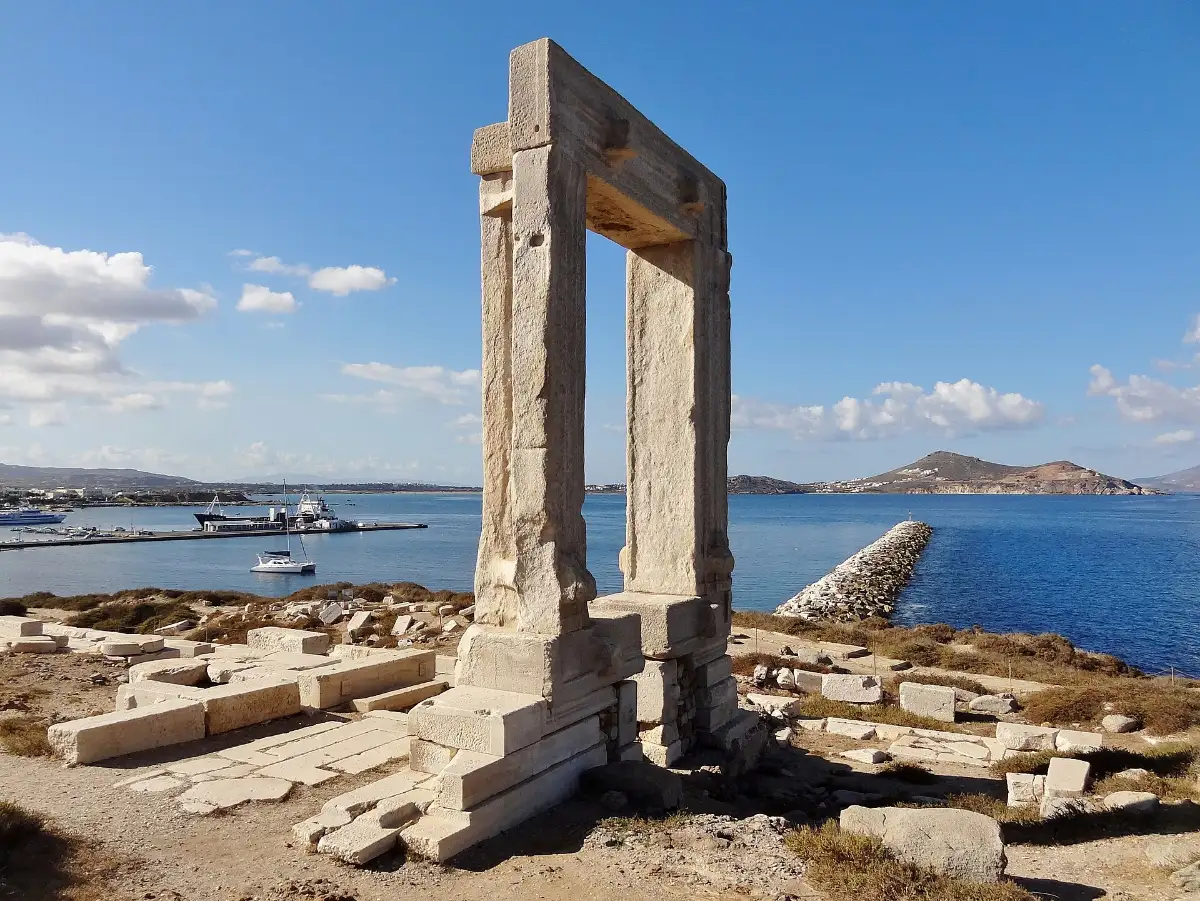
The gate. The Portara is the one entry below with a page of its own, and it is the first thing the island shows you: a marble doorway standing by itself on the islet of Palatia, framed against the sky, visible from the deck as the ferry turns in. It is the only finished part of a temple of Apollo begun in the sixth century BC and never completed, and it survives for an unglamorous reason, which is that its four blocks were too heavy to carry away when the rest of the stone was. A paved footpath joins the islet to the town. This is a walk out, a look and a walk back, and it is worth every minute of it.
The town under it. Naxos Town, the Chora, wraps the harbour under a Venetian Kastro, and the two are connected in a way most guides skip: a good deal of the temple’s stone ended up in the castle. The Kastro lanes are the argument for staying a night in town rather than treating the port as a transit point. The harbour front does the evening.
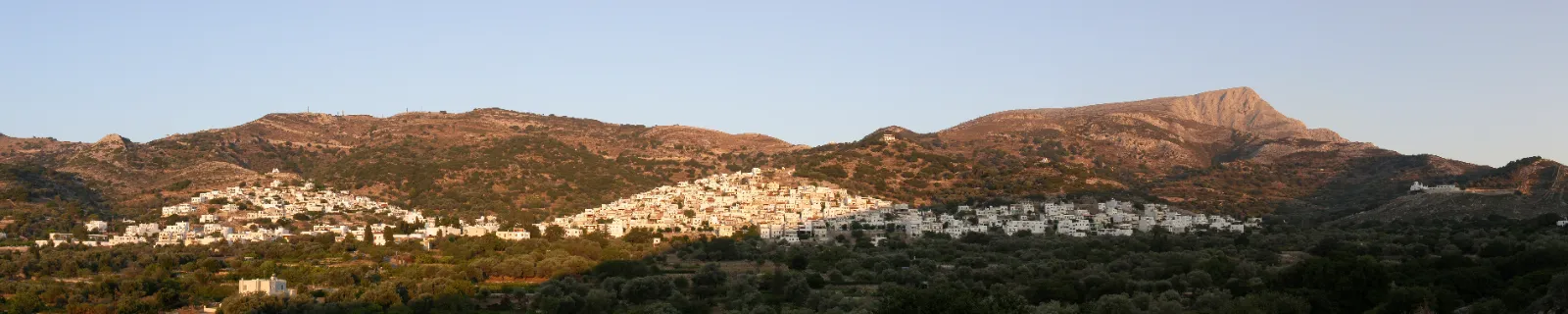
The interior, which is half the reason to pick this island. Inland and uphill lies the Tragea, an olive valley scattered with small Byzantine chapels. Halki sits at the middle of it with its old market lanes and its citron distillery, Apiranthos is higher and paved in the island’s own marble, and Filoti sits under Zas where the walking starts. Budget whole days for this rather than a spare afternoon: the roads are mountain roads, and the villages are the point rather than the scenery between them.
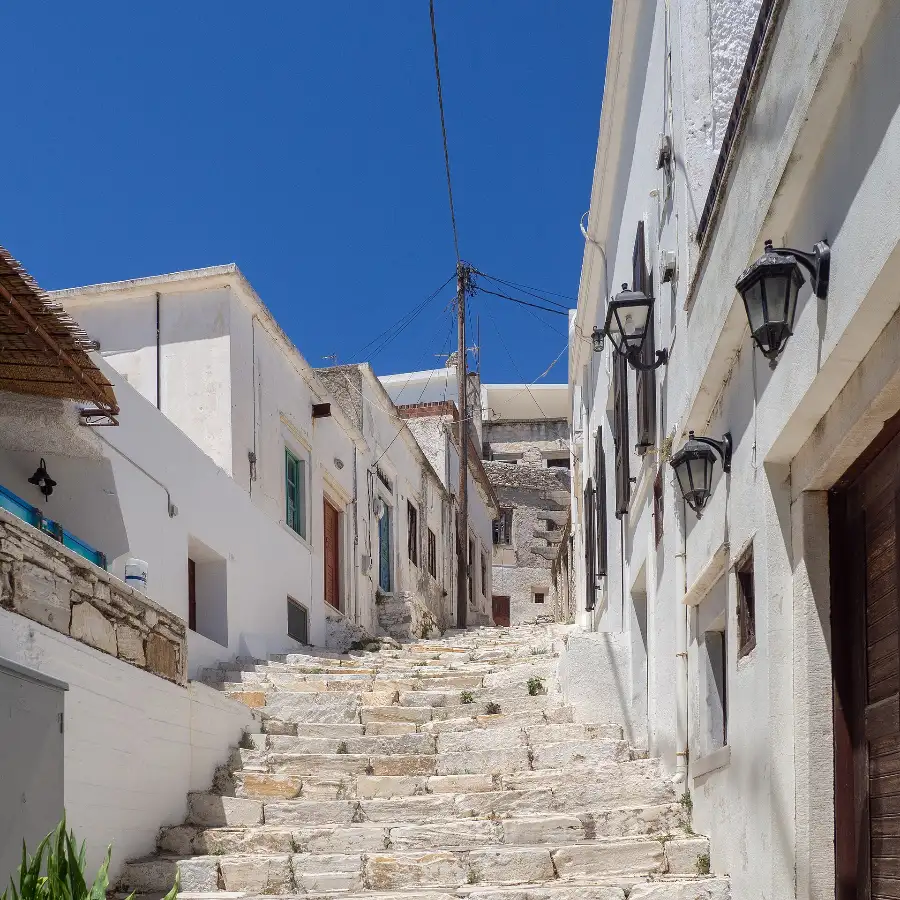
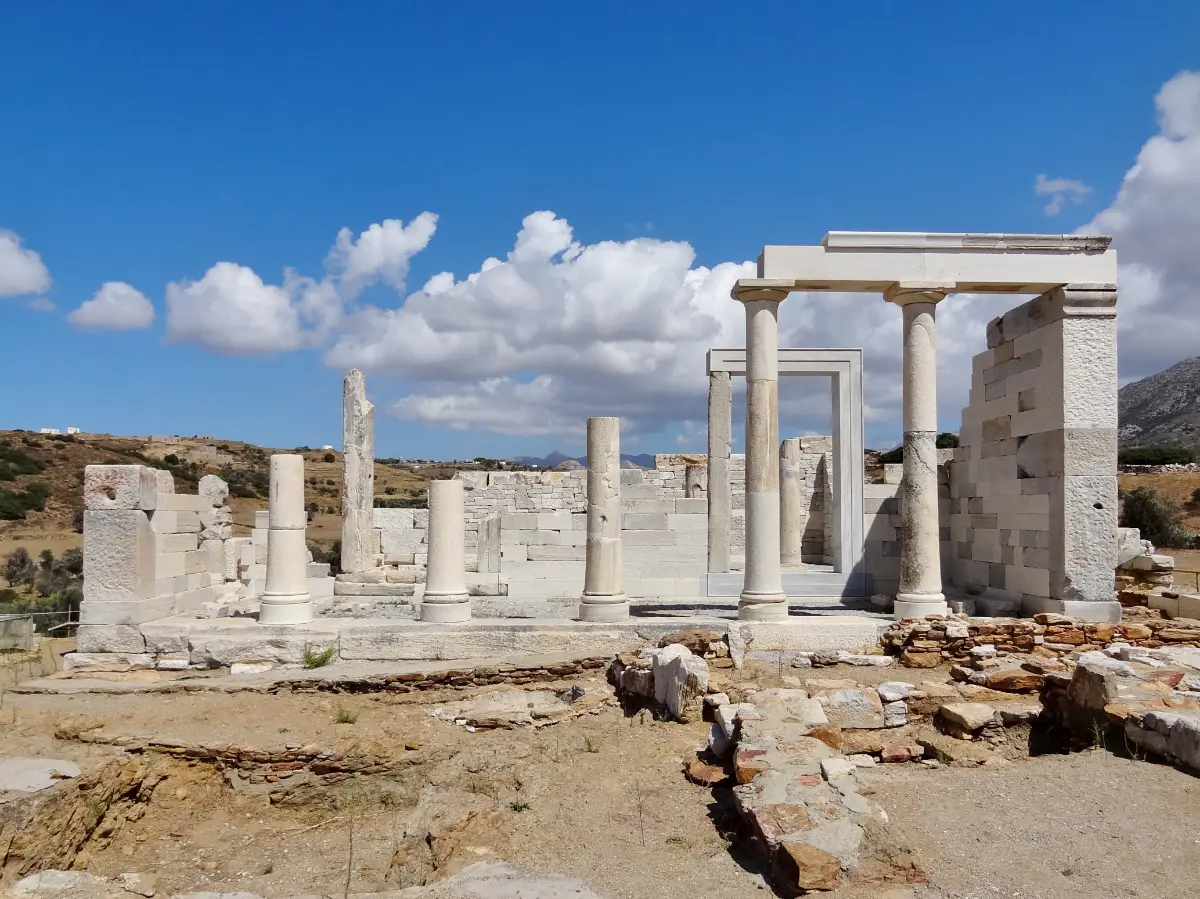
The unfinished statues, and the mountain. In the quarries above Melanes and Flerio lie the kouroi, colossal archaic statues abandoned where they cracked and still lying where the carvers left them. They are the quietest extraordinary thing on the island and they cost you a detour rather than a day. The Temple of Demeter near Sangri sits on the same loop. Mount Zas is the highest summit in the Cyclades, and the usual approach climbs from Filoti.
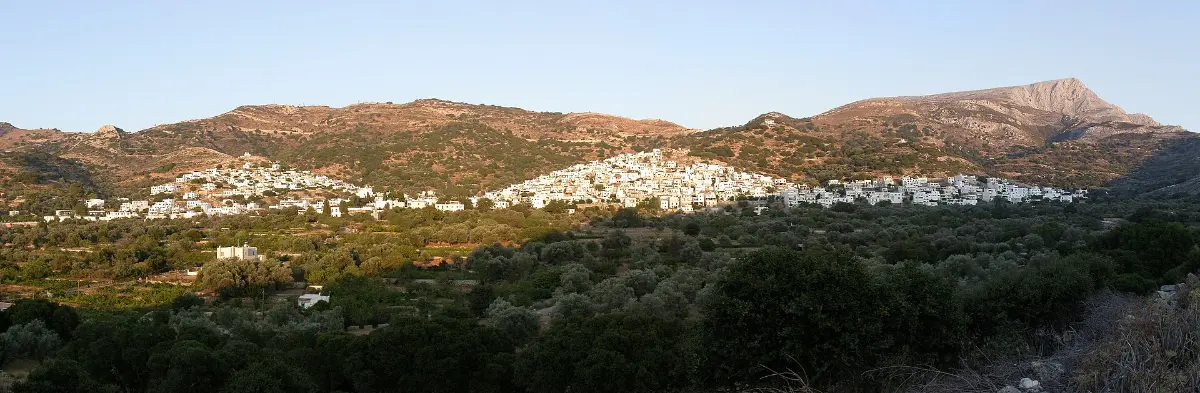
The transport split follows the same lines. The local bus handles Naxos Town and the west-coast beach strip well, while the Tragea, the ancient sites and the trailheads want your own wheels. That is why renting a car for two or three interior days rather than for the whole stay is the standard advice here, and it is the right advice.
We print no opening hours, no admission prices and no closed days for the sites named above, and we are not going to tell you which of them are free either. Our own Portara page went looking for a published fee, an opening time or an access rule for that monument and could not find one, and turning a silence into a promise is how a travel page sends somebody to a locked gate.
The Naxos guide settles days, bases and the beach half of the island. Naxos against Paros is the decision most Cyclades trips actually come down to, and the ferries guide covers how you reach either of them.