Start with the honeymoon you want, then pick the island
A Greece honeymoon rarely lives on one island. There is no single best Greek island for the occasion; the right one falls out of what you want the trip to be, and the near-universal move is to pair two islands rather than build the whole honeymoon on one. Start with the honeymoon you want, match it to an island below, then read on for the when, the cost and the route.

Diagram by Greece Trips. Free to reuse with credit - CC BY 4.0.
One line before you plan: this page is about honeymooning in Greece, the trip after the wedding. Getting married in Greece is a separate project, with its own paperwork, venues and guest list, and it is not what this covers.
Greece rewards a two-island honeymoon, not one
Where to honeymoon in Greece comes down to a pairing, not one island. Spend three or four nights on an icon like Santorini for the caldera view and the sunset, then move to a quiet island - Milos, Naxos or Paros - for the swimming and the seclusion, with a night in Athens at each end to hold the flights. That shape is the honeymoon; the single-island version leaves half of it on the table.
No Greek island gives you both halves at once. Santorini hands you the view, the caldera walk and the photographs, and in the same breath it hands you cliff steps instead of a beach, the year’s thickest crowds, and the highest prices in the country. A quieter second island gives back what the icon takes: a swimmable bay, an empty stretch of sand, a taverna where the table stays yours. You want both, so you take both, and the ferry between them is short.
You fly into Athens and out through it, so a night there at each end is not a detour. It is the buffer that protects everything else.
Which is the one rule that saves honeymoons: never book a same-day ferry-to-flight connection. Greek ferries run late, and a delayed boat that would cost you an afternoon on any other trip costs you the flight home on this one. Travelers report the same near-miss across the Greece forums year after year, not on a single blog. Keep a buffer night in Athens before you fly, and leave slack between islands rather than chaining tight same-day hops. In the shoulder season the boats sail less often, so that slack matters more, not less. How the ferries actually run and getting around Greece cover the mechanics; for the Cyclades pairing itself, the Cyclades island-hopping route lays out the crossings.

Diagram by Greece Trips. Free to reuse with credit - CC BY 4.0.
Which Greek island for which honeymoon
The best Greek islands for a honeymoon each suit a different couple: Santorini for the view and the sunset, Milos or Naxos for quiet beaches and seclusion, Crete for variety and resort ease, Mykonos for glamour, and Corfu for calm green water. Match the island to the honeymoon you want, then read the trade-off before you book, because each one asks for something in return.
Santorini: the icon, with an honest caveat
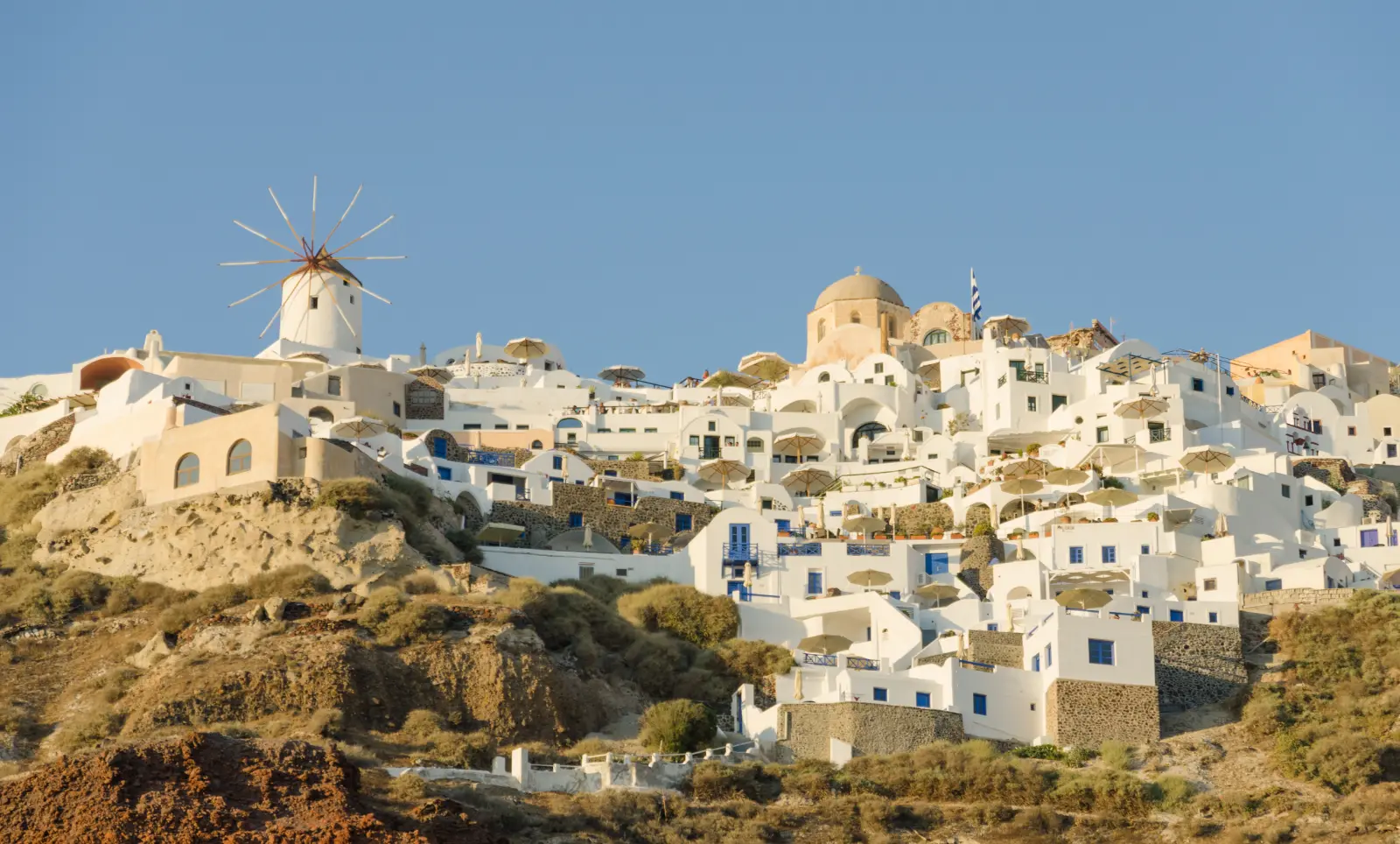
Santorini earns its reputation. The caldera villages - Oia, Imerovigli, Firostefani - stack white houses down a volcanic cliff above a drowned crater, the sunset over the water is the real thing, and the wineries on the volcanic terraces pour a wine you cannot get elsewhere. That is the postcard, and it delivers.
Now the caveat. The caldera hotels are cliff terraces reached by steps, not beachfront; you get the view, not the swim. Oia’s sunset is genuinely spectacular and genuinely mobbed, shoulder to shoulder along the castle walls. It is the priciest island in Greece, and its honeymoon suites are reported to book many months ahead.
Treat Santorini as the postcard half of the trip, not the whole thing: three nights, paired with a quiet island. Base in Imerovigli or Firostefani for the same caldera view with fewer crowds than Oia. The Santorini honeymoon guide has the suite-by-suite detail; the Santorini hub covers the rest of the island, and Oia covers the village itself.
Milos, Naxos and Paros: the quiet half of the trip
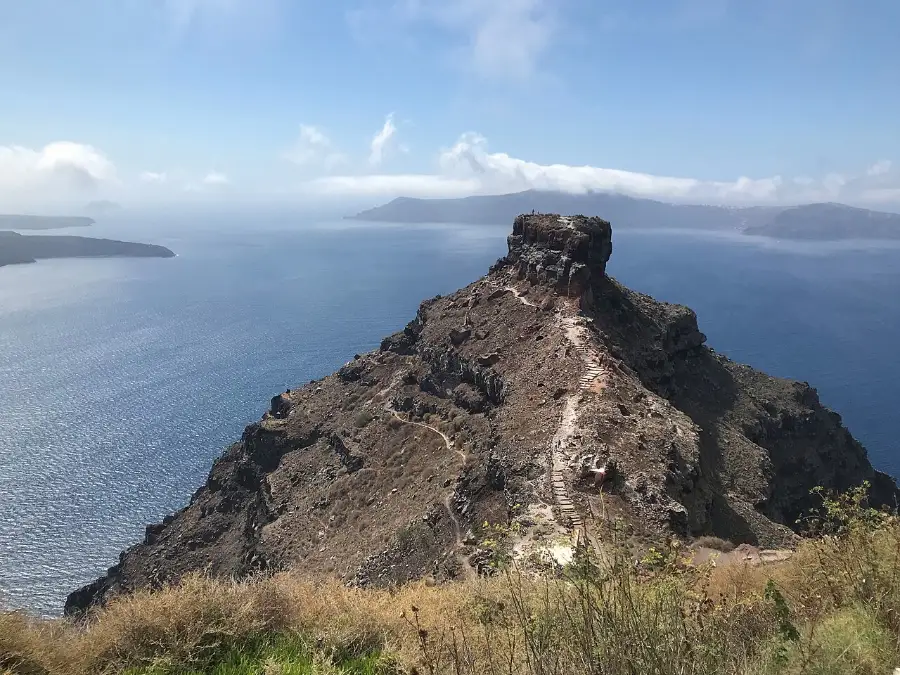
This is where the seclusion your honeymoon actually needs lives, and each of the three does it differently. Milos is the lunar one: white volcanic coves, the moonscape of Sarakiniko, and quiet swimming in water that stays clear into autumn. Naxos is the big, unhurried one: long sandy beaches down the west coast, real village life up in the mountains, and the best value of the three. Paros sits in the middle, polished but still calm, an easy first choice if you want comfort without a scene.
The trade-off is plain. You give up Santorini’s show-stopping sunsets and get back actual beach time, room to breathe, and lower prices across the board. A rental car helps on Naxos and Milos, where the best coves are a drive from the port.
Pick one as the second island for three to four nights and let it be the trip’s slow half. Start with Milos and Sarakiniko, Naxos for beaches and value, or Paros for the polished middle ground.
Crete: history, variety and where the resorts are
Crete is the honeymoon for couples who cannot pick one thing. It is a whole country of an island: beaches at every scale, Minoan history at Knossos, mountain villages and gorge walks, and the longest warm season in Greece down on the south coast. It is also where the resort and all-inclusive inventory concentrates, so it doubles as the resort-ease choice.
The catch is the size. Crete is big enough that you drive, so base in one region - Chania in the west or Elounda in the east - rather than trying to cross the whole island on a honeymoon.
Take Crete as a standalone one-island honeymoon when you want variety without ferries, or as the resort half of a pairing. The Crete hub, the Crete hotels page and Elafonisi beach show what a week there holds.
Mykonos: the glamour honeymoon
Mykonos is the honeymoon for couples who want a scene, and it is honest about it. It is stylish, social and expensive: design hotels, beach clubs that run to a soundtrack, and the genuinely lovely lanes of Little Venice under the windmills. What it is not is quiet. This is the loud, dressed-up honeymoon, not the secluded one.
Pick Mykonos on purpose for the buzz, or pair a night or two of it with a calmer island so you get both. If the party is the actual point, that is a different trip - see Mykonos and Mykonos hotels, or the nightlife and party islands guide.
Corfu and the Ionian: green, calm-water alternative
If you want green hills and flat, sheltered water instead of the bare, wind-exposed Cyclades, cross to the Ionian side. Corfu is lush and wetter, and its bays are sheltered: the Ionian sits on the far side of the country from the meltemi’s main run down the Aegean, which is why high summer feels flatter on the water here than it does in the Cyclades. The trade is the icon shot: no whitewashed caldera, a softer and less-photographed look. For couples who rate calm water and scenery over the set piece, that is the point. Take Corfu as a one-island honeymoon or the calm-water half of a pairing; the Ionian islands page covers the neighbours.
Where honeymooners actually stay, and the all-inclusive question
Greece’s signature honeymoon stay is a small boutique suite, not a mega-resort, and that one fact changes the answer to “is there an all-inclusive.” Four stay types cover almost every honeymoon here:
- The caldera-view suite. The Santorini splurge: a terrace over the crater, a plunge pool, the sunset from your own rail. It is the view-and-photographs stay, and the priciest.
- The private-pool villa or suite. Privacy above all, available on most islands - your own pool, your own walls, no lobby to cross in a robe.
- The small boutique hotel. Character and location over scale: a dozen rooms, a good breakfast, a walk to dinner. The best-value romantic option.
- The beach resort or all-inclusive. Ease over character, and it lives on the bigger islands - one base, food and drink handled, a beach at the door.
Greece has all-inclusive resorts, but they are generally described as concentrating on the bigger islands - Crete, Rhodes, Kos and Corfu - rather than on the Santorini-and-Cyclades icons most couples picture, where boutique suites are the rule. So all-inclusive ease means choosing a resort island, not a caldera terrace in Oia. Decide which matters more before you pick the island, because the island decides the stay.
The named suites and resorts sit on each island’s own hotels page rather than here: Santorini hotels for the caldera suites, Crete hotels and Rhodes hotels for the resorts, and Mykonos hotels for the design end.
We do not arrange any of it for you, and we sell nothing here. The suite, the ferries between islands and the Athens buffer are three separate bookings you make yourself, and the order matters: the suite first, because on the caldera the room is the view you are paying for, then the ferries around it.
Each island’s hotels page lists the honeymoon suites and resorts, and the itineraries show how to stitch the legs together yourself.
When to honeymoon in Greece
Late September is our pick for the honeymoon sweet spot, and here is the reasoning so you can disagree with it. The sea has had all summer to warm up, the July and August crush has gone home, and rates come off their peak once the school holidays end - three things a honeymoon wants, and they overlap in one window. May and June are the spring alternative: green, cooler, everything open, the sea only just warming. The date to avoid on purpose is mid-August, when peak heat, peak crowds, peak prices, the meltemi wind at full strength, and ferries sold out around the 15 August holiday all land at once.
Timing and the two-island shape pull together. In the shoulder season the icon islands are quieter and the ferries still run often enough to hop, so late September lets you have Santorini without the worst of its crowds. Push much later and the calculation flips: deep into autumn many small islands close their hotels and thin their boats, and the quiet second island you wanted may be shut.
The month-by-month decision, with the crowds, prices and sea by season, lives on the best time to visit Greece page. This is the honeymoon verdict; that page has the calendar.
What a Greece honeymoon costs
The useful thing about the cost of a honeymoon week in Greece is not the total, it is which line dominates it. Independent Greece cost guides put the per-person spread for a week at roughly a threefold range depending on island and season, and hotels drive almost all of that spread: the gap between a Santorini caldera suite and a quiet-island boutique is far wider than the gap in anything else you will buy. Flights are the next line and they move with season and origin, food is a smaller and steadier one, and ferries between islands are smaller still, a modest fare rather than a flight, though the fast boats want booking ahead in the shoulder season when sailings thin out.
Add it up and a honeymoon to Greece costs more than an ordinary holiday and less than the luxury brochures imply; where you place the splurge decides the rest.
Here is the honeymoon-specific part the general cost pages miss. The caldera-view suite is the single biggest line item on the whole trip, and it is reported to book many months ahead. So the highest-leverage money decision you make is not flights or food - it is whether to spend the splurge on three icon nights in Oia, or spread the same money across more nights on a quieter, cheaper island. Swap one caldera night for two on Naxos and the weekly total drops noticeably, which is exactly why the pairing saves money as well as sanity.
For the full breakdown across a trip, use the Greece trip cost page, and time the airfare with the flights to Greece guide.
A route that works: icon, quiet island, Athens
Every workable Greece honeymoon itinerary is the same shape at any length - one icon island, one quiet island, and Athens to bookend the flights - and you stretch or trim it by the number of nights you have:
- 7 days: Athens 1 night, Santorini 3, then Milos or Naxos 3. One icon, one quiet island, one buffer.
- 10 days: Athens 2, Santorini 3, a quiet island 3, then a second quiet island or Crete 2. Room to slow down without rushing a third stop.
- 2 weeks: the same spine plus Crete or a third island, and more nights everywhere. This is the length that lets you actually stop moving.
The logic is simple: the icon gives you the photographs early, the quiet island gives you the honeymoon itself, and Athens absorbs the delays that Greek travel builds in. Resist the urge to add a fourth island; a honeymoon is not an island count, and every ferry is a half-day you are not on a beach.
Do not read those as day-by-day plans; they are the shape. Two rules hold them together. Keep a buffer night in Athens before your flight home, because a late ferry should never be able to make you miss it. And in the shoulder season, when boats sail less often, leave slack between islands rather than banking on a tight same-day connection.
The day-by-day versions live on the itinerary pages: 7 days in Greece, 10 days in Greece, and the Athens, Santorini and Crete route for a two-week variant. All the itineraries are here, and Athens covers the bookend nights.
The romantic add-ons worth your time, and the ones to skip
Some honeymoon add-ons are worth the money and some are where it goes to die, and the operator brochures will not tell you which is which.
Worth it: a caldera or coastal cruise that puts you on the water for the sunset, away from the land-side crush, is the best version of the Santorini evening. A wine tasting on the volcanic terraces is genuinely local and genuinely good. A full, slow beach day on your quiet island - a cove, a taverna, nothing scheduled - is the thing you will actually remember. And one proper dinner at a taverna with the table booked over the water beats three rushed ones.
Skip, or at least think twice: the helicopter transfer that sells romance and delivers a fifteen-minute hop, and any experience priced mostly on the word “honeymoon.” The most-photographed viewpoint at the busiest hour is a queue, not a moment.
The honest workaround for Oia’s sunset is the clearest example. Rather than paying for a premium terrace or a tour, walk out toward Finikia for the same light with room to stand, or watch it from Imerovigli, one village along the caldera. Oia has the timing, Santorini restaurants has the dinner, and Sarakiniko on Milos is the quiet-island beach day.
So where should you actually honeymoon in Greece
For most couples, the answer is not a shrug. Go in late September. Pair Santorini for three nights with Milos or Naxos for three or four, and bookend the trip with a night in Athens at each end. That single shape gives you the view and the sunset, the swimming and the seclusion, and a buffer that keeps a late ferry from costing you your flight home.
The clean exceptions are worth naming. Take Crete on its own if you want resort ease or history and variety without ferries. Take Mykonos if glamour and a scene are the actual point. Take Corfu if calm green water beats the caldera shot for you. Each is a good honeymoon; each is a different one.
And the last boundary, stated plainly: this is honeymooning in Greece, the trip after the wedding. If you are planning to get married in Greece, that is a separate project with its own paperwork, venue and guests, and it deserves its own planning.
When you are ready, build the route, read Greece for couples if this is not strictly a honeymoon, and confirm your dates against when to go, month by month.
Common questions about a Greece honeymoon
Which is the best Greek island for a honeymoon?
There is no single best island. Santorini wins for iconic views and sunsets, Milos or Naxos for quiet beaches and seclusion, Crete for variety and resort ease, and Mykonos for glamour. Most couples pair an icon island with a quieter one rather than choose just one, which is the move this whole page recommends.
When is the best time to honeymoon in Greece?
Late September is the sweet spot: the sea is still warm, the summer crowds have thinned, and prices are easing off their peak. May and June are the spring alternative, cooler with a less-warm sea. Avoid mid-August, when heat, crowds, prices and sold-out ferries all peak at once.
How much does a honeymoon in Greece cost?
More than an ordinary holiday, and less than the brochures imply. The spread across a week is wide, roughly threefold between a modest quiet-island trip and a caldera-suite one, and the hotel is what moves it: the Santorini suite is the biggest single line item on the trip, with flights the next one and food a distant third. For plannable figures, use the Greece trip cost page.
Are there all-inclusive resorts in Greece for a honeymoon?
Yes, but they are generally described as concentrating on the bigger islands - Crete, Rhodes, Kos and Corfu - rather than on the Santorini-and-Cyclades icons most couples picture, where boutique suites are the norm. The decision rule is simple: choose all-inclusive ease and you are choosing a resort island, not a caldera terrace in Oia.
How many days do you need for a Greece honeymoon?
Seven days covers one icon island plus one quiet island with an Athens buffer. Ten days lets you add a second quiet island or Crete without rushing. Two weeks lets you slow down or add a third island. Whatever the length, never book a same-day ferry-to-flight connection; keep a buffer night in Athens.
Santorini or Mykonos for a honeymoon?
Santorini for the sunset, the caldera view and a calmer, more romantic mood; Mykonos for glamour, beach clubs and a social scene. Choose by whether you want calm or buzz, and if you cannot decide, spend a night or two of each. The Santorini versus Mykonos comparison goes deeper.
Is getting married in Greece the same as honeymooning there?
No. A honeymoon is the trip after the wedding; getting married in Greece is a separate project with legal paperwork, a venue and guests. This page is about the honeymoon. For the marriage side, confirm the civil-marriage requirements with the Greek authorities directly (your nearest Greek consulate, or the town hall in the municipality where you plan to marry) rather than trusting a travel blog, because the paperwork and residency rules change.
Booking
We sell nothing and book nothing for you. Every guide on this page tells you how to arrange each piece yourself - which ferry operator, when to book, what to prebook and what to leave loose.