The short answer
Santorini vs Crete is a choice between two sizes of trip, not two versions of the same holiday. Choose Santorini for a short, high-impact few days built around the caldera, the cliff villages and the sunset; choose Crete for a longer, varied road trip through sandy beaches, ancient history and mountain food. With a week or more and no clear preference, do both.
This page settles it axis by axis - character and size, beaches, things to do, cost, getting around and the car, and romance - then names who each island suits.
Choose Santorini for a short, iconic trip of caldera views and sunsets. Choose Crete for a whole-island road trip of beaches, history and food. Do both if you have a week to ten days and want the full contrast.
Santorini vs Crete at a glance
Here is the whole decision in one view. Read it top to bottom: most rows fall to Crete on variety, beaches, cost and families, while Santorini takes the iconic view, romance and the short high-impact trip.
| What you’re deciding | Santorini | Crete | Verdict |
|---|---|---|---|
| Best for | A short iconic highlight | A fuller, varied holiday | Depends on the trip |
| What kind of trip | One view, seen slowly | A whole-island road trip | Opposite trips |
| Size and days | Small, 2 to 4 days | Greece’s largest, a week or more | Crete for time, Santorini for a short break |
| Beaches | Volcanic black and red pebble | Sandy, turquoise bays | Crete |
| Scenery and things to do | The caldera and one great view | Gorges, mountains, old towns | Crete for variety |
| History and culture | Akrotiri and the cliff villages | Knossos and Minoan Crete | Crete |
| Cost | Among Greece’s priciest | More affordable day to day | Crete |
| Getting there from Athens | Shorter, frequent ferry or a flight | Longer haul or a flight | Santorini, easier hop |
| Getting around and the car | Buses and walking; no car needed | Too spread out without a rental car | Depends on how you travel |
| Romance and honeymoon | Caldera suites and the Oia sunset | Quieter romance with space | Santorini |
| Families | Cliffs, steps, little soft sand | Sandy shallows and family resorts | Crete |
| Best season | Leans on peak summer | Works well beyond peak too | Crete |
Those verdicts are ours rather than a scoreboard, and nothing weights one row against another except judgement - a traveller who lives for beach days will read the table differently from one who is there for the view. On our reading the pick is easy to name: Crete for a fuller, varied, better-value holiday, and Santorini for a short iconic one. The choice is icon versus immersion.
This page compares the two at a decision level only. For the full picture - every beach, hotel, restaurant and attraction - go deep on the Santorini guide and the Crete guide.
Two different trips: an icon or a whole island
The gap between these two islands is size, and almost everything else follows from it. Santorini is small. You can base in one caldera village, see the island in two to four days, and spend the trip circling a single view. Crete is Greece’s largest island, closer to a small country, with mountain ranges, deep gorges, several real cities and a coastline no single base can reach. It wants a week or more, and it rewards a car and a plan.
That size changes how you even choose where to stay. On Crete you pick a region, not the whole island: the west around Chania and its Venetian harbour, the centre around Heraklion and Rethymno, or the quieter east - and you accept from the start that you will not see all of it. On Santorini you do not choose a region at all. You pick Fira or Oia on the caldera rim, and the island is small enough to reach the rest from either.
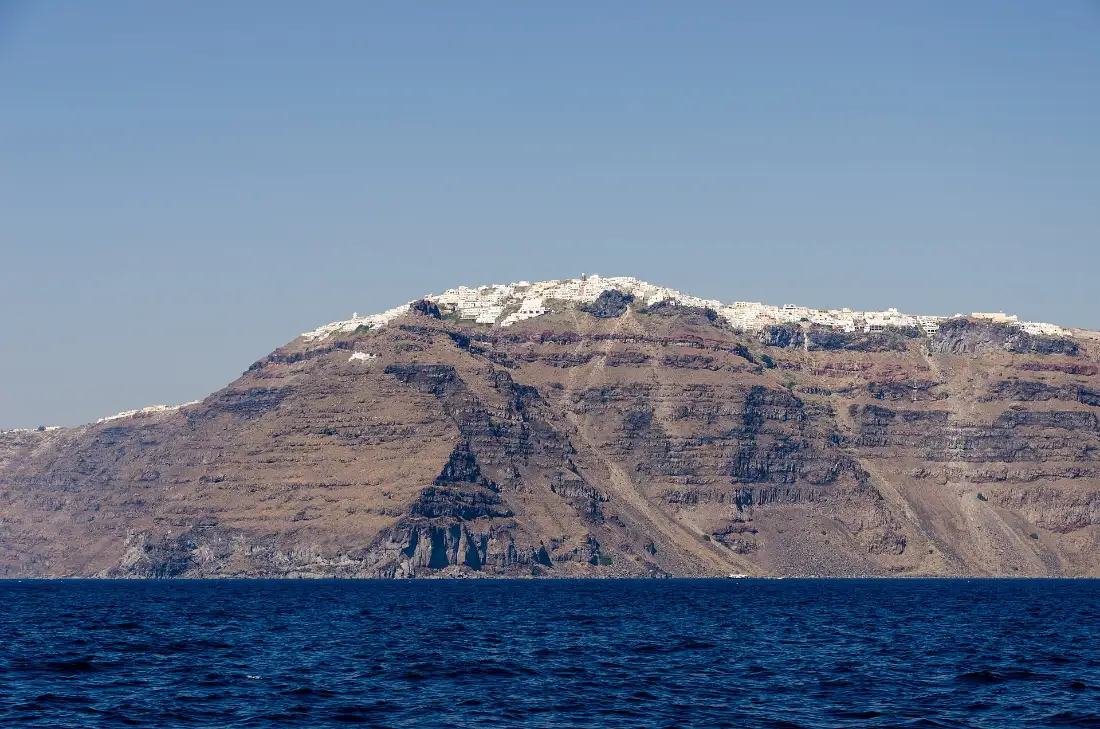
Both share one honest downside in peak season. Santorini’s crowds are concentrated: cruise ships empty into Fira and Oia for the sunset, and the lanes go shoulder to shoulder. Crete’s crowds spread across a far bigger island, but its headline beaches and Knossos still fill up in July and August, so neither is a quiet escape at the height of summer.
Choose Santorini if you want a short, high-impact trip and one unforgettable setting. Choose Crete if you want a fuller, slower holiday with room to move and real variety.
Beaches: volcanic drama or the sandy bays you pictured
If beach days are a real reason for the trip, Crete wins the water itself, and it is not close. Santorini’s beaches are for the look; Crete’s are for the swim.
Santorini sits on the rim of a volcano, so its beaches are black and red pebble and coarse dark sand along the east and south coasts - Perissa and Kamari, and the much-photographed Red Beach under its rust-coloured cliff. They are striking, and worth an afternoon, but the dark stone holds the heat and the shore drops away more steeply than soft sand does. This is the volcanic coast, not the swim-and-lounge day many travellers arrive picturing.
Crete has the sandy, turquoise bays people mean when they say Greece. Elafonisi spreads pink-tinged sand into shallow water; Balos pools a lagoon between a headland and an islet; and between them run long organised family beaches and quiet coves the length of the island. These are beaches for swimming, for long days and for children in the shallows, not scenery to photograph and leave.
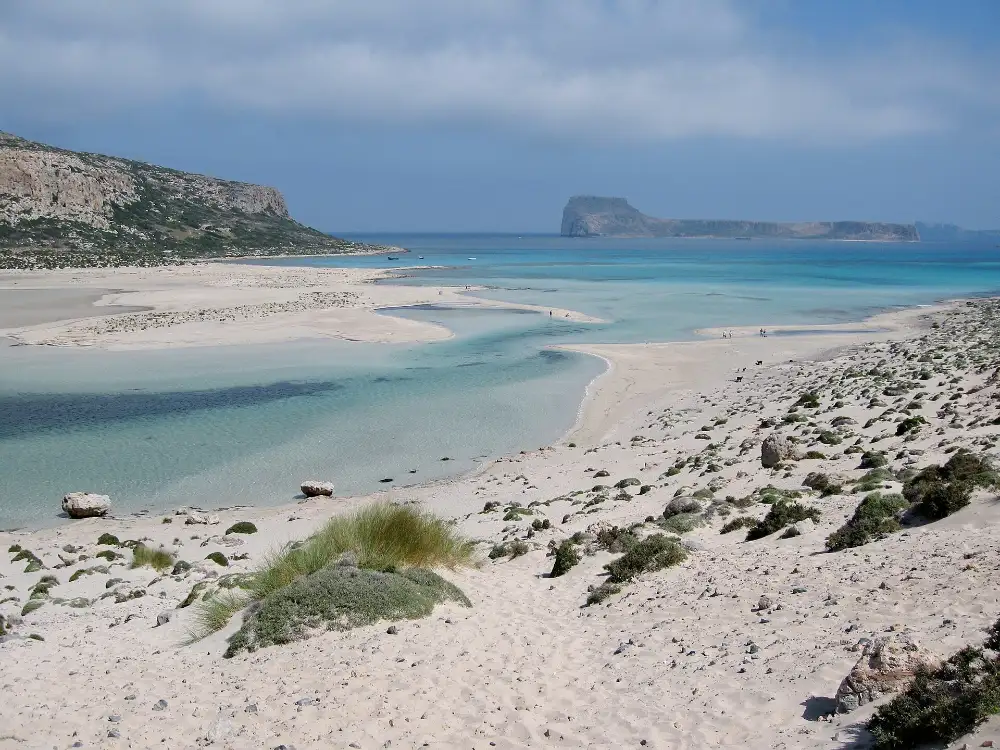
Choose Crete if beaches and swimming are a genuine reason you are going. Choose Santorini if you want the beach as scenery and are there mainly for the views.
For the sandy bays, start with Crete’s beaches and the famous pair at Elafonisi and Balos; for the volcanic-coast reality, the Santorini beaches page sets honest expectations.
Scenery, history and things to do
This is where the icon-versus-immersion split is clearest. Santorini is one unforgettable thing you can absorb in a couple of days. Crete is many things that reward a week.
On Santorini the draw is the caldera itself: the cliff villages of Fira and Oia stacked white above a flooded volcano, the Bronze Age town buried under ash at Akrotiri, a handful of wineries pouring the local Assyrtiko, and the sunset the whole day bends toward. It is iconic, and it is quickly seen - two full days cover the highlights without rushing.
Crete cannot be seen in two days, and that is the point. The Minoan palace of Knossos anchors the heritage of Europe’s oldest civilisation. The Samaria Gorge is a long walk down through a national park to the sea. The Venetian old towns of Chania and Rethymno, mountain villages, monasteries and layers of Ottoman and Venetian history fill as many days as you give them.
Choose Crete if you want variety, history, hiking and things to do. Choose Santorini if one spectacular setting, seen slowly, is enough, and you would rather not fill every day with sightseeing.
For the depth, route to Knossos, the Samaria Gorge and the wider list of things to do in Crete; on the other side, Oia and the Santorini attractions page hold the island’s highlights.
Cost: both doable, but Crete stretches your money further
Ask which island is cheaper and the honest answer is Crete, day to day, corroborated across independent travel sources. The mechanism is supply: Crete’s far larger stock of rooms keeps rates competitive, while Santorini’s limited caldera-view supply meets steady cruise-and-honeymoon demand and prices climb. Food follows the same pattern - everyday tavernas across Crete against sunset-view dining rooms on the Santorini rim.
The split is worth seeing clearly, because it is a shape rather than a single number. Santorini’s premium is the view: the caldera room, the sunset dinner table, the cruise-crowd restaurant. Crete’s savings come from more rooms, family resorts and all-inclusives, and tavernas over view-restaurants. But Crete usually means renting a car and staying longer, so the trip total can rise even when each day costs less.
So the answer turns on trip shape, not a headline. Santorini can be done cheaply on a short stay if you skip the caldera-view room, but Crete is the island that stretches a longer budget furthest.
For the plannable breakdown - what a day, a room and a car actually add up to - see what a Greece trip costs.
Getting there and getting around: the car question
Both islands are easy to reach, and only one is easy to explore without a car - and that single fact should weigh on the choice as much as the scenery.
Getting there is straightforward either way. Both have airports with direct summer flights, and both have ferries from Athens: Santorini is the shorter, more frequent hop, while Crete is the longer haul, often an overnight sailing, into one of two airports and ports at Heraklion or Chania. Take the actual crossing times for your dates from the ferries guide rather than a fixed timetable.
Getting around is the real divider. Santorini is small enough that buses, taxis and your own feet cover it, and plenty of visitors never rent a car at all. Crete is a different problem: the famous beaches, the gorges and the mountain villages sit far apart, and while public buses connect the main coastal towns, they do not run to most of the sights. A rental car is simply how you see Crete, which is why it belongs in the decision and not in a footnote.
Choose Santorini if easy, car-free logistics matter to you. Choose Crete if you are happy to rent a car and drive - it is the price of admission to what makes the island worth the trip.
Before you book, weigh which islands need a car, the practicalities in renting a car in Greece, and the crossings on the Greek island ferries page.
Romance and honeymoons: why Santorini keeps the crown
Santorini owns the classic Greek honeymoon, and the reason is geology, not marketing. The island is the rim of a flooded volcano, so its villages sit on a cliff hundreds of metres above the water. That gives you cliff-top suites, private plunge pools facing the caldera, and the Oia sunset couples plan a whole dinner around. It is the most iconic honeymoon setting in Greece.
Crete is romantic too, in a quieter register: agrotourism stays in the hills, long taverna dinners, boutique hotels in the Venetian old towns, and coves you reach by a short drive. What it does not have is one iconic view that every couple comes for. Its romance is spread out and low-key rather than concentrated into a single cliff.
Choose Santorini for a first honeymoon and pure iconic romance. Choose Crete if a couple wants romance with space, beaches and things to do, or would rather sidestep Santorini’s crowds and prices.
Plan from the Greece honeymoon guide, then the island’s own Santorini honeymoon detail; for a trip that is romantic without being a honeymoon, Greece for couples is the better starting point.
Which should you pick? By traveller type
The same two islands score very differently depending on who is going, so match the island to the traveller rather than to a leaderboard. Here is the quick router:
- First-timer with one island and limited days: Santorini. It is the iconic, memorable Greek-island trip - the one people picture when they picture Greece - and you can see it fast. If you are still weighing the whole field, the best Greek island for first-timers sets it in context.
- Families: Crete. Sandy, shallow, swimmable beaches, far more family resorts and self-catering, space to move and easy day trips beat Santorini’s cliffs and steps for most families with young children. Plan on the Greece with kids page.
- Beach-and-swim lovers: Crete, for the long sandy bays; Santorini’s coast is volcanic pebble, a different swim day.
- History and active travellers: Crete. Knossos, the Samaria Gorge, mountains and old towns give you weeks of things to do; Santorini gives you an afternoon of them.
- Honeymooners and couples: Santorini for iconic romance; Crete if you want romance with space and beaches. Start with honeymoon planning or Greece for couples.
- Budget travellers: Crete, where the money stretches furthest over a longer stay.
- Short break or a slow, one-setting trip: Santorini, every time - one view, seen without rushing.
One honest caveat: if peace and quiet is your real priority, neither of these two is it in summer. Both draw heavy crowds, and the quietest Greek islands sit elsewhere. Otherwise the read-out is simple - Crete for most longer, varied, family or budget trips, and Santorini for a short, iconic, romantic one. Go deep on Crete or Santorini once you have your pick.
Can’t choose? Here’s how to do both
They are linked by a direct ferry and they complement each other almost perfectly, so on a week-to-ten-day trip the smartest answer is often to pair the icon with the immersion rather than choose. Give Crete the bulk of the time, because it needs it, and treat Santorini as a short, high-impact stop of two to three nights.
Order is an editorial call, not a rule. Many travellers do Crete first and finish on Santorini’s caldera, so the trip ends on the sunset; but let your onward flights and the ferry decide, because the reverse works just as well. A direct fast ferry connects Heraklion on Crete with Santorini, and in July and August the popular sailings fill, so book the crossing ahead and check current schedules before you travel.
To turn this into a plan, our ready-made Athens, Santorini and Crete route sequences all three, and the longer 14 days in Greece gives the pairing room to breathe; for day-by-day detail, borrow from the Santorini itinerary and the Crete itinerary.
One season note can tip the split: Crete’s real cities function year-round, so it holds up better in the shoulder and off months, while Santorini leans harder on peak summer. For the wider timing, see the best time to visit Greece.
Our pick, if you make us choose
Forced to one island, book Crete. For a fuller, better-value holiday - beaches you actually swim at, history that fills days, mountains and old towns and room to move - it is the one that gives you the most Greece for a week, and the clearer pick for families and for anyone travelling on a budget. Choose Santorini instead when the trip is short and one unforgettable setting is the entire point, or for a first, iconic honeymoon where the caldera and the Oia sunset are exactly what you came for. Neither choice is a mistake; they are answers to different questions.
And if you have a week to ten days, stop choosing. Give Crete the time it genuinely needs, let Santorini be the short, bright finish, and let the ferry between them carry you from one to the other. The logic under every verdict on this page is the same - a short iconic highlight set against a whole-island immersion - and once you know which of those you want, the two islands stop looking like rivals and start looking like different answers to different trips.
From here, go deep on the Crete guide or the Santorini guide. If your shortlist is really a different pairing, the same decision spine runs through Santorini vs Mykonos, and the full map of the country’s islands is on the Greek islands hub.
Quick answers
Which is better, Santorini or Crete?
Neither is better outright. Santorini vs Crete splits by trip length: Santorini is a short, iconic few days built around the caldera and the sunset, while Crete is a larger, varied island for beaches, history, food and a road trip. Pick Santorini for a high-impact break, Crete for a fuller holiday. Santorini also owns romance; Crete wins beaches, variety and value.
Is Santorini or Crete cheaper?
Crete, day to day. A far larger supply of rooms keeps Crete’s rates competitive, while Santorini’s limited caldera-view supply and steady demand push prices up; food and family resorts are cheaper on Crete too. The nuance: Crete usually means renting a car and staying longer, so the trip total can still add up even when each day costs less. See the trip-cost page.
Is Santorini or Crete better for families?
Crete, for most families. It has the sandy, shallow, swimmable beaches, far more family resorts and self-catering, space to move and easy kid-friendly day trips. Santorini’s cliffs, steps, crowds and volcanic beaches make it harder work with young children, though its sightseeing still appeals to older ones. Plan on the family page.
Do you need a car in Crete?
Effectively yes, to see Crete properly. The island is large, and its famous beaches, gorges and mountain villages sit far apart; public buses connect the main towns but do not run to most of the sights, so a rental car is how you actually explore. Santorini, by contrast, is small enough for buses and walking. Weigh it on which islands need a car.
How many days do you need in Santorini and Crete?
Santorini rewards two to four days - enough for the caldera villages, a sunset and a beach or winery without rushing. Crete wants a week or more, and you still will not see all of it, so plan around one or two regions rather than the whole island. Pairing both, give Crete the bulk of the time and Santorini a short stop; the itineraries hub slots it together.
Can you visit both Santorini and Crete in one trip?
Yes, and they pair well. A direct fast ferry links Heraklion on Crete with Santorini, so a week to ten days covers both comfortably - most of the time on Crete, Santorini as a short, high-impact stop. Peak-summer sailings fill up, so book the crossing ahead and check current times before you travel. The ready-made Athens, Santorini and Crete route plans it.
Is Santorini or Crete better for a honeymoon?
Santorini, for most honeymooners. Caldera-view suites, cave hotels and the Oia sunset make it the classic iconic romantic pick. Choose Crete if you want romance with space, quieter coves and beaches, or want to sidestep Santorini’s crowds and prices. Start on the honeymoon page.