Milos
Things to do in Milos
Milos is sold as a beach island, and its beaches are covered on their own page. This one is about the rest, which is more than most visitors expect: a whitewashed hill capital, a Roman theatre looking out over the bay, catacombs cut in the early Christian centuries, rows of boat garages painted like a colour chart, and a mining history that explains why the coast looks the way it does.
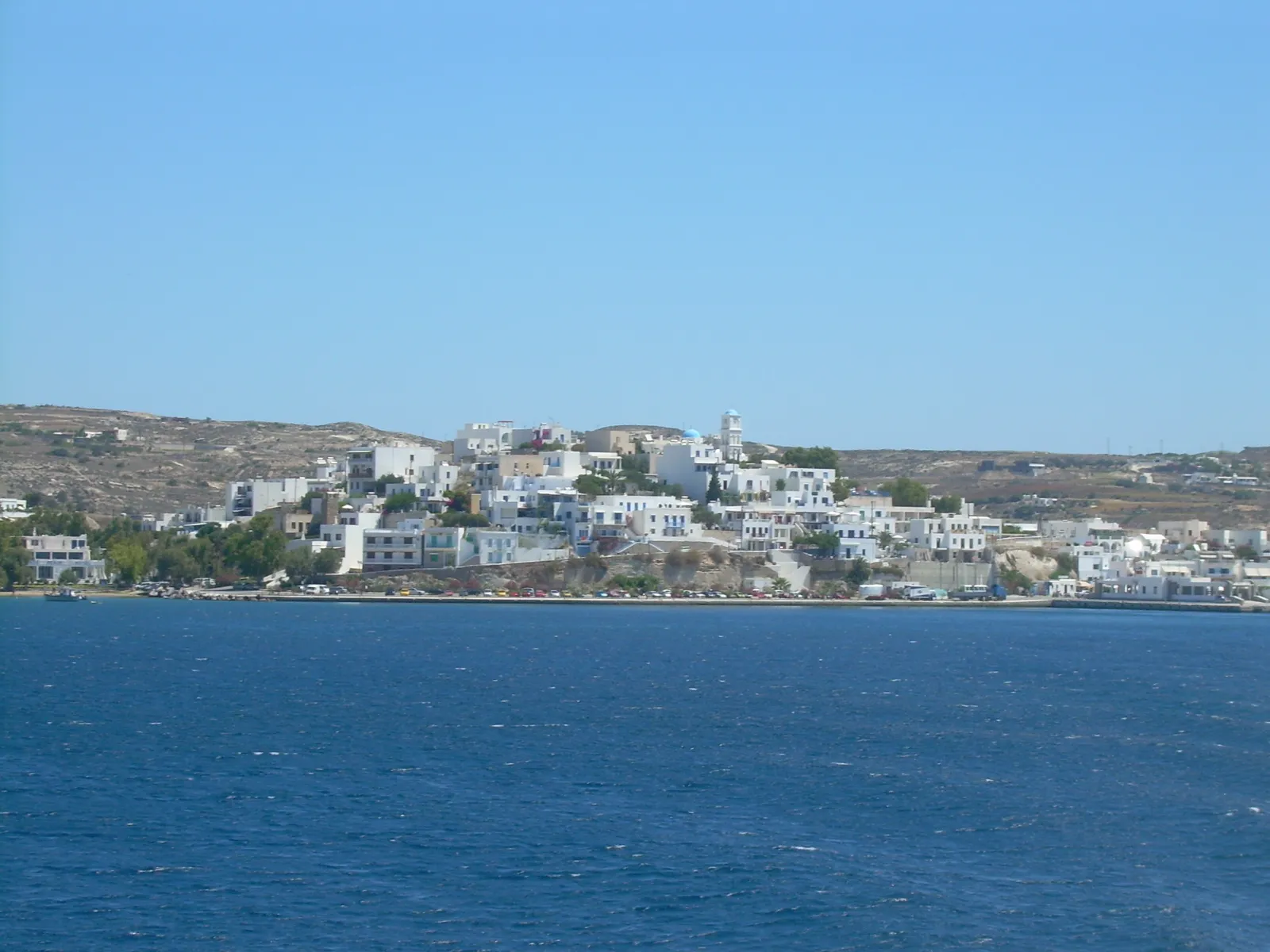
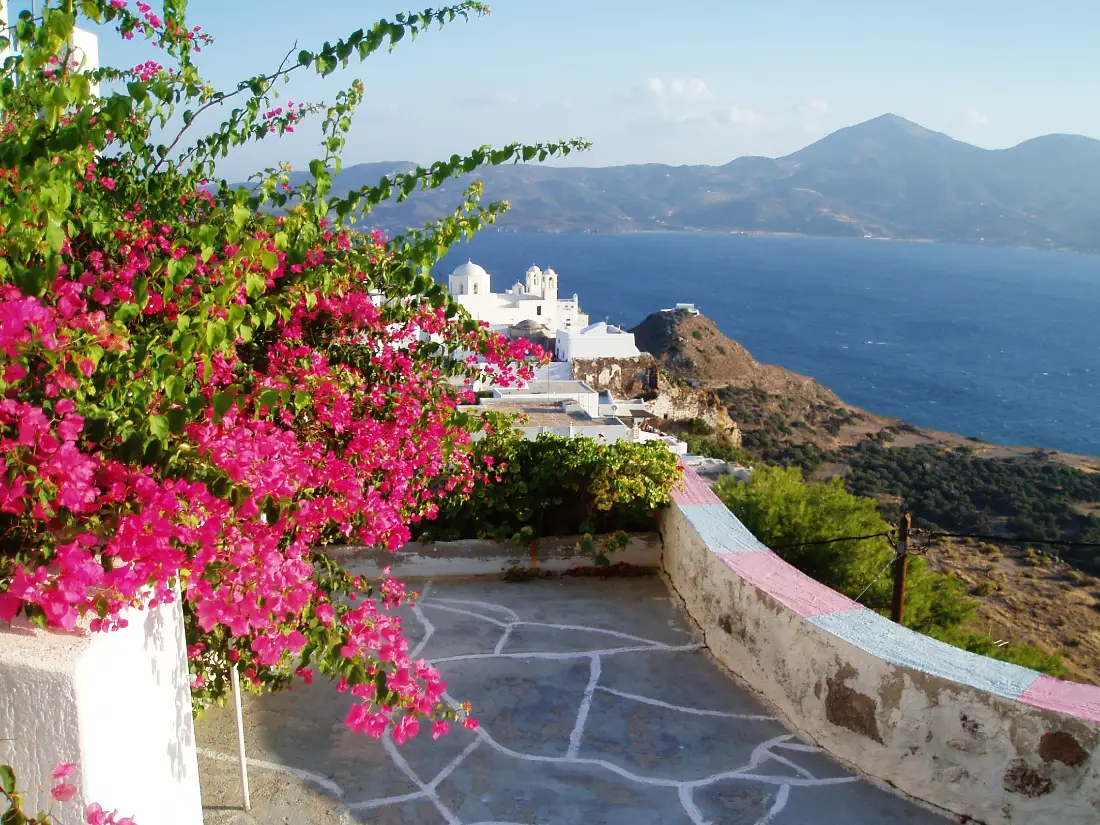
Plaka and its Venetian castle. The old capital sits on the hill above the port, its lanes too narrow for cars, and the ruined Venetian Kastro on the rock above it is where the island goes for sunset. The walk up is short and steep, the view takes in the whole drowned-volcano bay, and it is the one evening on Milos worth arriving early for. Plaka also holds the island’s small museums and the cafes that make the climb worth repeating in daylight.
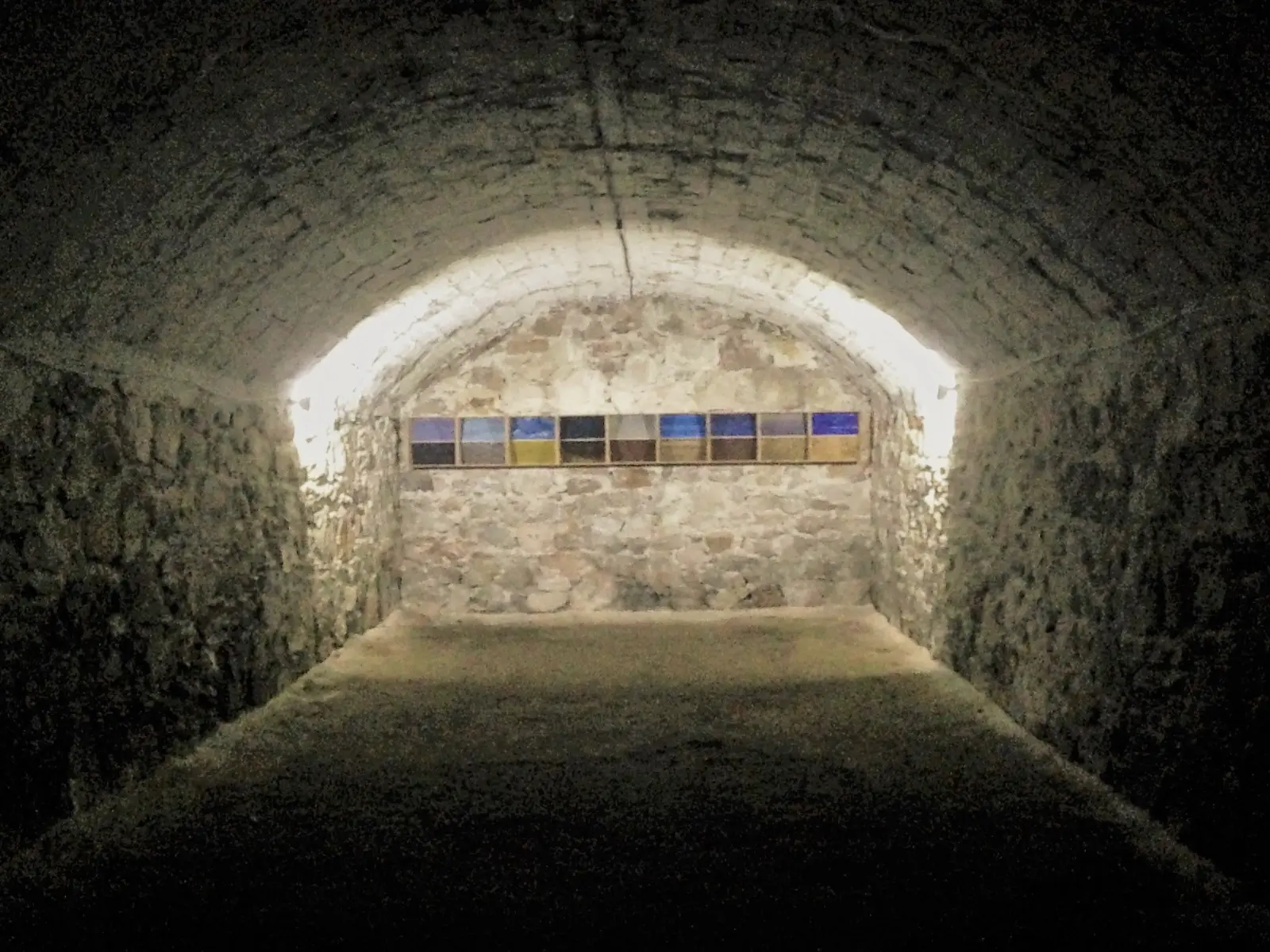
The Tripiti cluster: theatre, catacombs, Venus. Three sights sit within a short walk of each other just below Plaka, and together they are the island’s real half-day of culture. The Ancient Theatre is Roman-era with marble seating and the bay in front of it, open to wander. The Catacombs of Milos, cut in the first to fifth centuries AD, are among the most significant early Christian burial complexes anywhere, and they keep set opening hours rather than standing open, so check before you build a morning around them. A signposted spot nearby marks where a farmer turned up the Venus de Milo in 1820; the statue has been in the Louvre ever since, which locals will mention.
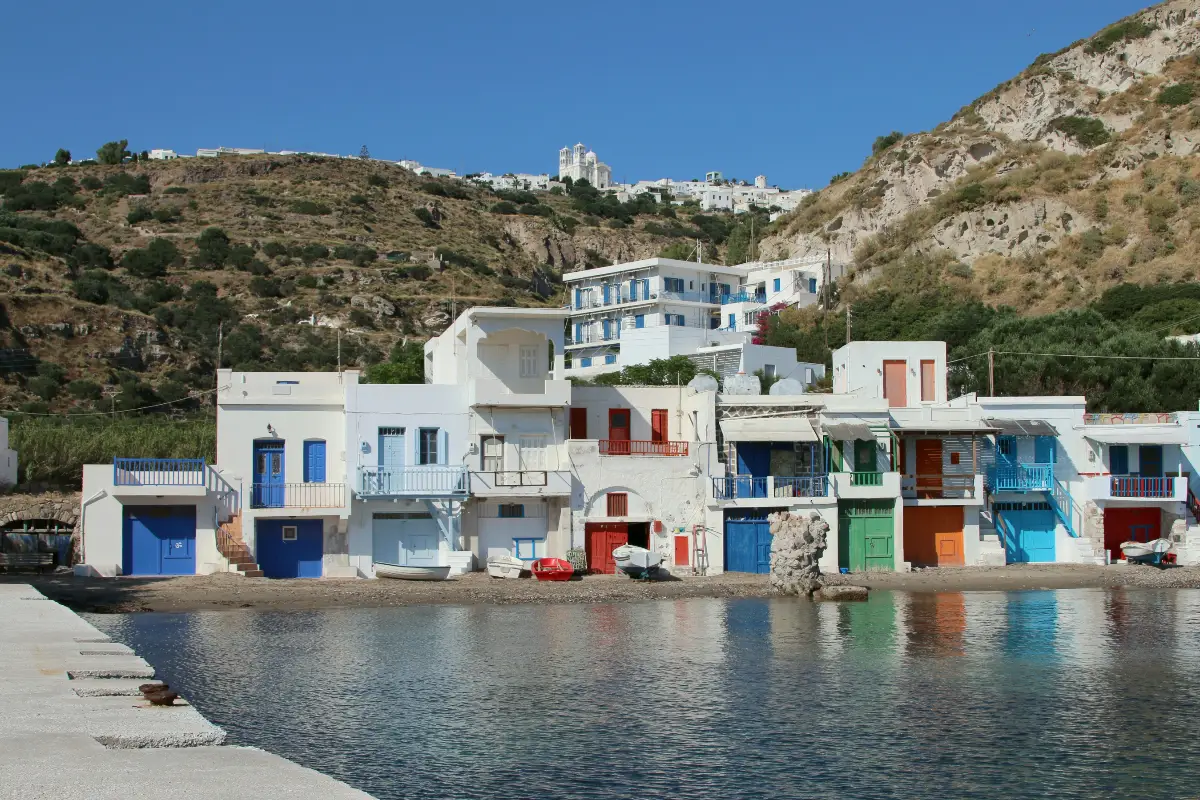
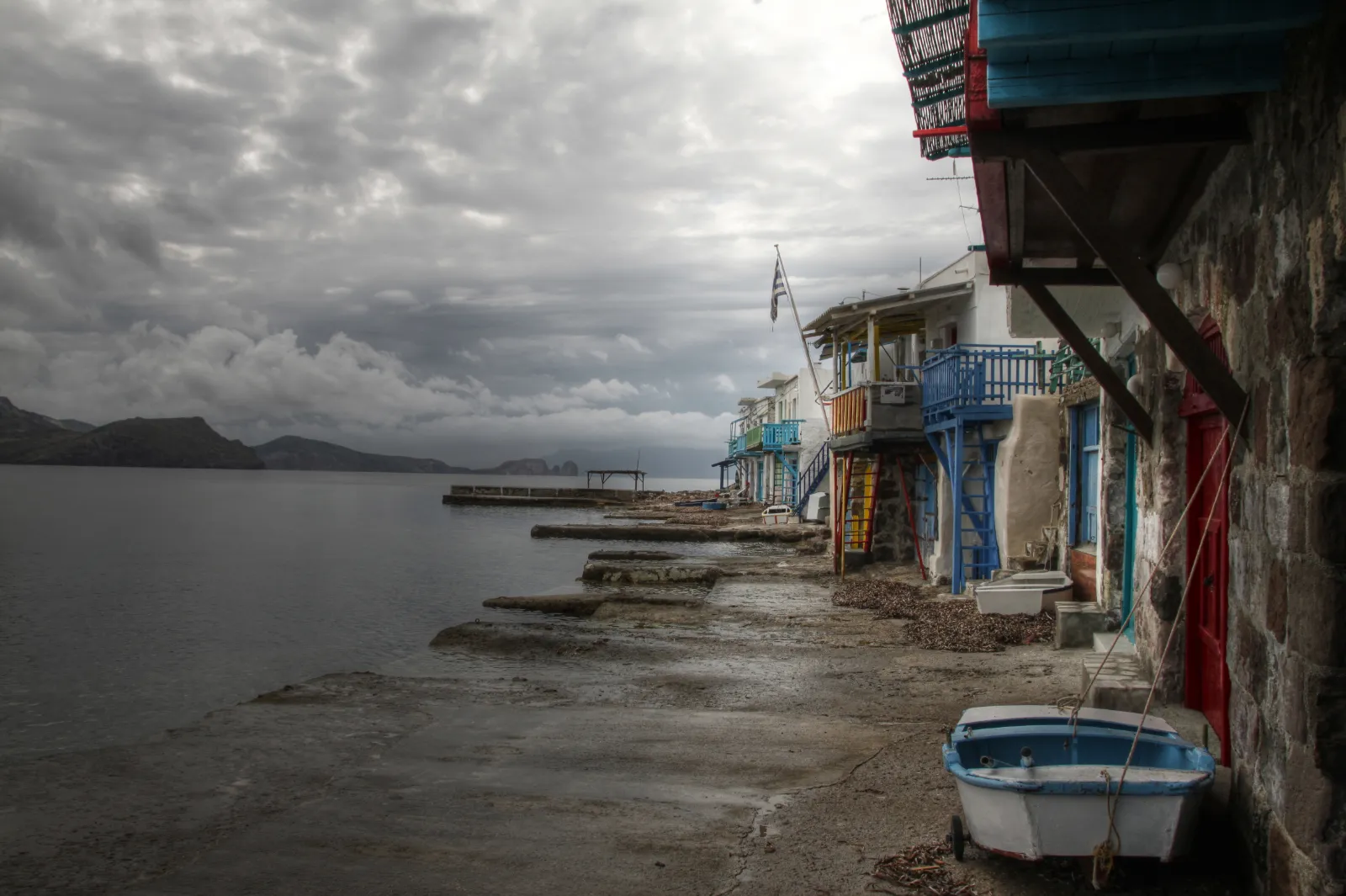
The syrmata: Klima and the painted boat garages. The syrmata are the island’s signature and its most photographed thing after Sarakiniko: rows of boat garages cut into the coastal rock, their doors painted sea blue, red and ochre, with fishermen’s houses stacked above. Klima is the classic one and it is at its best in late-afternoon light. Firopotamos, Mandrakia and Skinopi are the quieter versions of the same idea, and a car makes a loop of them into an easy afternoon.
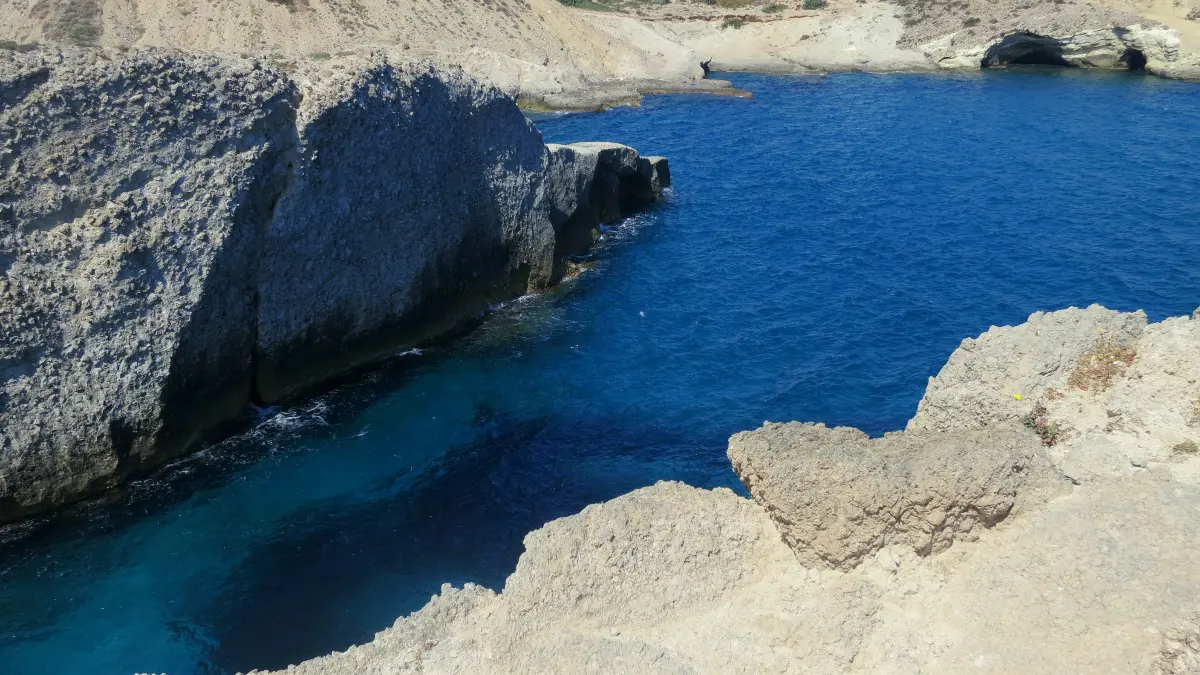
The mining island. Milos traded obsidian, the volcanic glass sharp enough for blades, across the prehistoric Aegean, and it still quarries bentonite and perlite today. That is not background colour: the mining is the reason the coast is white in one place and red in the next. The Mining Museum in Adamas joins the dots between the geology and the beaches, and it is the cheapest way to make the rest of the island legible.
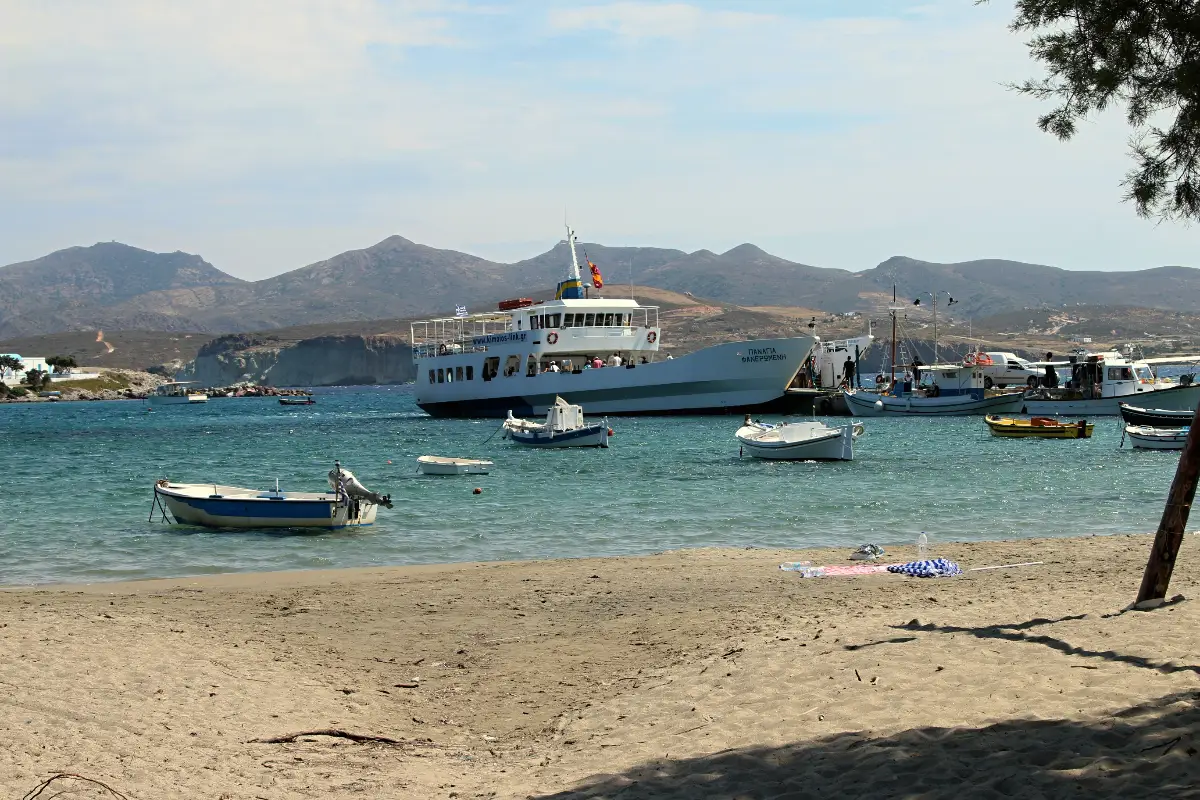
Pollonia and the crossing to Kimolos. The calm village in the north-east is a sight in its own right, with waterfront tavernas and the short ferry to Kimolos leaving from it. What happens on the other side belongs on the day trips page, which covers Kimolos and the uninhabited Polyaigos properly.
How to fit it around the coast. Most Milos trips are built around the boat day and the beach days, so the land sights work best in the gaps that the wind and the heat leave: Plaka and the Kastro in the evening, Tripiti in the morning before the sun is high, the syrmata in the last hour of light. Three to four days is the minimum that leaves room for all of it, which is the same figure the Milos guide arrives at from the other direction.