Milos
Beaches in Milos
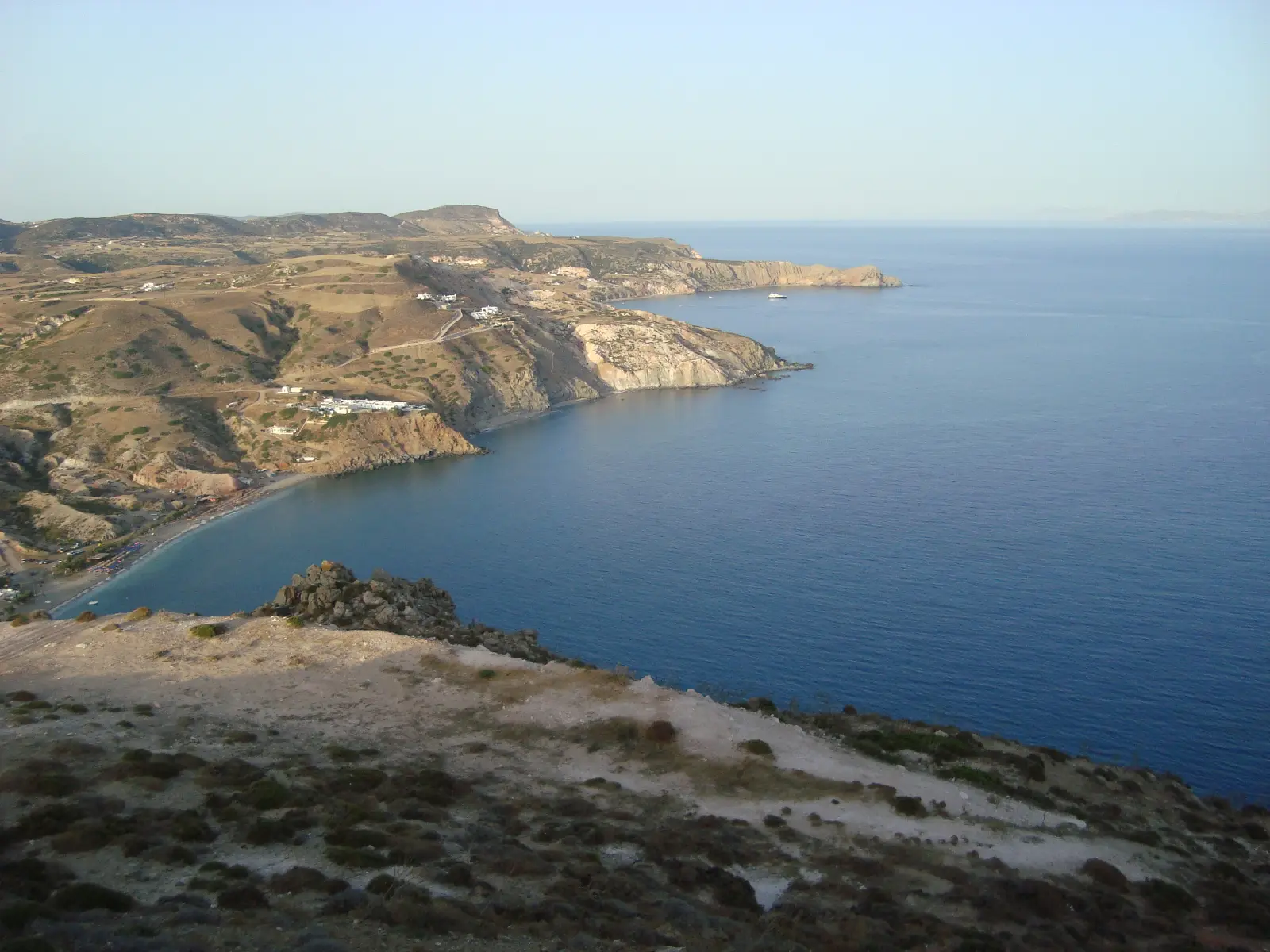
Milos is a volcanic island, and the geology is the reason to swim here rather than somewhere else. That is not a slogan, it is a planning rule. The same volcanic history that makes this coast look like nowhere else in the Cyclades is what puts half of it at the end of a boat trip, a dirt track or a rope.
So the useful way to sort Milos beaches is not by how they look. It is by how you reach them, and that decides what you book, hire or accept.
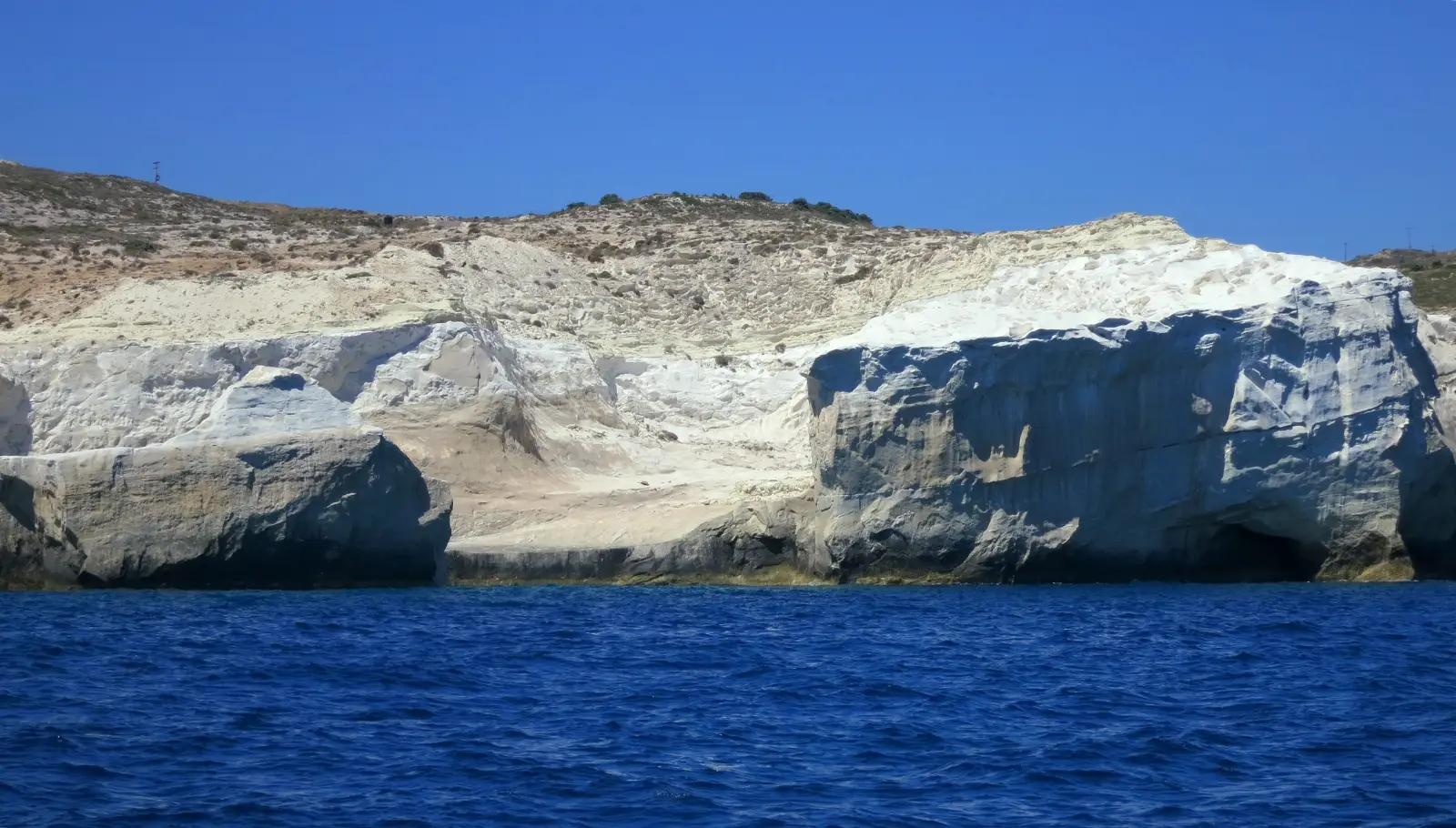
The rock that is the beach. Sarakiniko is the white one on every photograph of the island: white volcanic rock with a narrow inlet cut back into it and a strip of sand at the head of the inlet. The rock is the place and the beach is a detail inside it, which has one consequence that shapes the whole visit. You cannot drive an umbrella pole into solid stone, so shade there is not something you can rent, and not really something you can bring. Go early or late, carry more water than you expect to drink, and treat it as an hour or two rather than a day. It sits at the end of a sealed road with a car park, which makes it the easiest famous thing on Milos to reach and, predictably, the busiest.
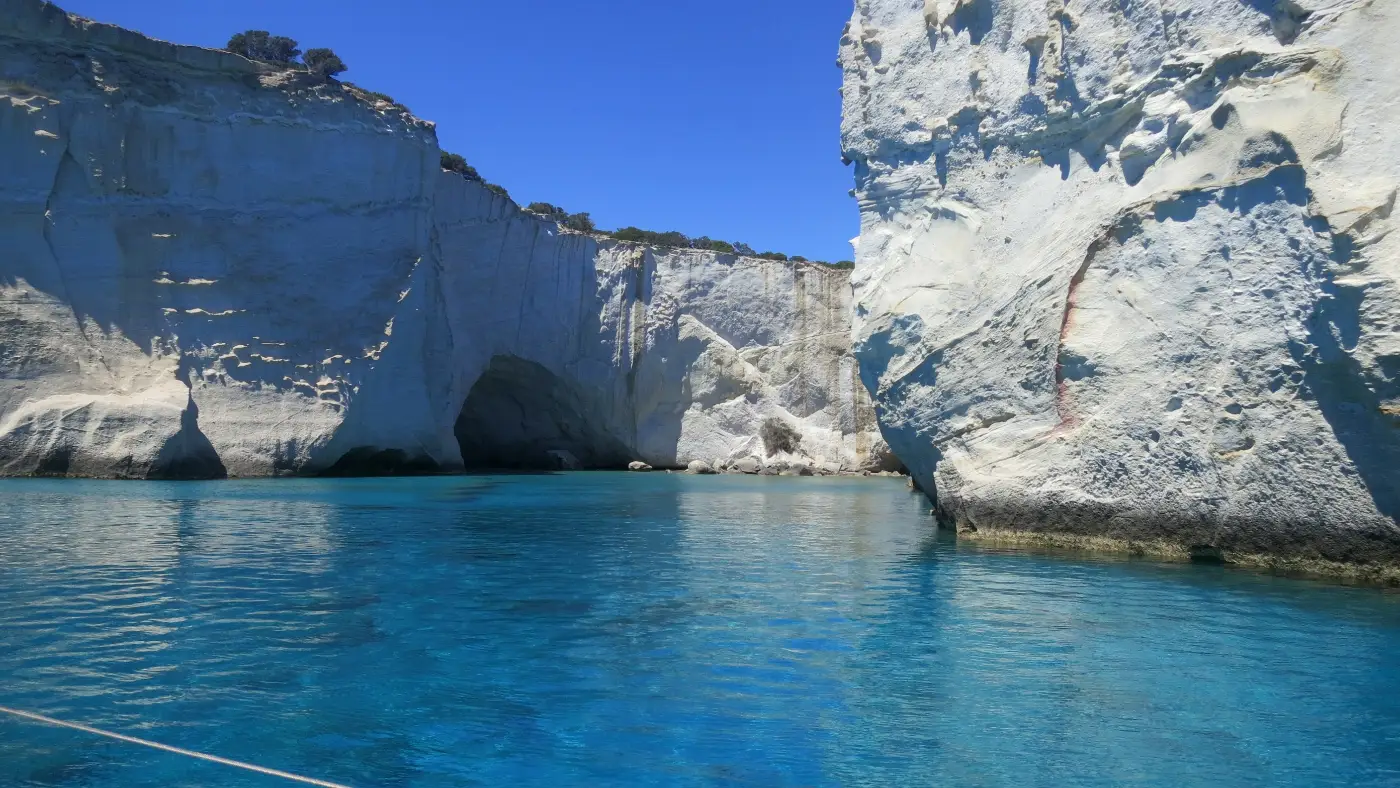
Boat only, and the wind gets a vote. Kleftiko is the island’s headline image: white sea stacks standing out of deep water at the roadless southwest tip, cut through with arches, caves and passages you can swim into. No road reaches that coast, and you do not walk in. You arrive by boat out of Adamas, and the meltemi, the dry north wind of the Aegean summer, is the thing most likely to take the day away from you. The planning rule follows and almost nobody obeys it: book the boat early in your week and keep a spare day behind it. People who leave themselves a second chance usually get out.
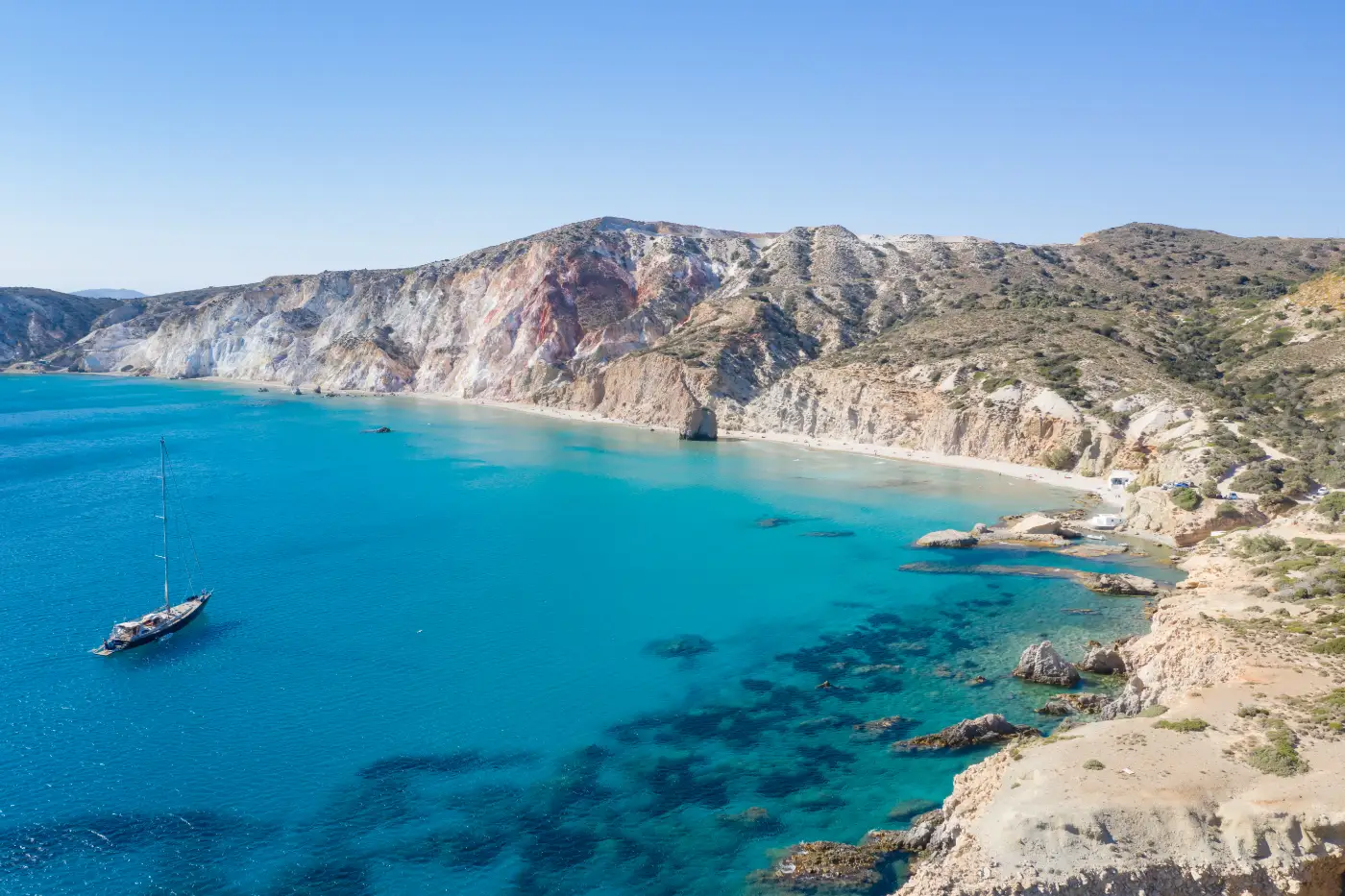
The sands you can simply drive to. Firiplaka and Paliochori, also written Paleochori, are long sweeps of sand under red and ochre cliffs on the south coast, both at the end of sealed roads, and at Paliochori the sand is warmed from below by geothermal heat. Provatas rounds out that group. These are the beaches that behave the way a beach is expected to, with somewhere to lie down and something to eat behind you. They are what a Milos week needs between the rock and the boat.
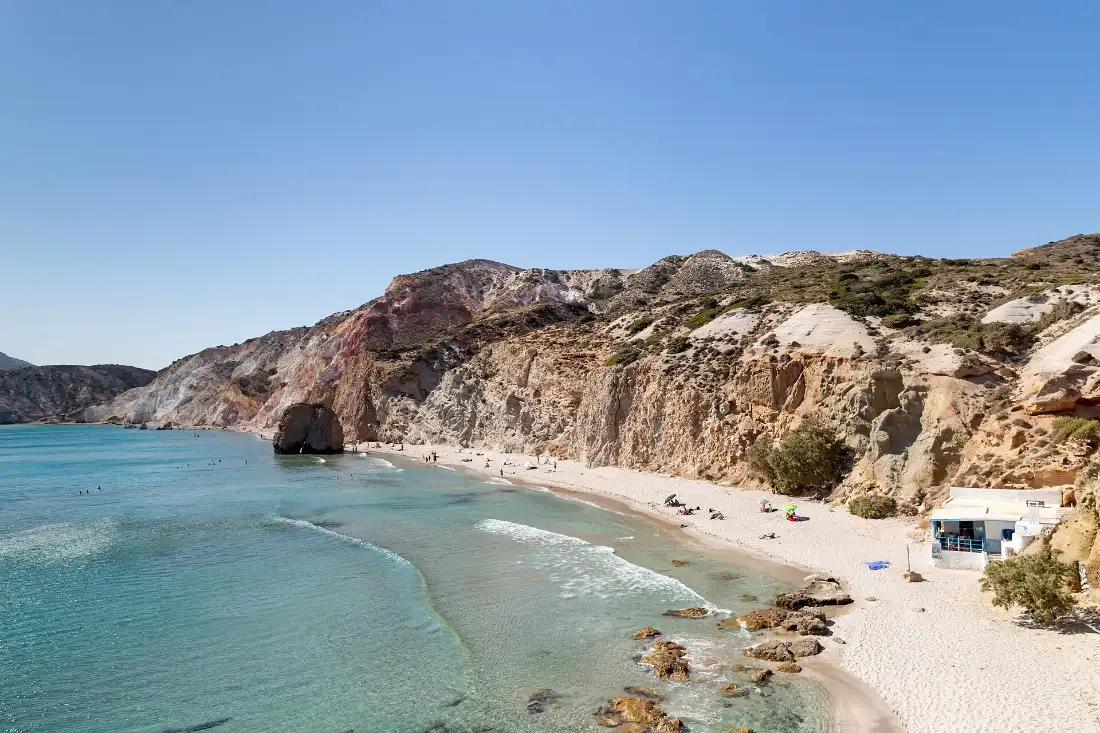
The ones that ask something of you. Tsigrado is a small cove reached down a rope-and-ladder descent through a gap in the rock, and the descent is the entire character of the beach. Whether that suits you is not a judgment this page can make from here, and it is worth a look before you commit. Beyond Tsigrado, a long run of the south and west coast is coves at the end of unpaved roads, where a low-slung rental car struggles and a 4×4 or a capable ATV does not.
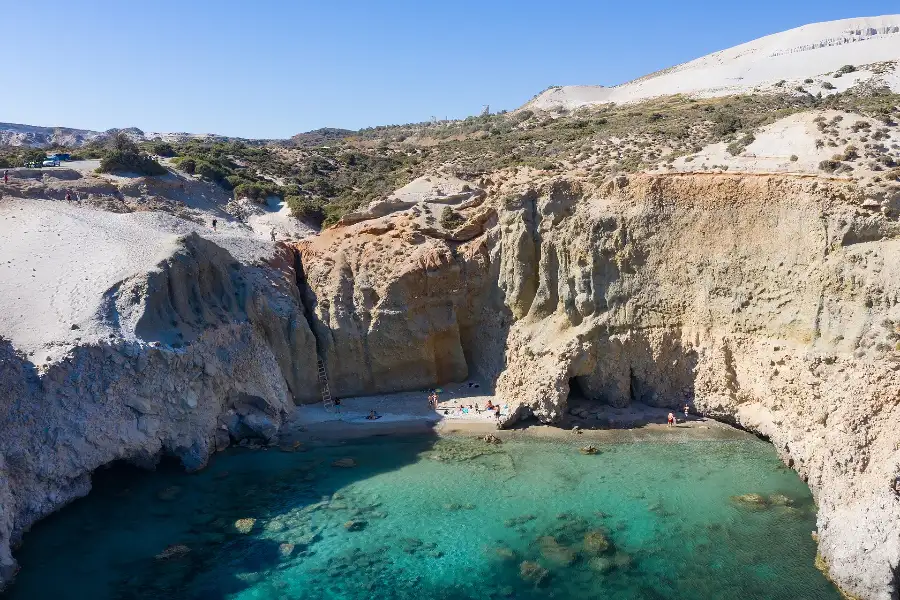
That last point is the honest catch of a Milos week, and it costs people beach days every summer. The beach in the photograph may want a vehicle you did not hire, and Greek rental contracts frequently exclude damage sustained off asphalt, so read yours before you take a track. Renting a car in Greece sets out how those contracts actually work.
We print no boat fares, bus times or sunbed prices here. Operators rebrand and reprice between seasons, and a page built on their numbers is out of date before the next summer. How the island fits together, and which base puts you nearest which coast, is in our Milos guide.