What it is
The capital of Santorini, on the caldera rim above the old port; the island’s transport, services and museum hub
Getting up from the old port
Cable car, the old stepped path on foot, or a donkey or mule ride. Step counts published for the path disagree and none is printed here
The cable car
Funded by a foundation established by the shipowner and island benefactor Evangelos Nomikos, opened in the early 1980s
The animals
Regulated under a August 2018 circular amending Law 1197/81 (rider weight limit, microchipping, rest, veterinary care, shade, water, food, inspections and penalties). Welfare concerns raised by The Donkey Sanctuary, the Greek Animal Welfare Fund and PETA
Main sight in town
Museum of Prehistoric Thera, holding the finds from Akrotiri
The rim walk
Fira to Oia, roughly 10 km, about 3 to 4 hours, no shade
Best hours
Early morning and evening. Cruise arrivals concentrate on the rim around midday
Travel details last checked July 2026.
That is worth knowing before you arrive, because the photographs sell Fira as a smaller Oia and it is not one. It is a working town of a few thousand people that happens to sit on the lip of a drowned volcano, and it is busiest and least charming at exactly the hour most day-trippers see it.
It is also the only place on the rim where the cliff has three different ways up it, and choosing between them is the first real decision the island asks you to make.
Three ways up the cliff, and what each one costs you
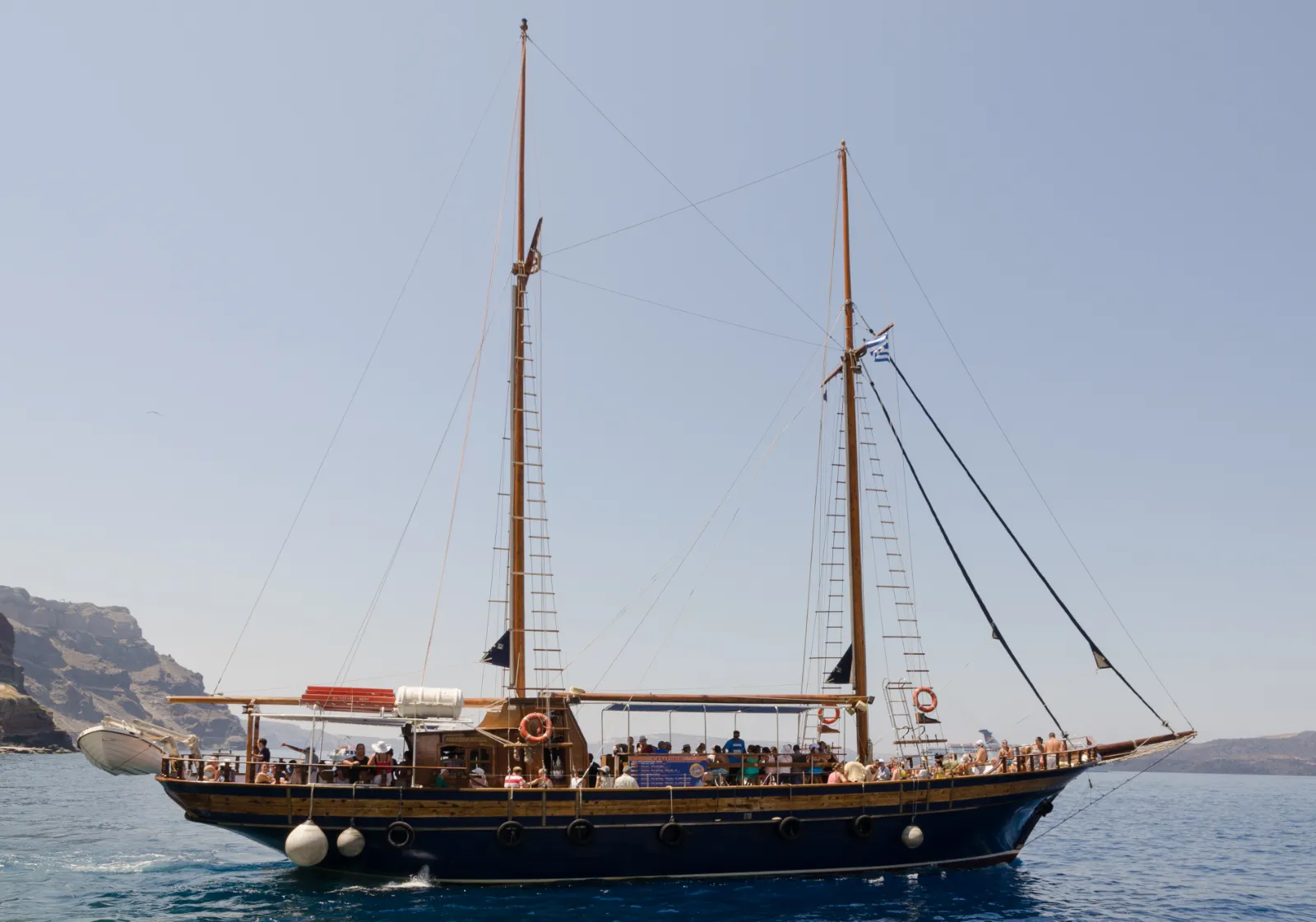
Below Fira, at the bottom of the caldera wall, is the old port. Cruise ships anchor off the island and tender their passengers in there, so on a busy morning several thousand people arrive at sea level needing to get to a town several hundred metres above them.
There are three routes, and they have been the same three for forty years.
The cable car runs straight up the cliff face and takes a few minutes. It was paid for by a foundation established by Evangelos Nomikos, a Santorini-born shipowner and benefactor of the island, and it opened in the early 1980s; that account is consistent across the sources but we did not read it at the operator, so treat it as the received history rather than as a document. The cable car is the fast option and it is the one with the queue. When two ships are in, the queue at the bottom is the defining feature of the morning.
The stepped path is the old way. It zigzags up the cliff between the port and the town, and how many steps it has depends entirely on who counted: 587, 588 and “about 600” all appear in print, no authority publishes a figure, and we are not going to invent a tie-breaker. What matters more than the number is the surface. The path is shared with the working animals, so it is soiled in places and slick where it has been washed, and it climbs several hundred metres in full sun with no shade worth the name. Going down is a knee exercise. Going up in August at midday is a serious piece of exertion, and this page is not going to tell you whether you should do it, because that depends on you and on the day.
The third route is a ride on a donkey or a mule, and it needs its own section.
The animals, and what has been said about them
The animal rides between the old port and Fira are the island’s oldest transport and its most contested attraction, and a page about Fira that skipped them would be leaving out the part readers actually ask about.
Here is what is on the record.
In August 2018 Greece’s Ministry of Rural Development and Food issued a circular amending Law 1197/81, the country’s animal-protection law, setting out how working equines on the islands must be treated. As reported by GTP Headlines, the Greek travel trade’s news service, the measures bar the carrying of riders above 100 kilograms, require the animals to be microchipped, require veterinary support and rest periods, and require owners to provide shade, water and food, with inspections and penalties for owners who do not comply.
That legislation exists because welfare concerns had been raised, publicly and repeatedly, by organisations that work on this.
The Donkey Sanctuary, a British equine welfare charity, and the Greek Animal Welfare Fund carried out an assessment of the island’s working donkeys and mules and met the mayor of the day, who committed to improvements. Their finding was mixed rather than damning: they reported the animals’ body and hoof condition as largely good, and they identified areas needing improvement, including more shelter from the sun at the top of the port steps. PETA has separately published investigations and run campaigns alleging continuing mistreatment.
We are reporting all of that rather than adopting it. We have not inspected an animal, we are not a welfare organisation, and we are not going to tell you what to do with your morning. What we can tell you is that the option exists, that it is regulated, that named charities have documented concerns about it, and that the two alternatives up the same cliff are a cable car and your own legs. Read the organisations directly if it matters to you, and decide it yourself.
One factual note that helps nobody’s argument and is worth having anyway: whatever you choose, the animals will be on the path. If you walk, you are sharing it with them.
What is actually in Fira
Strip away the arrival logistics and Fira has more to detain you than its reputation suggests, though most of it is indoors.
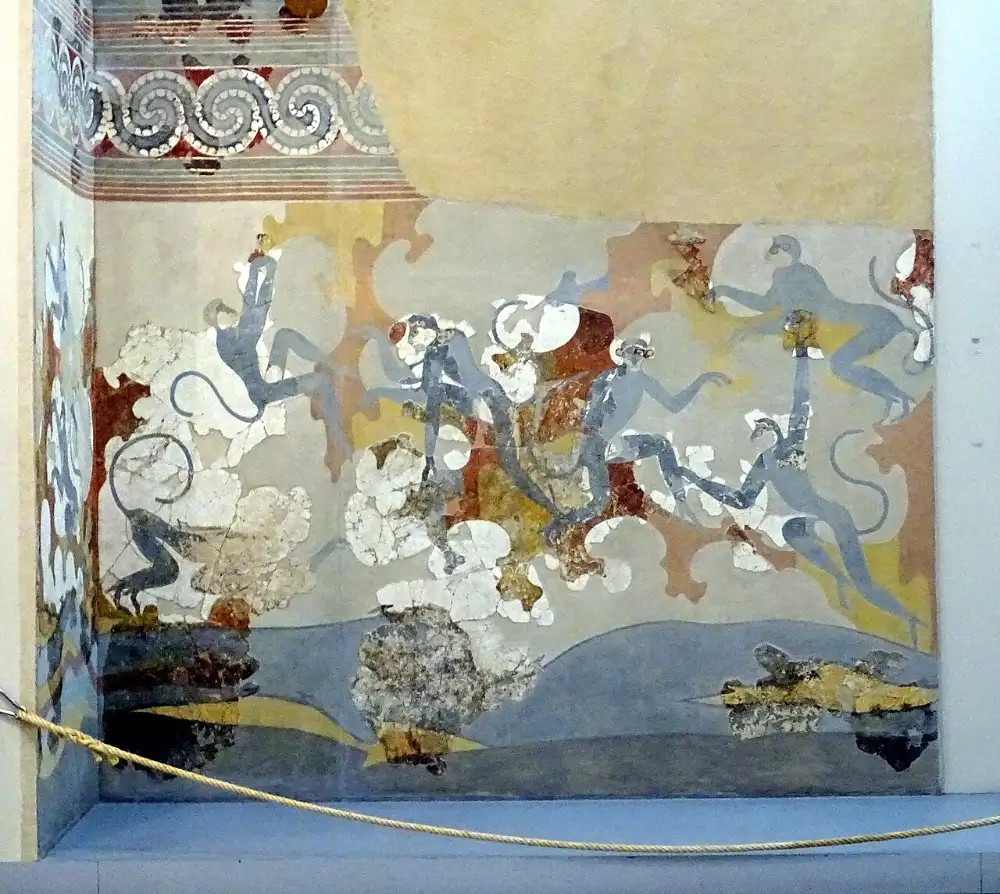
The Museum of Prehistoric Thera is the strongest thing in town, and it is the missing half of a visit to Akrotiri. The excavation is the site; the museum is where the finds from it live, including the wall paintings. Doing one without the other is a common mistake and an avoidable one. We print no hours and no ticket price here, because both change and neither was read at the museum.
The town also carries the island’s split religious history in its street plan. Fira has an Orthodox metropolitan cathedral on the rim and a Catholic cathedral a few streets north, in a quarter that dates from the centuries when Latin rule sat over an Orthodox island. That is unusual in the Cyclades and it is the most interesting ten minutes of walking in the town.
Then the rim itself. The caldera-edge path runs north out of Fira through Firostefani and Imerovigli and on to Oia, roughly 10 kilometres in three to four hours, and it is the best free thing on Santorini. Starting from Fira means starting from the transport hub, which is why most people walk it in this direction. Go early or late; there is no shade on it. The Santorini guide has the rest of the day’s shape, and Oia is its own decision at the far end.
Fira’s nightlife is the island’s, such as it is. It is where the bars and the handful of clubs are, and it is a low ceiling by Cycladic standards, which is covered on the Santorini nightlife page rather than repeated here.
Nothing in Fira is booked through us. What you book for a Fira day is the room and the transfer from Athinios or the airport, and the Santorini guide sets out how those work.
Timing beats everything else
The single most useful thing on this page is a clock.
Cruise ships anchor off Santorini most mornings in season and push thousands of people up the cliff into Fira and on to Oia around the middle of the day. That is when the cable car queue is longest, when the rim streets are shoulder to shoulder, when the restaurants with the view are full, and when the town is at its least appealing. It is also, unavoidably, when most first-time visitors see it.
The fix is not clever, it is just early. Fira at eight in the morning is a different town: shopkeepers hosing the paving, the caldera in flat clean light, and space on the rim path. Fira in the evening, once the tenders have gone back, is better again, and the sunset works from here perfectly well without the Oia crush.
If you are staying in Fira, all of this is free. If you are day-tripping in, it is the difference between a good visit and a queue with a view.
The honest summary
Fira is not the prettiest place on the caldera rim and it does not need to be. It is the place that makes the rest of the island reachable, it holds the museum that explains the island’s oldest story, and it has the one stretch of cliff with a genuine choice of how to climb it. Base here if you want buses, food and convenience; visit here early if you are staying somewhere quieter. Either way, do not judge it by the hour the ships are in.
Last checked July 2026. What gets re-checked on this page: the animal-welfare rules and the organisations working on them, the museum’s status, and the walk figures carried from our Santorini guide. No ticket price, fare, opening hour or penalty figure appears here by design. How we date and correct facts is in our editorial policy.
Common questions
What is Fira in Santorini?
Fira is the capital of Santorini, on the caldera rim above the old port. It is the island’s administrative and transport hub: the KTEL bus station is here, and buses run from it to Oia, Kamari, Perissa and Akrotiri. It holds the Museum of Prehistoric Thera, an Orthodox and a Catholic cathedral, most of the island’s shops and services, and the start of the rim walk to Oia. It is a working town rather than a picture-postcard village, which is both its drawback and its usefulness.
How do you get from the old port to Fira?
Three ways, and they have been the same three for decades: the cable car up the cliff face, the old stepped path on foot, or a ride on a donkey or mule. The cable car is quickest and gathers the longest queue when cruise ships are in. The path climbs several hundred metres in full sun and is shared with the working animals, so it is soiled and slick in places. We print no fare and no journey time, because both change with the season and the crowd.
Is it worth walking the steps from Fira to the old port?
That depends on you, on the hour and on the weather, and it is not a call this page can make for you. The facts are these: the climb is several hundred metres of vertical, there is effectively no shade, the surface is shared with the animals and is slippery in places, and the step count is disputed. Downhill is far easier than uphill. Many people walk down and take the cable car back, which is the compromise most locals would recognise.
Are the Santorini donkey rides still running, and what are the rules?
The rides between the old port and Fira still operate. In August 2018 Greece’s Ministry of Rural Development and Food issued a circular amending Law 1197/81 which, as reported by GTP Headlines, bars the carrying of riders over 100 kilograms, requires microchipping, veterinary support and rest periods, and requires owners to provide shade, water and food, with inspections and penalties. Welfare concerns have been raised by The Donkey Sanctuary and the Greek Animal Welfare Fund, whose assessment reported condition as largely good while identifying areas for improvement, and by PETA, which has campaigned on it. We report that rather than advise on it.
Should you stay in Fira or Oia?
Fira for convenience, Oia for the view and the price tag. Fira is the transport hub, has the most restaurants and services, is easiest without a car, and is the busiest of the rim towns with no beach of its own. Oia is quieter to sleep in, more beautiful, more expensive and further from the buses. Firostefani and Imerovigli sit between them on the same cliff and are the usual compromise. The full comparison is in the Santorini guide.
What is there to do in Fira itself?
The Museum of Prehistoric Thera, which holds the finds from the Akrotiri excavation and is the reason to do both in one trip. The two cathedrals, Orthodox and Catholic, a few streets apart. The caldera-rim path, which starts here and runs about 10 kilometres to Oia in three to four hours. And the town’s bars, which are Santorini’s nightlife in practice. Most of it takes half a day, and the best half is early morning.
When is the best time of day to visit Fira?
Early morning or evening. Cruise passengers come ashore and reach the rim around the middle of the day, which is when the cable car queue, the streets and the view restaurants are at their worst. Before about nine, and again after the tenders have gone back, Fira is a calm town with the same view. If you are only in Fira for one day, that timing is the difference between the visit you hoped for and a queue.
Booking
We sell nothing and book nothing for you. Every guide on this page tells you how to arrange each piece yourself - which ferry operator, when to book, what to prebook and what to leave loose.