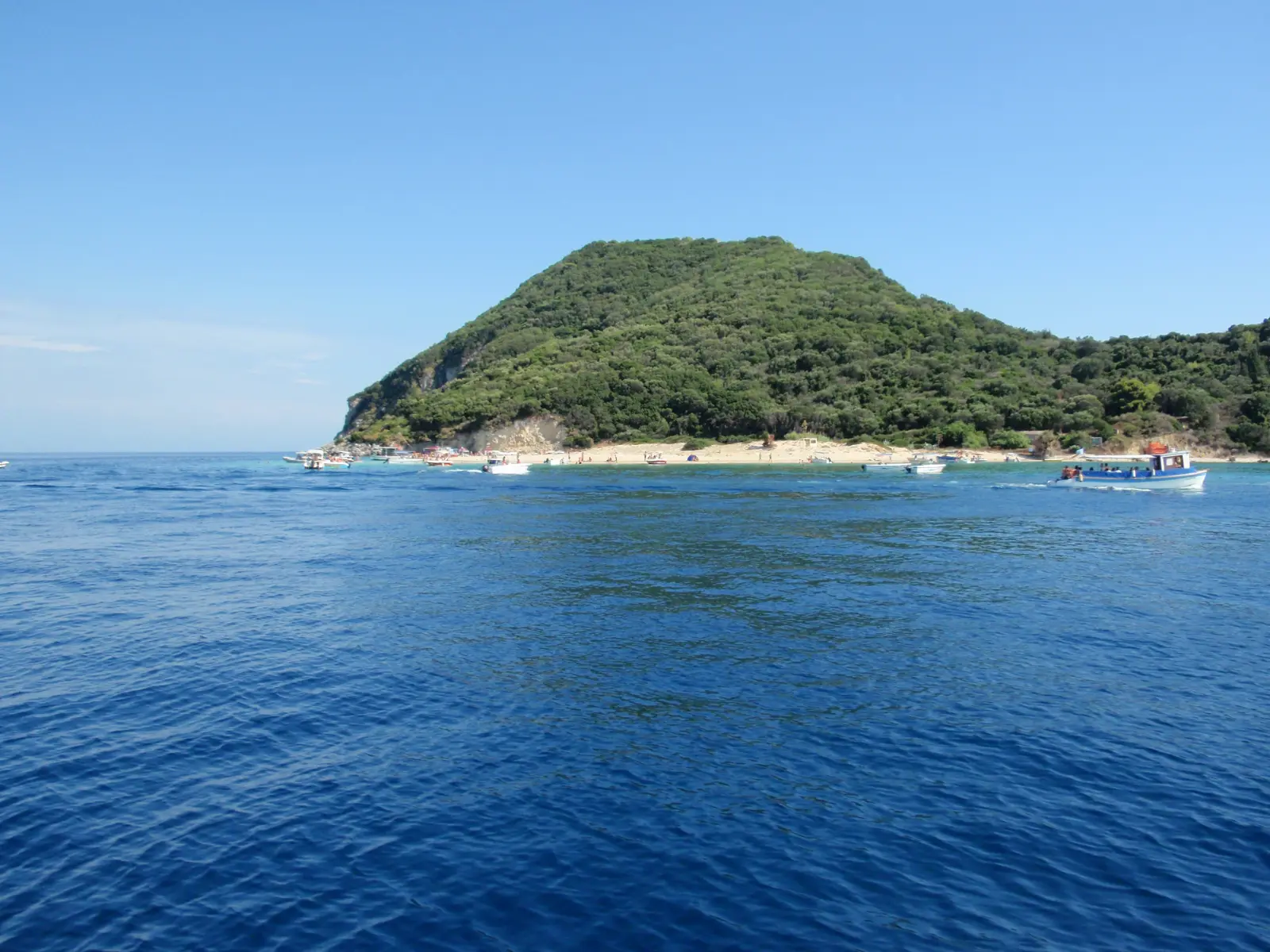
Island group
Ionian Islands (western Greece) - third largest of the group, also known by its Venetian name Zante
Airport
Zakynthos International “Dionysios Solomos” (IATA: ZTH), about 4 km south of Zakynthos Town, operated by Fraport Greece; night flights restricted roughly 22:00-05:00 for loggerheads nesting on adjacent Kalamaki beach
Ferry from mainland
Kyllini (north-west Peloponnese) to Zakynthos Town, about 75 minutes - the only mainland port link; no Piraeus ferry, and no Ionian-Aegean connections. Summer-only side link: Agios Nikolaos to Pessada (Kefalonia), ~1.5 h, ~2/day
Best months
May-June and September-early October (shoulder sweet spot): swimmable sea, boats running, thinner crowds. July-August is peak charter season; most resort infrastructure closes in winter
Travel details last checked July 2026.
Where Zakynthos sits, and why it is also called Zante
Zakynthos is the third largest of the Ionian Islands, lying off the north-west coast of the Peloponnese in western Greece. Its Venetian name, Zante, still fills package brochures and flight searches, so “Zakynthos, Greece” and “Zante” point to the same island. The capital, Zakynthos Town, faces the mainland from the east coast.
The Venetian name is earned. Venice held the island from 1484 to 1797 and called it Fiore di Levante, the flower of the East. What the label no longer describes is the architecture: a 7.3-magnitude earthquake in August 1953 destroyed most of Zakynthos Town, and what stands today is a rebuilt, working Greek port rather than a preserved Venetian set piece like Corfu. Come for arcaded squares and a lived-in harbourfront, not a museum quarter.
The rest fits the Ionian pattern: a green interior of vines and olive groves climbing to limestone cliffs along the west coast, with calm, clear coves beneath them. If the Greek island in your head is a whitewashed Cycladic cube, adjust it - the Greek island of Zakynthos is greener, softer and lower-key than the Aegean postcards. It also plans differently, because the first decision here is not when to come but which side of the island you want.
One island, two holidays: the loud south, the quiet north and west
Zakynthos runs two holidays at once, and picking between them comes before dates or hotels.
The south runs the package trade. Laganas and its Golden Mile form a purpose-built British party strip - a long run of bars and clubs, foam parties and booze cruises for an 18-25 crowd - and it is a resort strip, not the real Zakynthos; it does not pretend otherwise. The strip only becomes itself after dark, so basing elsewhere costs a party-goer nothing and gains everyone else the island. If the strip is the point of your trip, the Greece party islands compared covers that scene properly; this page keeps to the island around it.
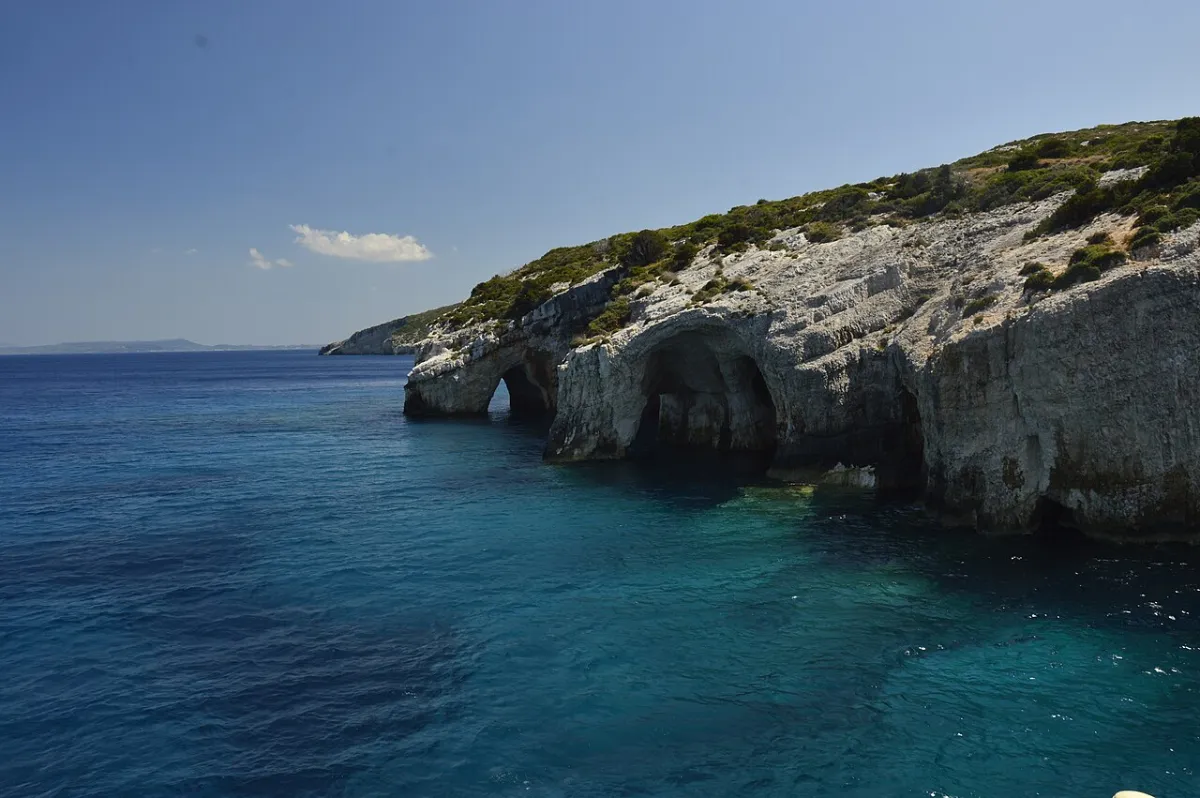
The north and west are the Zakynthos on the screensavers. The west coast rises into limestone cliffs strung with villages the package buses skip - Kiliomenos, Exo Chora, Volimes - and runs out at Cape Skinari, where the Blue Caves sit at the island’s northern tip. Porto Limnionas and the sulphur springs at Xigia break the cliff line for swimmers, and the land between is vineyard and olive grove. In the shoulder months this is also the island’s hiking: cliff paths, village lanes and the tracks around Cape Skinari, at their best in May or October rather than August heat.
The two sides share an island, not a holiday. Decide which one you came for first; the sections below settle how long it needs, how you arrive and where you base.
How many days Zakynthos needs
Five days is the honest answer: one boat day for the caves, one marine-park beach day, one west-coast drive through the cliff villages, an evening or two in Zakynthos Town, and a spare day. Three days works only from a single well-chosen base - one boat trip, one beach, no slack.
The spare day is not padding. The island’s marquee sights - the Navagio view from the water, the Blue Caves, the Keri caves - are sea-access sights, and boats cancel for swell rather than rain. A stiff blow on the open west coast can wipe out exactly the day you had ring-fenced for the postcard, so give the weather somewhere to go.
Greeka argues the highlights fit in three days, and the long blog guides converge on five to seven. We land at five: enough for both halves of the island without turning the week into a checklist. A full week adds the interior villages, a winery afternoon and the summer ferry hop to Kefalonia. If Zakynthos is one leg of a longer trip, the island-hopping guide shows where an Ionian week fits in a wider Greece route.
Getting there: a short flight, or the Kyllini ferry
Two ways in: a short flight, or bus-and-ferry through the Peloponnese. From Athens you fly to Zakynthos International Airport “Dionysios Solomos” (ZTH), about 4 km south of Zakynthos Town, in roughly an hour. The overland alternative runs to Kyllini in the north-west Peloponnese - about 3.5 to 4 hours from Athens by KTEL bus or car - then crosses to Zakynthos Town by ferry in about 75 minutes. Kyllini is the island’s only mainland port link; there is no ferry from Piraeus.
| Route | Roughly | Choose it if |
|---|---|---|
| Fly, Athens to ZTH | About 1 h; ZTH is about 4 km from town | You value the day - almost everyone |
| Bus or car to Kyllini, then ferry | About 3.5-4 h to Kyllini, then a ~75-minute crossing | You are driving, or folding in a Peloponnese leg |
Between April and October, much of Europe flies straight to Zakynthos, Greece without touching Athens: British Airways, easyJet, TUI, Ryanair and others run seasonal direct routes into ZTH, which is how most of the resort crowd arrives.
The airport also carries the island’s oddest rule: night flights are restricted through the overnight hours, because loggerhead turtles nest on Kalamaki beach beside the runway. Book a late arrival and you will land somewhere else in Greece first.
One correction saves island-hoppers real planning pain: there is no ferry from Santorini to Zakynthos, none from Zakynthos to Mykonos, and none between the Ionian and the Aegean at all - the networks do not touch. You fly via Athens; the overland alternative is a long two-ferry day via Piraeus and Kyllini. How the networks divide is in the Greek island ferries guide, and flights to Greece covers the airports.
Getting around: a car on land, a boat for the coast
Rent a car. KTEL buses link Zakynthos Town with the main resorts, but they thin out fast beyond them, and the west-coast villages and viewpoints have little or no service. Two things to know before you drive: locals move quickly, and the west-coast roads are proper mountain roads, narrow and switchbacked, so allow more time than the map suggests.
Then plan the water separately, because the real transport question here is not bus-or-car but land-or-boat. The Navagio cove, the Blue Caves, the Keri caves and the Myzithres stacks all face the open sea, and no road reaches them. Small motorboats rent by the day from Agios Nikolaos in the north and from Keri and Porto Vromi in the south-west, licence-free below a certain engine size. Follow the rental briefing and the marine park’s speed limits in Laganas Bay - the rules are the operators’ and the park’s, and they are not optional. The wider mechanics of buses, ferries and rentals are in getting around Greece.
Where to base: Town, Tsilivi, Vasilikos, or the far north
Where to stay in Zakynthos is a five-way decision, and because the island runs two holidays at once, your base picks your trip more than it would elsewhere.
Zakynthos Town is the rebuilt, working port: tavernas that serve locals, the Kyllini ferry on the doorstep, and a central position that reaches both halves of the island. It is not a resort, and it is better for that.
Tsilivi, Alykes and Kalamaki are the family bases - gently shelving sand and resort infrastructure built around it. Kalamaki sits inside the marine park’s nesting bay, so its beach closes from sunset to morning in season and stretches are roped off through summer; plan mornings on the sand and evenings elsewhere. More in Greece with kids.
The Vasilikos peninsula holds the island’s best sand - Gerakas and Banana among it - at the quiet south-east tip. It is the pick for couples who want the beaches without the strip.
Agios Nikolaos and the far north are boat-and-cove country: the Blue Caves on the doorstep, real quiet at night, and a car as a condition of staying.
Laganas is the strip. Book it if the nights are the trip; book anywhere else if they are not.
| Base | Vibe | Best for | Trade-off |
|---|---|---|---|
| Zakynthos Town | Working port town | Ferry access, reaching both halves | Not a beach base |
| Tsilivi / Alykes / Kalamaki | Shelving sand, resorts | Families | Nesting-bay rules at Kalamaki |
| Vasilikos | Quiet, the best sand | Couples | A drive from everything else |
| Far north | Coves and boats | Boat days, walkers | Remote; car essential |
| Laganas | Purpose-built party strip | 18-25 groups here for the nights | It is the strip |
Which bed, in which of these, is the next decision down - where to stay in Zakynthos takes the areas one by one.
Navagio right now: a view, not a beach
First, the current legal position, because much of what ranks online is out of date. As of our last check, entry to Navagio - Shipwreck Beach - is prohibited. A Joint Ministerial Decision, Government Gazette B’ 3033 of 28 May 2026, keeps the beach closed through 31 October 2026. It bars vessels from approaching or anchoring within 50 metres of the shoreline and bans swimming across the cove. The Municipality of Zakynthos and the Hellenic Police enforce it.
Navagio access - last checked 14 July 2026
- Beach closed to entry through 31 October 2026 (Joint Ministerial Decision, Government Gazette B’ 3033 of 28 May 2026)
- No vessels within 50 m of the shoreline; swimming banned across the cove
- Viewing: the clifftop platform near Volimes, subject to the fencing works the decision requires, and viewing-only boat trips holding outside the exclusion zone
So a “visit” is currently a photograph, from the Volimes clifftop or from a boat holding offshore - and any tour still sold as a beach landing cannot deliver one under the current decision. Ask what “visit” means before you pay.
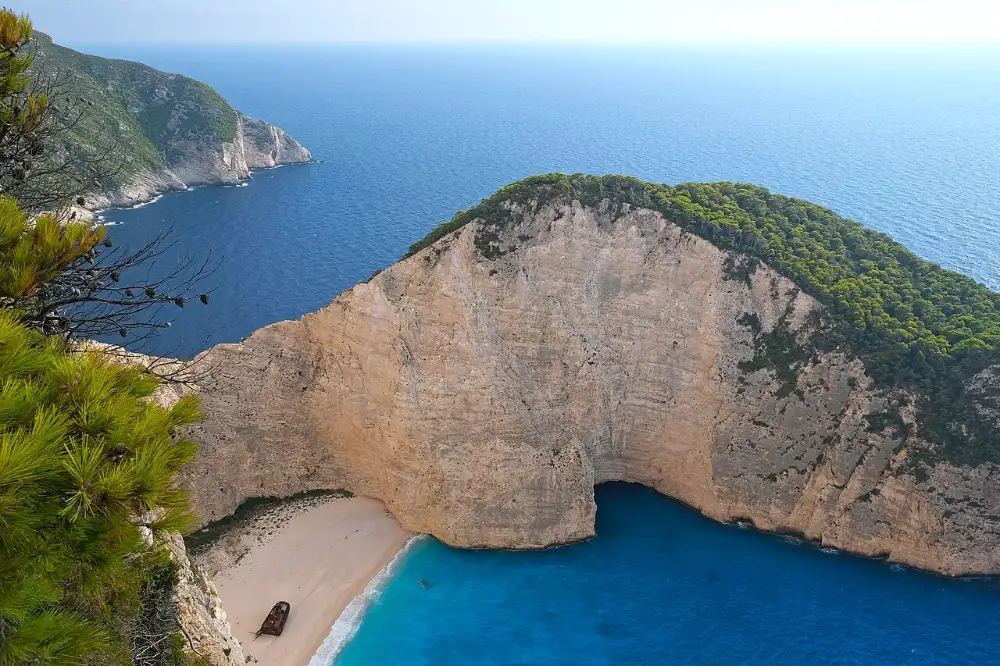
The reason is rockfall. After collapses in 2018 and 2022, OASP, Greece’s earthquake planning and protection organisation, assessed fractured, overhanging limestone above the beach. The finding is theirs, not ours - we can tell you what the decision allows, and that you should check current status before planning a day around it.
Greek media report that a restoration is planned - treat that as reported, not scheduled; no reopening date exists.
None of this empties the trip: the same coast holds the Blue Caves and the cove circuit below, and the clifftop shot is still the postcard.
Blue caves, Keri and the boat-day coast
With the postcard closed to landings, the boat day becomes the island’s centrepiece - and it comes in two versions, at opposite ends of Zakynthos.
The north day runs from Agios Nikolaos harbour to the Blue Caves at Cape Skinari: sea-carved limestone arches where the water throws a deep blue light onto the rock. Go in the morning. The light does the work, and the small early boats out of Agios Nikolaos beat the midday circuit tours to the arches.
The south-west day runs from Keri or Porto Vromi: the Keri caves, the Myzithres stacks off the cape, Marathonisi - the turtle-shaped islet in Laganas Bay, whose landing rules belong to the marine park below - and Cameo island by Agios Sostis at the bay’s eastern edge.
Pick one end, not both. The two cave coasts sit at opposite tips of the island, and a single do-everything cruise spends most of its hours in transit. Drivers can add the west-coast swim spots without a boat: the rock-cut inlet at Porto Limnionas and the warm sulphur springs at Xigia are both reachable by road. Where all of them rank against the sand is on the best beaches in Zakynthos.
The marine park: turtle beaches with real rules
Laganas Bay, on the southern shore of Zakynthos island, is the National Marine Park of Zakynthos: established in December 1999, the first national park created for sea turtles in the Mediterranean. It wraps six loggerhead nesting beaches - Gerakas, Dafni, Sekania, Kalamaki, East Laganas and Marathonisi - which together host on the order of 900 to 2,000 nests a year, a large share of the Mediterranean total.
The rules are specific, and they are the reason the turtles keep coming back:
- Nesting beaches open in the morning and close overnight for nesting and hatching - check the posted hours at the entrance
- Keep yourself, your towels and any furniture within 5 m of the waterline
- No private umbrellas on Gerakas, Dafni or Marathonisi
- Sekania is closed to the public entirely
- Keep 15 m from any turtle, in the water or on the sand
- Boats in the bay hold a 6-knot speed limit
Gerakas also reportedly runs a seasonal visitor cap, with a kiosk at the entrance - arrive in the morning or late afternoon.
For families the practical read matches our Greece-with-kids advice: Kalamaki’s sheltered, shallow sand is one of the island’s most usable family beaches, and it doubles as nesting habitat, with stretches roped off through summer. Mornings on the sand, evenings elsewhere. The island-by-island version is in Greece with kids.
Treat the rules as the point rather than the small print. Nesting season and tourist season are the same months - roughly May to October, with hatchlings from late summer into autumn - and the whole south coast runs on turtle time, the airport curfew included. Boat trips in the bay sight turtles often, but no operator can promise one, and any that does is overselling.
When to go: shoulder months, and turtle season
Come in late May, June, September or early October. The sea is warm enough to swim, the boat trips are running, the nesting beaches are open through the day and the crowds are a fraction of August’s. Those same weeks are the walking window for the west-coast paths.
July and August are the charter peak: the Navagio viewpoint and the cave boats at their most queued, Laganas at full volume, rooms at full price. The island still works then - base east or north and book early.
Winter is the caveat. Zakynthos is a charter island more than a year-round one: most resort infrastructure closes out of season, while Zakynthos Town keeps working like the county town it is.
| Season | Crowds | What runs | Turtle activity |
|---|---|---|---|
| May-June | Building | Boats and resorts opening up | Nesting begins |
| July-August | Peak | Everything, with queues | Nesting; first hatchlings late summer |
| September-early October | Easing | Boats and resorts still running | Hatchlings |
| November-April | Minimal | Zakynthos Town; resorts mostly closed | None on the beaches |
The same shoulder-season logic runs Greece-wide in the best time to visit Greece, and the month-by-month weather guide has the detail this page deliberately skips.
Where Zakynthos fits: the Ionian, not the Aegean
Zakynthos belongs to the Ionian, and its one working island-hop points north. In summer, a ferry links Agios Nikolaos at the island’s northern tip with Pessada on Kefalonia in about an hour and a half. It is seasonal and sparse, and both ports are remote, so plan the connection with the schedule in hand rather than improvising it. Kefalonia rewards the effort.
Beyond it, the chain runs north through Ithaca, Lefkada, Paxos and Corfu - a coherent green-water route best strung along the mainland side. The Ionian islands compares them.
And once more, plainly: there is no ferry between Zakynthos and Santorini or Mykonos, in either direction, because the Ionian and Aegean networks never meet. Anything Aegean means flying via Athens, so budget a connection day if Santorini is the other half of your plan.
That geography settles what kind of trip this is. Zakynthos works as a one-base week with boat days, or as the southern leg of an Ionian route - not as an add-on to a Cyclades hop. When you are ready to place it in the bigger picture, start from all our Greece destinations.
Zakynthos FAQ
Can you visit Shipwreck Beach (Navagio) right now?
Not on the sand. A Joint Ministerial Decision keeps Navagio Beach closed through 31 October 2026 after rockfalls, bars boats from coming within 50 m of the shore and bans swimming in the cove. You see it from the clifftop viewpoint near Volimes - which the decision makes conditional on the required fencing works being finished - or from a viewing-only boat trip holding outside the exclusion zone. Last checked 14 July 2026; re-check the status box above before you book.
How many days do you need in Zakynthos?
Five days is the sweet spot: a boat day for the caves, a marine-park beach day, a west-coast drive and a spare day for wind, because boat trips cancel for swell. Three days works from one good base; a week adds the interior and the summer Kefalonia hop. The island-hopping guide fits it into a longer route.
Is Zakynthos a party island?
Only one corner of it. Laganas in the south is a purpose-built British party strip with a young 18-25 crowd; the rest of the island runs on beaches, boat trips and quiet villages. Base anywhere else and you will barely notice it. The full comparison is on the Greece party islands page.
When can you see turtles in Zakynthos?
Loggerhead season runs roughly May to October: nesting from late spring, hatchlings from late summer into autumn, centred on Laganas Bay and Marathonisi inside the National Marine Park. Boat trips in the bay sight turtles often, but nobody can guarantee one, and the park’s rules on hours, distances and boat speeds apply throughout.
How do you get to Zakynthos from Athens?
Fly - it is about an hour from Athens to Zakynthos “Dionysios Solomos” airport (ZTH). The overland route is a 3.5-to-4-hour bus or drive to Kyllini in the Peloponnese, then a roughly 75-minute ferry to Zakynthos Town. There is no ferry from Piraeus. The detail is in the Greek island ferries guide.
Can you get from Santorini to Zakynthos?
Yes, but not by a direct ferry - none exists, because no Ionian island connects to the Aegean ferry networks. Flying via Athens is the practical route in both directions, and the same holds for Mykonos. The overland alternative is a long two-ferry day via Piraeus and Kyllini. Start from Santorini to plan that side.
Plan by category
The Zakynthos guides
5 guides, each scoped to a decision you actually have to make.
 Attractions
Things to do
See the attractions → Hotels
Where to stay
Compare the areas →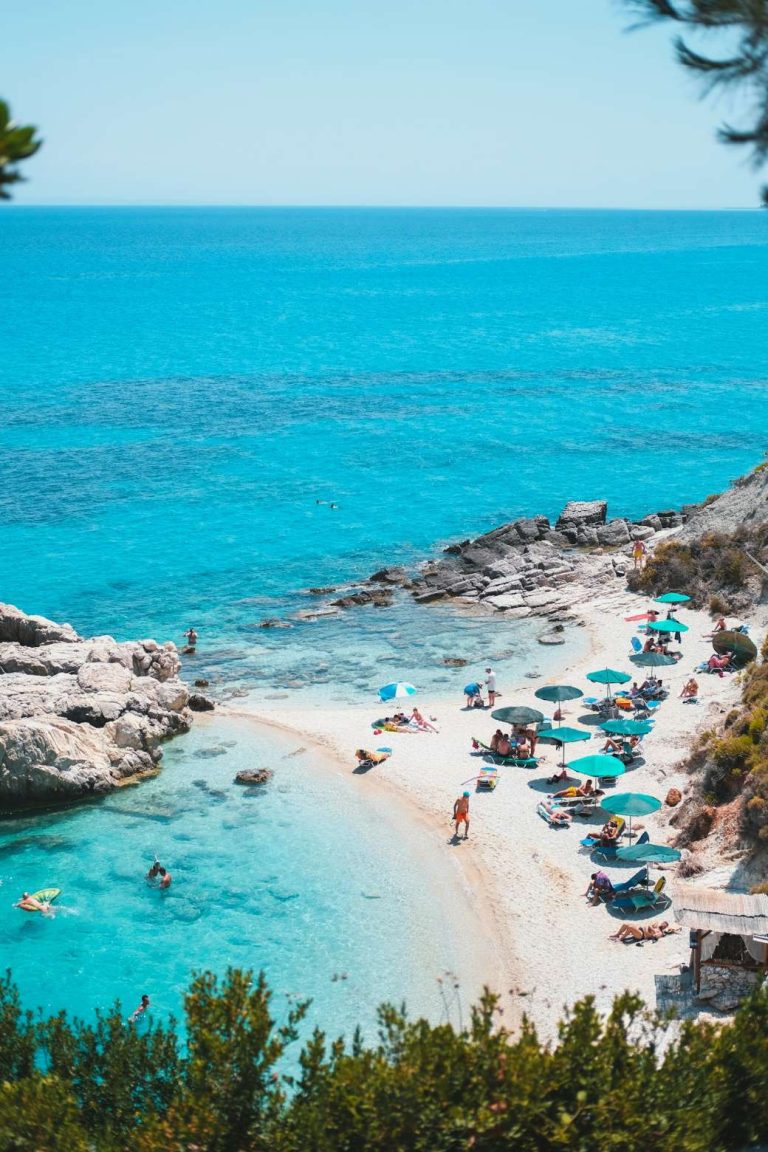 Beaches
The beaches
See the beaches →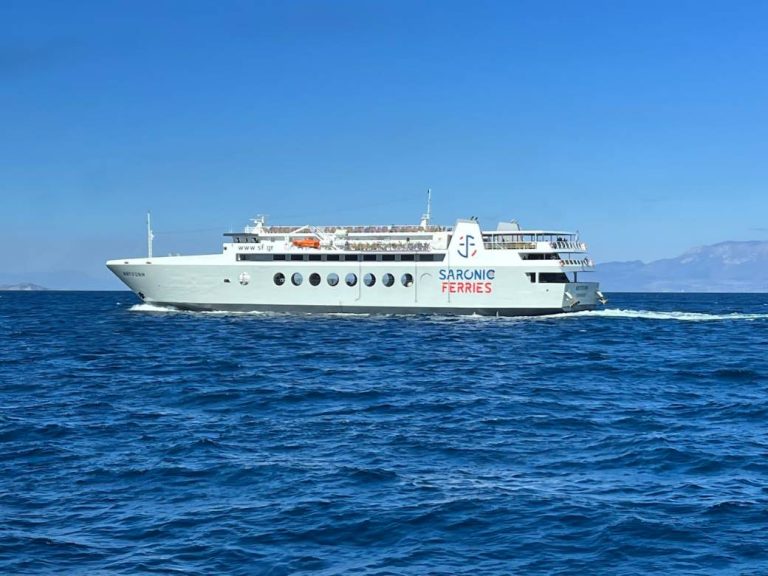 Itinerary
Day by day
See the itinerary →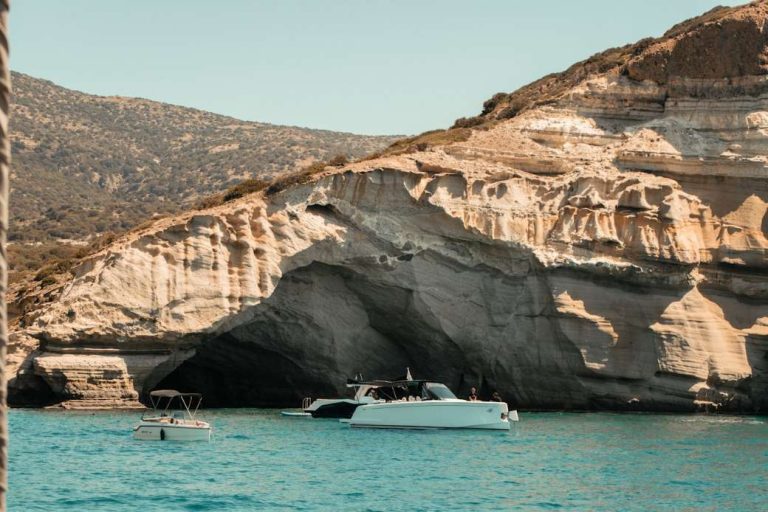 Day trips
Day trips
See the day trips →
Booking
We sell nothing and book nothing for you. Every guide on this page tells you how to arrange each piece yourself - which ferry operator, when to book, what to prebook and what to leave loose.