Kefalonia
Beaches in Kefalonia
Kefalonia’s beaches sort themselves by one rule, and it is worth knowing before you book a room rather than after: the drama is pebble, the comfort is sand.
The famous ones are white pebble under cliffs, and they are on the north and west coasts. The easy sand is in the south, around Skala and Lassi, and over on the Paliki peninsula. If you book a base for the postcard and then spend the week wanting sand, you will be driving.
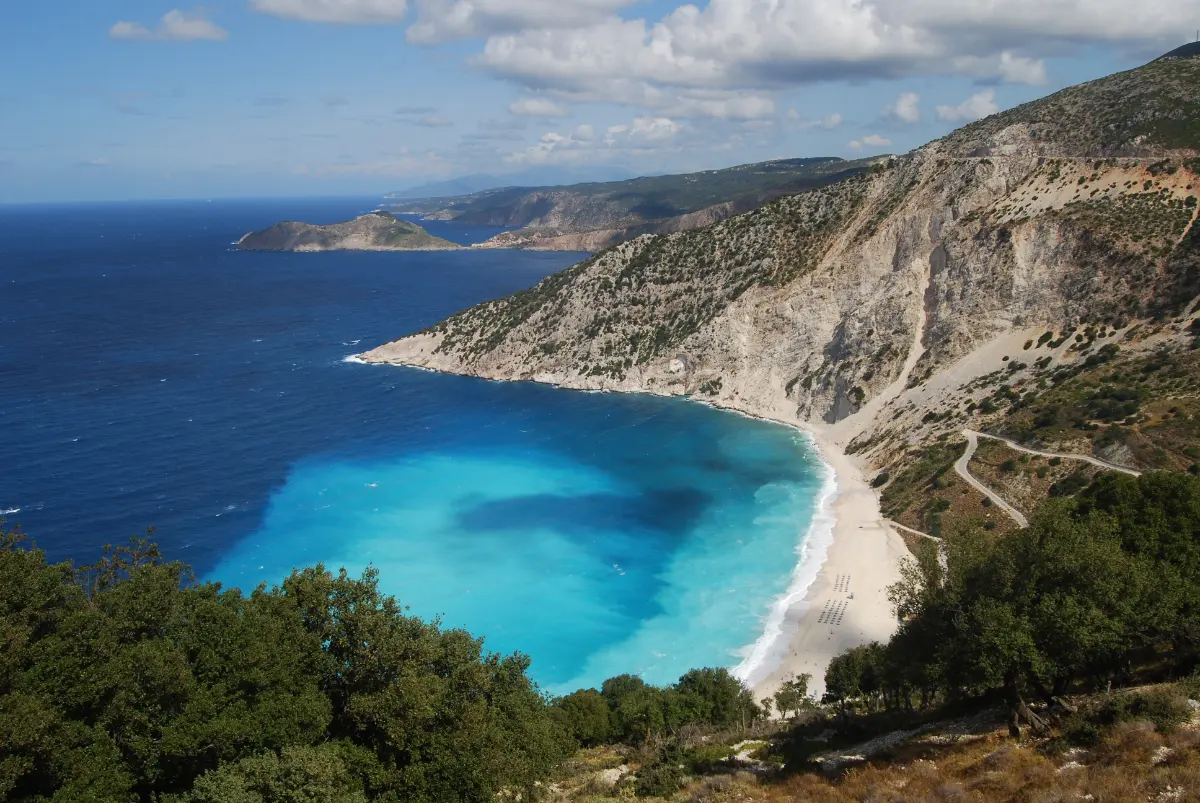
The north-west is the postcard, and it is pebble. Myrtos is the one on every cover: a white cobble crescent under a bare limestone cliff, with the road above it giving the view that made it famous and a run of switchbacks giving the access that puts a lot of people off. Its colour, its stones and the way the water deepens are one geological process rather than three separate facts, which is the most useful thing anyone can tell you about it. Further round, past Assos, the coast keeps that character: cliff, cobble and water that goes from turquoise to navy in a short distance.
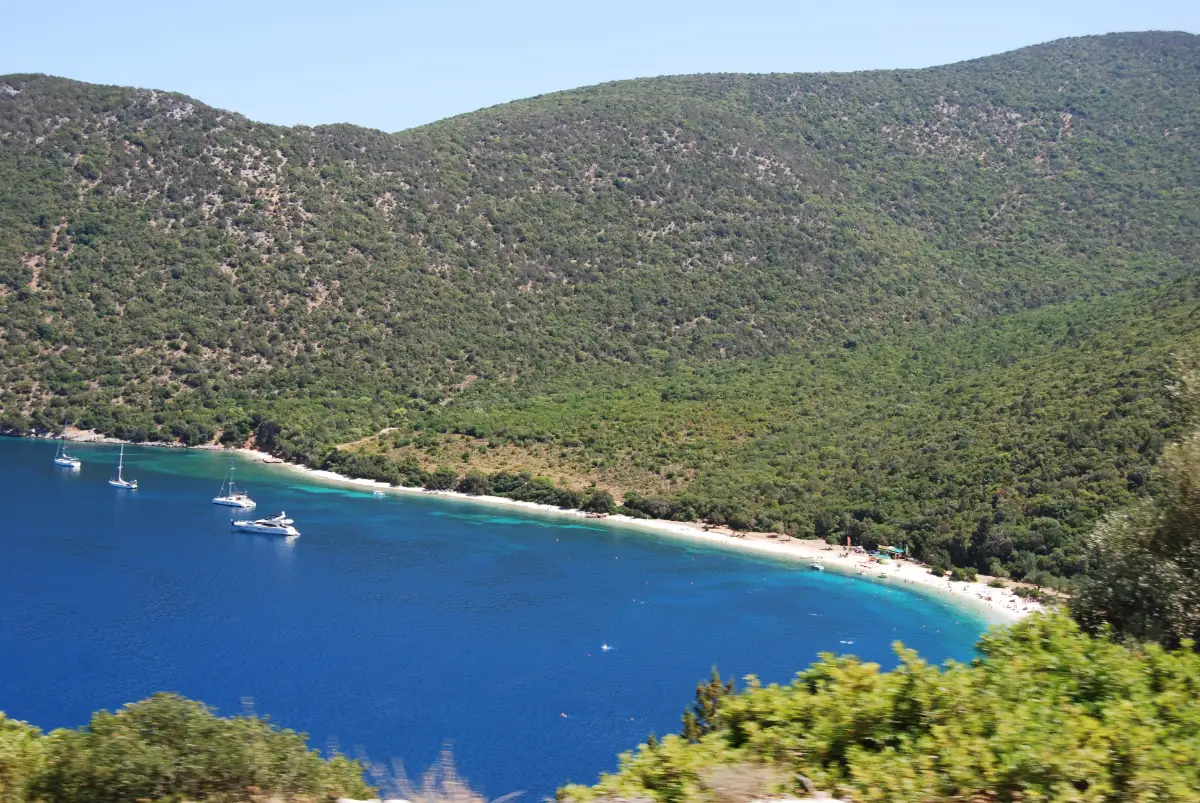
The east coast is greener and gets there faster. Antisamos is the one to know, a short road over the headland from the port at Sami, and its signature is what is behind it rather than what is on it: steep hills covered to the waterline in dense green, with nothing built on them. It is pebble too, and the road ends behind the bank rather than at a clifftop viewpoint, so you arrive at sea level. That single difference is why people who found Myrtos hard work often prefer it.
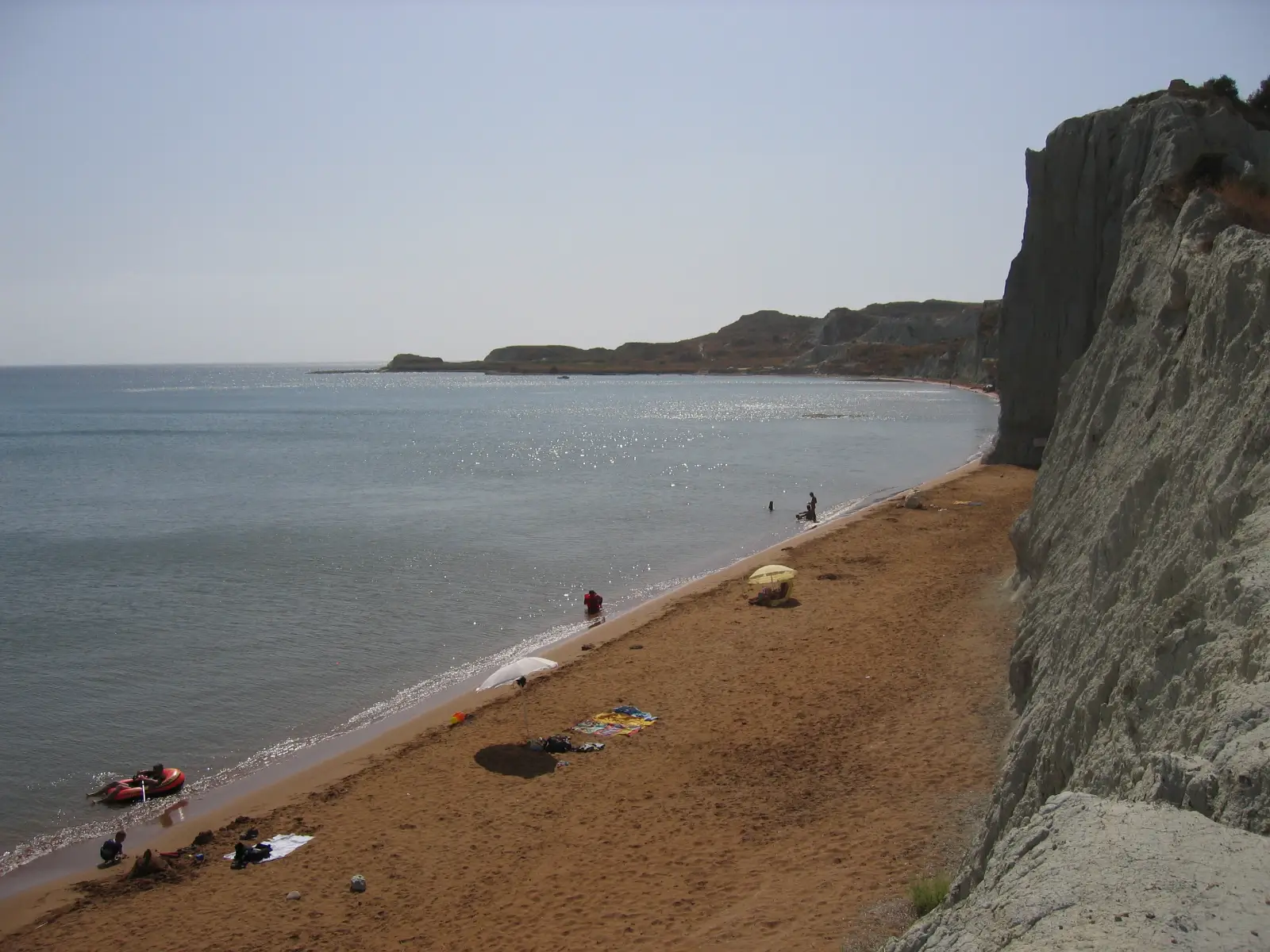
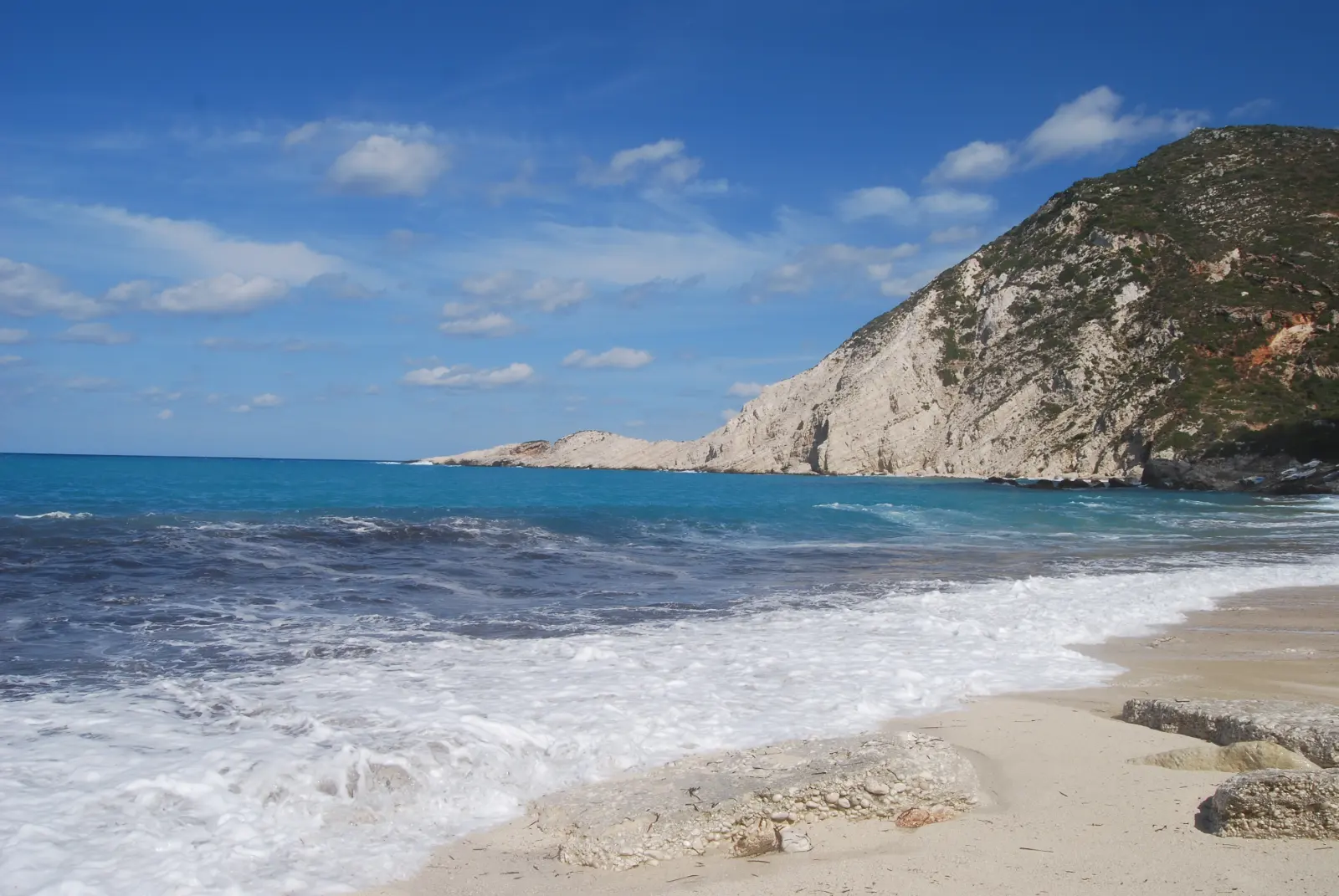
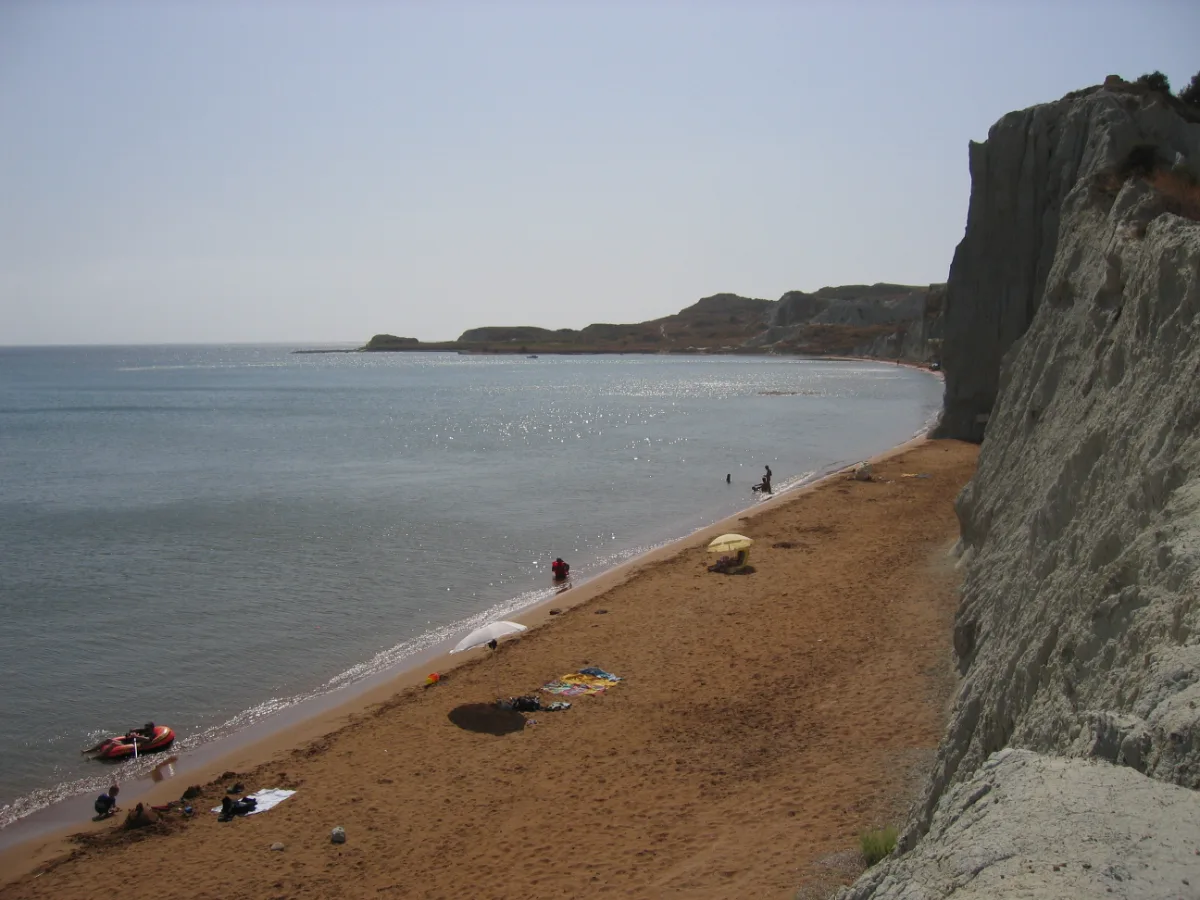
Paliki is a separate lobe of the island, and that is the whole reason it is quieter. The Gulf of Argostoli cuts it off from the rest of Kefalonia, with Argostoli and Lixouri facing each other across the water, so getting there means going round the head of the gulf or across it. Petani sits on its west side, opening due west onto open sea, which is one fact that explains two things people usually describe separately: the sunset, and the afternoon wind. On the peninsula’s south side, Xi is the odd one out on an island of white stone, a long curve of red-orange sand under white clay cliffs.
The south is where the sand is easy. Skala holds the island’s longest beach, around three kilometres of it, and Lassi’s pair, Makris Gialos and Platis Gialos, is five to ten minutes over the hill from the capital. If the trip is a beach week rather than a driving loop, this is the half of the island to sleep on.
Two things this page will not do.
It will not certify any of this water for swimming, for children or for anybody else. Several of these beaches shelve steeply and some of them face open sea; that is a description of the ground and the exposure, and it is genuinely useful, but the judgement about getting in belongs to the person standing there, to the flag, and to any lifeguard on duty. No web page has seen your day.
And it will not print sunbed prices, canteen names or bus times. Those change every season, and a beach guide built on them is wrong by the following summer. What does not change is the map, and on this island the map is the thing that decides your week: the headline beaches sit on three different coasts, so a plan that treats them as interchangeable turns into a driving holiday with swims attached. The Kefalonia guide works through the bases and the car decision, and Corfu against Kefalonia takes the Ionian choice from the top.