The only transport question that matters: does this leg need a car?
| The leg | What to use |
|---|---|
| Around central Athens | The metro and your feet. Never a car. |
| Athens to a mainland town or site | KTEL bus, or a hire car if you want the detours |
| Athens to Thessaloniki | Train or plane, after you check the train is running |
| A big, spread-out island (Crete, Kefalonia, Naxos, Rhodes) | Hire car, picked up at the airport |
| A small or cliff-bound island (Santorini, Hydra, Mykonos town) | Bus, taxi, feet |
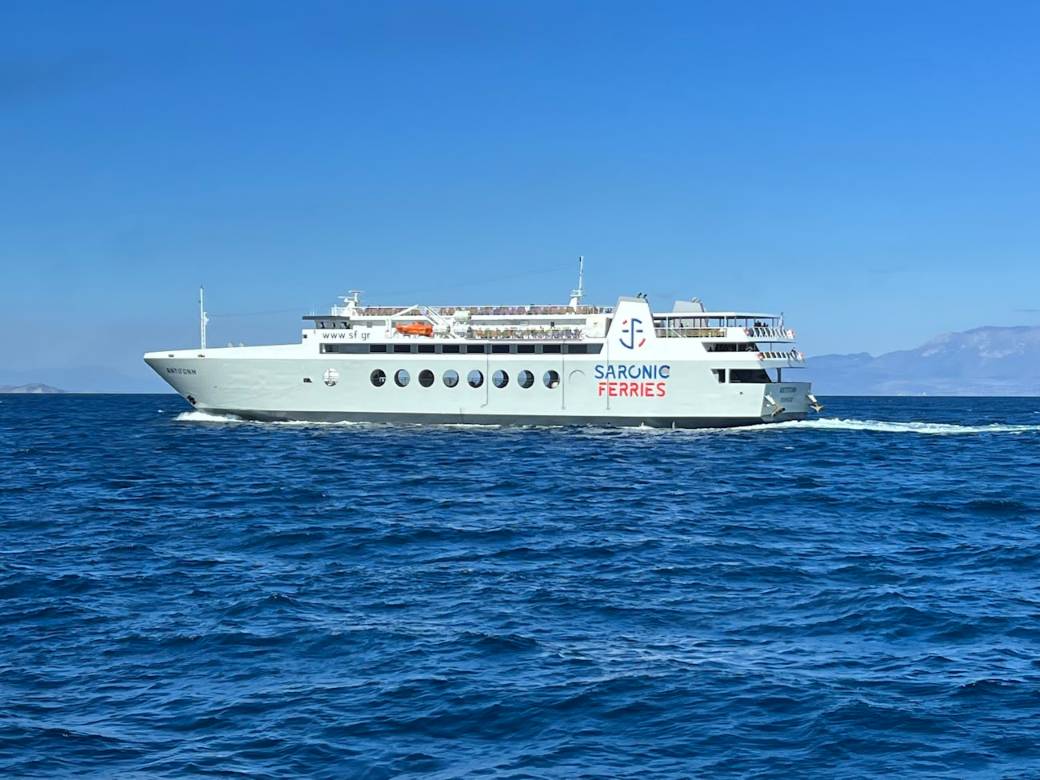
| Island to island | Ferry, which has its own page |
Intercity KTEL buses cover the mainland and the big islands cheaply and reliably, ferries link the islands, the train is a small extra rather than a spine, and a hire car is what turns a single base into a whole region. Getting around Greece is mostly a matter of picking correctly between those four, leg by leg.
The fork underneath every one of those choices is the same. Greek public transport is genuinely good at connecting towns, and genuinely bad at connecting everything between them. Buses will take you from city to city, from port to main village, from airport to the town you booked. They will not take you to the gorge, the mountain village, the monastery on the ridge or the beach at the end of eleven kilometres of switchbacks. That single distinction decides your car question, island by island, and the rest of this page is built on it.
Three things sit outside this page’s scope on purpose, so you know where to go next. Boats between islands, ports and boat types are on Greek island ferries. Airports, international routes and domestic hops are on flights to Greece. Every number with a currency symbol lives with the costs. What is left, and what follows here, is the land: how to get around in Greece once your feet are on it.
KTEL buses are the real national network, and they have no national timetable
Start with the structural fact, because it changes how you plan. KTEL is not a company. It is a federation of independent regional cooperatives, roughly one per prefecture, with no unified national timetable and no single booking site. Some sell tickets online and some are counter-only, and which is which is a question about your region rather than about Greece. The practical rule that follows: search for the KTEL company of the region you are travelling from, not for “Greek buses”, and expect the website to look like it was built by a bus company, because it was.
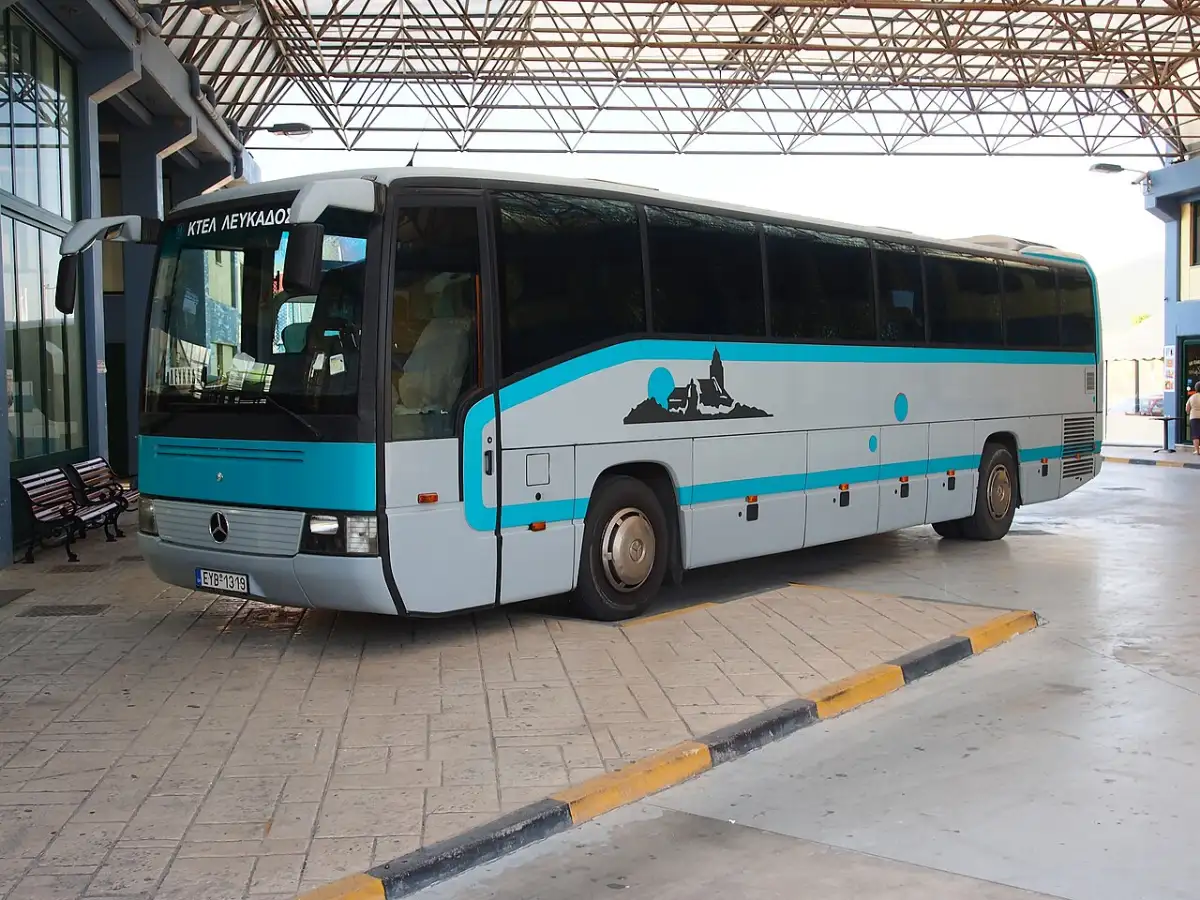
The mechanics trip people up more than the network does. Fares are set by distance, so a return is not automatically cheaper than two singles. On main intercity routes seats are assigned and worth booking ahead in summer. On rural and island routes you buy from the driver, there are no reservations, and the bus leaves when the timetable says rather than when it fills. Luggage goes in the hold.
Athens has two intercity terminals with different catchments, and turning up at the wrong one costs you a morning.
| Route | Athens terminal | The verdict |
|---|---|---|
| Athens to Delphi | Liosion (Terminal B) | The bus is the right call. The site is a walk from the stop and a car adds nothing |
| Athens to Kalambaka, for Meteora | Liosion (Terminal B) | The bus. The rail branch to Kalambaka has been out of service since the 2023 storms |
| Athens to Nafplio | Kifissos (Terminal A) | Easy, and the town itself needs no car |
| Athens to Thessaloniki | Kifissos (Terminal A) | Long by road. The train or a flight usually wins |
| Athens to Patras | Kifissos (Terminal A) | The land leg to the Ionian ferries |
For Delphi and Meteora the bus is a genuinely good option rather than a compromise. For the wider list of day trips from Athens, the choice between the bus and a hire car is a choice between cheap and flexible, and neither answer is wrong.
On the islands, KTEL means a handful of routes radiating from the port or the main town, cheap and busy in August. Those timetables shrink hard out of season, which makes them a planning input rather than a footnote: see when to go.
The trains: a small network having a hard few years
The Greek rail network is small, it does not reach a single island, and it serves a handful of mainland corridors rather than the country. The flagship is Athens to Thessaloniki, which is competitive with flying once you add airport time at both ends.
Then there is the current reality, and it is the reason this section refuses to print a status. The Athens to Thessaloniki corridor is being upgraded and new trainsets are being introduced, so what is actually running changes from week to week: engineering work, part-route cancellations with replacement buses, and ordinary delays all come and go on that line. We checked the operator’s own page a week apart while editing this and the picture had already changed. The Diakopto to Kalavryta rack railway, the Odontotos, is separately suspended until the infrastructure manager lifts it. Read all of that as one instruction rather than as a bulletin: check Hellenic Train’s service information before you build a day around a train.
When it runs, one route is worth taking on its own merits: Athens to Thessaloniki. The branch to Kalambaka for Meteora has been out of service since the September 2023 storms, and trains in Greece tracks it. Around the capital, the Proastiakos suburban rail is the useful local layer, including the link out to the airport.
Trains can undercut the bus on the slower non-express services, and the comparison of what any of it costs sits in what a Greece trip costs.
Where a hire car earns its keep, and where it is a liability
The car question is not a question about Greece. It is a question about the specific place, and the answers are not close.
Islands and regions where the car is the trip
| Destination | Car? | Why |
|---|---|---|
| Crete | Yes | Buses hold the north-coast towns. The gorges, the south coast and the best beaches have nothing |
| Kefalonia | Yes | Sights on three coasts, buses thin and shaped around package schedules |
| The Peloponnese | Yes | The sites are scattered across a large mainland region |
| Naxos | Yes | The mountain villages and the far beaches |
| Rhodes | Yes, once you leave the Old Town | The interior and the south |
| Paros, Zakynthos | For a day or two | Bus and feet for the towns, a car for the far beaches |
| Santorini | One day at most | Buses radiate from Fira, the cliff villages are pedestrian, and parking is the standing complaint |
| Mykonos town, Rhodes Old Town | No | Pedestrian cores. The car waits outside |
| Hydra | Not possible | There are no cars on the island |
| Athens | No | The metro and your feet beat a car on every measure |
Crete runs roughly 250 km end to end across four distinct regions, and while the KTEL buses along the north coast between Chania, Rethymno and Heraklion are cheap and comfortable, the gorges, the south coast and the famous beaches effectively need a car. Kefalonia is the same argument at a smaller scale: an inland massif, sights an hour of winding road apart, and headline stops with no useful bus service, so a rental car is effectively part of the ticket. The Peloponnese scatters its sites across a region the size of a small country. Naxos keeps its mountain villages and its best beaches away from the port. Rhodes is walkable inside the Old Town and unreachable outside it.
One caveat that our own island guides make and most others skip: plan drives longer than the map suggests. Mountain and coastal roads are slow, and an hour on paper is often two.
Islands where a car is dead weight
Santorini charges you twice for a car, once at the desk and again every time you look for a parking space. Everything radiates from the KTEL station in the middle of Fira, the cliff villages are pedestrian, and street parking in Fira, Firostefani and Imerovigli is the standing complaint of everyone who rented. Our advice on the island page holds here: take a car for one day if you want the interior and the southern beaches, and not for a Fira-and-Oia trip.
Hydra settles the argument entirely. Vehicles have been banned since the 1950s, and transport is feet, mules, donkeys and water taxis. Mykonos town and Rhodes Old Town are the same idea in miniature: pedestrian cores where the car is something you park at the edge of the plan.
The rule that falls out of this: on a small island, rent for the day you need it, not for the week.
The middle case: rent for a day, not for a week
For most island stays the right answer is neither yes nor no. Base yourself somewhere the buses serve, walk or take the bus on the town days, and pick up a car for the one or two days you are going after the far beaches, a mountain village or a site with no service. Paros and Zakynthos both reward exactly this.
The catch is supply. Island rental fleets are small and they sell out in July and August, so the day-hire plan still needs booking ahead. Turning up at the desk on the morning you want the car is how the plan quietly becomes a taxi.
Driving in Greece: the licence rules, and what the roads are really like
Two things decide whether driving here works for you: whether the rental desk will hand you the keys, and whether you enjoy the road once it does.
Do you need an International Driving Permit?
EU licences are recognised in Greece. For a non-EU licence the requirement has changed in recent years and rental desks apply it inconsistently, so the only answers that count are your rental company’s and your own licensing authority’s. Confirm both before you travel, because an International Driving Permit cannot be issued after you land. Our driving in Greece page sets out what each named authority actually says, and why no page can honestly give one answer to this.
Three practical points matter more than the letter of the rule. The US State Department’s Greece country information says insurance companies may require both your national licence and an IDP for coverage, and that rental companies may ask for one. Travellers on the Rick Steves forum report island car and scooter desks asking for an IDP regardless of what the law says. And an IDP is issued at home, by AAA or AATA in the United States and by the equivalent motoring body elsewhere.
So the recommendation is not a hedge. If your licence is non-EU, get an IDP before you fly. It is valid for a year, it costs little, and it removes the one argument that can end a trip at a rental counter with your bags on the floor.
Rental desks add their own conditions on top of the law: a minimum age that varies with the car class, a licence held for a minimum period, and a surcharge for younger drivers. None of that is a Greek rule, it is the company’s, so it sits in the terms of the booking you are about to make and you can read those tonight.
Roads, parking and the mountain-time rule
You drive on the right. Mainland motorways are tolled at barriers and the islands have no tolls. The European Commission’s road-rules page for Greece gives 50 km/h in built-up areas, 90 km/h on non-urban roads and 130 km/h on motorways for passenger cars, with a 110 km/h motorway figure shown alongside it, which is the reminder that the limit is the sign in front of you rather than the number you memorised. Seat belts and child restraint systems are mandatory, and so are helmets on mopeds and motorcycles.
We are not going to tell you whether Greek roads are safe or dangerous, because that is not a certificate we are in a position to issue. What we can do is point at who says what. The US State Department’s Greece page describes Greece as having one of the highest traffic fatality rates in the European Union, says lane markings should not be relied on, and describes slower traffic moving onto the shoulder while other drivers overtake across the centre line. That is the State Department’s characterisation rather than ours. Translated into behaviour, it means keep right, expect to be overtaken, let the local car past rather than racing it, and treat an unlit mountain road at night as a different job from the same road in daylight.
Then the rule our Crete and Kefalonia guides both teach: plan drives longer than the map says. A switchback coastal road turns a 60 km hop into a morning.
Parking is the problem nobody warns you about, and the kerb colours are not what most guides tell you they are. A continuous yellow line is national law and means no stopping and no parking; a broken yellow line means parking is prohibited or restricted. Blue and white bays are municipal, set town by town, and in the City of Athens scheme it is the white bay that is the paid visitor bay and the blue one that is reserved for residents, which is the reverse of what you will usually read. Driving in Greece has the signs and the sources; the short version is to read the vertical sign rather than the paint. Island old towns and cliff villages have almost none of any of it, because they have almost no road. In Fira, in Chania old town and inside Rhodes Old Town, the car gets left outside the pedestrian core and you walk in with your bags. Build that walk into the plan.
If you have an accident, photograph everything before anything moves, and get a police report at the scene for anything involving another vehicle, an injury, or damage you intend to claim for. That report is the document your insurer and your rental company will ask you for, and it is far easier to get on the road than a week later from another country. Keep your rental company’s number on your phone, not in the glovebox.
Rent the car per island, not per trip: the ferry rule nobody reads
The plan every first-timer invents is to hire one car in Athens and take it island to island. That plan is the one most Greek rental contracts forbid. Taking a hire car on a ferry usually requires the rental company’s written permission, many contracts prohibit it outright, and where it is permitted the insurance may be void while the car is aboard unless you have paid for a specific supplement. One-way rentals that start on the mainland and end on an island are generally refused outright.
The fix is simple and it usually costs less than shipping a vehicle would anyway. Rent per island. Pick the car up at the island’s airport or port, drop it before you sail, and rent again at the next one. It removes the insurance question, it removes the permission letter, and it lets you rent a car only on the islands that actually need one.
There is one exception worth naming. For a long stay on a single island reached by a short mainland crossing, the Ionian above all, taking a car across can make sense. Even then, you ask the rental company first and you get the answer in writing.
The boats themselves are a separate subject: Greek island ferries covers the ports, the operators and the booking, and the island hopping guide covers how to sequence a route that works.
Taxis and ride-hailing: Uber sends you a taxi here
UberX does not operate in Greece. Private-car ride-hailing was never allowed in, so what the app does is dispatch a licensed taxi, and the fare runs on the official meter exactly as it would if you had waved at one in the street. FREE NOW, the former Beat, and Bolt work the same way. That is the part worth understanding, because it means the app is a way of finding a taxi rather than a cheaper alternative to one. Which apps cover which island is a question to settle by opening the app on the day, not by reading a list written months earlier.
The mechanics are the same whichever way you order. Taxis run a day tariff and a higher overnight tariff, with legitimate surcharges for airports, ports and luggage, and the surcharge card has to be displayed in the cab. The meter is not optional. If a driver will not use it on a metered route, take the next taxi.
A taxi is not an admission of defeat, either. It is the right tool for the run the island bus does not cover, for a late ferry arrival, for a group with luggage, and for the last mile to a beach where a hire car would have nowhere to park. On the islands, ask your hotel to call one rather than expecting to hail it, because you will not.
Athens airport runs on a fixed flat rate into the city centre, and that, with the rest of the arrival options, sits on the Athens guide.
City transit: the Athens metro is the only one you will really use
Three metro lines cover central Athens, and the two that matter to a visitor are the ones that reach the two places a Greece trip actually starts: the blue line runs to the airport and the green line runs to the port at Piraeus. The tram, the trolleybuses and the suburban rail fill in the rest, and between them they beat a car in the city on every measure including time. Thessaloniki’s metro opened in November 2024, making Thessaloniki the country’s second metro city.
One rule costs people real money. Validate your ticket before you board, or tap your card at the reader. Inspectors check at random, and the fine for travelling unvalidated is many times over the fare it saved you. Buying a ticket is not the same as validating it, and “I bought one” is not a defence anybody has ever won with.
Athens transit in detail, from the airport options to the walkable core, belongs on the Athens page rather than here. Everywhere else in Greece, city transit means the local bus and your feet, and inside a Greek town that is usually all you need.
Scooters, quads and ATVs: the rental we tell you to skip
Skip the quad bikes and the ATVs. This is the same stance our Crete and Santorini guides take, and it is not squeamishness. The US State Department states plainly that small motorbike and ATV rental firms frequently carry no insurance and require the customer to cover all damage, and that your own travel insurance may not cover a two-wheel or ATV rental at all. Put that on fast open roads, with gravel on the bends and drivers who know the road better than you do, and the fun vehicle turns into the uninsured one.
The scooter deserves fairness. On a small, flat, low-traffic island, an experienced rider with the right licence category, a helmet and confirmed insurance is making a reasonable choice. Note that scooter desks are among the ones most likely to ask for an International Driving Permit.
E-bikes and bicycles are the quiet growth story on the flatter islands, with the obvious asterisk that nobody enjoys a hill in July at midday.
Between the islands: the one leg this page hands off
Land transport stops at the water. Islands are linked by ferries, the network is dense in summer and thin in winter, and a handful of islands also have airports, where a domestic hop can save a whole day on the long legs.
That is all the orientation this page gives, because three other pages own it properly. Greek island ferries has the ports, the boats, the booking and what happens when a sailing is cancelled. The island hopping guide has route design: which islands chain together and which pairings quietly cost you a day. Flights to Greece has the airports and the domestic hops.
Once you are actually on the island, you are back on this page: the port bus, a taxi, your feet, or a car for the day, depending entirely on which island it is.
Build the route mode by mode
Buses for the mainland towns and the island ports. A hire car wherever the good part of the island is not on a bus route, rented on that island and dropped before you sail. The train only when you have checked that it is running. Taxis and the apps for the gaps the timetable leaves. Feet for Athens, for Hydra and for every old town in the country.
None of this is static, and that is the last honest thing to say about how to get around in Greece. Island bus timetables shrink out of season, rail works move, rental terms differ by company and app coverage changes. Check the operator, not the guide, including this one, before you commit a day to it.
When the modes are settled, the route is the next decision: start with the itineraries, or go back to the travel guide for the rest of the planning.
Common questions about getting around Greece
How do you get around Greece without a car?
Intercity KTEL buses connect the mainland towns and the main towns on the big islands, ferries link the islands, the Athens metro covers the capital, and taxis fill the gaps. A car-free Greece trip works well, as long as you base yourself in towns rather than chase remote beaches.
The trade-off is real and worth naming: without a car you will miss the gorges, the mountain villages and the far beaches on the big islands. The verdict table above tells you which destinations that actually costs you. For the sea legs, see Greek island ferries.
Do you need an International Driving Permit to drive in Greece?
EU licences are recognised. For non-EU licences the requirement has changed in recent years and rental desks and insurers apply it inconsistently, so confirm with your rental company and your own licensing authority before you travel. An IDP cannot be obtained after you arrive in Greece.
The practical recommendation stands regardless of how the rule reads: if your licence is non-EU, carry an IDP. It is valid for a year and it settles the argument at the counter.
Is it safe to drive in Greece?
That is not a verdict we will issue in either direction, and you should be wary of any page that does. What we can give you is who says what. The US State Department describes Greece as having one of the highest traffic fatality rates in the European Union, and the UK Foreign Office describes the traffic in the larger cities as busy, fast and chaotic. Overtaking is assertive, slower traffic drifts onto the shoulder, and mountain roads are unlit.
Behave accordingly rather than worrying. Keep right, let the fast car past, treat an unlit mountain road at night as a different job from the same road in daylight, and plan every drive longer than the map says.
Do you need a car in Santorini?
No, with one exception. Buses radiate from the Fira station to Oia, Kamari, Perissa and Akrotiri, the cliff villages are pedestrian anyway, and parking in Fira and Imerovigli is the standing complaint. Rent a car for a single day if you want the interior and the southern beaches.
That is the same advice as our Santorini guide, and it holds for a first visit and a fifth.
Can you take a rental car on a ferry between the Greek islands?
Usually not without written permission, and often not at all. Many Greek rental contracts prohibit ferry travel or void the insurance while the car is aboard, and one-way drop-offs on a different island are generally refused.
The fix is to rent per island: collect at the port or the airport, drop the car before you sail, and rent again on the next island if that island needs one.
Are there trains in Greece, and can you take one from Athens to Thessaloniki?
The network is small and reaches no islands. Athens to Thessaloniki is the flagship intercity route and is competitive with flying once you count airport time at both ends, but the corridor is under upgrade and what is running on it changes from week to week, from engineering work to part-route replacement buses to ordinary delays.
So check hellenictrain.gr for your own date rather than trusting any page’s snapshot, including this one, and keep the KTEL bus as the fallback.
Does Uber work in Greece?
Yes, but not as you know it. Uber dispatches licensed taxis on the official meter, because private-car ride-hailing is not permitted in Greece. FREE NOW, the former Beat, and Bolt work the same way.
Coverage is best in the big cities and thins out from there, and on a small island you will still be asking your hotel to call a taxi. Open the app on the day rather than trusting a coverage list.
How do you get around the Greek islands?
This is two questions. Between islands it is ferries, and occasionally a domestic flight, which is covered on Greek island ferries. On an island it is the port bus, a taxi, your feet, or a hire car for the day.
Which of those depends on the island. On a big one such as Crete, Kefalonia, Rhodes or Naxos, take the car. On a small or cliff-bound one such as Santorini, Hydra or Mykonos, do not.
Booking
We sell nothing and book nothing for you. Every guide on this page tells you how to arrange each piece yourself - which ferry operator, when to book, what to prebook and what to leave loose.