Where
north coast of western Crete, Greece; the town plus the region running from the White Mountains to the south and west coasts. Crete’s second city after Heraklion
Airport
Chania International, Ioannis Daskalogiannis (CHQ), on the Akrotiri peninsula near Souda Bay, about 14 km from town
Flight from Athens
ATH to CHQ roughly 45 to 55 minutes, flown by Aegean and Sky Express among others
Main ferry port
Souda, about 7 km east of town; ANEK Lines (Attica Group, sold as ANEK-Superfast) runs the Piraeus overnight, about nine hours, departing Piraeus in the evening and docking around dawn
Second port
Kissamos / Kastelli, in the far northwest of the region; departure point for the Balos and Gramvousa boats, and the Cretan end of the year-round Kythira, Antikythira and Gythio line, whose weekly frequency varies by season. Not the Piraeus port
Where to stay, by area
Old Town (atmosphere), Nea Chora and the beach side (beach and value), Koum Kapi, Halepa and Tabakaria (quiet), the west strip of Agioi Apostoli, Stalos, Agia Marina and Platanias (resort). No property named, by editorial policy
Samaria Gorge
about 13 km through the White Mountains to the Libyan Sea, one-way and downhill, exited by boat from Agia Roumeli; season roughly early May to late October, closed in winter, opening date set yearly by OFYPEKA (2026: 19 May)
Elafonisi
about 75 km southwest of Chania, close to two hours by road via the Topolia gorge; shallow, pink-tinged, Natura-protected
Best months
May, June, September and early October. July and August are hot, busy and at peak prices
How long
three to four nights minimum; a week to use it as a proper western-Crete base
Covered municipal market
closed for a long restoration with a repeatedly revised reopening date; status not asserted here, and no construction year printed (sources give 1909-1913)
Travel details last checked July 2026.
Where Chania sits, and why it anchors western Crete
Chania town sits on the north coast of Crete’s western third, and it is the island’s second city after Heraklion as well as the practical hub for everything west of it. Behind the town the White Mountains, the Lefka Ori, rise quickly and hold snow long after the coast has warmed up. The region named after the town stretches from those peaks down to the Libyan Sea in the south, out to Kissamos and Falassarna in the far west, and along the north coast in both directions from the harbour.
That geography is the whole argument for basing here, and also the limit of it. From Chania you are inside easy reach of western Crete: the gorges, the west-coast beaches, the Akrotiri peninsula, the hill villages of Apokoronas. You are a long way from the other half of the island. Agios Nikolaos in the east is about 200 km away, close to a three-hour drive each way, and Knossos and the Heraklion museums sit well east of centre too. People do drive it in a day and arrive back tired, having spent most of the daylight on the north-coast highway.
So treat Chania as a western base rather than an island base. Crete is large enough that a single hotel rarely covers it, and the honest version of a first trip is either two bases or a decision to do one half properly. The full Crete guide handles that whole-island call, including the split-stay case. If you are still one step earlier and choosing between islands rather than towns, Crete against Rhodes is the comparison that tends to decide it.
The Venetian harbour and old town: what you actually walk into
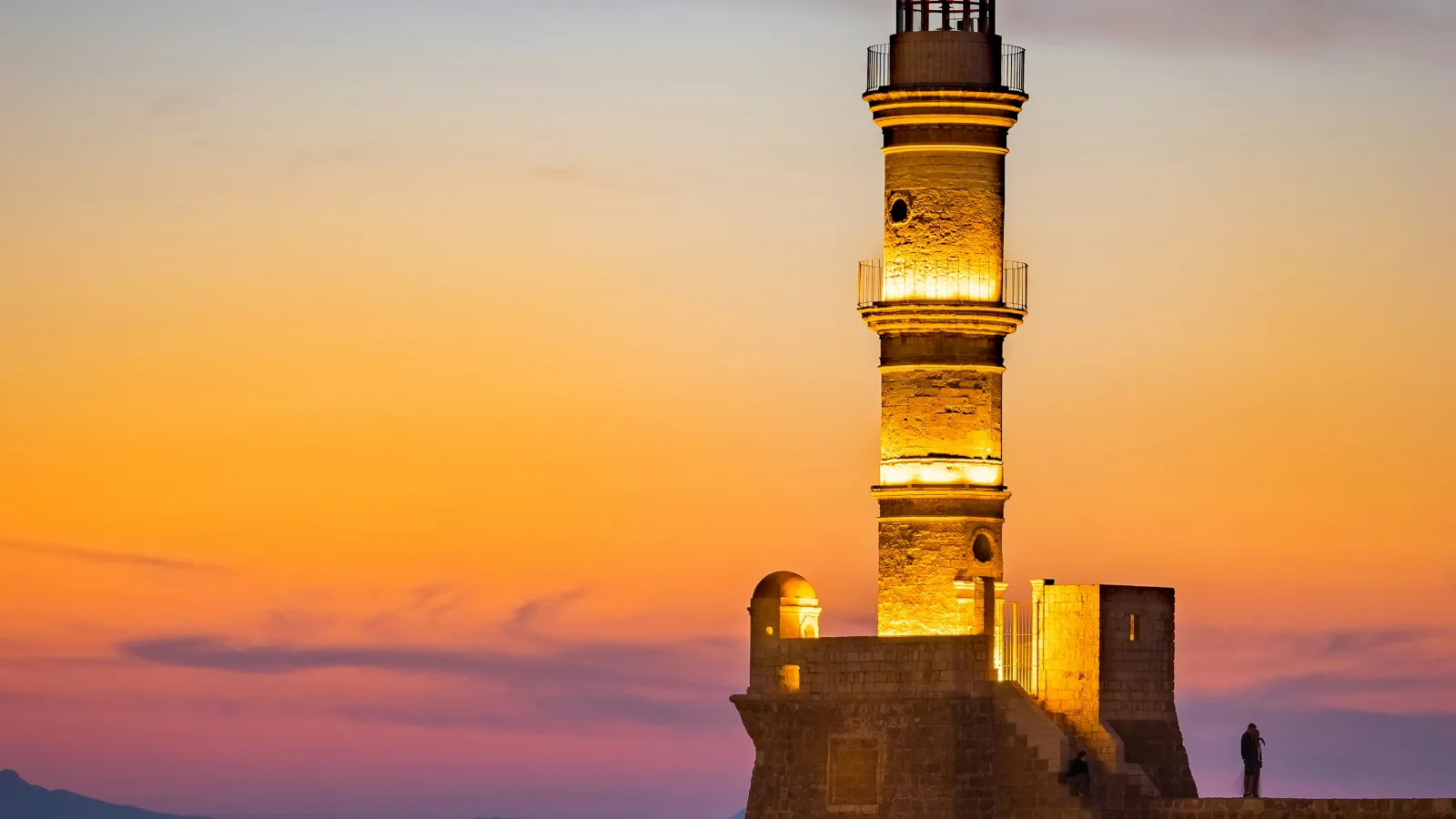
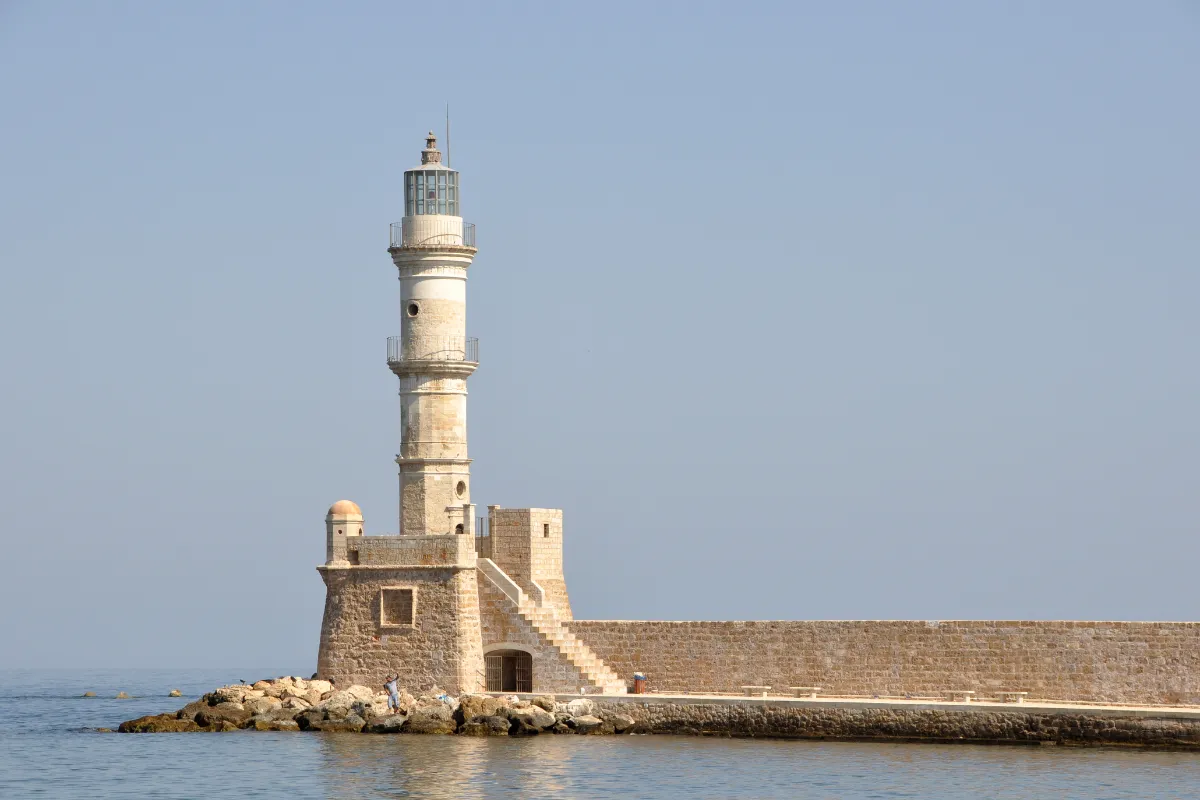
The harbour is a wide curved basin with a quay running around the inside of it and a long stone mole reaching out across the mouth. At the far end of that mole stands the lighthouse, which you look at from the quay rather than walk up to in most visits. Its base is Venetian, from the naval works that fortified this harbour, and the tower standing on it today is commonly dated to a rebuild in the 1860s by the Egyptian troops then garrisoning Crete for the Ottomans, so only the base is original. You will also read that it is one of the oldest lighthouses in the world. That superlative is not supported by the sources that document the structure, and this page will not repeat it. What is true is more interesting anyway: you are looking at a Venetian foundation carrying a nineteenth-century Egyptian tower.
Behind the quay the old town goes back in layers rather than styles. Topanas is the northwestern quarter, the Venetian end, tightening into lanes below the Firkas fortress. The Evraiki, the old Jewish quarter, sits inland of it. Splantzia to the east is the Ottoman quarter, built around a square with plane trees, and it stays more residential than the waterfront. Above the harbour is the low Kastelli hill, the oldest inhabited ground in the town and the site of Minoan Kydonia.
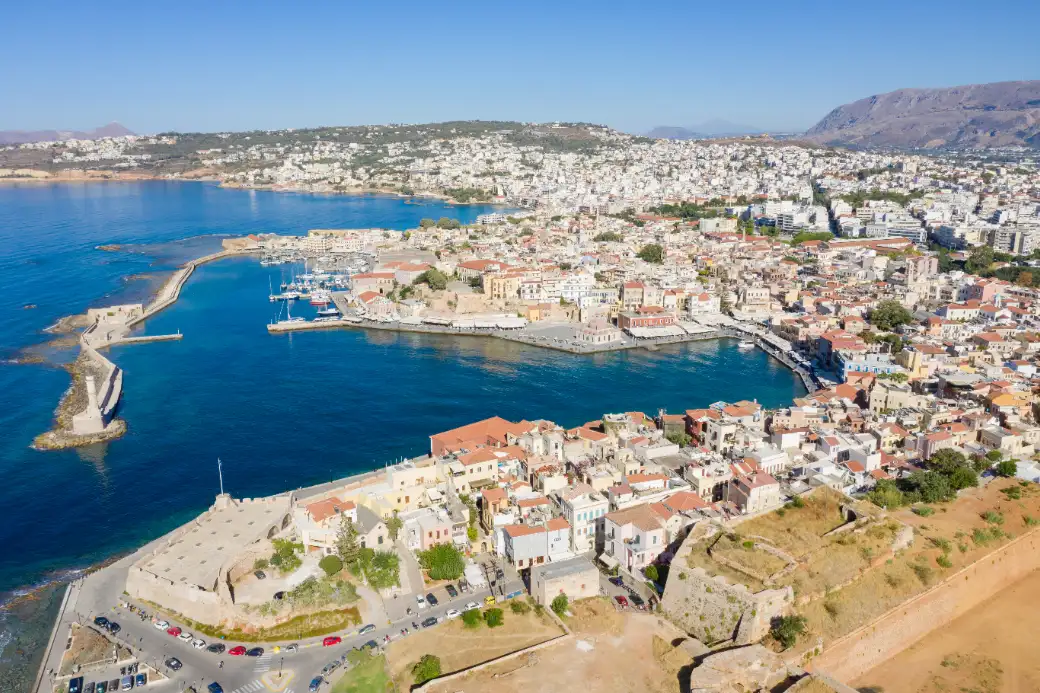
The harbourfront has a daily rhythm worth planning around. At eight in the morning it belongs to people walking dogs and delivering crates. By midday in summer it is one of the busiest strips in Crete, and by evening the tables run the length of the quay. The lanes one street back stay calmer all day, which matters if you are choosing a room.
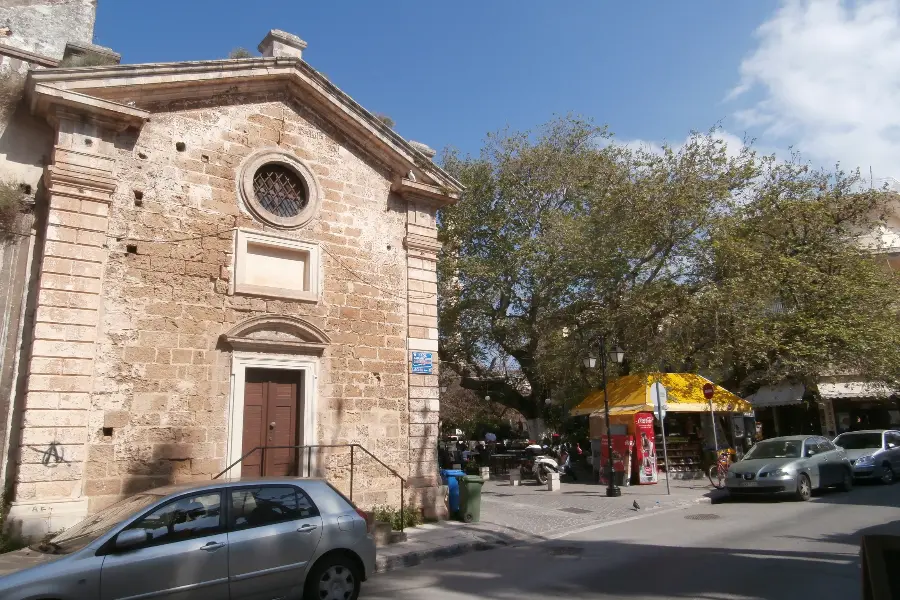
One landmark to check before you build a morning around it: the covered municipal market, the cross-shaped hall on the new-town edge of the centre, has been closed for a long restoration, and its announced reopening has moved more than once. Check its current status before you go rather than trusting any guide, including this one.
Best hotels in Chania: choose the zone, then the room
The best hotels in Chania fall into four areas, and the area shapes your trip far more than the property does: the Old Town for atmosphere, Nea Chora and the beach side for beach and value, Koum Kapi and Halepa for quiet, and the resort strip west for resort facilities and space. Decide the zone, then shortlist rooms inside it.
This page names no hotel, on purpose. Properties rebrand, change hands and close between seasons, and a page built on their names would be wrong by next August. Areas do not close. Once your zone is settled, shortlist actual properties on the Crete hotels page, which covers the island. Two questions settle the zone faster than any review score: whether you are hiring a car, and whether you are travelling as a couple or with children. On price, the pattern is a zone-and-season one. The high end, the restored-mansion boutiques and the five-star stock, concentrates on the Old Town harbourfront and in Halepa rather than spreading evenly across Chania hotels. The better value sits in Nea Chora and Koum Kapi, and moving your dates into May or October moves the number further than any postcode will.

Diagram by Greece Trips. Free to reuse with credit - CC BY 4.0.
Old Town: the Chania hotels people picture
This is the harbour quarter, and it is the atmosphere choice. Rooms here are mostly boutique conversions inside restored Venetian and Ottoman buildings, often small properties of a couple of dozen rooms or fewer, with the character that implies and the lift-free staircases too. The quarter is largely car-free, so you park outside the centre and walk your bags in over cobbles. Harbour-facing rooms are lively on summer nights, and lively means audible. Best for couples and for first-timers without a car who want to step straight out into the lanes. Hardest for anyone pushing a stroller.
Nea Chora and the beach side: town plus a swim
Nea Chora is a genuine seaside neighbourhood a short walk west of the harbour, roughly fifteen minutes on foot, with a sandy town beach and a promenade of seafood tavernas behind it. You get the town without the harbour-quarter premium, calmer water, and parking that is merely difficult rather than theoretical. Best for families, for anyone who wants a swim before breakfast, and for travellers watching the budget. Further west the same idea continues through Agioi Apostoli and the sheltered coves around it, where the water shelves gently enough for small children.
Koum Kapi, Halepa and Tabakaria: the quieter, more local bases
Go east from the harbour and the volume drops. Koum Kapi sits directly east along the shore, more residential, with cafes facing the sea and the Old Town still comfortably walkable. Halepa is the quiet, historic, well-heeled quarter uphill from there, and part of the town’s high-end stock sits in its restored mansions. Tabakaria, the old tanneries stretch further east again, is the most atmospheric of the three and the least convenient: it is a twenty to thirty minute walk to the Old Town, which is a walk you will do once a day, not three times. Best for repeat visitors and anyone who wants a neighbourhood rather than the show.
The west resort strip: pools, space and a car
Drive west out of town and the coast turns into a strip of resort suburbs: Agioi Apostoli, Kato Stalos, Stalos, Agia Marina, then Platanias, spreading over roughly five to twenty-five minutes of driving. This is where the pools, the family facilities, the all-in properties and the direct beach access are. The trade is explicit: you are exchanging old-town atmosphere and walkability for space and beach convenience, and you will want a car to get the town back. Platanias is also where the town’s louder late-night scene concentrates, as a strip rather than as any one venue. Best for families and for couples who would rather have a sunbed than a cobbled lane.
Getting to Chania: the airport, the ferry port, and the drive in
There are two normal ways in. Fly into Chania airport (CHQ) out on the Akrotiri peninsula, about 14 km from town, or take the overnight ferry from Piraeus into Souda, the port about 7 km east of the centre. Athens to Chania is a hop of roughly 45 to 55 minutes; the ferry is around nine hours and lands you early in the morning.
The flight is the simple option. Aegean, Olympic Air, Sky Express and Ryanair all serve CHQ on the domestic network, and in summer the airport also takes direct European charters and scheduled flights from around forty carriers. The airport is called Ioannis Daskalogiannis, and Akrotiri means the transfer is a real leg of the journey rather than a formality.
The ferry is the option people underrate. ANEK Lines, now part of Attica Group and sold under the ANEK-Superfast banner, runs the Piraeus to Souda overnight, leaving Piraeus in the evening and docking around dawn. It buys you a night’s accommodation and a morning in Chania on the same ticket, and it takes a car across without a hire-desk transfer at each end. Treat the departure time and the crossing length as things to re-check, not to remember.
Then the detail that catches first-timers. Chania has two ports and they do different jobs. Souda, east of town, is the passenger port for the Piraeus overnight. Kissamos, also called Kastelli, is out in the far northwest of the region, and it is where the Balos and Gramvousa excursion boats sail from. It is also the Cretan end of the long southern crossing to Kythira, calling at Antikythira, and on to Gythio in the Peloponnese; that line runs year-round, but the number of sailings a week rises and falls with the season. If a booking says Kastelli-Kissamos, do not drive to Souda.
Both the port and the airport connect to town by bus and by taxi, and either leg is worth building into your arrival plan rather than discovering on the pavement. The general mechanics of both journeys live on overnight ferries from Piraeus and flying into Greece.
Using Chania as a base: the gorges and the west-coast beaches
The reason to sleep here is what a day’s drive reaches. Western Crete holds the island’s three headline outdoor sights, and all three are day trips from a Chania bed.
The Samaria Gorge is the big one: about 13 km down through the White Mountains to the Libyan Sea, one-way and downhill, which sounds gentle and is not. You do not walk back. You finish at Agia Roumeli on the south coast and leave by boat, then by bus, which is why it eats a whole day and needs an early start. The gorge runs a summer season, roughly early May to late October, and it closes for winter; the exact opening date is set each year by the managing authority, OFYPEKA, and in 2026 it was 19 May.
Elafonisi is the pink-tinged lagoon in the southwest corner, about 75 km from Chania but close to two hours each way, because the road climbs through the Topolia gorge and stays narrow and winding most of the way. It is a shallow, protected Natura site, and it is busy in July and August in proportion to its fame.
Balos sits out on the Gramvousa peninsula in the northwest. Most people reach it on the excursion boat from Kissamos; the alternative is an unsurfaced track and a walk down, which hire-car agreements often have opinions about. Falassarna on the west coast, with its long sand and its sunsets, and the cliff-cove at Seitan Limania on Akrotiri round out the set that people actually come for. There are dozens more on Crete’s beaches.
The logistics point matters more than the list. Nearly all of this needs a car, the roads are slow rather than long, and the days are full. Plan one big sight per day and you will enjoy them. Plan three and you will drive past them. Hiring a car in Greece covers the paperwork and the road realities.
When to go, and how long to stay
May, June, September and early October are the months that make this trip work. Days are warm without being punishing, the sea is swimmable well into October, the gorge is open, and the old town moves at a pace that lets you sit down. July and August are hot and full: the harbourfront at midday and the queue for Elafonisi are both at their least appealing, and prices sit at their annual peak. If your dates are fixed to high summer, adjust by hours instead of by month, and do the walking early.
Three to four nights is the practical minimum. That covers the old town properly, a beach day, and one big trip such as Samaria or Elafonisi. A week is the length that makes Chania feel like a base rather than a stopover: the gorge, two or three west-coast beaches, a run into the Apokoronas villages or up to the Akrotiri monasteries, and a couple of unhurried mornings on the quay before it fills.
Winter is the interesting case. Chania is a working year-round town with a university, a port and its own population, so it does not shut down the way a small Cycladic island does; the streets stay in use and the old town stays inhabited. What changes is the seasonal layer. Samaria is closed all winter, beach services wind down, and the excursion boats stop running until spring. That makes a winter visit a town, food and mountain-village trip rather than a beach and gorge one, which some travellers actively prefer. The broader case for travelling outside July and August is on the best time to visit Greece.
Who Chania suits, and who should base elsewhere in Crete
Base in Chania if you want a town with a real old quarter to come back to each evening, if your list is Samaria, Elafonisi, Balos and Falassarna, if you are travelling with children and the beach side or the west strip suits you, or if you plan your days around what you are going to eat.
Base somewhere else if your list is Knossos and the east. The Minoan palaces, the Heraklion Archaeological Museum, Spinalonga and the Lasithi beaches are all a long drive from here, and they are better done from a Heraklion or eastern base; the Crete guide makes that call properly and covers the split-stay option.
And be clear about the nights. Chania is not a party town in the Malia or Ios sense, and anyone selling it as one is selling you a different holiday. Evenings here are long dinners, harbour bars and the lanes behind the quay, with the louder late scene concentrated out on the Platanias strip west of town. If that is the shape of night you want, nightlife in Crete sets out where on the island it actually lives. To fit Chania into a wider route, start from the Crete itinerary.
Chania FAQ
Where should you stay in Chania?
Base in the Old Town for atmosphere and walkability, Nea Chora for a town beach and better value, Koum Kapi or Halepa for a quieter local feel, or the west resort strip around Agia Marina and Platanias for pools and family space. Two things decide it: whether you have a car, and whether you are a couple or a family. No car and no children points to the Old Town; both points west.
How do you get to Chania from Athens?
Fly Athens (ATH) to Chania (CHQ) in about 45 to 55 minutes, or take the ANEK overnight ferry from Piraeus to Souda, roughly nine hours, arriving early in the morning. CHQ is on the Akrotiri peninsula about 14 km from town and Souda is about 7 km east, so build the transfer into either plan. See overnight ferries and flights to Greece.
How many days do you need in Chania?
Three to four nights covers the old town, a swim and one or two big day trips. A week lets you add the Samaria Gorge, two or three more west-coast beaches and some unhurried harbour mornings. The deciding factor is the car: without one, three nights of town and beach is a complete trip, and with one, a week fills itself.
Do you need a car in Chania?
Not for the Old Town and Nea Chora, which are walkable and served by town buses. Yes if you want Samaria, Elafonisi, Falassarna or the mountain villages, which are slow and awkward to reach on public transport. Excursion buses and boats cover the headline sights if you would rather not drive. Read hiring a car in Greece first.
What is Chania known for?
Its Venetian harbour and the lighthouse at the end of the mole, an old town layered from Venetian, Ottoman and Jewish quarters, and its role as the base for western Crete’s headline sights: the Samaria Gorge and the beaches at Elafonisi, Balos and Falassarna. It is also the food capital of western Crete in reputation.
Is Chania or Heraklion the better base in Crete?
Neither wins outright; they cover different halves. Chania is the western base, with the old-town atmosphere, the gorges and the west-coast beaches. Heraklion is the central one, far closer to Knossos, the Archaeological Museum and the east. Pick by where most of your list sits, and see the Crete guide if it sits in both.
Booking
We sell nothing and book nothing for you. Every guide on this page tells you how to arrange each piece yourself - which ferry operator, when to book, what to prebook and what to leave loose.