Skiathos
Beaches in Skiathos
Skiathos is a beach island before it is anything else, and it is widely reported to have more than sixty of them, nearly all sandy and nearly all backed by pine. Nobody counts them the same way twice, which is the useful part: you will not run out. So the decision worth making is not which beach, it is which coast, because the two names everyone already knows sit at opposite ends of the same island and of the same experience.
The south is sheltered, sandy and served by the bus. This is the developed side, and most of the names sit along it. The island bus runs the length of it, which is the single most important practical fact on this page: it means Skiathos is one of the very few Greek islands where you can have a beach holiday without hiring anything. Troulos and Banana draw a slightly younger crowd, Vromolimnos has a livelier reputation, and Megali Ammos is the closest sizeable beach to town, which makes it the one you walk to on the first evening.
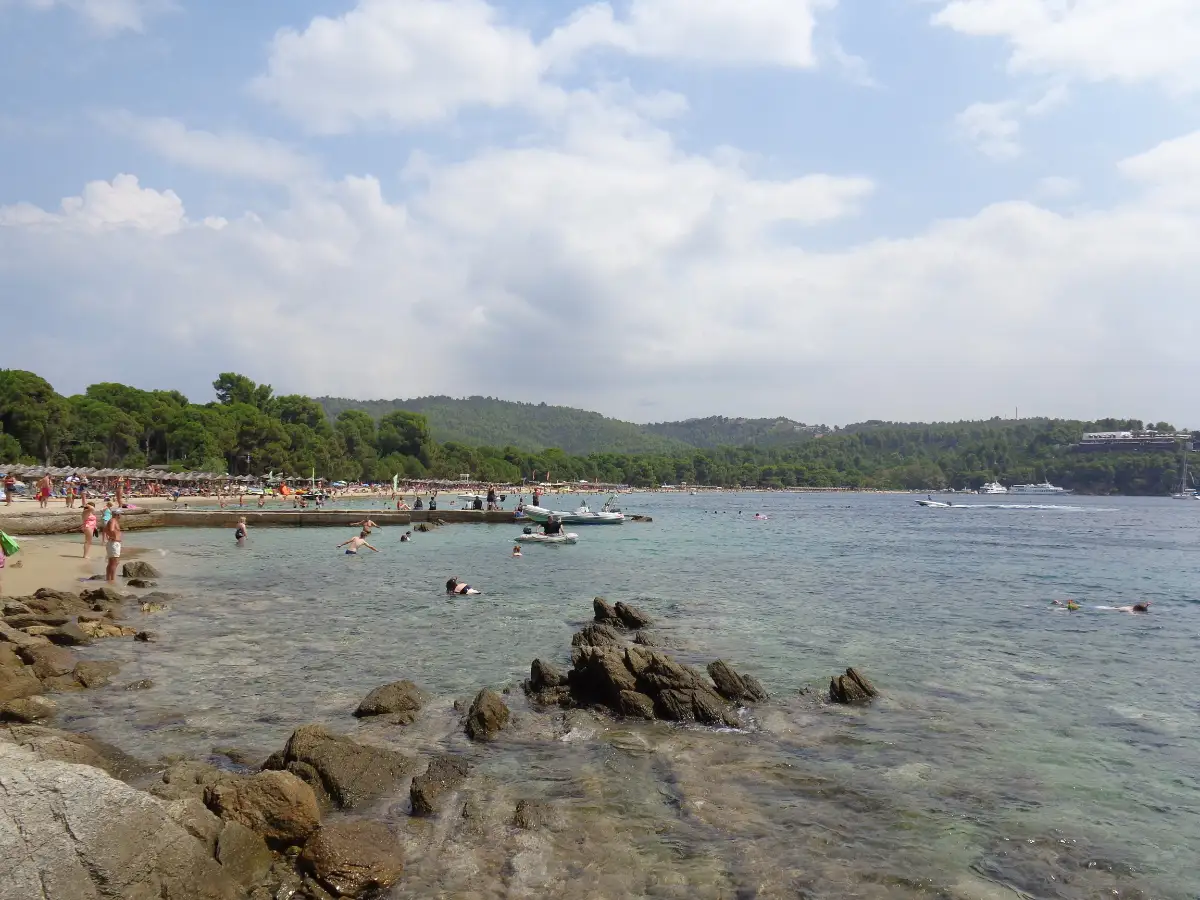
Koukounaries is the headline, and it earns it on geography rather than on reputation. It is a long crescent of fine golden sand on the sheltered southwest corner, backed by a rare stone-pine forest with a protected lagoon behind it, and the water stays shallow a good way out. The bus runs right to it. The honest caveat is the one that applies to every famous beach: in July and August a beach for everyone becomes a beach with everyone on it, and the shade under those pines is the first thing to go.
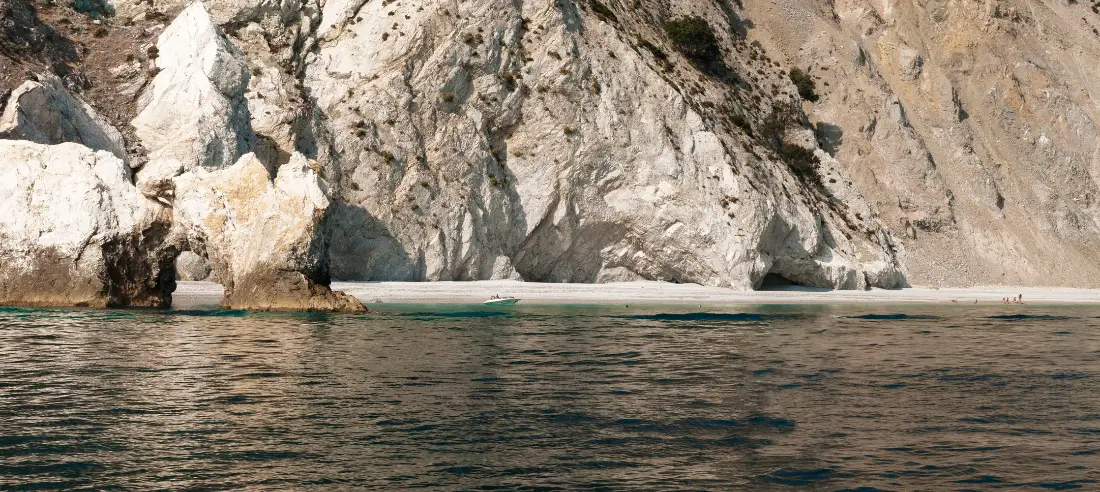
Lalaria is the postcard, and the catch is the entire point of it. It is a beach of smooth, pale, egg-shaped pebbles under a towering cliff, with a natural rock arch standing out of the sea at one end and caves along the shore. You cannot drive or walk in. You reach it by boat, and only when the sea is calm enough to land, which means a Lalaria day is a decision the weather makes rather than you. Local custom, and good sense, is to leave those pebbles where they are.
The north coast stays wild because it is hard to get to. Where the south is sheltered and built up, the north is rugged, greener and more exposed, reached mainly by boat or rough road rather than by the bus. That is not a shortcoming to be fixed; it is the reason the quiet is still there. Nearly everyone sees this coast the same way, which is from the water, on a boat trip that rounds the shore and noses into the caves. If the sea is up, that trip does not run, and the island is honest about it.
Accessible swimming, and where to check it. Four beaches carry Seatrac, the ramp-and-seat system that lets a wheelchair user get into the sea unaided: Koukounaries, Agia Paraskevi, Vromolimnos and Agia Eleni. Each installation has a live status on the Seatrac directory, and they do go out of service, so check the one you are counting on before you travel rather than when you are standing on the sand. The wider picture is in accessibility in Greece.
A note on Blue Flags, and why no number appears here. Several south-coast beaches fly one. We print no count and name no beach, because the list is reissued every year and a number copied into an article is wrong the following season. If it matters to you, the current list is published annually and is the only version worth reading.
How to plan a week out of this. Use the bus and the south coast for the ordinary days, keep one flexible morning for a boat trip so you can take the calm day when it comes rather than the day you booked, and treat the north as a bonus rather than a fixture. Whether you need to hire anything at all is covered in which islands need a car, the island itself in our Skiathos guide, and the neighbour an hour away in Skiathos to Skopelos.