
The short answer
About two hours on a conventional ferry, and roughly an hour and a half on a direct high-speed service.
It is a short, well-served leg, and it carries the biggest change in atmosphere of any hop in the Cyclades: Naxos is a working island with mountains and farms, and Santorini is the most visited rock in Greece. Doing them in that order is the right way round.
Take it southbound as the last leg of a route, and fly home from Santorini. Book it early in July and August.
Naxos to Santorini at a glance
Do it in this order
| Crossing time | ~2h conventional, ~1h25-1h30 direct high-speed |
|---|---|
| Direction | Southbound down the Cyclades chain |
| Carries a car | Conventional ferries |
| Weather risk | Real. Fast craft stop first in a meltemi |
| Arrives at | Athinios, at the foot of the caldera cliff |
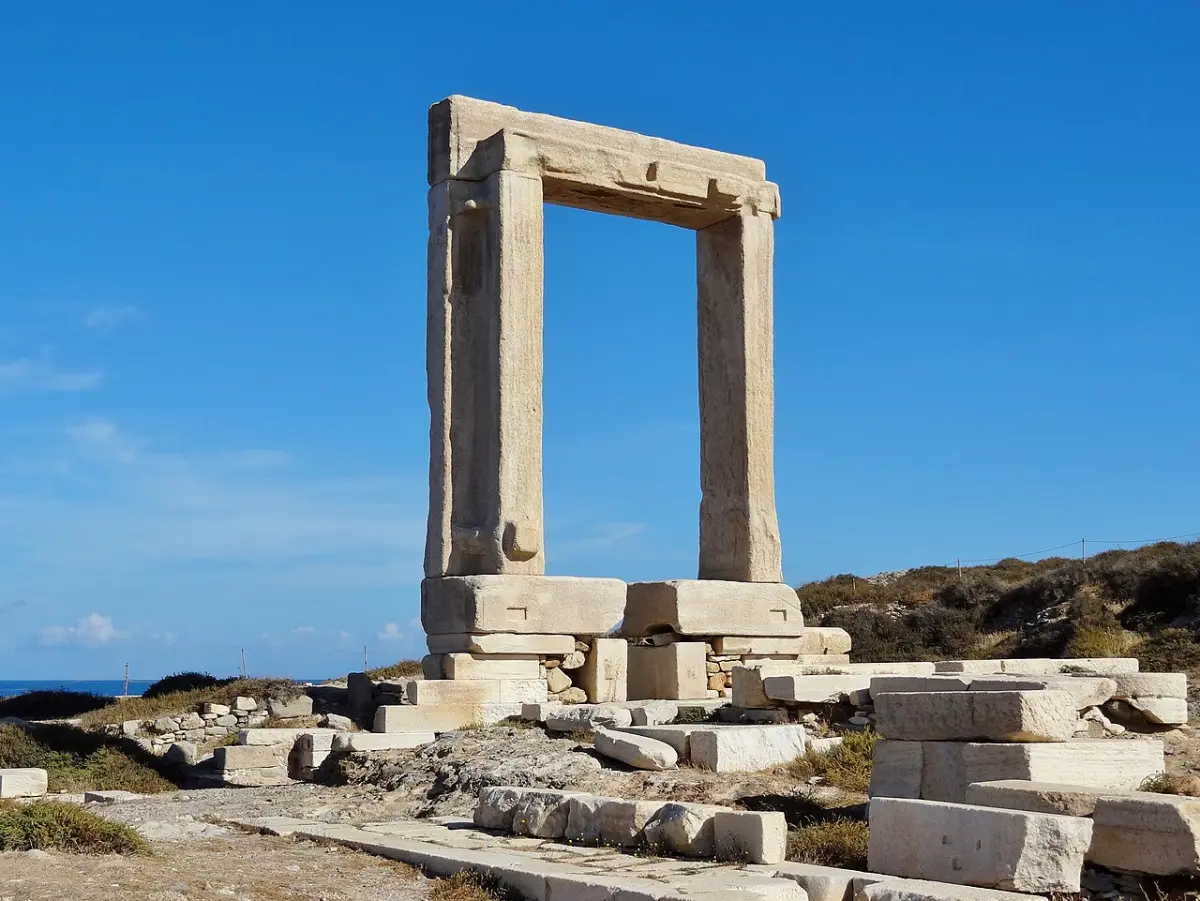
There is a real argument about sequence here, and it is not fussiness.
Santorini is spectacular and expensive and crowded. Naxos is none of those things: it is the largest of the Cyclades, it grows its own food, it has a mountain interior and a west coast of long shallow beaches, and it costs markedly less.
Go Naxos first, Santorini second and the trip builds toward its set piece. Go the other way and Naxos can read as an anticlimax, which it does not deserve and would not be if you had seen it first.
The other reason for this order is structural: Santorini sits at the southern end of the chain with an international airport, so ending there means flying home from the far end instead of sailing back up. That is the single most useful habit in Greek island travel, and it is covered in the island hopping guide.
Fast boat or conventional
The gap here is about half an hour, which is small enough that the choice comes down to price and preference rather than logistics.
High-speed, roughly 90 minutes direct, enclosed and pricier, and the first vessel stood down in a strong meltemi.
Conventional, about two hours, cheaper and steadier with open decks, and it carries cars.
On a two-hour crossing in decent weather the open deck is the better experience by some distance. Take the fast boat when the day is tight, not by default. And if your plans cannot move, remember the heavy boats keep sailing after the light ones stop - see when a ferry is cancelled.
Arriving at Athinios
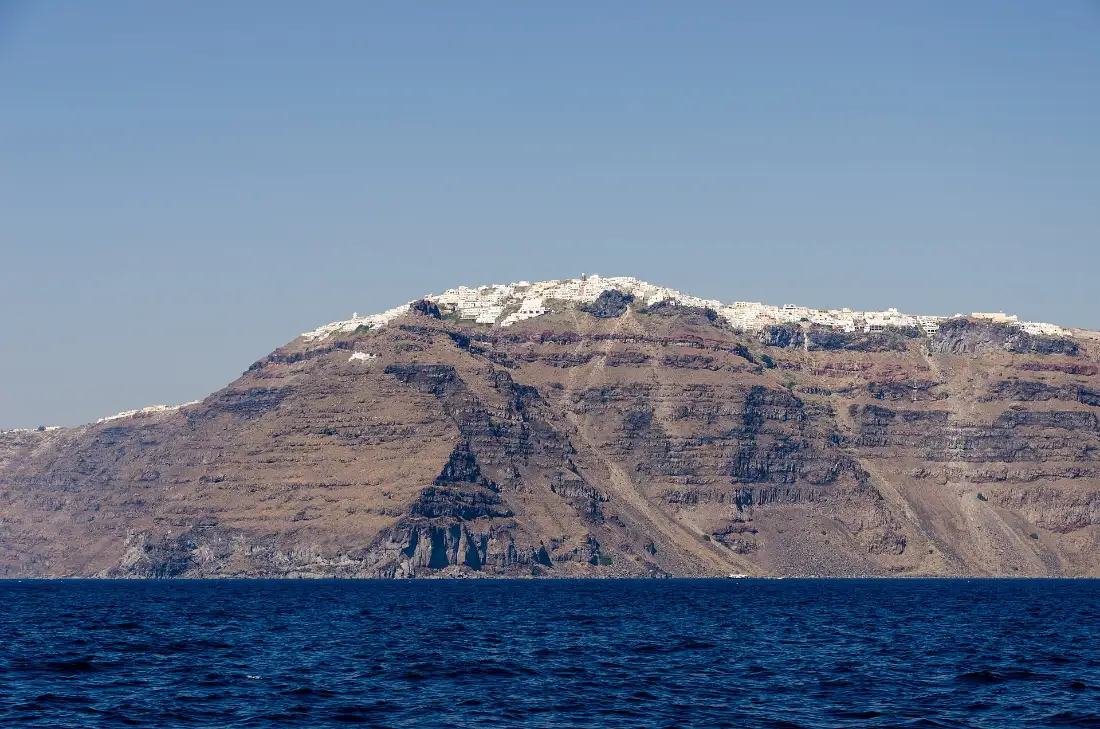
Ferries dock at Athinios, at the base of the caldera cliff and well below the villages. Have your onward transfer arranged before you sail rather than improvising at a port that is emptying a full boat onto one switchback road.
Then there is the question of which side of the island to sleep on, which decides most of your budget - the caldera rim or the beach coast. That is settled in where to stay in Santorini.
Where it fits
Naxos sits in the middle of the Cyclades, a few minutes from Paros and a short run from Mykonos, so the classic route assembles itself: Athens, Paros or Naxos, Santorini, home.
If you would rather not stop at all in the middle, Athens to Santorini covers the direct run. And if you are still deciding whether Santorini earns its place, Santorini vs Naxos is the honest version of that argument.

Diagram by Greece Trips. Free to reuse with credit - CC BY 4.0.
Coming back: Santorini to Naxos
Santorini to Naxos is the same short crossing northbound, and plenty of trips run in that direction: Santorini first while the enthusiasm is high, then somewhere with room to move.
- Naxos is the bigger island, with mountains, villages and a long sand coast, and it absorbs several days in a way Santorini does not.
- Northbound is into the summer meltemi, so expect a livelier crossing than the run south.
- From Naxos you can reach Paros, the Small Cyclades and Amorgos, none of which is easy from Santorini.
Frequently asked questions
How long is the ferry from Naxos to Santorini?
About two hours on a conventional ferry and roughly an hour and a half on a direct high-speed service.
Should I visit Naxos before or after Santorini?
Naxos first. It is quieter, cheaper and less dramatic, so it reads better as a build-up than as a follow-up - and ending on Santorini lets you fly home from the far end rather than sailing back.
Do Naxos to Santorini ferries run in winter?
Frequency drops sharply outside the season across the whole Cyclades network. Check the operator for your dates rather than assuming the summer pattern holds.
Where does the ferry arrive in Santorini?
At Athinios, at the foot of the caldera cliff. It is not the town, and the road up is steep and busy when a boat empties. Arrange your transfer in advance.
Is Naxos worth more than a night?
Yes. It is the largest of the Cyclades with a real mountain interior as well as a beach coast, and two nights wastes both the island and the crossing.
Next
Read the Naxos travel guide and the Santorini travel guide, or weigh them against each other in Santorini vs Naxos.