Mykonos
Things to do in Mykonos
Mykonos sells beaches and nights, and the sightseeing is compressed into two places: the town, and a boat ride. That is a short list by Greek island standards, and it is worth knowing up front, because the island rewards doing those two properly more than it rewards hunting for a third.
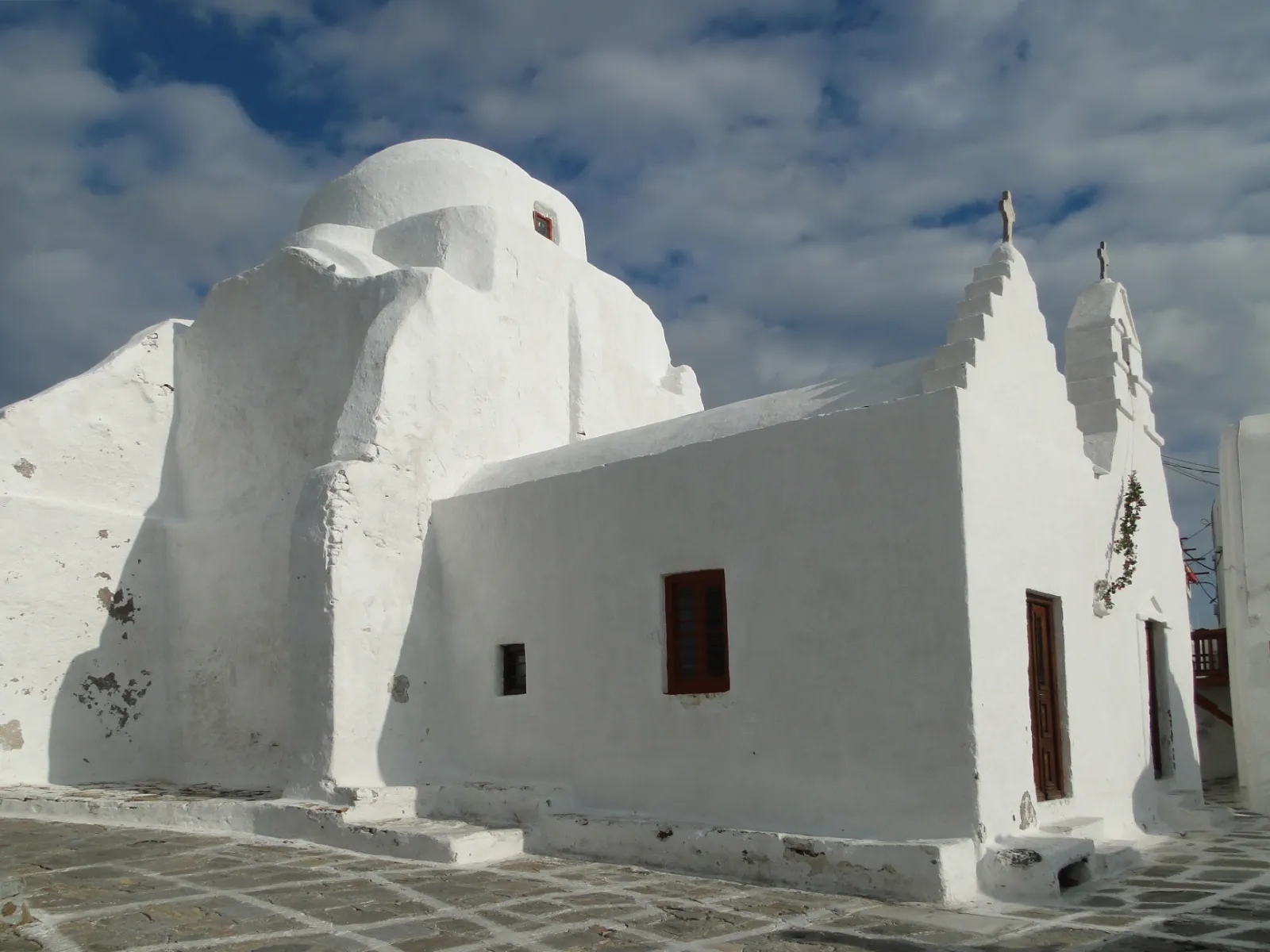
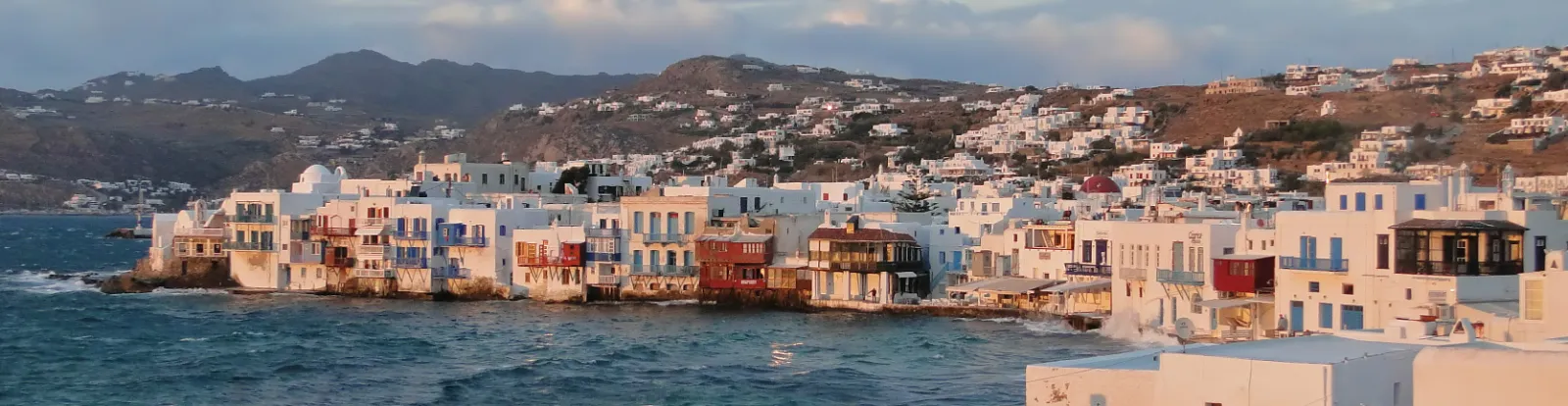
The town, which is the sight. Chora, or simply Mykonos Town, is a whitewashed maze above an old harbour, laid out deliberately confusingly centuries ago to slow raiding pirates, and getting lost in it is the point rather than a failure. It is closed to through traffic and walked. Within it, Little Venice is a short row of old merchants’ houses built so close to the water that the sea breaks against their foundations and their wooden balconies hang over it. The ground floors are bars and restaurants now, and at sunset it is the busiest few hundred metres in the Cyclades. Beside it stands Panagia Paraportiani, several whitewashed chapels fused into one irregular white mass, which is the strangest and best-known building on the island.
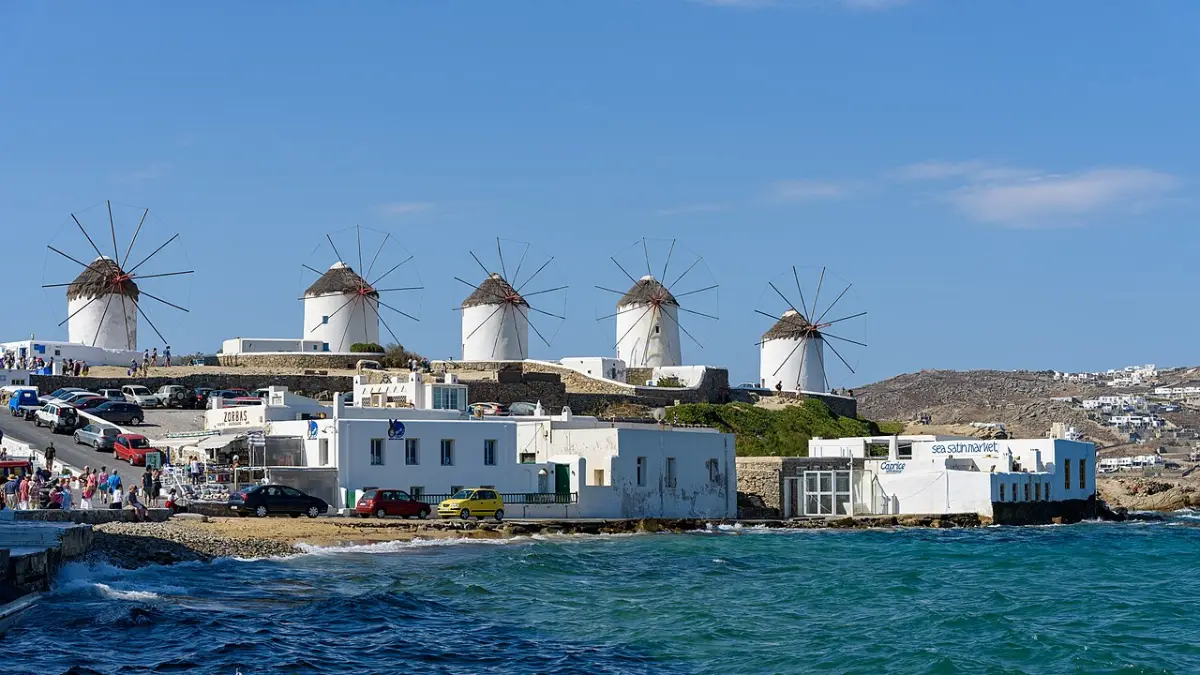
The windmills, a few minutes along. Kato Mili is the row of round whitewashed mills with conical roofs on the low ridge above the harbour, from the centuries when the island’s wind milled grain rather than blowing over beach umbrellas. They no longer work. The classic photograph is taken from the Little Venice waterfront looking across to them, and the two are one twenty-minute walk. The useful part is the reverse view: the ridge itself gives you the same sun over a wider sea, from higher up, with a fraction of the crowd on the frontage below. That is where locals watch it go down.
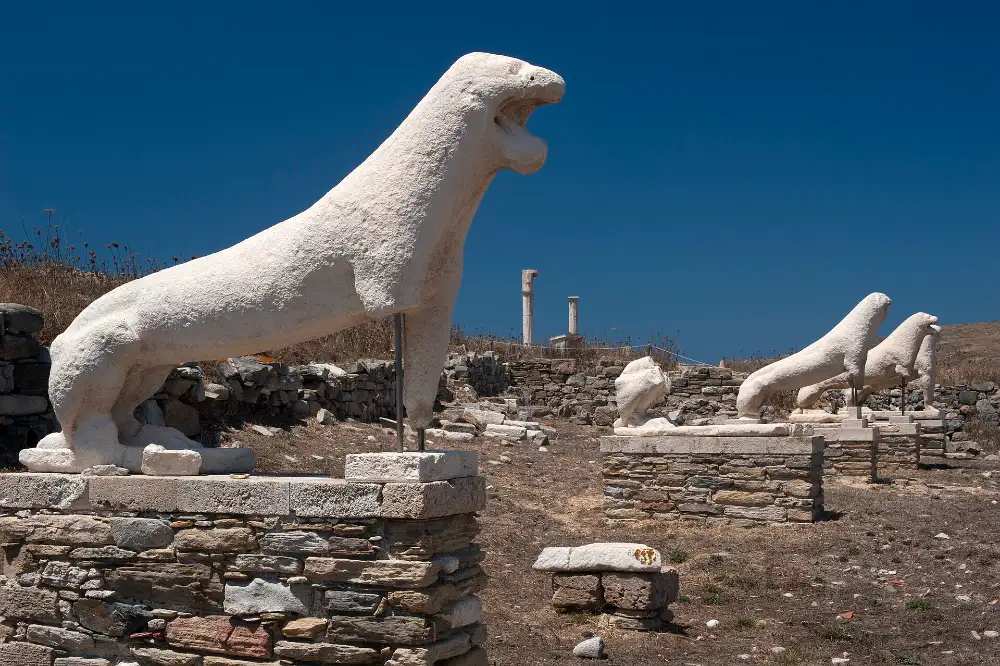
Delos, which is the reason to keep a morning free. The uninhabited island across the water was one of the great sacred and trading centres of the ancient Aegean, and what is left is a whole abandoned city: sanctuaries, houses with mosaics, a theatre, a terrace of carved lions. Boats cross from the Old Port in Chora, the archaeological site keeps its own season and is closed through the winter, and the site admission is paid separately from the boat ticket rather than included in it. Two practical truths that do not expire: shade on the island is scarce, and your visit is bounded by the boat you came on rather than by how long you want to stay. Go early, take water and a hat, and treat it as the half-day it is.
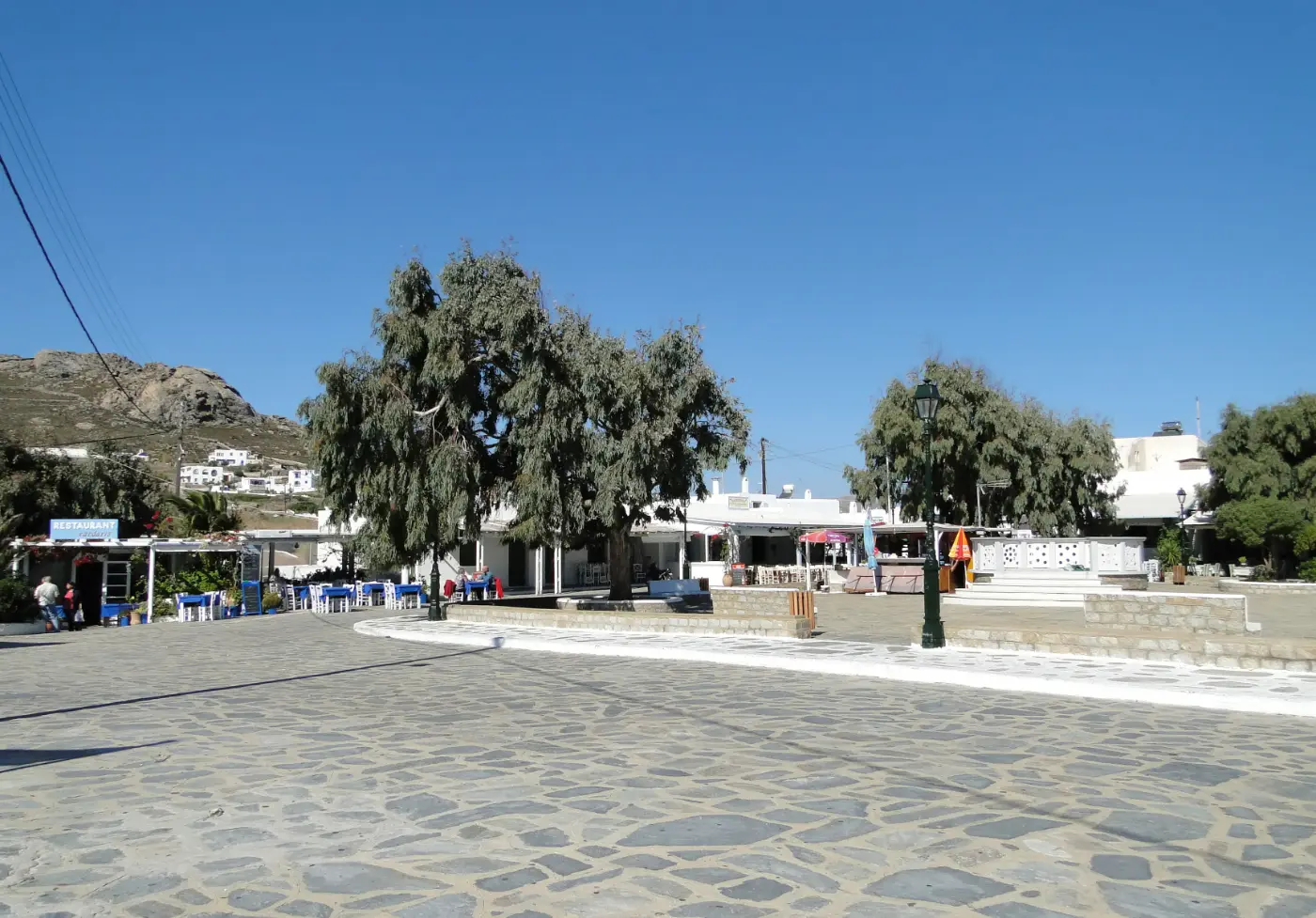
Inland, and the rest of the town. Ano Mera is the island’s one proper inland village, built around a square with a monastery on it, and the closest Mykonos comes to an ordinary Greek afternoon. Back in Chora, small museums cover archaeology, the maritime past and island folklore; they are a windy-afternoon proposition rather than the reason anyone books the flight.
Timing is the whole trick here. Chora is quiet early in the morning and again after the day boats have gone, and a slow crush through the middle of the day when cruise passengers and shoppers fill the same lanes. Little Venice runs on the same clock in reverse: empty in the late morning, packed from late afternoon, and pleasant again an hour after the sun has gone. Nothing on this page needs queuing for if you come at the edges of the day.
This page prints no opening hours, boat times or admission fee. Site hours are set by the ministry and the season, crossings belong to the operators, and both change more often than a page can track. We name no bar or restaurant either, on the Little Venice frontage or anywhere else, because that trade rebrands and changes hands between seasons. The Mykonos guide has the island in the round, the nightlife guide has the evening, and Paradise Beach has the other half of what people come here for.