What it is
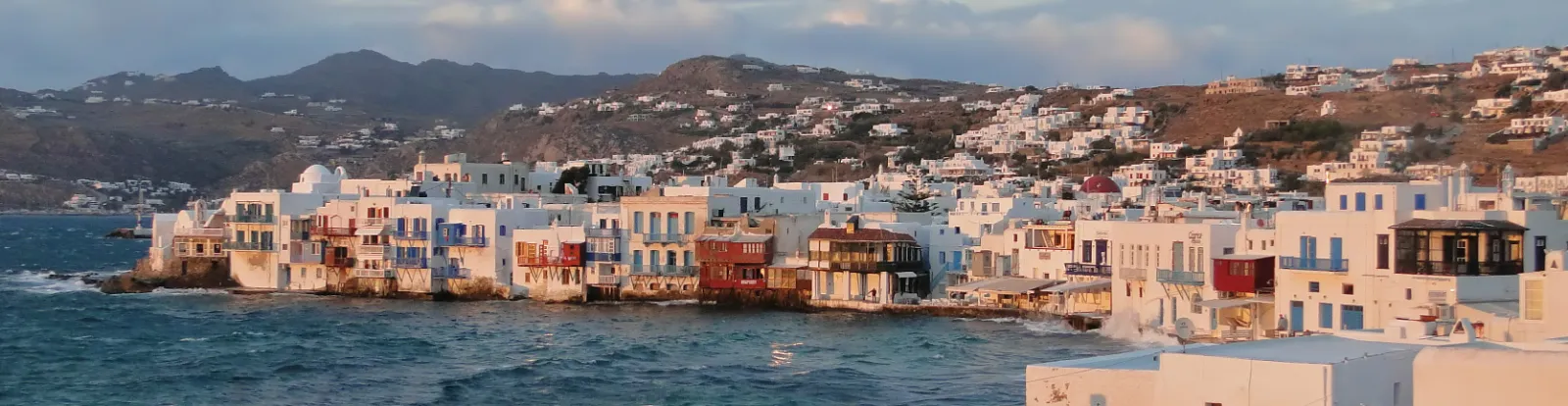
A row of old merchants’ and captains’ houses on the waterline at the west edge of Mykonos Town, balconies over the sea, ground floors now bars and restaurants
Local name
Alefkandra. “Little Venice” is a later, descriptive name
Age
Not printed. Published datings span from the 13th century to the mid-18th and none is a primary
Nearby
The Kato Mili windmill row on the ridge a few minutes away, and Panagia Paraportiani in the same quarter
The sunset
The town’s gathering point. Terraces fill from late afternoon; the paving behind is standing room. The windmill ridge is the uncrowded alternative
Wind
The buildings stand on the waterline, and when the meltemi is up the sea comes over the front terraces
Venues
None named here, by design. The trade on this frontage turns over between seasons
Travel details last checked July 2026.
That is the whole thing, and knowing how small it is beforehand is the single most useful preparation you can do. Visitors arrive expecting a quarter and find a frontage: one line of buildings, a stretch of paving in front of them, and the sea.
It is still worth going. It is just worth going with the right expectation, and preferably not at the hour everybody else picks.
What you are actually looking at
The buildings belong to Mykonos’s shipping and merchant centuries, when the island lived off the sea and the people who did well out of it built where the boats were. They are captains’ and merchants’ houses, put up hard against the water with storage below and living space above, and the balconies that everyone photographs were part of the building rather than an addition for tourists.
When they went up is genuinely unsettled. Published accounts put the quarter anywhere from the 13th century to the middle of the 18th, and the source that gives the widest span hedges it with the word “estimated”. We are not going to pick a century to make the sentence tidier. What is not in doubt is why they are where they are: this is a working island’s waterfront, not a picturesque idea.
The quarter’s own name is Alefkandra. “Little Venice” is the tourist-era name, and it comes from the obvious resemblance rather than from anything documented.
Just along from it, on the low ridge above the harbour, stands the row of round whitewashed windmills known as Kato Mili. They are the island’s signature silhouette and they no longer work; they ground grain when the island’s wind was an industrial resource rather than a weather complaint. We print no count and no construction date for them, because the numbers and the centuries in circulation were not read at any primary.
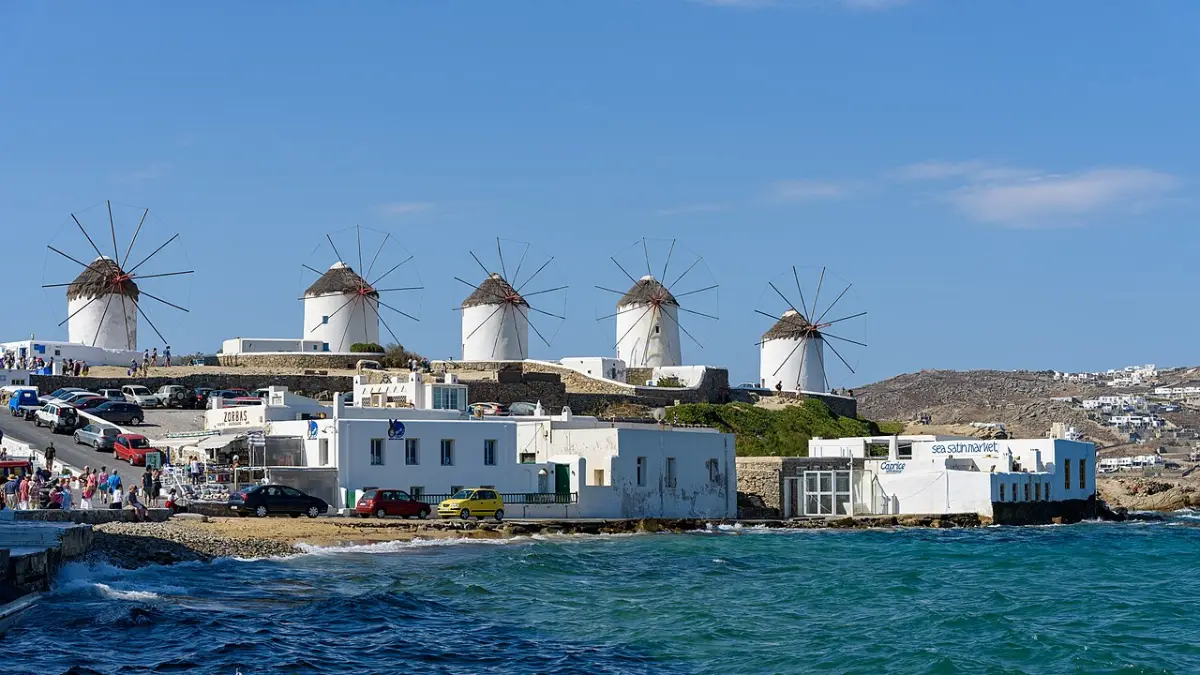
The two sit within a few minutes of each other, and the classic photograph is the windmills seen from the Little Venice waterfront with the sea in between. Walk both. It takes twenty minutes.
The sunset, and the arithmetic of it
Little Venice faces west, and Mykonos Town has decided that this is where the sun goes down.
From late afternoon the frontage fills, the terraces are taken, the paving behind them is standing room, and by the time the light is actually good you are watching it over other people’s phones. That is not a complaint about anyone, it is a description of a small place with a large reputation, and it happens every clear evening in season.
Three things follow from it.
If you want a table on the water for sunset, the table is the booking, and it is made a long way ahead in July and August. We name no venue and print no minimum spend, because the businesses along this frontage change hands and change their terms between seasons, and a list of names is a page that is wrong by next August.
If you want the view without the arrangement, come at a different hour. Late morning is empty, the light on the whitewash is clean, and you can actually see the buildings you came to see. An hour after sunset is better again: the crowd thins, the town’s night moves inland and up towards the bars, and the water goes quiet.
And if the sunset is the point rather than the location, the windmill ridge and the paths above the town give you the same sun over a wider sea, from higher up, with a fraction of the pressure. Locals watch from up there.
The wet seat, and the wind that causes it
Here is the practical detail that separates a good evening from a ruined camera.
These buildings stand on the waterline with nothing in front of them. When the wind is up, and on Mykonos the wind is up more often than most Cycladic islands, the sea comes across the front terraces and soaks the row nearest the edge. Diners get drenched. It is a well-known feature of the place rather than an accident, and on the right evening it is half the entertainment.
Mykonos sits in the path of the meltemi, the dry north wind of the Aegean summer, which our Mykonos guide treats as one of the island’s organising facts because it decides beaches, boats and ferries as well as dinner. The general behaviour of the Greek sea and its winds is in what the sea is like in Greece.
So: on a blowy evening, sit back from the edge unless getting wet is what you are there for, and keep a phone or a camera away from the front rail. We are not going to make a judgement about the wall, the rocks or the water beyond describing what they do, because the sea moves and no page can see the evening you are standing in.
Fitting it into a day in Chora
Little Venice is twenty minutes on its own and half a day as part of the town, which is the way to treat it.
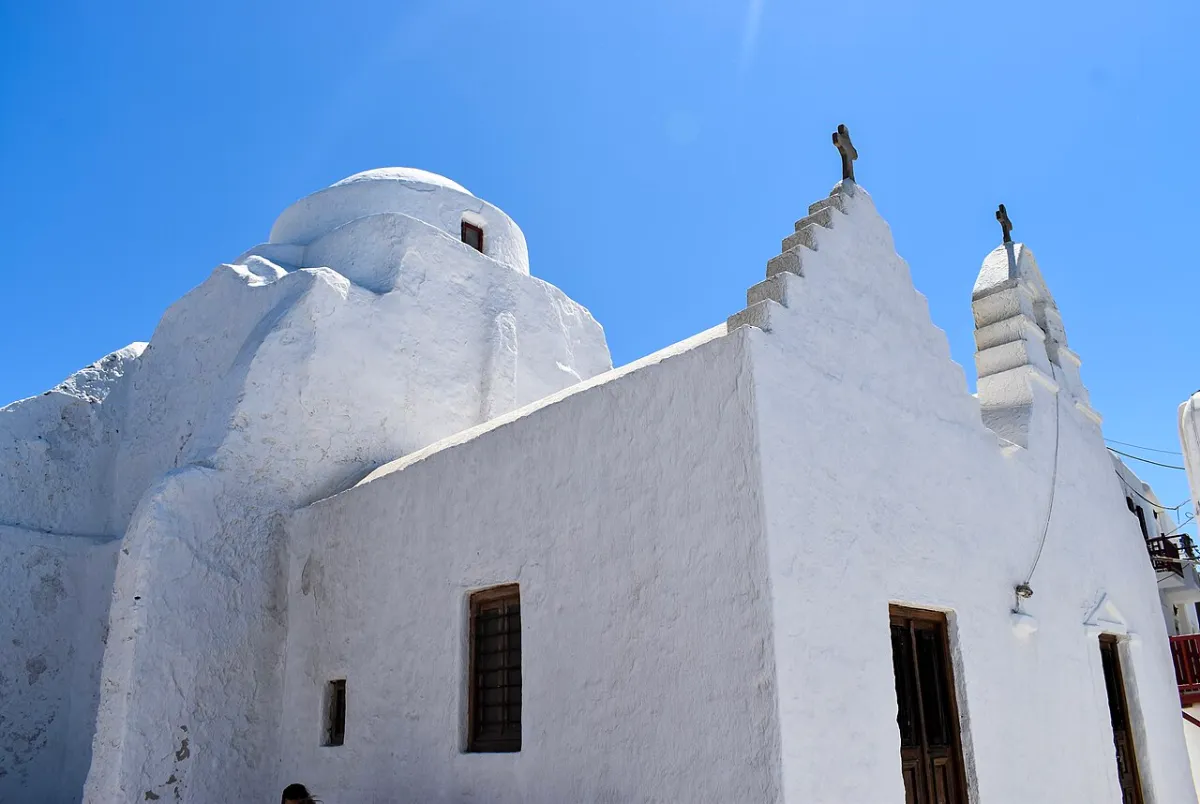
Mykonos Town is closed to through traffic and is walked. From the Little Venice frontage you are already beside Panagia Paraportiani, the whitewashed knot of chapels fused into a single strange white mass, and a few minutes from the lanes, the small squares and the shopping that make up the rest of Chora. The Old Port, where the Delos boats leave from, is on the other side of the same headland, which makes a Delos morning and a Little Venice evening a natural single day.
Then the night. The island’s evening starts around here with sunset drinks and moves outwards and later, which is mapped properly on the Mykonos nightlife page rather than repeated on this one. What belongs here is only the timing: Little Venice is the first act, and it is over by about nine.
A sunset table on this frontage is booked directly with the business, well ahead in high season. The room, the transfer and the Delos boat are the things worth locking in before you fly, and the Mykonos guide sets out how they fit together.
Whether it is worth it
Little Venice is worth an hour, and it is worth photographing, and it is not worth planning an evening around unless you have a table and you like the idea of a crowd. It is a genuinely unusual piece of building, it holds one of the two or three best-known views in Greece, and it is small, busy and expensive at the hour it is famous for.
Go in the morning to look at it. Go back after dark if you want a drink by the water. Watch the actual sunset from the windmill ridge, and let everyone else queue for the front row.
Last checked July 2026. What gets re-checked on this page: nothing about the buildings, which do not change, and everything about the businesses in them, which do. No venue name, price or opening hour appears here by design. How we date and correct facts is in our editorial policy.
Common questions
What is Little Venice in Mykonos?
A short row of old houses on the western edge of Mykonos Town, built directly on the waterline, with wooden balconies overhanging the sea and bars and restaurants now occupying the ground floors. The quarter’s own name is Alefkandra; “Little Venice” is a later name taken from the resemblance. The buildings are captains’ and merchants’ houses from the island’s shipping centuries, though published datings for them disagree by several hundred years, so we do not print one. It is a frontage rather than a district: smaller than most visitors expect.
Why is it called Little Venice?
Because a row of buildings standing in the water with balconies over it looks like Venice, and the name stuck in the tourist era. The quarter’s older and local name is Alefkandra. Mykonos did have long commercial contact with Venice, and the resemblance is often explained by that, but the name itself is a modern description rather than a historical one.
What time should you go to Little Venice?
Late morning if you want to see the place, which is when it is empty and the light on the whitewash is clean. An hour or more after sunset if you want a drink by the water without the crush. The famous hour, from late afternoon to sundown, fills the frontage completely: terraces are taken, the paving behind is standing room, and you watch the light over other people’s phones. If the sunset itself is what you want, the windmill ridge above the town gives you a wider view with far fewer people.
Do you get wet in Little Venice?
Frequently, if you sit at the front on a windy evening. The buildings stand on the waterline with nothing in front of them, and when the sea is up it comes straight over the front terraces. Mykonos is in the path of the meltemi, the north wind of the Aegean summer, so this is a regular event rather than a rare one. Sit back from the edge if you would rather stay dry, and keep a camera away from the front rail.
Where are the Mykonos windmills, and are they the same place?
The Kato Mili windmills stand on the low ridge just along from Little Venice, a few minutes’ walk, and they are the second half of the same visit. They are round whitewashed mills with conical roofs, no longer working, from the centuries when the island’s wind was milling grain. The classic photograph is taken from the Little Venice waterfront looking across to them. We print no count and no construction date, because neither was confirmed at a primary source.
Do you need to book a table in Little Venice for sunset?
For a table on the water in July or August, yes, and well ahead. We name no bar or restaurant and print no prices or minimum spends, because the businesses along this frontage change hands and change terms between seasons and any list would be out of date within a year. Book directly with whichever business you choose. If you would rather not arrange anything, come at a different hour, which costs nothing and is a better look at the buildings.
Booking
We sell nothing and book nothing for you. Every guide on this page tells you how to arrange each piece yourself - which ferry operator, when to book, what to prebook and what to leave loose.