Ios
Things to do in Ios
Ios has a reputation that arrived before the island did, and it is worth separating from the place. The nightlife occupies one village and one beach. The rest of Ios is a Cycladic island with a Bronze Age settlement near the port, a headland that has been called Homer’s tomb since antiquity, and a hill town that is genuinely good to walk in daylight. This page is that half.
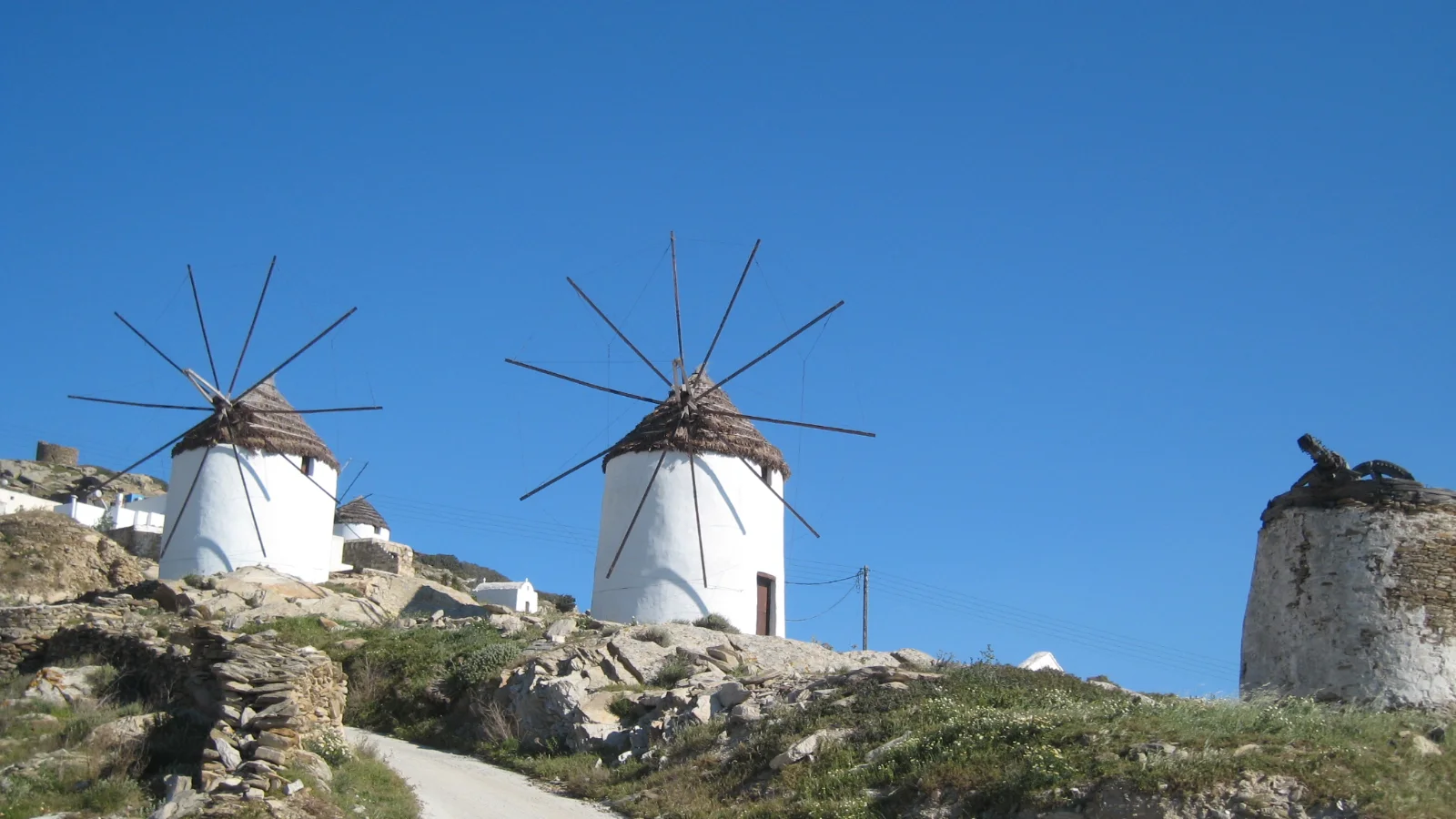
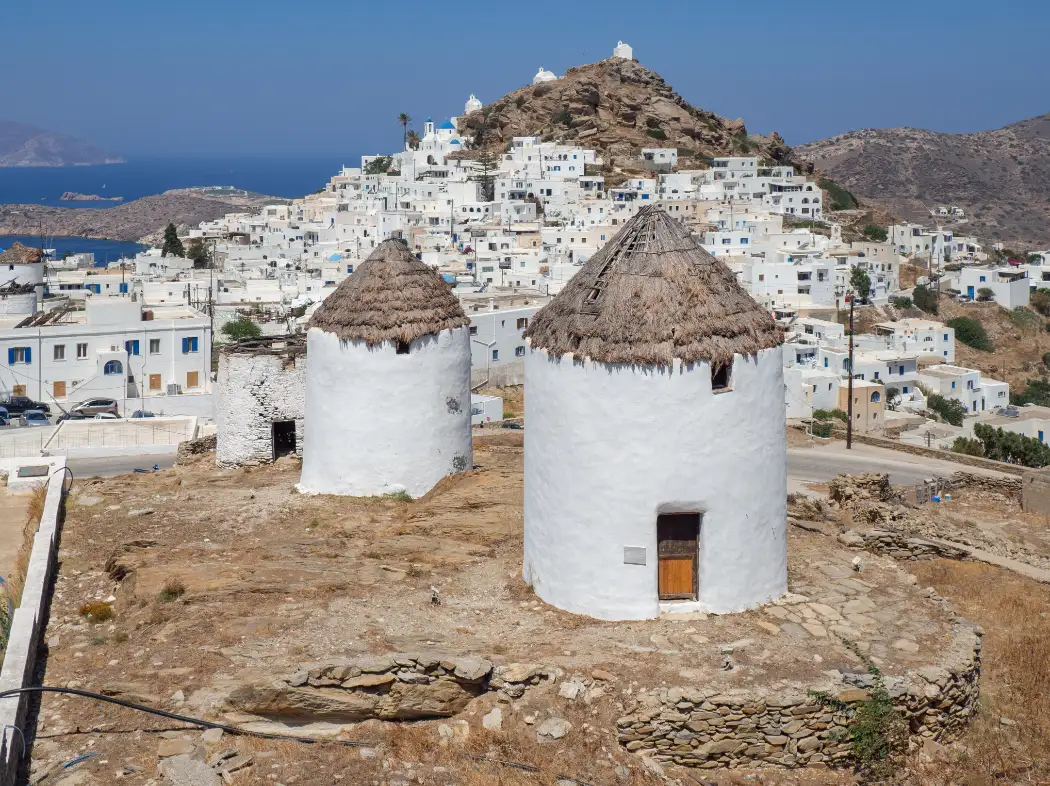
Chora, before anything opens. Strip away the reputation and Chora is a working Cycladic hill village: whitewashed houses stacked up a slope, a main square, alleys too narrow for a car, a row of windmills along the ridge, and the church of Panagia Gremiotissa at the top. The bars are wedged into that fabric, in the houses along the lanes and around the square, which is exactly why a night here is walkable. It is also why the lanes are worth walking in their own right in the morning, when what you see is the village rather than the venue.
The Kastro rock and the climb. Chora climbs to the foot of a bare granite dome topped with whitewashed chapels, and the walk up to it is the best half-hour in the town. The small open-air Odysseas Elytis theatre sits on the slope, and the view from the ridge is the whole island at once, which is the quickest way to understand how small the loud part actually is.
Skarkos, which the party guides skip entirely. Close to the port sits an Early Cycladic settlement from the Bronze Age, one of the better-preserved of its kind anywhere in the Aegean. Its finds are held in the small archaeological museum in Chora. Both the site and the museum are run by the Ephorate of Antiquities of the Cyclades, both are ticketed and both close one or two days a week, so take the current hours from the ephorate close to your visit rather than from a number printed in a guide. Reaching the site is a walk, which is part of why it stays quiet.
Homer’s tomb, and what can honestly be said about it. A site at Plakotos, on the northern tip of the island, has been called Homer’s tomb since antiquity. Ancient writers put the story on record: Pausanias and Strabo both name Ios as the place where Homer died, the Suda repeats it, and the tradition runs back through Herodotus, with a seventeenth-century traveller’s identification the point at which the modern location hardens into a spot you can walk to. What none of that does is prove it. The tomb has never been confirmed as Homer’s, and the honest thing to say is that Ios has held the tradition for a very long time, not that the poet lies there. Say it that way and the walk out to the north still earns itself: a quiet road, rock cairns, the wind, and an empty headland at the end of it, worth the trip whoever is or is not buried under it.
The walking, which is the island’s most underrated asset. Ios is small enough that a morning on foot from the town to a beach and back is a real day’s activity, and the paths up onto the ridge connect the quiet coast in a way the road does not. It costs nothing and books nothing, and on an island where everything else needs wheels that matters more than it sounds.
Where the loud half actually stops. The nightlife stays in Chora and on Mylopotas rather than colonising the coast. Drive ten minutes south and Ios becomes a different island entirely. If the going-out is why you are here, where the nightlife actually is, and how you get home is the page built for that question. If it is not, the beaches and our Ios guide are where the rest of the island lives, and island hopping in the Cyclades is how it fits a longer route.