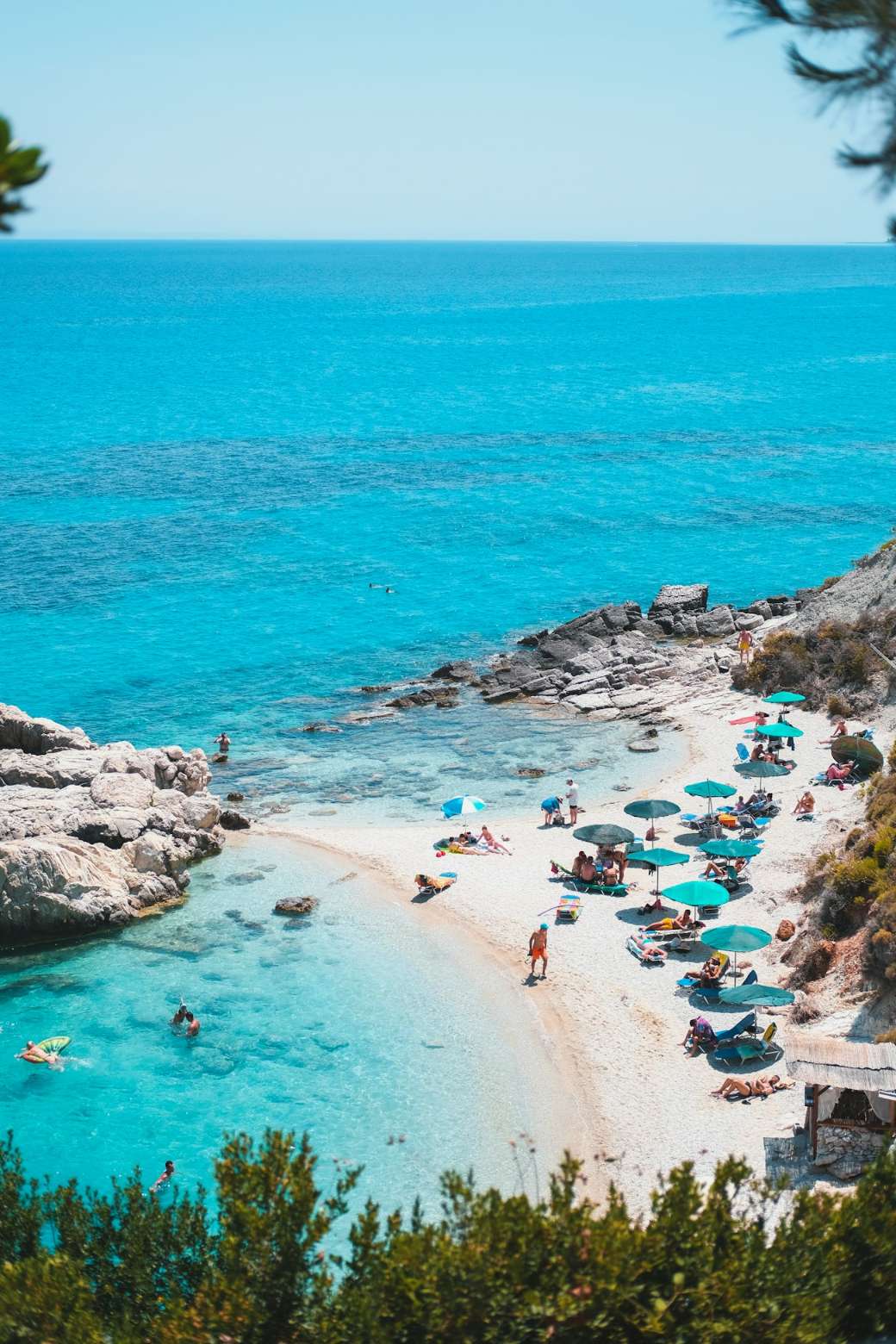
The short answer, by trip type
The best time to visit Greece isn’t a month - it’s whatever serves your trip. Ferries running, islands open, the sea warm enough to swim, and the crowds and heat you’re willing to take: those four things set your window, not an average temperature.
| Your trip | Go when |
|---|---|
| Island-hopping | Mid-May to late June, or September |
| Beach and swimming | July to early October |
| History and sightseeing | April–May, or October |
| Tight budget | November–March (with real caveats) |
| Honeymoon | Late September |
If you remember one line: late September is the closest thing Greece has to a right answer for everyone. The rest of this page is how to beat that default for your own trip.
The four levers that decide when to go to Greece
For most travelers, the best time to visit Greece is late May to late June or the whole of September: the sea is warm, ferries run at full frequency, the islands are open, and the July and August crowds have either not arrived yet or already gone. May and early October are the cheaper, quieter edges of that window.
That answer falls out of four questions, and they are the spine of everything below.
First, are the ferries running, and often enough? Greece is an archipelago, and most of it is reached by boat. In high summer the network runs at full tilt; by November it drops to a skeleton that links the big islands to the mainland and little else.
Second, are the small islands actually open? Many of the smaller Cyclades close their hotels and tavernas out of season, so “visiting” one between November and March can mean arriving to shuttered doors.
Third, is the sea warm enough to swim? The Aegean lags the calendar by about a month, so “summer” and “warm water” are not the same window.
Fourth, can you live with the heat, the crowds and the meltemi - the dry north wind that peaks in high summer and cancels ferries?

Diagram by Greece Trips. Free to reuse with credit - CC BY 4.0.
Swap those four for a landlocked country and they stop making sense, which is exactly why a generic “best weather” answer misses Greece. The raw numbers - average highs and lows, rainfall, sea temperature by month - live on our Greece weather by month page. This page decides; that one tabulates.
Greece by season: what each one is actually like
Each Greek season is a different trade between crowds, price, what’s open and how the sea feels. Here is what you actually get.
Spring (April to June): waking up
Spring is when the sites are green, cool and nearly empty, and the country switches back on island by island. April is early: the mainland and larger islands are reopening, wildflowers are out across the Peloponnese, but the sea is still cold and many small islands haven’t opened. May is the pivot - warm days, long light, almost everything open, prices still below summer. June is properly warm and starts to fill, though the water only turns comfortably swimmable toward the end of the month. That last point catches people out: early-June air can be hot while the sea still bites. Athens is at its best now - plan a spring city-first trip.
Summer (July to August): peak everything
Summer is the guarantee: reliable sun, warm sea, every ferry and every taverna running - and in exchange, the heat, the crowds, the highest prices and the meltemi. July and August are the hottest and busiest months, and the middle of August is the single date to avoid, when Greeks travel en masse and ferries sell out weeks ahead. Summer genuinely suits three people: anyone who wants guaranteed beach weather, anyone who came for the nightlife, and anyone locked to school holidays.
Autumn (September to October): the quiet winner
Autumn is the traveler’s pick. September keeps summer’s warm sea and full ferry schedule while the crowds thin sharply after the first week, and prices ease at the same time. October is golden and much quieter, but it has a hard edge: after mid-month, services taper and the smaller islands begin to close. This is the season that earns late September as our single best blind pick - warm water, boats still frequent, nobody in the way. For how the boats thin out, see our Greek island ferries guide.
Winter (November to March): mainland only, mostly
Winter is cheap, calm and, on the islands, mostly shut. Athens, Crete, Rhodes and Corfu keep running - real cities and large populations don’t close - while the small Cyclades largely go dark and ferries drop to a skeleton. Expect rain, short days and a country that belongs to locals again. Good for a mainland break or a year-round island like Crete; wrong for island-hopping.
Month by month: the quick verdict
Here is every month scored on the things that change a trip - not the thermometer. For temperatures, rainfall and sea-temperature figures, use the Greece weather by month page; this is the decision, that is the data.
| Month | Crowds | Price | Ferries | Swim? | What’s open | Verdict |
|---|---|---|---|---|---|---|
| January | Low | Low | Skeleton | No | Mainland, big islands | Athens city break; forget the small islands |
| February | Low | Low | Skeleton | No | Mainland, big islands | Quiet, cheap, wet; mainland only |
| March | Low | Low | Skeleton | No | Big islands waking | Sites empty, sea cold; good for Athens and Crete |
| April | Low–mid | Mid | Building | No | Most islands reopening | Wildflowers and Easter crowds; water still cold |
| May | Mid | Mid | Near-full late | Borderline | Almost everything | The spring sweet spot |
| June | Mid | Mid–high | Full | Yes, late June | Everything | Warm, long days; sea catching up |
| July | High | High | Full | Yes | Everything | Hot and busy; meltemi building |
| August | Peak | Peak | Full but sold out | Yes | Everything | Avoid mid-month unless it’s nightlife |
| September | High→mid | High→mid | Full | Yes, warmest | Everything | The all-round winner |
| October | Mid→low | Mid | Reduced after mid-month | Early yes, late borderline | Tapering late | Golden early; small islands closing after mid-Oct |
| November | Low | Low | Skeleton | No | Mainland, big islands | Athens and Crete only |
| December | Low | Low (holiday spike) | Skeleton | No | Mainland, big islands | Cities festive; islands shut |
The short version: May, September and early October are the best months to visit Greece for most trips - open, warm and uncrowded at once. Ferry tiers and swim windows shift year to year, so treat the cells above as typical, not guaranteed.
Best time to island-hop: it’s a ferry-schedule question
Island-hopping is the one trip where weather is almost beside the point. What decides it is how often the boats run, and that follows three tiers across the year.
Full network - roughly late May to late September. Daily sailings on the popular routes, high-speed and conventional boats both running, so you can chain three or four islands without building the whole trip around a timetable.
Reduced - late September through October. Fewer daily departures, the high-speed boats starting to withdraw, but still enough to hop between the bigger islands if you accept a slower pace and a buffer day.
Skeleton - November to March. Sailings mainly serve the large islands and the mainland; many small-island links simply stop, and some direct inter-island routes such as Mykonos–Santorini do not run at all in winter, so a crossing between the two means routing back through Piraeus or a third island.
The practical rule: shoulder months still work for hopping if you build in buffer days and skip tight same-day connections. Deep off-season breaks the chains between small islands entirely - ferry operators’ winter timetables and travelers’ own October and November trip reports agree on that. Plan the mechanics with our Greek island ferries and island-hopping guide; for a route that holds up in the shoulder season, see the Cyclades island-hopping route.
When the sea is actually warm enough to swim
The reflex is “summer equals warm sea.” In Greece that is wrong by about a month. Air heats fast in spring; water heats slowly, holds the heat, then releases it late. So the coldest-feeling swimming is often late May and early June, when the air is already hot, and the warmest water of the year comes in August and September. It stays swimmable well into October, especially in the south.
Take the honest window as roughly late May to late October, with the sweet spot in September, when the sea is at its warmest and the crowds have gone. For the actual sea-temperature-by-month figures, use the weather-by-month page; for the longest, warmest swim season in the country, head south to Crete.
Can you swim in Greece in October? Yes through early and mid-October, particularly in the south, where the sea keeps summer’s warmth even as the air cools. By late October it turns borderline.
The meltemi wind, and why it belongs in your plan
The meltemi is not folklore; it is a planning input. It is a dry north wind that blows down the Aegean in summer - present from roughly June to September, strongest and most persistent in July and August. It often runs to a daily rhythm: a calm morning builds into a firm afternoon blow that eases at sunset, though a strong spell can last for days.
Two things matter for your trip. First, it funnels hardest through the central Cyclades - the Mykonos–Paros–Naxos channel and the crossing down to Crete - and eases as you move away. Second, it cancels boats: when it hits full strength the small high-speed ferries are the first to be pulled, and in the worst gusts the big ones follow. Charter skippers and sailing forecasts track it obsessively, and summer travelers report the same pattern - a calm plan undone by a windy afternoon.
Turn it into a decision. If you travel the Cyclades in July or August, build ferry buffer days and don’t schedule a same-day onward connection you can’t afford to miss. If calm water is the point - a sailing trip, a young family, easy swimming - lean to the Ionian, the Corfu side, which sits out of the meltemi’s path almost entirely. When it does disrupt a route, our Greek island ferries guide covers how cancellations play out.
Are the islands even open? Off-season and the shutdown
“Open” in Greece is not all-or-nothing; it is a split. The big places with real year-round populations - Athens, Crete, Rhodes and Corfu - keep their hotels, restaurants and main sights running through winter. Many small Cyclades beach islands do the opposite: hotels close, tavernas shutter, and ferries thin to a handful a week from late October until around Easter. The smaller, purely seasonal islands effectively close to visitors altogether.
It is also uneven within a single island. Early-spring trip reports describe an island town nearly empty, its tourist street shut, while the quarter where locals actually live carries on - a bakery open, one taverna lit. So “open” can mean “you can go, but bring low expectations and a flexible plan,” not “business as usual.”
Are the Greek islands open in October? Mostly yes, but services taper after mid-month: the larger islands stay fully open while smaller ones begin closing hotels and cutting ferries. When does the season end? Not on a single date - it winds down through October, and mid-to-late October is the practical end for small-island infrastructure and frequent boats.
Cheapest time to visit Greece (and what ‘cheap’ costs you)
The cheapest months are the deep off-season, November to March, holidays aside. Flights and hotels sit at their lowest, and the big islands can run well below their summer rate. The catch is everything above: shut small islands, skeleton ferries, rain and short days. You save money by removing most of the reasons to hop between islands in the first place.
For most travelers the real value is shoulder season - May, and late September into October - when prices sit well under the July and August peak but the country is still open, warm and sailing. You give up a little certainty on the weather and gain a lot on crowds and cost.
Book flights well ahead for summer dates; last-minute rarely wins in peak season, and fares climb as August fills. See what a trip actually costs on our Greece trip cost page, and time your booking with the flights to Greece guide. The one honest exception to “shoulder over off-season” is a mainland city break, where Athens and Thessaloniki stay fully alive all winter and the low prices come with no real downside.
By trip type: matching the month to why you’re going
The same month scores differently depending on why you came. Four common trips, and the window each one actually wants.
Honeymoons and couples: late September
Late September is the honeymoon sweet spot, and the levers line up to say so: the sea is at its warmest, the summer crowds have thinned, ferries are still running full, and prices have started to slide off their August high. Plan it through our Greece honeymoon and couples guides; for the classic caldera stay, Santorini is at its calmest now.
Families: June or early September
Families do best on the shoulders of summer - warm enough to swim, cool enough to walk a site without melting, and cheaper than the August peak. School calendars force many into August; if you can choose, June or the first half of September beat it on every count. Start with our Greece with kids guide and the 10-day family route.
Nightlife and parties: July to August
If the trip is Mykonos and Ios at full volume, peak summer is the only answer - the exact season the rest of this page tells you to dodge. The clubs, the beach parties and the crowds all run hottest in July and August, so own the contradiction and go then. See our party islands and nightlife guide and Mykonos.
History and sightseeing: April–May or October
For ruins and cities, go when the light is kind and the stones are empty. Climbing the Acropolis or walking Delphi in July and August is a shadeless grind at the busiest hours; spring and mid-autumn are cooler, quieter and far better for photographs. April, May and October are the picks. Base yourself in Athens and branch out from there; the travel guide hub has the rest.
Festivals and the dates that move the crowds
Two dates reshape prices and ferry availability more than any forecast, and both move domestic travelers, not just tourists. Greek Orthodox Easter is the first - movable, often on a different Sunday from Western Easter, and the biggest travel weekend of the Greek year, when families head to home villages and islands. The second is the 15th of August, Dekapentavgoustos, the mid-summer feast that empties the cities onto the islands and sells out ferries weeks ahead.

Diagram by Greece Trips. Free to reuse with credit - CC BY 4.0.
The practical takeaway: check both dates before you book a shoulder-season trip, because they drop peak-season crowds and prices into otherwise quiet months. Easter’s date changes every year and follows the Orthodox calendar, so look it up rather than assuming the Western date - the official Greek tourism calendar is the place to confirm it. Neither date is a reason to stay away; both are a reason not to be caught out.
So when should you actually go?
If you have to pick one month without knowing anything else about your trip, go in late September. The sea is at its warmest, ferries still run something close to full, the crowds have gone home and prices have started to fall - the four levers all point the same way for once. May is the spring alternative: everything open, cool and green, at shoulder-season prices, with a sea that is only just warming up.
The date to avoid, unless nightlife or a school calendar forces your hand, is the worst time to visit Greece for most trips:
- Mid-August - peak heat, peak crowds, peak prices, the meltemi at its strongest and ferries sold out.
- Orthodox Easter week, if you are after quiet rather than atmosphere.
- Deep winter, if the trip depends on the small islands, because most of them are shut.
Pairing Greece with Italy on one trip? The same shoulder-season logic answers both - aim for May or late September. When you’re ready, build the route; and for the numbers behind all of this, the weather by month page has them.
Common questions about when to visit Greece
When is the best time to visit Greece?
For most travelers, late September and May into June are the best windows: warm enough to swim, ferries still frequent, islands open, and crowds far below the July and August peak. Prioritizing swimming pushes you later; sightseeing or budget pulls you earlier.
What is the worst time to visit Greece?
Mid-August is the worst for most trips - peak heat, crowds and prices, the meltemi at full strength and ferries sold out. Deep winter is worst for island-hopping, because most small islands close. The one exception: mid-August is the best time for nightlife.
When is summer in Greece?
Meteorological summer runs June to August, but the practical beach season is longer - roughly late May to early October - because the sea holds its warmth into autumn. Air-summer and sea-summer are not the same window; the water peaks in August and September.
Can you swim in Greece in October?
Yes, through early and mid-October, especially in the south around Crete and the Dodecanese, where the sea keeps summer’s warmth as the air cools. By late October it is borderline. The sea-temperature figures are on the weather-by-month page.
Is September a good time to visit the Greek islands?
Strongly yes, especially the first three weeks: warm sea, full ferry schedules, and crowds dropping sharply after early September. Late September is the natural cut-off before October’s closures and reduced sailings begin, so book the earlier part if you can.
Is November a good time to visit Greece?
It depends where. November is good for Athens and Crete - mild, cheap and quiet - but poor for small-island hopping, when many islands have closed, ferries run a skeleton schedule and rain picks up. Choose the mainland or a large island, and skip the small Cyclades.
Are the Greek islands open in October?
Mostly yes, but services taper after mid-month. Larger islands stay fully open while smaller ones start closing hotels and tavernas and cutting ferry frequency. Early October is close to full season; late October is the tipping point into the off-season.
When does tourist season end in Greece?
There is no single closing date - the season winds down through October, and mid-to-late October is the practical end for small-island hotels and frequent ferries. Year-round destinations like Athens and Crete never fully close, so “season” really means the islands.