Island group
Cyclades (northern Cyclades, between Andros and Mykonos), South Aegean, Greece. Capital and port: Tinos Town (Chora), south coast
Airport
None. Tinos has no airport; the nearest is on Mykonos, a short ferry hop away, so every arrival on Tinos is by sea
Ferry from Rafina
On the Andros-Tinos-Mykonos line; about an hour and a half by high-speed catamaran or roughly three and a half hours by conventional ferry. Daily year-round, over ten crossings a day in high summer. Operators: Fast Ferries, Golden Star Ferries, Seajets. Piraeus also runs daily but slower (about two and a half hours high-speed, four to five conventional) and only up to twice a day. Mykonos hop about a quarter of an hour to half an hour. No fares carried
The shrine
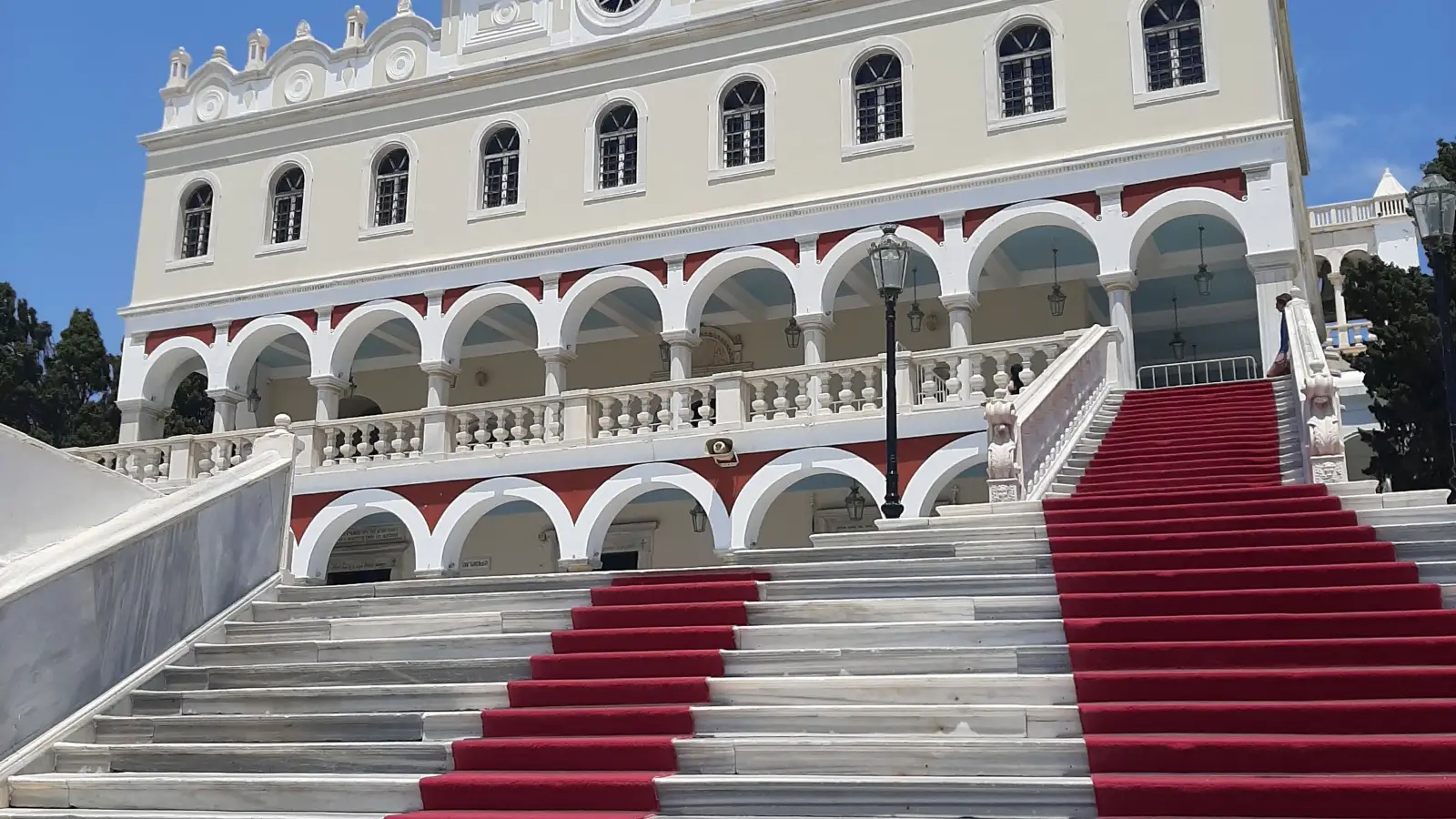
Holy Church of Panagia Evangelistria (Our Lady of the Annunciation / Panagia Megalochari), Tinos Town - Greece’s most important Marian shrine. The church names four celebrations: 15 August (Dormition), 25 March (Annunciation), 30 January (finding of the icon) and 23 July (the vision of Saint Pelagia)
Best months
May-June and September (green hills and light winds in late spring; the calmest sea and warmest swimming in September; July-August are hot, windy and busy, and the week around 15 August is the pilgrimage peak)
Craft heritage
Tinian marble craftsmanship inscribed on UNESCO’s Representative List of the Intangible Cultural Heritage of Humanity, 2015; the Museum of Marble Crafts (Piraeus Bank Group Cultural Foundation) sits just outside Pyrgos
Travel details last checked July 2026.
Tinos, Greece: the pilgrim island that is also a craft island
Tinos is a Cyclades island reached by ferry from Rafina, and it carries two reputations at once. To most Greeks it is the country’s biggest Orthodox pilgrimage, drawn to a single church above the port town. To travelers who come for something else, Tinos, Greece is a slow craft island of marble-carved villages, stone dovecotes and granite boulder country. Which of the two islands you meet turns on one date, 15 August, and this page is built around that fork.
What Tinos is, and who comes for what
The island of Tinos sits in the northern Cyclades, in the Aegean, with Andros a short strait to the northwest and Mykonos close to the southeast. Its capital and only real town is Tinos Town, the Chora, wrapped around the ferry harbour on the south coast. Everything begins there: the boat lands at the Chora, the rental desks line the waterfront, and the great pilgrimage church stands on the rise just above it.
Two very different visitors share that harbour, and they are often after opposite things. Most Greek arrivals come for the shrine, above all in the days around 15 August, when the island fills with pilgrims. The other Tinos belongs to travelers drawn by the marble-carved villages, the ornamental dovecotes, the walking, and a food reputation that Greeks take seriously - artichokes and capers, cured louza, local cheeses and raki.
It helps to know what the island is not built for. The evening here is a long dinner in a village square rather than a club strip, and the coast answers to the wind rather than to a beach-club brochure. Tinos runs quieter and cheaper than Mykonos next door, and it asks for a slower gear than the party islands do.
Read the sections that follow as a map of that character - the pilgrimage first, then the craft villages, the boulder country, the beaches, and the logistics that string them together. For where the island sits among its neighbours, start with the Cyclades.
Getting to Tinos: the ferry usually leaves from Rafina, not Piraeus
Tinos has no airport of its own, so every arrival is by sea. The fastest and most frequent route runs from Rafina, the smaller Athens port on the Andros-Tinos-Mykonos line, and the reason to prefer it starts on land: Rafina sits close to Athens International Airport, far closer than Piraeus does, with a KTEL bus running between the two. Allow around half an hour to forty minutes for that leg, and more in traffic. Piraeus, the bigger port most people default to, also serves the island, more slowly and less often.

Diagram by Greece Trips. Free to reuse with credit - CC BY 4.0.
The choice on the Rafina route is speed against weather. High-speed catamarans make the crossing in about an hour and a half; conventional ferries take roughly three and a half hours, cost less, and ride the summer meltemi wind more steadily than the fast boats, which are the first to be held in port when it blows hard. Sailings run daily all year, and in high summer there are more than ten a day. Piraeus also reaches Tinos every day of the year, but on both counts it is the weaker option: the fast boat takes over two hours against Rafina’s hour and a half, the conventional ferries closer to four or five, and there are only a couple of sailings a day rather than ten.
Once you are in the Cyclades, Tinos is easy to reach sideways. The hop from Mykonos is famously short, from about a quarter of an hour on the fast boats to around half an hour on the slower ones, and the same line links the island to Andros in about forty minutes, with onward connections to Syros, about a quarter of an hour away, and Paros, about an hour. Andros is one stop back up the line toward the mainland.
Two practical notes for summer. Rafina fills up on peak mornings, so arrive with time to spare, and book vehicle space well ahead if you are bringing a car. In the week around 15 August, ferry seats to Tinos sell out earliest of all, and the pilgrimage is why. Boats, gates and tickets in general are covered in Greek island ferries, and the run out from the airport in getting from the airport to the port.
The pilgrimage: Panagia Evangelistria and 15 August
Tinos is famous, above all, for the Holy Church of Panagia Evangelistria in the port town - Greece’s most important Marian shrine, and the destination of the country’s biggest Orthodox pilgrimage. It draws its largest crowds on 15 August, the feast of the Dormition of the Virgin.
The story behind the shrine is told, according to tradition, as a discovery. In the summer of 1822 a local nun, Pelagia, reported visions of the Virgin asking that the ground be dug; in January 1823 a workman’s pickaxe struck a wooden icon of the Annunciation on the site. The Holy Church of Panagia Evangelistria - Our Lady of the Annunciation, also known as Panagia Megalochari - was raised over the spot, and by the church’s own account the building work on the complex ran on until 1880. It has been a focus of Greek Orthodox devotion ever since.
On the great feast that devotion is physical. Some pilgrims cover the last stretch on their knees, climbing a carpeted route uphill from the port to the shrine; after the liturgy, the icon is carried down to the harbour in a naval procession. What a visitor witnesses is that practice - the slow ascent, the crowds, the procession - not a promise of anything beyond it.
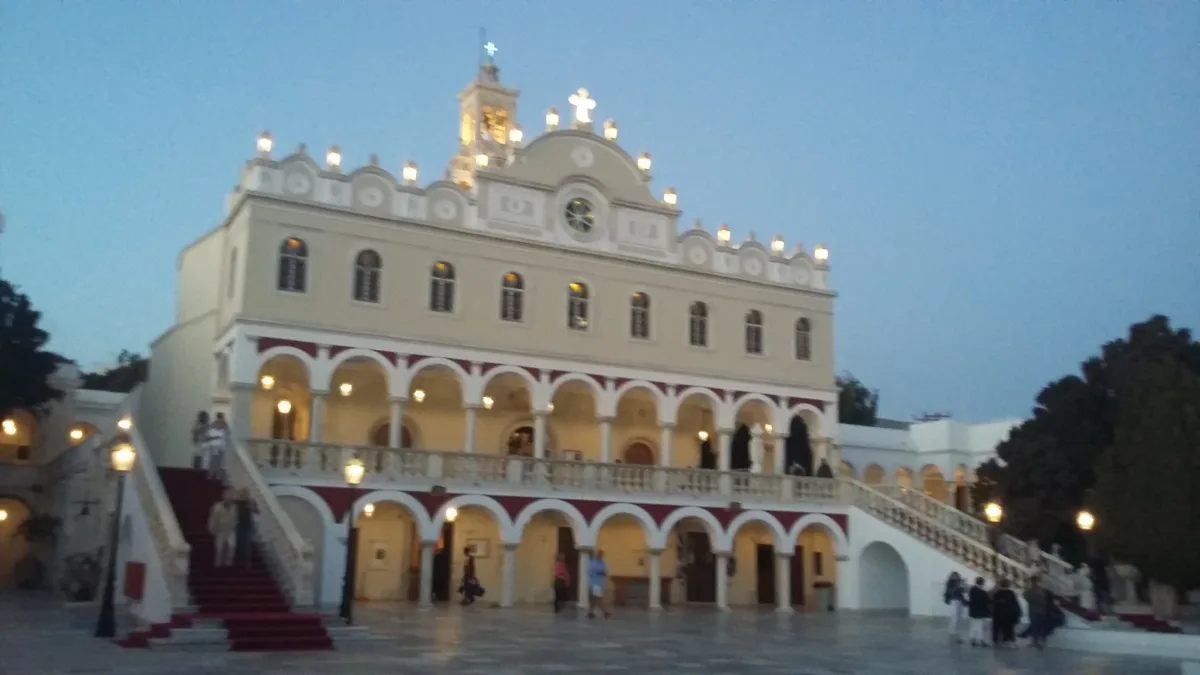
Four dates draw pilgrims, and the church names all four itself. 15 August, the Dormition, is the great one and the single busiest day on the island. 25 March, the Annunciation and the church’s name-day, is also Greek Independence Day; 30 January marks the finding of the icon, and 23 July the anniversary of Saint Pelagia’s vision.
Outside those peaks the church is calm, open to visitors and free to enter, and modest dress - shoulders and knees covered - is expected. On 15 August it is the reverse: the town is overwhelmed, beds and ferry seats are booked out well ahead, and prices rise across the island. That is the fork this page keeps returning to, and it is worth settling early. Why August reshapes any Greece trip is set out in Greek Easter and August, and how to behave inside a working church in Greek etiquette and customs.
Marble villages: Pyrgos, Ysternia and Kardiani

Diagram by Greece Trips. Free to reuse with credit - CC BY 4.0.
The northwest is where Tinos still works marble by hand. Pyrgos is the heart of it, a village where the everyday fabric is carved stone: fountains, lintels, doorway reliefs, even the markers in the cemetery are worked marble. The local school of fine arts has turned out sculptors for generations, among them Yannoulis Chalepas, born in the village and now counted among modern Greece’s finest. Just outside Pyrgos, the Museum of Marble Crafts, run by the Piraeus Bank Group Cultural Foundation, lays out how the stone is quarried, split and carved - the single best place on the island to understand the craft before you walk the lanes it built.
This is not a local curiosity. In 2015, Tinian marble craftsmanship was inscribed on UNESCO’s Representative List of the Intangible Cultural Heritage of Humanity, recognition that the skill handed down in these villages is a living tradition rather than a museum piece.
Two more villages fill out marble country. Ysternia is built amphitheatrically down a slope above the sea, its marble-paved lanes looking across the water toward Syros. Kardiani is the green one, spring-fed and dramatic on its hillside, houses stacked among the trees. All three sit along the northwest on narrow mountain roads that climb and switch back, which is the first plain sign that Tinos is a place you see by car rather than by bus. Which islands genuinely need one is set out in which islands you actually need a car for.
Dovecotes and the boulder country around Volax
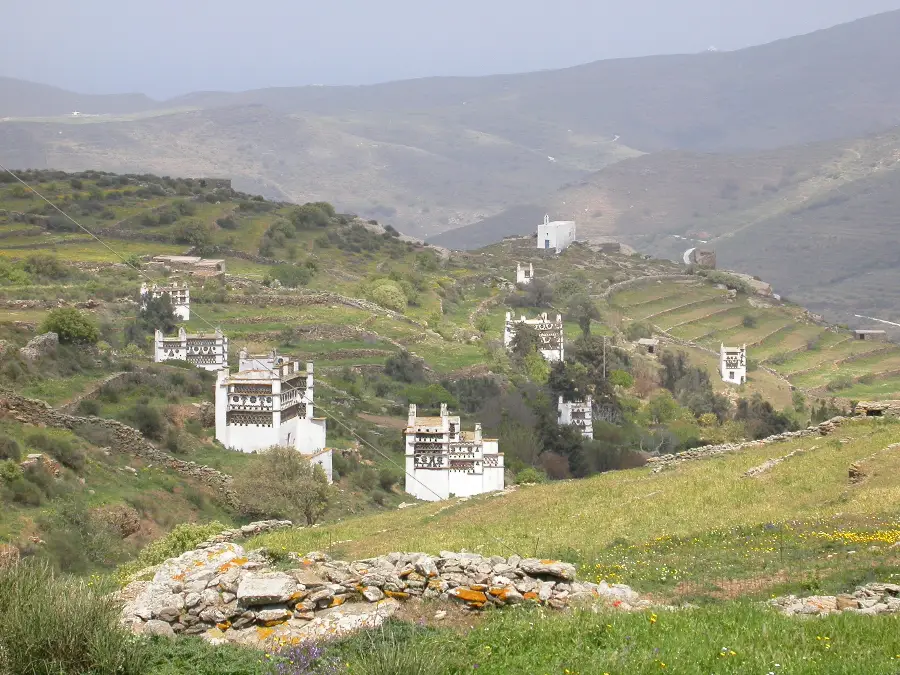
Away from the coast, the interior is dense with two things you see at this scale almost nowhere else. The first is the dovecote. These are ornamental stone towers from the Venetian centuries, their upper faces worked into geometric sunbursts, triangles and diamond lattices that double as perches and flight-holes. They were working buildings: pigeons were kept for their droppings, a prized fertiliser on a dry island, and for their squabs at the table. They stand in the hundreds across Tinos, and sources disagree on exactly how many - counts range from several hundred to more than a thousand - so it is the density that tells the story rather than any single figure. The valley around Tarambados holds the classic concentration.
The second is the boulder field around Volax. The village is a knot of white houses on a plateau strewn with thousands of rounded granite boulders, some larger than the rooms they lean against; wind and weather rounded the granite over an immense span of time, and the result reads as almost lunar. Volax also keeps a living basket-weaving tradition, the reeds still worked by hand.
This is the Tinos that rewards slow, car-based wandering - the half of the island the craft-and-walking traveler comes for, and the reason two days here fill easily. It is also the part that most clearly separates Tinos from its neighbours in the Cyclades.
Beaches, and what the wind does to them
Tinos has real beaches, but they answer to the wind before they answer to you. The summer meltemi blows hardest onto the north and east coasts, so which beach is swimmable often depends on the day: a leeward cove on the south can sit calm while the north churns white. Checking the wind before you drive out matters more here than picking a name off a list.
The easy, developed beaches are near the town. Agios Fokas and the Agios Ioannis and Kionia stretch just west of the Chora are sandy and served, close enough to reach in minutes. For the wilder side, Kolymbithra on the north coast has two bays and a genuine surf reputation, and Livada on the east is exposed and wave-prone - both are where the same wind that empties the sheltered beaches sends surfers across the island. Pachia Ammos is another broad northern sweep for those chasing space.
Be honest with yourself about what this is. Tinos is not a beach-first island the way Naxos or Paros are, and it does not pretend to be. Come for the villages and the shrine, treat the beaches as the bonus, and pick by the wind on the day. If swimming is high on your list, aim for September, when the meltemi eases and the sea is at its warmest. What the Aegean and the meltemi are actually like is spelled out in what the sea is like.
When to go, and how many days you need
Come in May or June, or in September, and give Tinos two full days at the very least - four to five if you want to meet the craft island rather than just tick off the shrine.
Late spring is the island at its greenest: wildflowers on the hills, warm days, quiet villages and light winds. September is the other sweet spot, when the meltemi has eased, the sea is warmest for swimming, and the harvest fills the tables. July and August are hot, windy and busy, and they carry the one date that changes everything.
That date is 15 August. If you want the pilgrimage itself - the slow ascent, the packed liturgy, the naval procession - come deliberately, and book beds and ferries months ahead. If you want the quiet craft island instead, avoid roughly 12 to 16 August, when rooms grow scarce and prices climb across Tinos. Both are good trips. They are not the same trip.
On length: a day-trip from Mykonos only reaches the harbour and the church. Two full days with a car cover Pyrgos, Volax and a couple of beaches. Four to five let you slow down, walk, and eat your way through the villages.
Where you sleep sorts into three choices: the Chora and the town beaches at Agios Ioannis and Kionia, handy for the port and dinner, or a village stay inland for the slow traveler with a car. In the days around 15 August, book far in advance whichever you pick. The wider seasonal picture is in the best time to visit Greece and shoulder-season travel.
Getting around: why Tinos is a car island
The villages that make Tinos worth the ferry are exactly the ones the bus barely reaches, which is why a car or scooter earns its place here. The island’s draws are scattered across mountain villages on narrow, winding roads, and the KTEL buses run mainly on radial routes out of the Chora with limited frequency - fine for reaching one village and back, awkward for stringing Pyrgos, Volax, Ysternia and a beach into a single day.
Rental desks cluster in the Chora and by the port, and the practical advice is to book ahead in July and August, and well ahead around 15 August, when cars sell out along with the rooms. A small car handles the paved roads comfortably; a few dirt tracks down to remote beaches reward higher clearance, though you can skip those and lose little. A scooter works for a couple exploring lightly, with the caveat that the same meltemi that rakes the beaches also buffets the exposed ridge roads.
How renting works across Greece is covered in renting a car in Greece, and the road rules and habits in driving in Greece.
Where Tinos fits: pairing it with Mykonos and the Cyclades
Most travelers should reach Tinos through Mykonos, and many should pair the two. The hop between them is only about 15 to 35 minutes, and the contrast is the point: Mykonos brings the airport, the crowds and the late nights, Tinos the villages, the marble and the quiet. A couple of Mykonos days at either end of a Tinos stay give you both registers of the Cyclades without a long crossing between them.
Tinos also sits on the Rafina line up to Andros, with onward links to Syros and Paros, so it slots naturally into a longer island-hopping route rather than standing alone. If you are already planning Mykonos, the simplest upgrade to the trip is to make it a two-island one. To build the wider route, start from Cyclades island hopping, and for how the hops actually work, read the island-hopping guide.
So, is Tinos your island?
The island rewards a particular traveler: the one who wants villages, marble, faith and food more than beaches and nightlife, and who is willing to plan around a single date. Come for the shrine or come for the craft country, bring a car, aim for May, June or September, and decide on 15 August with open eyes. Weigh it against all our Greece destinations, or find it on the interactive map.
Tinos FAQ
How do you get to Tinos?
Tinos has no airport, so you arrive by ferry. The fastest, most frequent route is from Rafina, the Athens port nearest the airport, on the Andros-Tinos-Mykonos line: high-speed boats cross in about an hour and a half, conventional ferries in roughly three and a half hours, and sailings run daily all year, with more than ten a day in high summer. Piraeus also serves the island daily, but more slowly and only a couple of times a day. More in Greek island ferries.
Is Tinos worth visiting?
Yes, for the right traveler. Tinos is worth it if you want authentic villages, marble craftsmanship, ornamental dovecotes, genuinely good food and Greece’s most important Orthodox shrine. It is less rewarding if you came for nightlife or reliably calm swimming beaches. Across many travel guides it reads as the quiet, authentic alternative to nearby Mykonos.
What is Tinos famous for?
Three things. The Panagia Evangelistria pilgrimage church in the port town, Greece’s most important Marian shrine, which peaks on 15 August; a marble-carving tradition inscribed by UNESCO in 2015, centred on the village of Pyrgos; and its hundreds of ornamental Venetian dovecotes scattered across the interior.
How many days do you need in Tinos?
Two full days with a car for the highlights - the church, Pyrgos, the boulder country at Volax and a beach or two. Four to five days to slow down, hike and eat well through the villages. A day-trip from Mykonos only reaches the harbour and the shrine.
When is the best time to visit Tinos?
May and June, or September: warm, quiet days with lighter winds, and in September the warmest sea for swimming. July and August are hot, windy and busy, and 15 August is the pilgrimage peak, when the island is packed and rooms and ferries sell out well ahead.
Do you need a car in Tinos?
Close to it. The villages and beaches are spread across mountain roads and the buses run limited radial routes from the Chora, so a car or scooter is near-essential to see the island in a day or two. Book ahead in peak weeks, and especially around 15 August. See renting a car in Greece.
Can you visit Tinos and Mykonos together?
Yes, and it is a natural pairing. The two islands are only about 15 to 35 minutes apart by ferry, so combining quiet Tinos with livelier Mykonos - which has the nearest airport - makes an easy two-island trip. Build it into a Cyclades route.
Plan by category
The Tinos guides
5 guides, each scoped to a decision you actually have to make.
 Attractions
Things to do
See the attractions →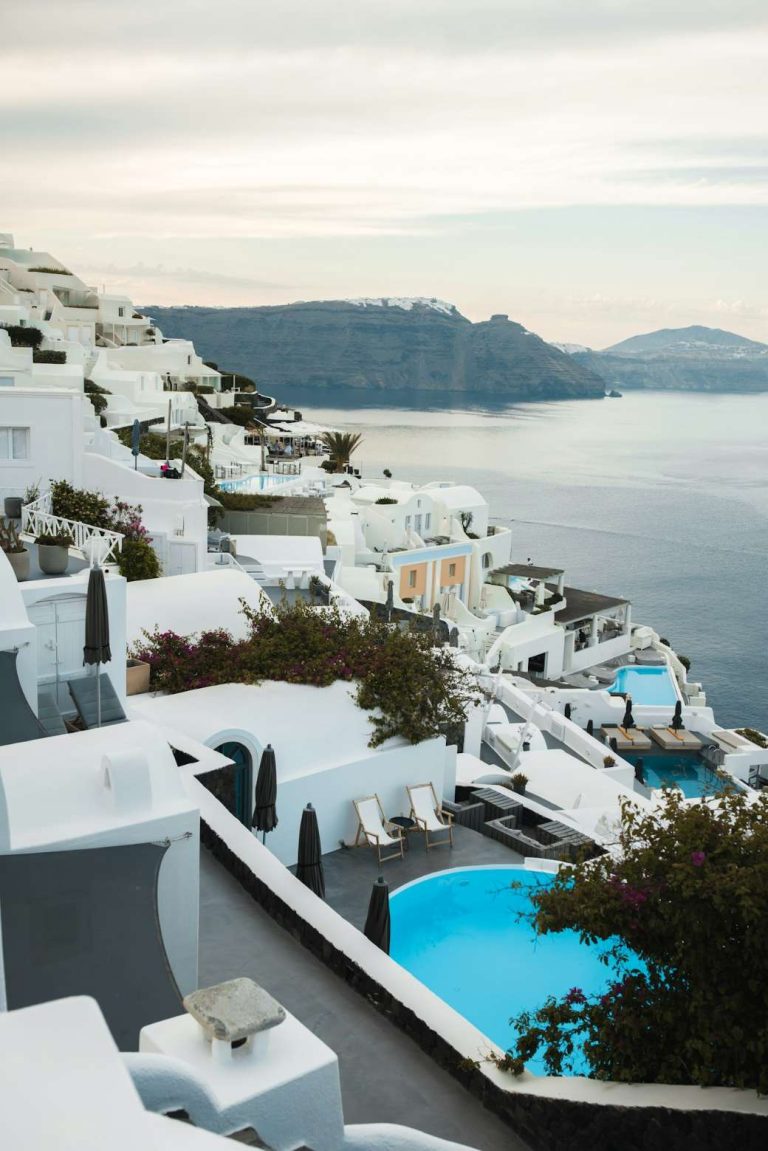 Hotels
Where to stay
Compare the areas →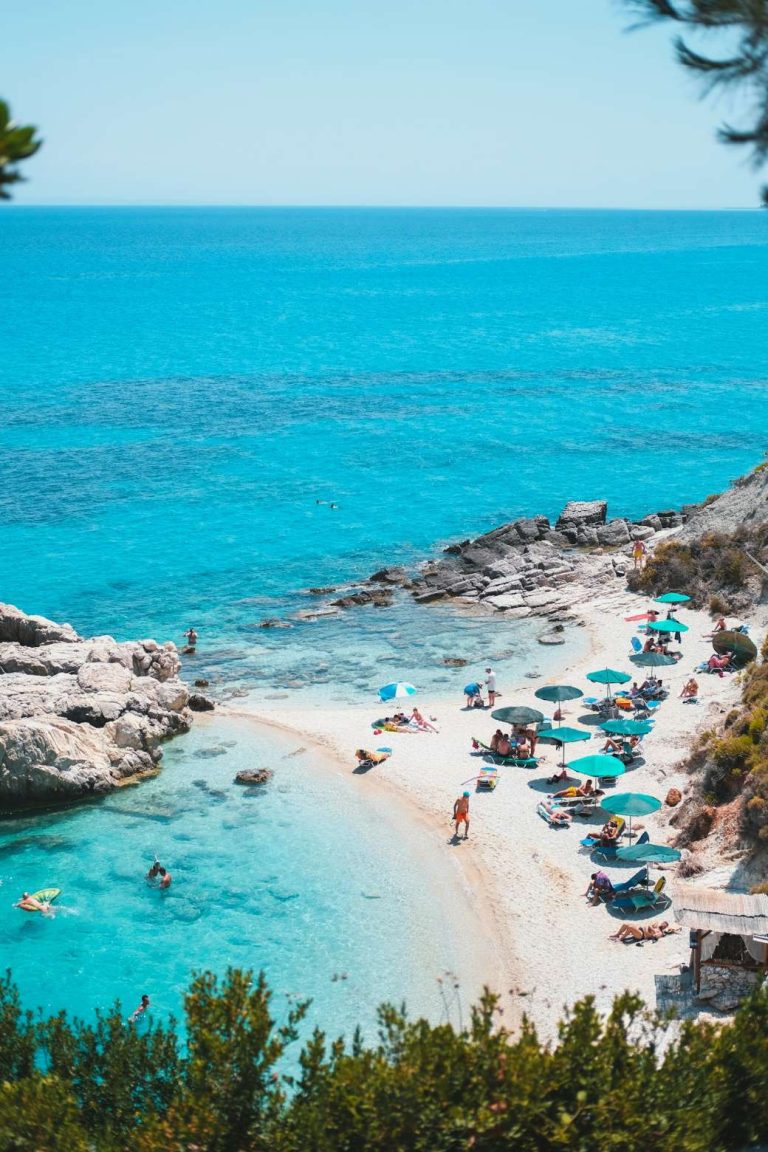 Beaches
The beaches
See the beaches →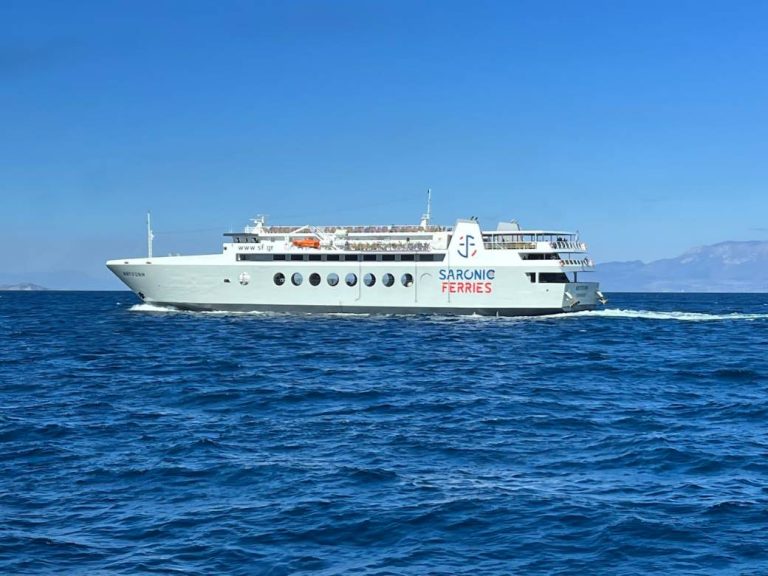 Itinerary
Day by day
See the itinerary →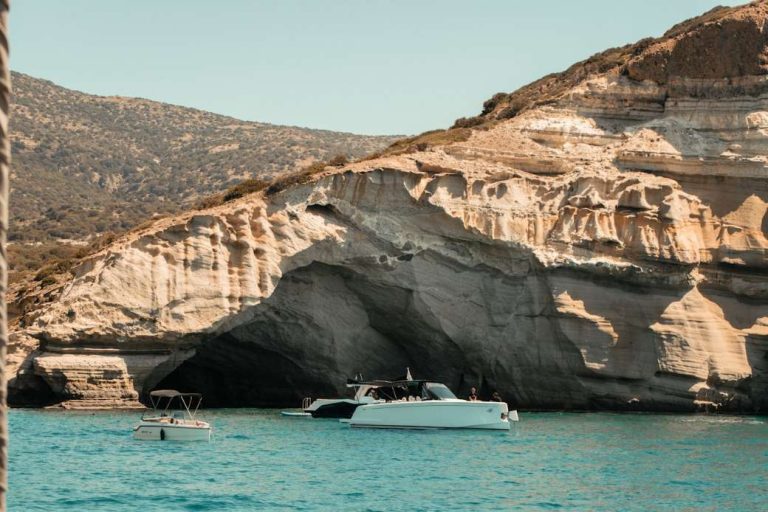 Day trips
Day trips
See the day trips →
Booking
We sell nothing and book nothing for you. Every guide on this page tells you how to arrange each piece yourself - which ferry operator, when to book, what to prebook and what to leave loose.