Tinos
Things to do in Tinos
Tinos is two islands in one: a pilgrim island and a craft island. Both are genuine, both are worth a visit, and they draw different people at different times of year. What follows covers both, and the last paragraph is the one that decides your dates.
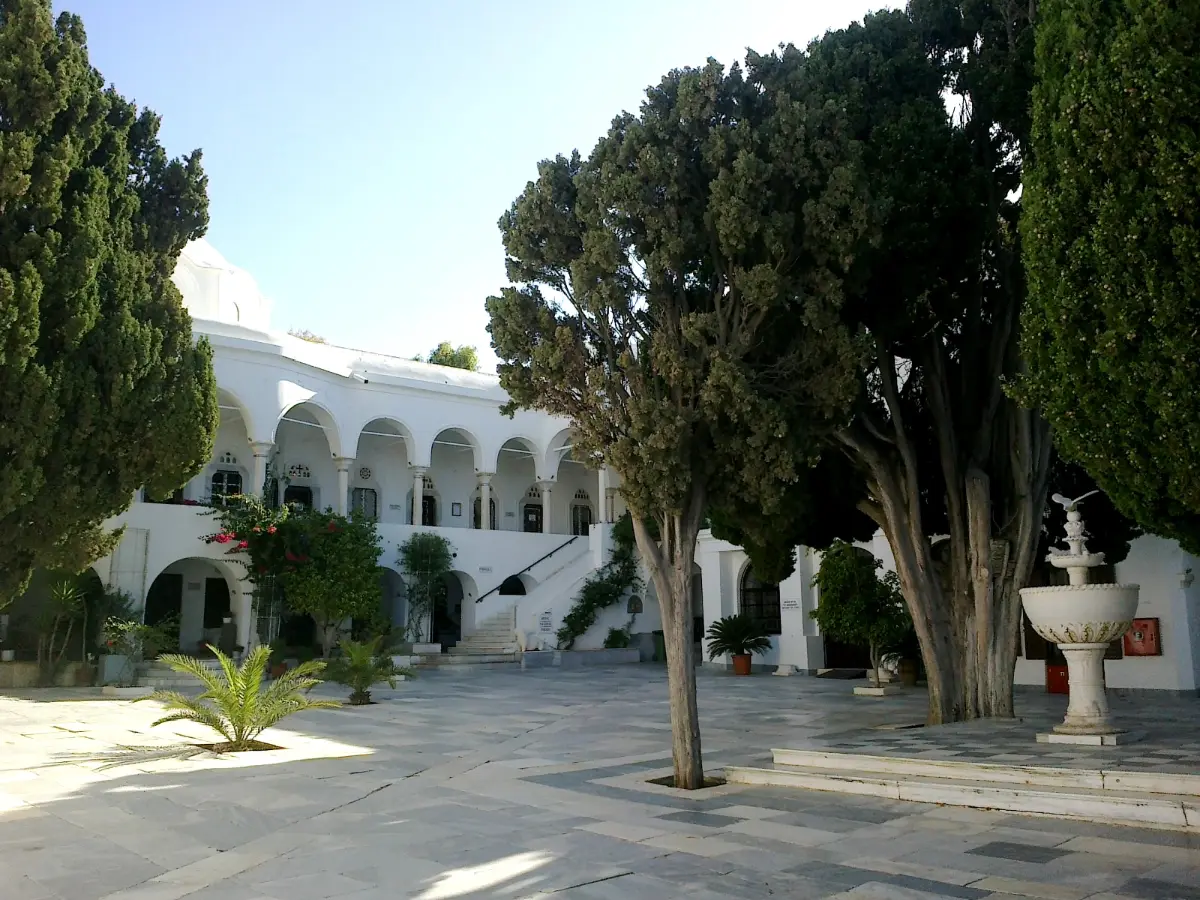
Panagia Evangelistria, the shrine. The Holy Church in the port town is Greece’s most important Marian shrine and the destination of the country’s biggest Orthodox pilgrimage. The story behind it is told, according to tradition, as a discovery: in the summer of 1822 a local nun, Pelagia, reported visions of the Virgin asking that the ground be dug, and in January 1823 a workman’s pickaxe struck a wooden icon of the Annunciation on the site. The church was raised over the spot, and by its own account the building work on the complex ran on until 1880.
What the devotion looks like, and what this page will and will not say about it. On the great feast some pilgrims cover the last stretch on their knees, climbing a carpeted route uphill from the port to the shrine, and after the liturgy the icon is carried down to the harbour in a naval procession. What a visitor witnesses is that practice: the slow ascent, the crowds, the procession. Not a promise of anything beyond it.
The four dates the church itself names. 15 August, the Dormition, is the great one and the single busiest day on the island. 25 March, the Annunciation and the church’s name-day, is also Greek Independence Day. 30 January marks the finding of the icon, and 23 July the anniversary of Saint Pelagia’s vision. Outside those peaks the church is calm, open to visitors and free to enter, and modest dress with shoulders and knees covered is expected. Greek etiquette and customs covers behaving inside a working church.
Pyrgos and the marble villages. The northwest is where Tinos still works marble by hand. Pyrgos is the heart of it, a village whose everyday fabric is carved stone: fountains, lintels, doorway reliefs, and even the markers in the cemetery. The local school of fine arts has turned out sculptors for generations, among them Yannoulis Chalepas, born in the village. Just outside, the Museum of Marble Crafts lays out how the stone is quarried, split and carved, and it is the single best place on the island to understand the craft before you walk the lanes it built.
Why that is more than a local curiosity. In 2015 Tinian marble craftsmanship was inscribed on UNESCO’s Representative List of the Intangible Cultural Heritage of Humanity, which recognises the skill handed down in these villages as a living tradition rather than a museum piece. Ysternia and Kardiani fill out marble country: the first built amphitheatrically down a slope with marble-paved lanes looking toward Syros, the second green and spring-fed with houses stacked among trees.
The dovecotes, which you see at this scale almost nowhere else. Ornamental stone towers from the Venetian centuries, their upper faces worked into geometric sunbursts, triangles and diamond lattices that double as perches and flight-holes. They were working buildings: pigeons kept for their droppings, a prized fertiliser on a dry island, and for their squabs at the table. They stand in the hundreds, and sources disagree on how many, with counts ranging from several hundred to more than a thousand, so it is the density that tells the story rather than any figure. The valley around Tarambados holds the classic concentration.
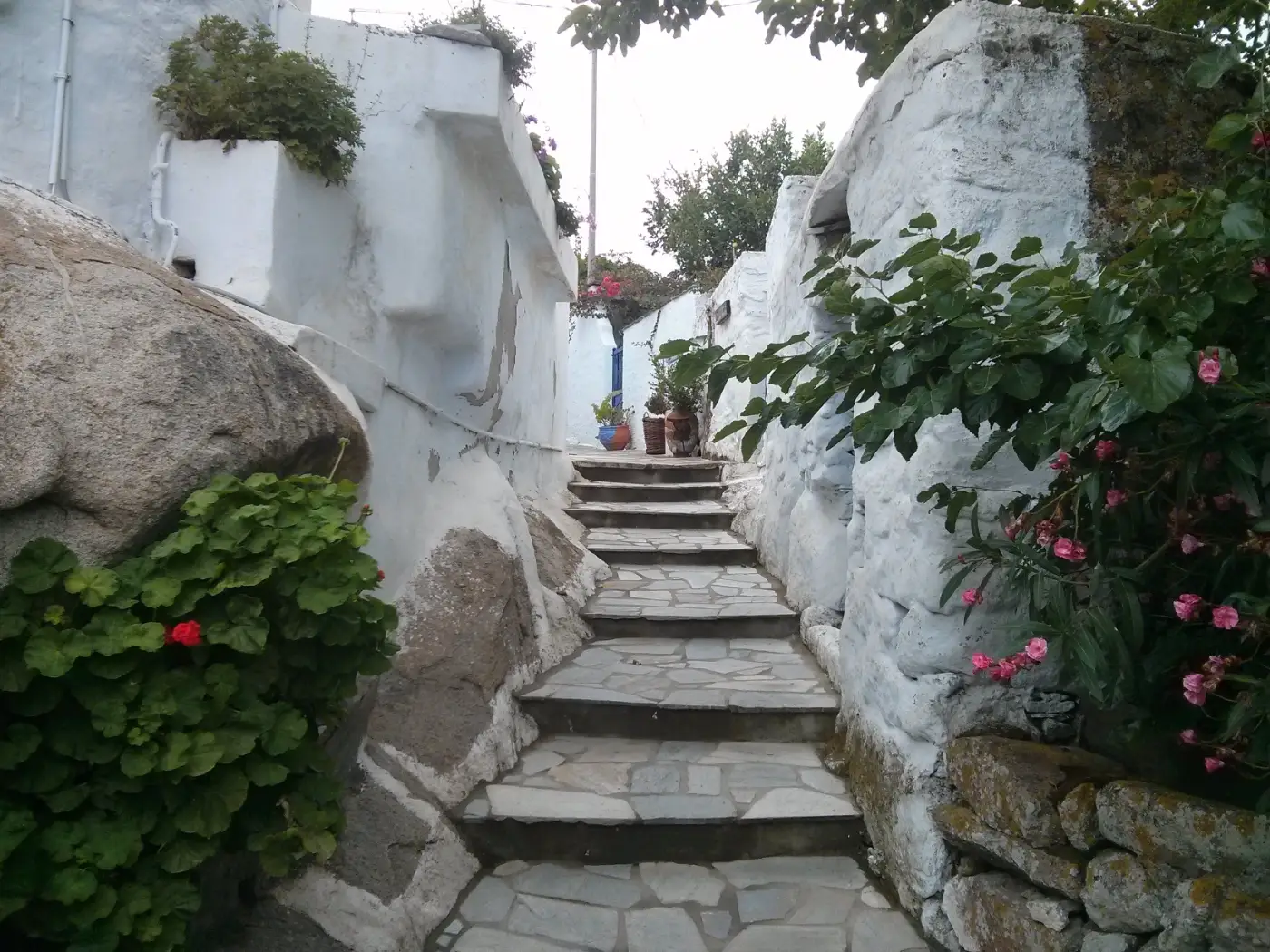
Volax and the boulder field. A knot of white houses on a plateau strewn with thousands of rounded granite boulders, some larger than the rooms they lean against, rounded by wind and weather over an immense span of time. The result reads as almost lunar. Volax also keeps a living basket-weaving tradition, the reeds still worked by hand.
The date decision, which matters more here than on most islands. On 15 August the town is overwhelmed, beds and ferry seats are booked out well ahead, and prices rise across the island. Settle that early rather than late. Greek Easter and August explains why August reshapes any Greece trip, our Tinos guide has the practicalities, the beaches answer to the wind, and this is a car island: which islands need a car.