Region
Central Macedonia, northern Greece (mainland)
Airport
Thessaloniki “Makedonia” (SKG), ~13 km southeast of the centre
Getting in
Bus 01X (day) / 01N (night) to the centre, ~40-50 min; taxi ~30 min; the metro does not reach the airport
Getting around
Dense, walkable centre; Metro Line 1 (opened Nov 2024; Kalamaria extension due summer 2026) plus a wide bus network; no car needed in the city
Onward connections
Train to Athens ~4.5-5 h; Meteora via Paleofarsalos (rail-replacement bus on the final leg during works); summer high-speed ferries to Skiathos, Skopelos and Alonissos
Best time to visit
May-June and Sept-Oct for the balance; the city itself works year-round
Days needed
2 focused days for the city; 3 with one day trip north
Currency / language
Euro (EUR) / Greek (English widely spoken in tourism)
Travel details last checked July 2026.
Two days for the city, a third for the north
Two focused days cover Thessaloniki: one for the monument walk from the White Tower up to the Byzantine walls, one for the markets, the food streets and Ano Poli. Add a third day for a single trip north - Meteora, Mount Olympus or a Halkidiki beach - and you have the city done properly, not rushed.
Most guides land on three days, and traveller forums run anywhere from two to four. The spread is bookkeeping, not disagreement: the three- and four-day counts quietly fold the day trips in. Count them separately and the honest answer is two days of city, plus however many days north you want to add. The centre is compact enough that a third day inside it starts repeating itself.
The two days have a natural shape. Day one climbs: the waterfront and the White Tower first, then the Roman and Byzantine core - the Arch of Galerius, the Rotunda, Agios Dimitrios - ending up in Ano Poli for the walls and the sunset. Day two eats: bougatsa early, the Modiano and Kapani markets before noon, a long meze lunch around Athonos Square, then whatever you missed, and the evening walk on the Nea Paralia promenade with half the city for company. Each piece is unpacked in the sections below, and where the third day goes is the better question - the day-trips section makes the case for each candidate.
If you are weighing this city against the capital, the verdict fits in one line: Athens takes the ancient headline and the ferry network, Thessaloniki takes the food, the Byzantine depth and the routes north - and a mainland route that gives two days to each is the strongest first Greece trip that skips the islands entirely.
Greece’s eating capital: plan the days around the meals
Thessaloniki eats better than any other city in Greece, Athens included, and the way to use that is to plan the sightseeing around the meals rather than squeezing meals between sights.
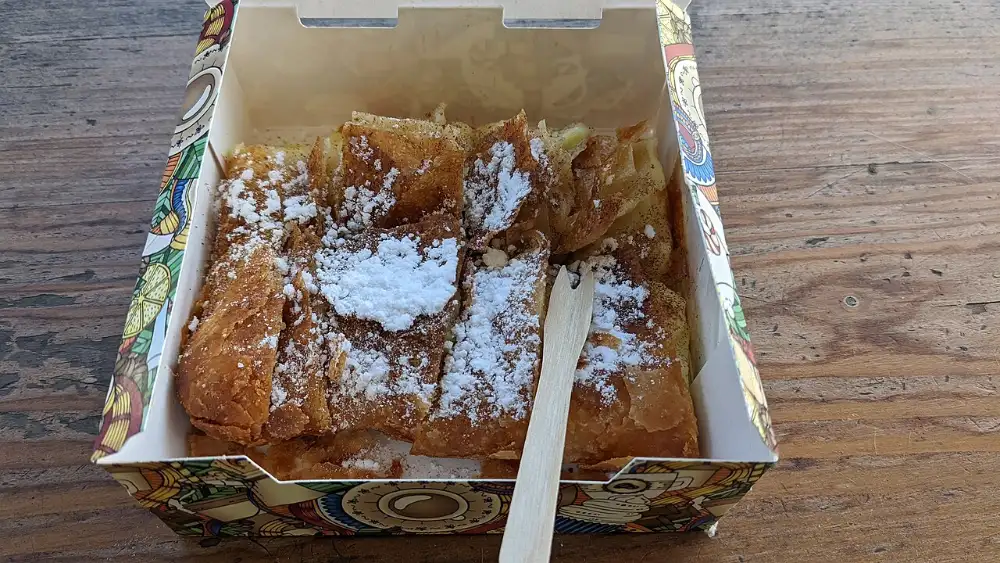
Breakfast is bougatsa, warm filo filled with custard, cheese or minced meat. Bougatsa Giannis and Bantis are the two institutions whose names recur across local guides and traveller forums alike - order at the counter, eat standing, take a side in the argument about which is better. Koulouri, the sesame bread ring, comes off street carts on every second corner, and Terkenlis on Aristotelous is where the city buys its tsoureki.
Mid-morning belongs to the covered markets, a short walk apart in the centre. Kapani is the older, scruffier, more local of the two. The Modiano - built in the 1920s to a design by engineer Eli Modiano and reopened in late 2022 after a full restoration - is the polished one, its stalls now mixing fishmongers and spice sellers with wine bars. Between the two, the streets around Athonos Square hold the ouzeri where a lunch of small plates can quietly absorb three hours.
Then the honest read on Ladadika, because you will end up there. The converted warehouse quarter by the port is genuinely good fun - cobbled lanes, pastel facades, tables spilling everywhere - and genuinely touristy at its core, where the menus come laminated and the prices track the foot traffic. Go once for the setting. For better cooking at better prices, walk a few streets out, or eat uphill in Ano Poli’s neighbourhood tavernas, where the food is the point rather than the backdrop.
After dark the city runs on meze, small shared plates that stretch an evening, which is why nobody here hurries dinner. You do not need a twenty-restaurant list; you need the shapes above and a willingness to follow the fullest tables.
The monuments: one walk from the White Tower to the walls
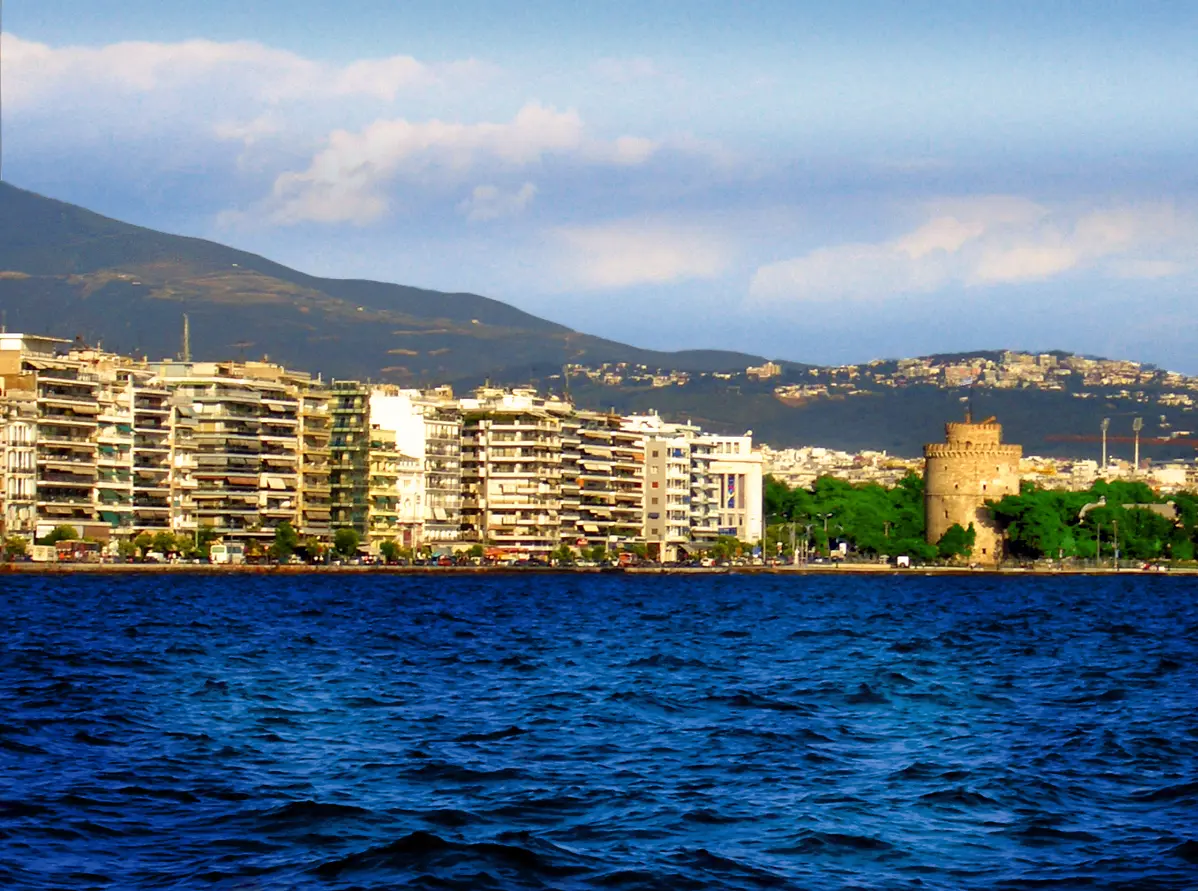
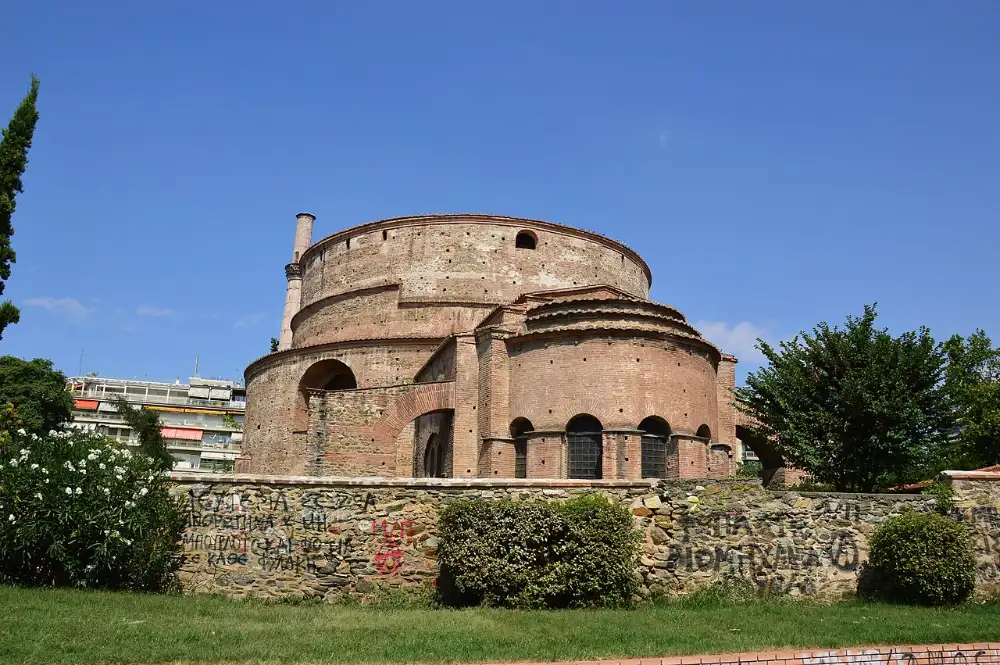
The best places in Thessaloniki line up along a single uphill walk, which is the strongest argument for seeing them as one route instead of a checklist. Start at the White Tower on the waterfront, the Ottoman-era round tower that became the city’s symbol. Head inland and the centuries stack up fast: the Arch of Galerius, carved with the emperor’s Persian campaigns, and the Rotunda beside it, a massive domed hall from the early 4th century that has been temple, church and mosque in turn; then the sunken Roman Forum, the church of Agia Sofia, and Agios Dimitrios, the basilica of the city’s patron saint built over its Roman crypt.
From there, climb into Ano Poli, the upper town that survived the Great Fire of 1917 - lanes of Ottoman-era houses, small Byzantine churches and long views over the roofs. It tops out at the Byzantine walls and the Trigonion Tower, where the whole gulf turns gold at sunset. Walk down afterwards; take bus 23 or a taxi up if the climb puts you off.
One fact worth getting exactly right, because most guides fudge it: the UNESCO World Heritage listing here is the 15 Paleochristian and Byzantine monuments of Thessaloniki - the Rotunda, the walls, Agios Dimitrios and Agia Sofia among them. The White Tower is not one of them; it is Ottoman, later, and a different story.
The layers do not stop at Byzantium either. For more than four centuries this was an Ottoman city, and for most of that time a Sephardic one - “Madre de Israel”, home to one of Europe’s great Jewish communities until the German occupation, when more than 45,000 of the city’s roughly 50,000 Jews were deported to Auschwitz-Birkenau in 1943. The Jewish Museum downtown carries that story, and the city reads differently once you know it.
End back at sea level: the Nea Paralia promenade runs about 3.5 km from the White Tower past the Umbrellas sculpture, and the early-evening volta along it is the city’s real social hour. Tickets, hours and the full list live on the things to do in Thessaloniki page.
Where to stay: the best hotels in Thessaloniki, by neighbourhood
First-timers should stay in the city centre around Aristotelous Square, which puts the monuments, both markets and the waterfront within a ten-minute walk. Pick Ladadika for nightlife, the seafront for gulf views, Ano Poli for atmosphere, Kalamaria for families, and Perea if you want beach mornings and a short airport run.
That is the frame for choosing the best hotels in Thessaloniki: neighbourhood first, property second. The city is compact enough that the wrong hotel costs you character, not kilometres - so here is each base with its honest catch:
- City centre / Aristotelous - the default for a first visit, and rightly so: hotels in Thessaloniki’s city centre sit on top of the monuments, the markets and the cafe streets. The catch is ordinary city noise, and views cost extra.
- Ladadika - food and nightlife on the doorstep, atmosphere by the barrel. Noisy on weekends; light sleepers should look one neighbourhood over.
- The waterfront - along Nikis Avenue toward Nea Paralia, this is the gulf-view premium: sunsets from the balcony, the promenade downstairs. You pay for exactly that.
- Ano Poli - the most atmospheric address in the city, all lanes and old houses above the rooftops. The catch is the hill: a steep walk home, softened by bus 23 or a cheap taxi.
- Kalamaria - the calm seaside suburb about 7 km southeast that local families favour; you trade the commute in for space and quiet, and the metro’s Kalamaria extension is under construction, so check whether it is running when you book. If you are travelling with kids, the family trip guide helps with the wider plan.
- Perea (Peraia) - the seaside strip near SKG. Hotels in Perea trade sightseeing convenience for a beach out front and a ten-minute airport run; a trade-off base for beach-and-flight trips, not for first-time sightseeing.
On properties, the cross-source consensus is unusually stable. The five-star names that keep agreeing across ranking sites, hotel guides and review volume are the Makedonia Palace on the waterfront and the Electra Palace on Aristotelous itself; MonAsty, an Autograph Collection hotel just off the square, is the city’s one Marriott-family property. The design-boutique tier runs The Modernist, The Excelsior and The Met. At the budget end, the well-reviewed level around the Blue Bottle Boutique and The Caravan shows that cheap hotels in Thessaloniki, Greece do not have to mean grim ones. Treat all of these as corroborated starting points rather than gospel, and check prices against your own dates - they swing hard by season.
Match the base to the plan and the decision mostly makes itself: two city days argue for Aristotelous or Ladadika, a Halkidiki-heavy trip argues for Perea, and families do well in Kalamaria. Then go back to the two-day shape above and build the days out from the front door.
Getting in and around: SKG, the new metro, and your feet
Thessaloniki “Makedonia” airport (SKG) sits about 13 km southeast of the centre. The 01X bus runs to the centre in roughly 40-50 minutes through the day, with the 01N covering the night; a taxi takes about 30 minutes on a set airport fare that is higher at night, so confirm the flat rate before you get in.
| Way in | Roughly | Cost | Best for |
|---|---|---|---|
| Bus 01X (01N at night) | ~40-50 min | Single flat fare - check at the stop | Most arrivals |
| Taxi | ~30 min | Set airport fare, higher at night - agree it first | Groups, bags, late nights |
| Rental car | ~30 min | Varies | Only if you are heading straight out of the city |
The metro is the news most guides have not caught up with. Line 1 opened on 30 November 2024 - 13 stations, driverless trains, and a construction saga measured in decades because every metre of tunnel ran through archaeology; several stations display the finds behind glass. A five-station extension southeast to Kalamaria has been under construction, with announced opening dates that have moved, so check the network’s current state rather than a date in print; the airport extension remains a plan, not a line - the metro does not reach SKG. The honest verdict for a visitor: you will still mostly walk. The centre is dense, flat until Ano Poli, and shorter end to end than most metro trips plus stairs.
Arriving from within Greece, the train from Athens takes around four and a half to five hours city centre to city centre, with upgrade works periodically interrupting the line - check Hellenic Train close to your date rather than assuming. Flying in from Europe, SKG’s fares often undercut Athens for a north-first trip; the flights to Greece guide covers how to pick your entry airport. Skip the rental car until the day you leave the city, and for the wider rail-bus-driving picture, see getting around Greece.
The beach question: the city coast is a swim, Halkidiki is the point
Search for the best beaches in Thessaloniki and the honest answer splits in two. The city’s own coast, southeast at Perea, Agia Triada and Epanomi, is where locals swim: sandy, shallow, reachable by bus and in summer by boat across the gulf. It makes a fine afternoon. Epanomi adds the one genuinely memorable sight of the local shore - a half-sunken shipwreck rusting just off the dunes, close enough to swim around - and the water stays swimmable well into October, which locals treat as normal and visitors treat as a rumour.
But the beach day you are picturing - pines to the sand, clear water, room to breathe - starts in Halkidiki, not the suburbs. Kassandra, the nearest of the peninsula’s three fingers, has the organised beach bars from about an hour’s drive; Sithonia, at roughly an hour and a half to two, is quieter and better, with coves like Spathies and the long sweep at Sarti drawing consistent praise from travellers who have compared both fingers.
The trade-off to respect: Halkidiki at that distance is a committed day trip with a car, and it honestly deserves its own nights. If beaches are the core of your trip, build them in as a stay after the city days rather than as repeated commutes from a city hotel.
Day trips north: Meteora by train, Olympus on foot, Vergina underground
Thessaloniki’s hinterland beats any island’s, and each of the big trips has a different transport truth, so take them one by one.
Meteora is the headline: monasteries on rock pillars about 250 km southwest. The rail situation needs current information, not old blog posts: the final rail segment into Kalambaka has been closed for track renewal since the 2023 storms, so the train journey currently means riding the mainline to Paleofarsalos and finishing on a Hellenic Train replacement bus - check what is actually running before you book. By road, tours and drivers do it in about three hours each way. It works as a long day; it is better as an overnight. The full plan - which monasteries, dress codes, timings - lives on the Meteora guide.
Mount Olympus is the real answer to anyone searching for hiking in Thessaloniki - inside the city you get the walls walk and the Seich Sou forest ridge above Ano Poli, which are strolls, not hikes. Litochoro, the trailhead town under Greece’s highest mountain (2,918 m), is about 100 km south. The lower Enipeas gorge trails make a legitimate day trip; the summit does not - it is a two-day mountain with refuge nights, and treating it as a day hike is how rescues happen.
Vergina, ancient Aigai, holds the unlooted royal tombs of Philip II, Alexander’s father, in an underground museum built into the burial mound itself - about an hour and a quarter by car, UNESCO-listed, and by broad agreement the single most striking sight in northern Greece.
One line each for the rest: Edessa’s waterfalls pair with the Pozar thermal springs for a soft spa-and-scenery day; Lake Kerkini is the birdwatching trip, pelicans included; Kavala, around two hours east, is the handsome port town and the stepping stone to Thassos.
Islands near Thessaloniki: two real neighbours, one summer ferry, otherwise fly
| Trip | Time from the city | Best mode | Realistic day trip? |
|---|---|---|---|
| Meteora | ~3 h by road | Tour or car; train + replacement bus during works | A long one; better overnight |
| Mount Olympus (Litochoro) | ~1.5 h | Car, or train to Litochoro | Yes - lower trails only |
| Vergina (Aigai) | ~1.25 h | Car or tour | Easily |
| Halkidiki (Kassandra) | ~1 h+ | Car | Yes, but it deserves nights |
| Kavala | ~2 h | Car or KTEL bus | Yes, on the long side |
Thessaloniki is not an island-hopping base, and pretending otherwise costs you a day of your trip. The honest list of islands near Thessaloniki, in order of practicality:
- Ammouliani - Halkidiki’s only inhabited island, about two hours door to door via the short crossing from Tripiti. The nearest real island beach day.
- Thassos - drive east and take the roughly 35-40-minute Keramoti crossing to Limenas, or the longer sailing from Kavala. Green, low-key, family-shaped.
- Skiathos - a bit over three hours on the seasonal high-speed ferry.
- Skopelos - around four hours on the same service.
- Alonissos - about four and a half hours, the end of the line.
- Everything else - a flight, not a ferry.
Two caveats keep that list honest. The Sporades boat is summer-only, and how often it runs has varied from season to season, so treat the sailing days as something to check rather than assume; outside the season there is no boat at all. And durations shift with the vessel, so confirm against Seajets or Ferryhopper when you book. The Sporades guide covers what is waiting at the other end - yes, the Mamma Mia one - and the Greek island ferries guide explains how the booking mechanics work.
For the Cyclades, fly. SKG has seasonal direct flights to Santorini, Mykonos, Rhodes, Milos, Paros and more, several on Sky Express - which, usefully, does not always show up on the big flight aggregators, so check the airline’s own site before concluding a route does not exist. If your trip is really about the Cyclades, fly from SKG or route through Athens; do not force a ferry from here. Day cruises out into the gulf exist too, but they belong with the city’s activities, not with the islands plan.
When to visit: a year-round city with a real winter
May-June and September-October are the recommendation: warm days, a sea still swimmable late into the season, and a city not yet - or no longer - in the sticky part of its summer. July and August run hot and humid on the gulf; the city still functions, but afternoons push everyone toward the water.
The differentiator is what happens after October. Unlike the islands, Thessaloniki does not close: the International Film Festival takes over the city each late autumn, Greece’s biggest student population keeps the bars and tavernas loud through winter, and the food culture was built for indoor evenings anyway. It is the rare Greek destination where a February visit is a real trip rather than an off-season compromise.
Just pack for the north. This is the continental corner of Greece: coat weather arrives by November and winter nights sit near freezing - a different country from a mild Cretan January. The month-by-month weather guide holds the numbers, and best time to visit Greece sets the city against the islands if you are still choosing dates.
Plan the northern leg
Thessaloniki works best as the anchor of a northern route: two city days built around the meals, one day trip - Meteora if you can stretch it to an overnight - then onward by train or a short flight. It suits food-led city-breakers first, and it works for families too: distances are short, the waterfront is flat, and the food is unfussy. The pattern to hold on to is the one this page opened with - the city is the destination, the north is the reason to stay longer, and the islands are a flight.
From here, go where the depth is: the full sights list with hours and tickets on the Thessaloniki attractions page, the monastery plan on the Meteora guide, and the whole route assembled on the itineraries page, including how a northern leg fits against an island week. See the route north, then build it piece by piece.
Frequently asked questions
How many days do you need in Thessaloniki?
Two focused days cover the monument core, the markets and food streets, and the waterfront. Add a third for one trip north - Meteora, Mount Olympus or a Halkidiki beach day. Guides that recommend three or four days are really counting those day trips inside the total.
Is Thessaloniki worth visiting?
Yes - if food and layered history rank above postcard views for you. It is Greece’s eating capital, holds 15 UNESCO-listed Paleochristian and Byzantine monuments, and unlike the islands it works year-round. Skip it only if your whole trip is beach-first island time; it will not out-beach the Cyclades.
Where should you stay in Thessaloniki?
First-timers should base in the city centre around Aristotelous Square, within a ten-minute walk of the monuments and markets. Pick Ladadika for nightlife, the waterfront for gulf views, Ano Poli for atmosphere, Kalamaria for families, and Perea if you want a beach base with a quick airport run.
What islands are near Thessaloniki?
Ammouliani, off Halkidiki, is the closest at roughly two hours door to door; Thassos follows via the short Keramoti crossing. Skiathos, Skopelos and Alonissos run about three to four and a half hours on summer-only ferries. For the Cyclades, fly from SKG instead. The Sporades guide has the detail.
How do you get from Thessaloniki airport to the city centre?
The 01X bus runs from SKG to the centre in about 40-50 minutes, with the 01N covering the night, and a taxi takes roughly half an hour on a fixed fare. The airport sits about 13 km southeast. The metro does not reach the airport - check the network’s status when you travel.
Can you do Meteora as a day trip from Thessaloniki?
Yes, but it is a long day: about 250 km each way, roughly three hours by road with a tour or car. The train currently involves a rail-replacement bus beyond Paleofarsalos while track renewal continues, so check Hellenic Train before booking. An overnight in Kalambaka is the calmer plan - the Meteora guide explains how.
Is Thessaloniki good for families?
Yes. The flat waterfront promenade, boat rides on the gulf and easy beach days at Perea or Halkidiki make it workable with kids, distances are short, and the food is unfussy. Kalamaria is the calm seaside base local families favour. The family trip guide covers the wider Greece planning.
Does Thessaloniki have good beaches?
The city has swimmable suburban beaches southeast at Perea, Agia Triada and Epanomi - fine for an afternoon, with Epanomi’s half-sunken shipwreck the memorable one. The beaches worth planning a trip around are in Halkidiki, from about an hour’s drive to Kassandra and up to two for Sithonia’s coves.
Plan by category
The Thessaloniki guides
5 guides, each scoped to a decision you actually have to make.
 Attractions
Things to do
See the attractions →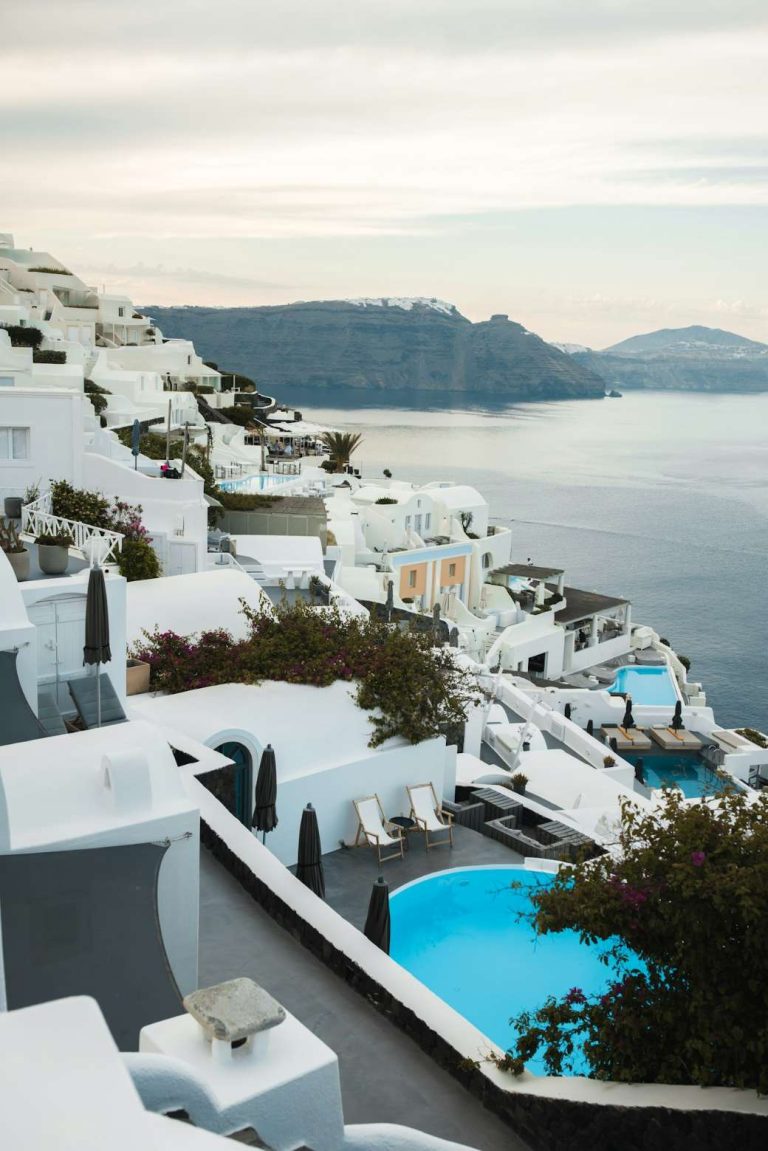 Hotels
Where to stay
Compare the areas →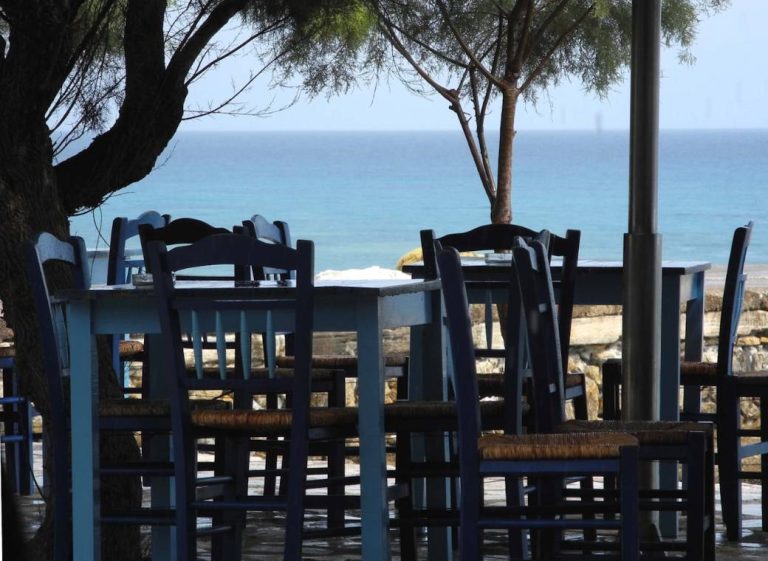 Restaurants
Where to eat
See where to eat →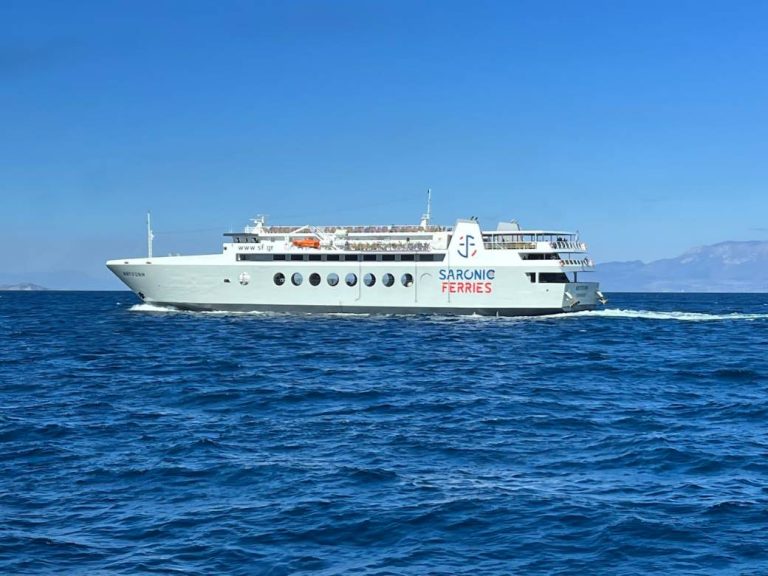 Itinerary
Day by day
See the itinerary →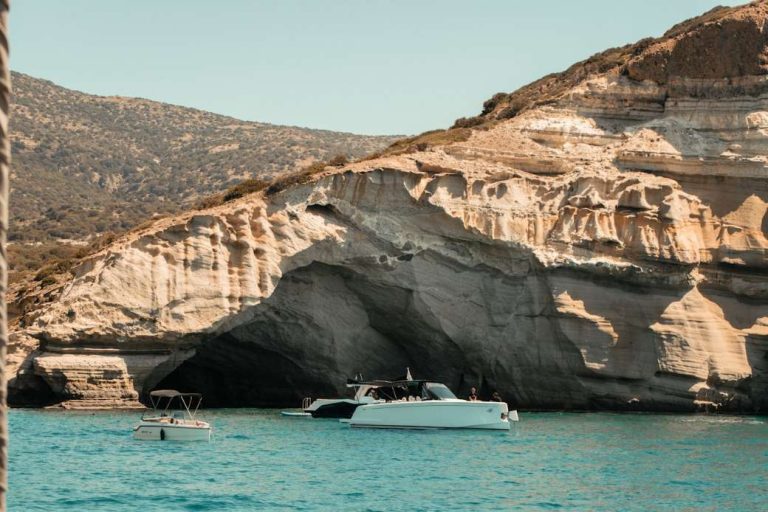 Day trips
Day trips
See the day trips →
Booking
We sell nothing and book nothing for you. Every guide on this page tells you how to arrange each piece yourself - which ferry operator, when to book, what to prebook and what to leave loose.