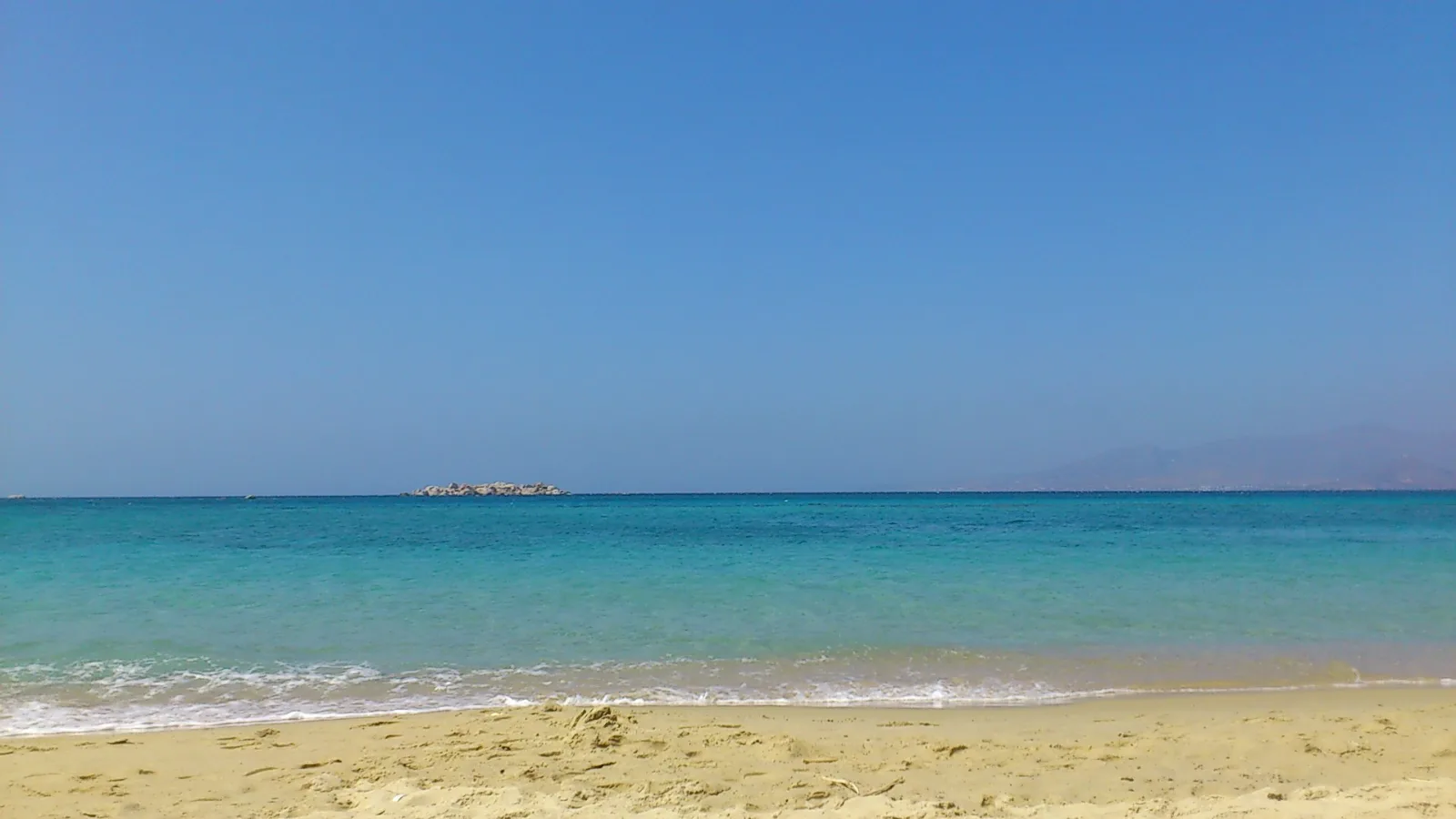
It begins where Agia Anna ends and runs south behind a line of sand dunes for roughly four kilometres, which makes it one of the longest beaches on the island and the reason people who dislike crowded sand come here at all.
What four kilometres of sand actually buys you
Length changes how a beach behaves under pressure. A small cove fills, and then it is full. A beach this long absorbs an August crowd at its access points and stays open in between, so how busy your patch is depends on how far you walk, not on what day it is.
Ten minutes on foot from the nearest parking usually changes the character of an afternoon. Twenty puts you somewhere you can hear the water.
The sand is pale and fine underfoot, the seabed is sand rather than rock, and the shore shelves gently along most of its length, which is the same profile that runs up the whole west coast. The beach faces west, so the afternoon light is the good light here and the sun goes down over the water in front of you.
The dunes, and the end where clothes come off
The dunes are the defining feature here. They sit between the sand and the road, they are held together by low scrub, and they are what keeps the back of this beach undeveloped while the beach itself is busy. Carry on south past Kastraki and the same dune system runs into the cedar woods near Alyko.
Naturism happens at the southern end. That is how it has been for decades, and it stays in the far stretches rather than spreading along the beach. One qualifier that most write-ups skip: we have found no official naturist designation for any beach on Naxos, so read this as practice rather than rule. Walk south far enough and you will reach it. Stay up at the northern end and it will not come to you.
Organised at the top, thinning as you walk
The northern end, nearest Agia Anna, is the developed one: sunbeds and umbrellas in rows, with low-key beach bars and tavernas set back behind the dunes. It is a gentler version of what you get at Agios Prokopios, with more space between the businesses.
Walk south and the umbrella rows break into clusters around the access tracks, and then into long stretches with nothing on them but sand. That is the point of the place, and also the thing to plan for. The dunes are low scrub, so shade is something you bring, and the further you walk the further you are from a cold drink.
Wind is the other planning item. The meltemi runs along this coast in high summer rather than straight into it, but Plaka is open along its whole length and the dunes sit behind you rather than in front. A windy day here is a sand-blasted day, and the sheltered corners are back up at the town end of the coast. That whole gradient is set out in the best beaches in Naxos.
Who it suits
Come for space, a long walk with the sea on one side, and an evening swim after the day crowd has packed up. It is the stretch couples on Naxos tend to settle on, and it is part of why the island holds its own among the quietest Greek islands even when the Chora is busy.
Choose differently if you want everything within reach of your towel, or if the walk between car and water is a problem for anyone in your group. That version of this coast is a few kilometres north. If you are weighing this island against its neighbour, this beach is a large part of the case in Naxos or Paros. The Naxos guide puts the coast in the context of a whole trip.
The booking that matters here is the accommodation behind this stretch in the peak weeks, and the ferry across.
Last checked July 2026. No price, timetable, water temperature or distance in minutes appears on this page by design.