Zagori
Things to do in Zagori
Zagori is a region rather than a place: forty-six villages scattered across the Pindus mountains north of Ioannina, built of grey stone with slate roofs, connected by cobbled paths and arched bridges. It looks nothing like the rest of Greece, and it is the best walking country in the country. Everything below assumes you have a car, because the region is spread across mountain roads.
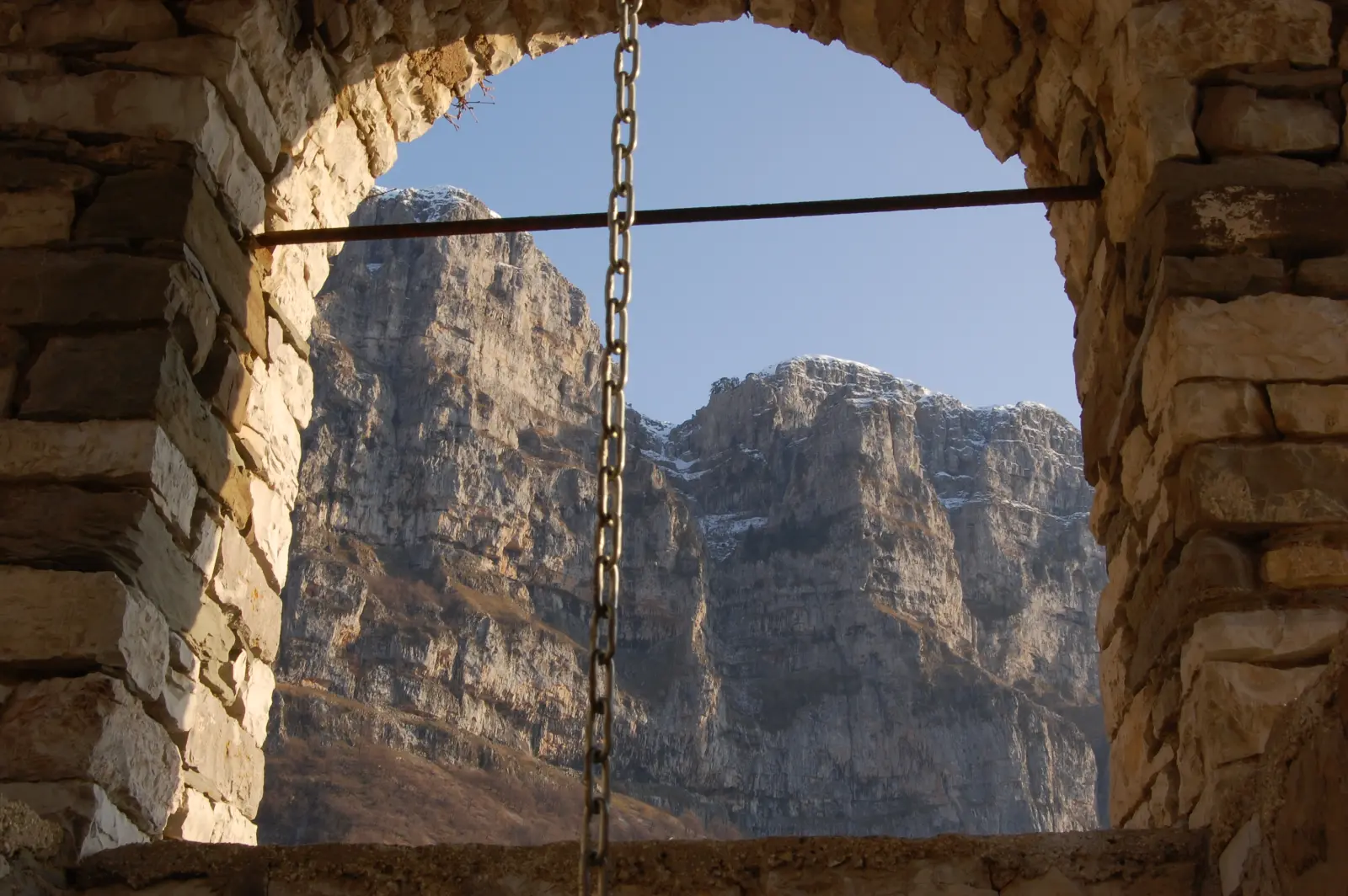
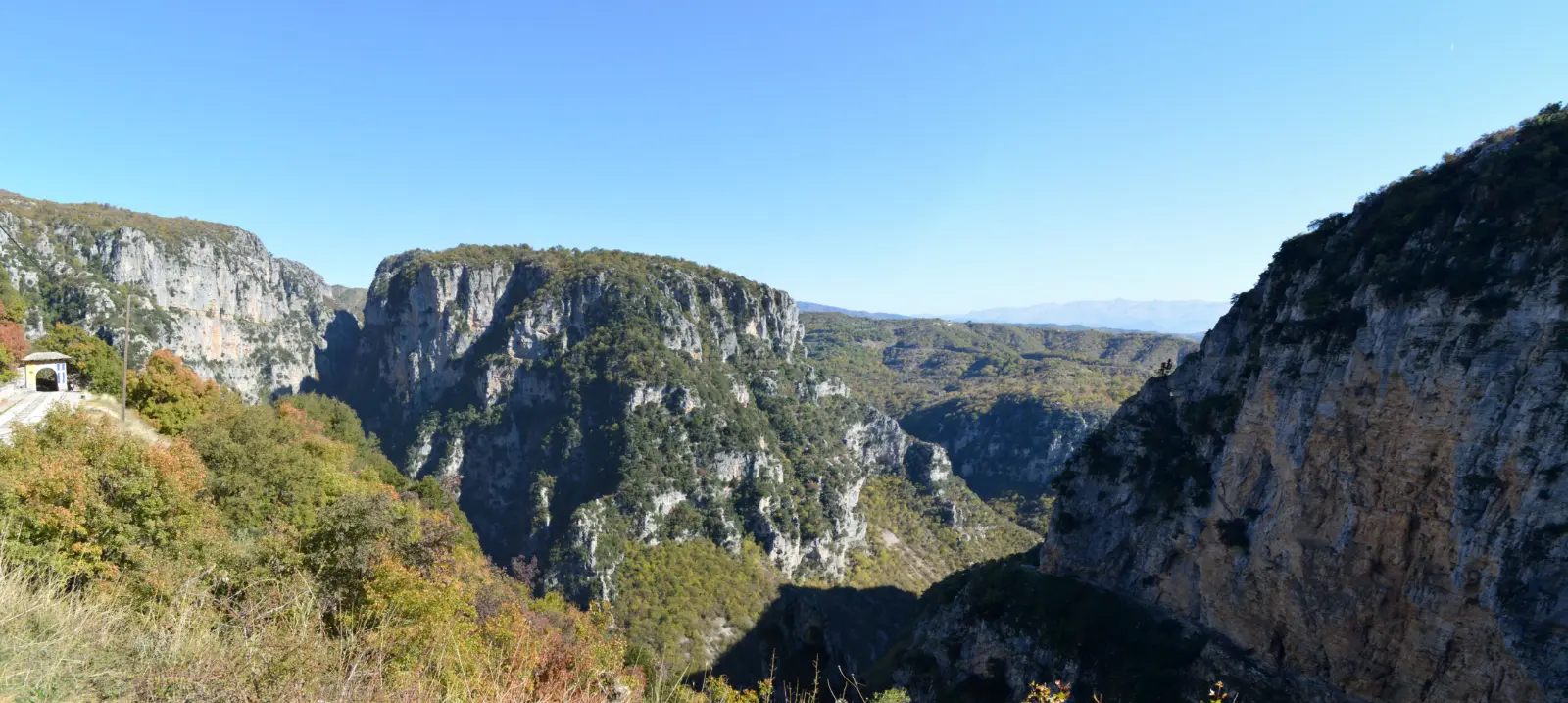
The Vikos gorge, and the two ways to meet it. A limestone canyon cuts through the middle of the region, and its depth relative to its width has it cited as one of the deepest in the world. The river at the bottom runs dry for much of the year and appears again at the springs of Voidomatis, which is the coldest water most visitors will ever swim in.
The viewpoints, which anyone can do. Oxya and Beloi, above the villages of Monodendri and Vradeto, both look straight down into the gorge, and both are short walks from parking. If you have one afternoon and no appetite for a mountain day, this is how you see it.
The through-walk, which is not a stroll. Monodendri to Vikos village, roughly six hours across rough ground with a serious descent and ascent. It is a mountain route, and people are helicoptered out of it every season. We describe the ground rather than certify it: this is remote terrain with no phone signal in the bottom of the canyon. Decide accordingly, and read hiking in Greece before you commit to it.
The villages, and the fact that all of them are worth an hour. Papingo and Mikro Papingo, under the Astraka towers, are the best known and the busiest. Monodendri, Vitsa, Dilofo, Kapesovo, Vradeto and Tsepelovo are the others people name. The pleasure of Zagori is not picking the right one; it is that you can stop anywhere and be glad you did.
The kalderimia and the bridges. Between the villages run the old stone-paved mule paths, and the stone bridges that are the region’s emblem: single, double and triple-arched packhorse bridges built by emigrant benefactors, several within a short walk of the road. That last clause is the useful one, because it means the bridges are available to anyone, not only to walkers.
The Vradeto steps, which are the best piece of engineering here. A zigzag stone staircase up a cliff that was the only way into that village until the 1970s. Standing at the bottom of it and understanding that this was the road is worth the drive on its own.
What the region asks of you. A car is essential, the roads are narrow and winding, and in winter they can be snowbound. Three nights minimum, and people who walk stay a week. Zagori is reached from Ioannina, half an hour to the nearest villages and more to the far ones. Our Zagori guide has the practicalities and where to stay covers which village to base in.