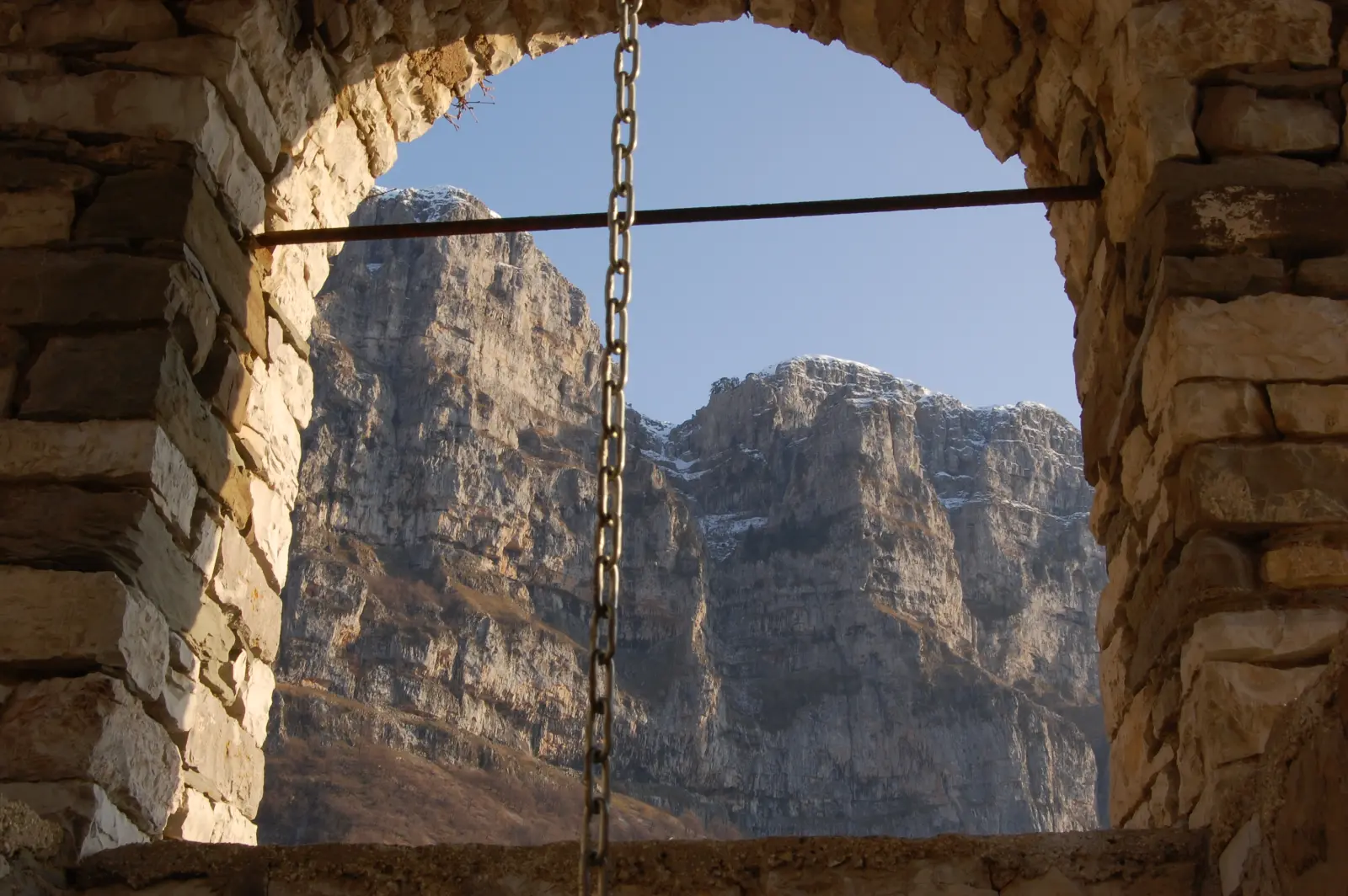
Papingo and Mikro Papingo, under the Astraka towers, are the best known and the busiest of Zagori’s villages.

Diagram by Greece Trips. Free to reuse with credit - CC BY 4.0.
Why these two and not the other forty-four
Zagori is forty-six stone villages in the mountains of Epirus, linked by slate paths and arched packhorse bridges. Most visitors see three or four.
The Papingo pair get the attention because of what stands over them: the Astraka towers. That is also why they are the busiest, which is worth knowing if quiet is what you came to the mountains for - Monodendri, Vitsa and Dilofo are the other names our guide points at.
What the stone actually is
The villages here are built of the local grey stone with slate roofs, and the paths between them are the old packhorse network rather than modern trails. It looks nothing like the rest of Greece - no whitewash, no bougainvillea, no sea.
That contrast is the reason to come, and it is why Zagori reads as a different country from the islands most Greece itineraries are built around.
The walking
This is the best walking country in Greece, and the Papingo end is where a lot of it starts.
The Vikos gorge is the headline: a limestone canyon cited as one of the deepest in the world by depth against width. Its viewpoints - Oxya and Beloi, above Monodendri and Vradeto - are short walks from parking. Its through-walk is a mountain route, not a stroll, and the gorge page carries that warning properly.
Nothing here rates a route for you. Take local advice on the ground rather than a travel page, and read hiking in Greece before you commit to anything.
Practical notes
Ioannina is the gateway. It is the natural base for Zagori, with an airport and domestic flights, and the Egnatia motorway putting it about four and a half hours from Thessaloniki. Our Ioannina guide has the city; many people use it for a night either side of the mountains.
A car. These are mountain villages linked by roads that were paths first. Plan on driving.
The season is the mountain season, not the beach one - spring and autumn rather than August.
Common questions
Papingo or Mikro Papingo? They are minutes apart and most visits take both. Mikro is the smaller and quieter of the two.
Is it a good base for the gorge? It is the northern end of that country. Monodendri is the end most through-walks start from - check which end suits the walk you actually intend.
Is it quiet? Less than the rest of Zagori. Our own guide calls these two the busiest of the forty-six, and that is the trade for the setting.
Next
Our Zagori guide has the villages, the Vikos gorge has the canyon, and things to do in Zagori covers the area.