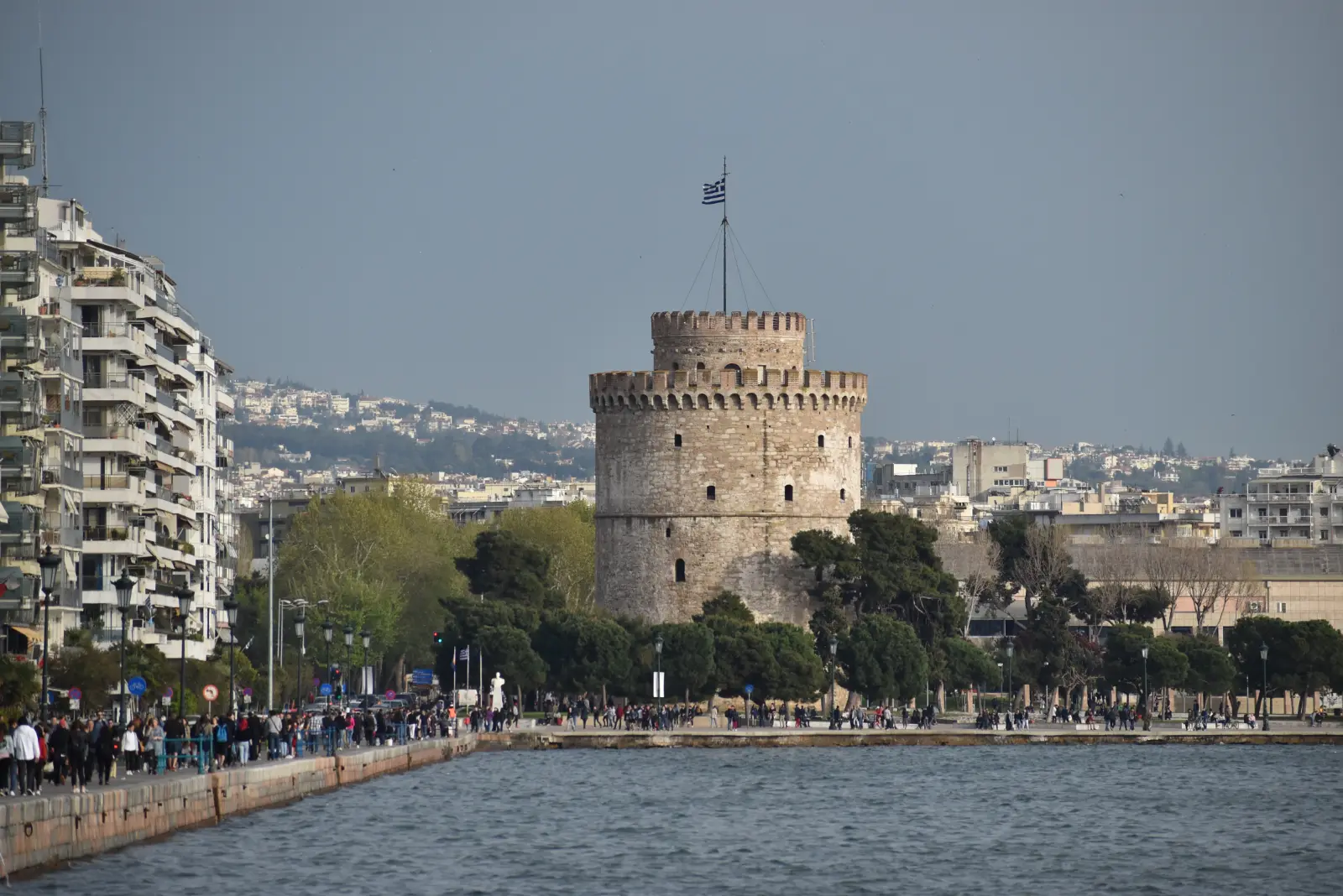
What it is
an Ottoman-era tower on the Thessaloniki waterfront, now the museum of the city
Built
in the fifteenth century, after the fall of Thessaloniki to the Ottomans in 1430
Earlier names
the Tower of the Janissaries, and the Tower of Blood (Kanle Kule), when it was a prison and a place of execution
The name
painted white and renamed Beyaz Kule in 1883 on the orders of Sultan Abdul Hamid II. The whitewashing was done by a convict, Nathan Guiledi, in exchange for his freedom
Inside
a permanent exhibition on Thessaloniki from its founding in 316 or 315 BC to the present, over six floors plus the terrace
Visitor limit
a maximum of 70 people inside at a time, to maintain stable climatic conditions
Facilities
the museum states it has no toilets, no snack bar, no cloakroom and no baggage storage, because of the space
Audio tour
available in four languages
Accessibility
the museum offers a virtual tour at information stations on the ground floor for visitors with limited mobility. Contact the museum for current arrangements
How long
about an hour. Our estimate; no authority publishes one
Tickets and hours
set and published by the Hellenic Ministry of Culture. Deliberately not reprinted here
Travel details last checked July 2026.
Inside is not a museum about the tower. It is the museum of the city: a permanent exhibition covering Thessaloniki from its founding in 316 or 315 BC to the present day, spread over six floors and the terrace above them.
That is the thing worth knowing before you decide whether to queue. You are not paying to go up a tower. You are paying for the city’s own account of itself, in the building that has watched most of it happen.
What the tower was before it was white
The building is fifteenth-century, and it went up after the fall of Thessaloniki to the Ottomans in 1430. That is the museum’s own dating of its own building.
It has not always been called the White Tower, and the museum publishes the earlier names rather than hiding them. In the nineteenth century it carried two, depending on what it was being used for: the Tower of the Janissaries, when the Janissary garrison was stationed in it, and the Tower of Blood, Kanle Kule, when it served as a prison and a place of execution.
The museum also records that in 1826, on the order of Sultan Mahmud II, rebellious Janissaries held in the tower were killed there.
That is the history, and we report it and move on rather than making an attraction of it. What matters for a visit is what it explains: this is a fortification that spent centuries being used for the least attractive things a fortification is used for, and it is now the place where the city keeps its own memory.
Then the name. In 1883, on the orders of Sultan Abdul Hamid II, the tower was painted white and given the name Beyaz Kule, the White Tower. The museum adds the detail that makes the story stick: the whitewashing was done by a convict, Nathan Guiledi, in exchange for his freedom.
So the building’s name is a rebranding. A prison was painted a new colour and given a new word, and the word is what the city now puts on its postcards.
The tower’s twentieth century is quieter and it is the part that turns a fortification into a monument. The museum’s history continues through the First World War and through the incorporation of Thessaloniki into Greece in 1912, after which the building stopped being a working piece of military and penal infrastructure and started being the thing at the end of the promenade. Every use it has had since is a use somebody chose for a building that had run out of jobs.
There is a reason the exhibition inside begins where it does. Thessaloniki was founded in 316 or 315 BC and has been lived in continuously ever since, which is a longer unbroken run than most European cities can claim and a great deal longer than the tower has stood. Putting the city’s whole span inside a fifteenth-century Ottoman tower is a deliberate piece of framing: the container is one chapter of the story it holds.
Six floors, one city, and a spiral
Inside, the exhibition works upward, and the structure of the building does the sequencing for you.
The ground floor sets space and time: where Thessaloniki is, and how long it has been there. The floors above it take the city’s transformations, its monuments, its people, its commerce, its cultural life and its food, one theme at a time. It is a small museum by floor area and a dense one by subject, which is the correct trade in a building this shape.
The circulation is the memorable part. A spiral ramp runs within the thickness of the wall, and some of the embrasures in the outer wall are reached from it while others open off the central room on each floor. Walking up inside a wall is an odd sensation and it is a large part of why people remember this visit.
At the top is the terrace, and the terrace is the reason to be patient with the rest. You come out above the waterfront with the bay on one side and the city climbing behind you toward the upper town. It is the view Thessaloniki is arranged around, and there is nowhere else in the centre that gives it to you.
Give the whole thing an hour. That is our estimate from the size of the building rather than a published figure, and it holds if you climb steadily and read some but not all of the panels.
The seventy, and why the queue is outside
Here is the practical fact that no competing page prints, and it will shape your visit more than anything else on this page.
The museum limits the number of people inside at any one time to a maximum of seventy, because the monument’s confined space means visitor numbers have to be kept down to maintain stable climatic conditions.
Seventy is not many for a building on the busiest stretch of promenade in northern Greece. What it means in practice is that the tower admits in flows rather than continuously, and that a queue outside is not a sign of chaos, it is the system working. It also means the arrival time you choose matters more here than at a large museum, where a crowd disperses across the floors. Come early, or come toward the end of the day, and the number does the rest.
The museum publishes an audio tour in four languages, which is worth taking: the exhibition is thematic rather than chronological and the audio is what holds it together.
And a piece of logistics the museum states about itself, which is unusually candid and worth planning around. Because of the space, the tower has no toilets, no snack bar, no cloakroom and no baggage storage. Arrive having dealt with all four. Luggage storage and transfers covers what to do with bags on a day when your hotel is not available.
On accessibility, we will quote the museum rather than characterise the building. It states that visitors with limited mobility can take a virtual tour of the museum at information stations on the ground floor. That is the provision it publishes, and it tells you a good deal about the interior of a fifteenth-century fortification. We do not grade the ramp or the stairs: what a particular person can manage on a particular surface is not a judgment this page is in a position to issue, and the museum itself is the place to ask about current arrangements. Accessibility in Greece is the wider guide.
We print no admission price, no opening hours and no closed days. They are set and revised by the Hellenic Ministry of Culture, and public holidays and what closes covers the days on which Greek state museums do something different.
Admission is sold at the tower and through the Ministry’s own e-ticketing arrangements. We sell nothing here and take no commission. With a seventy-person cap on the building, the time you arrive is the thing worth planning.
Where it sits, and what to do around it
The tower stands at the eastern end of the waterfront promenade, which is the single best thing about Thessaloniki as a city to walk in.
That geography is most of the case for visiting. The promenade runs from the port along the bay, and the tower is the point everyone walks to, so the visit slots into a walk you were going to take anyway. The bay is on your right the whole way and the sunset over the water is the city’s standing evening event.
Behind the tower the city rises, and the upper town with the Byzantine walls sits at the top of that rise. Seeing the layout from the terrace first and then walking into it is the right order, and it makes the shape of Thessaloniki obvious in a way that no map does.
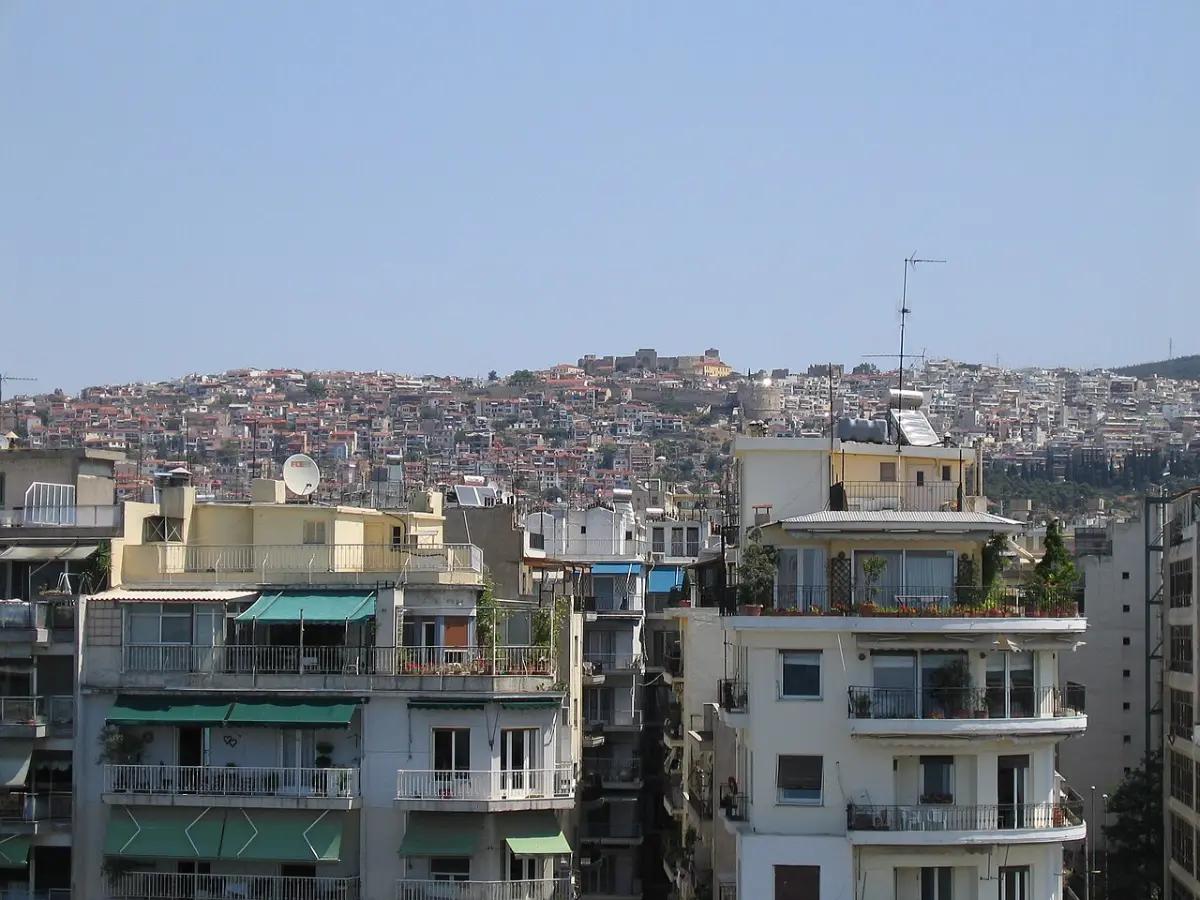
The other thing the promenade gives you is the city’s food culture at close range, and Thessaloniki takes that seriously enough that it is a reason to come rather than a thing that happens while you are there. Greek food and drink is the wider guide.
For the rest of the city, the Thessaloniki hub sets out how it fits together, and getting around Greece covers arriving from Athens or the islands.
Is it worth going in?
Yes, on one condition: go in for the city rather than for the tower.
If what you want is a fortification to explore, this is a modest one and you will be through it in under an hour. If what you want is an hour’s grounding in a city with an unusually complicated past, delivered in the building that stood through most of it and finishing on a terrace over the bay, it is the best hour in central Thessaloniki.
The disappointment people report is almost always a mismatch of expectation: they queued for a tower and got a museum. Knowing what is inside converts the same visit into a good one.
Go early against the seventy, take the audio guide, walk up the ramp rather than hurrying it, and give the terrace ten minutes before you come down.
Last checked July 2026. What we re-read before every update: the museum’s own history page and its published visitor information, including the seventy-visitor limit and its statements about facilities and accessibility. How we date and check facts is set out in our editorial policy.
Common questions
What is inside the White Tower of Thessaloniki?
The museum of the city. The tower houses a permanent exhibition covering Thessaloniki from its founding in 316 or 315 BC to the present day, arranged thematically over six floors: space and time on the ground floor, then the city’s transformations, its monuments, its people, its commerce, its cultural life and its food. At the top is a terrace with a view over the bay and back across the city.
Why is it called the White Tower?
Because it was painted white in 1883, on the orders of Sultan Abdul Hamid II, and given the name Beyaz Kule. The museum adds that the whitewashing was carried out by a convict, Nathan Guiledi, in exchange for his freedom. The name is a rebranding: the building had previously been known by names tied to what it was being used for at the time.
What was the White Tower before?
An Ottoman fortification, built in the fifteenth century after the fall of Thessaloniki to the Ottomans in 1430. In the nineteenth century the museum records two names for it depending on its use: the Tower of the Janissaries when the Janissary garrison was stationed there, and the Tower of Blood, Kanle Kule, when it served as a prison and a place of execution. It records that in 1826 Janissaries held in the tower were killed there on the Sultan’s order.
How long do you need at the White Tower?
About an hour. That covers a steady climb through the six thematic floors, a reasonable amount of reading, and ten minutes on the terrace at the top. That is our estimate from the size of the building rather than a published figure. It is a dense small museum rather than a large one, so the hour is spent reading rather than walking.
Why is there a queue outside the White Tower?
Because the museum limits the number of visitors inside at any one time to a maximum of seventy, since the monument’s confined space requires stable climatic conditions to be maintained. The tower therefore admits people in flows rather than continuously, and a queue on the pavement is the system working rather than failing. Arriving early or late in the day is the practical answer.
Are there toilets in the White Tower?
The museum states that because of the limited space the tower has no toilets, no snack bar, no cloakroom and no baggage storage. That is its own published information, and it is worth planning around before you join the queue rather than after. Deal with all four on the promenade, which is well provided for.
Is the White Tower accessible?
The museum states that visitors with limited mobility can take a virtual tour of the museum at information stations on the ground floor. That is the provision it publishes for a fifteenth-century fortification with a spiral ramp and six floors. We do not grade the interior ourselves. If this decides your visit, contact the museum directly, because its staff know the current arrangements and no travel page does.
Is the White Tower worth visiting?
Yes, provided you go in for the city rather than for the building. As a fortification it is modest. As an hour on the history of Thessaloniki, in the structure that stood through most of it, ending on a terrace above the bay, it is the best single hour in the centre. Most reported disappointment is people who queued expecting a castle.
Booking
We sell nothing and book nothing for you. Every guide on this page tells you how to arrange each piece yourself - which ferry operator, when to book, what to prebook and what to leave loose.