The short answer
From Piraeus, the crossing to Naxos runs 3h20 to 4h20 on a high-speed boat and about 5 to 5.5 hours on a conventional ferry. Naxos also has a small airport, JNX, roughly 40 to 45 minutes from Athens.
Naxos is the largest of the Cyclades and the most self-sufficient - it grows its own food, it has mountains and a real interior, and it is markedly cheaper than the islands either side of it. That makes the longer crossing a better trade than it looks on paper.
Sail if you are staying more than a couple of nights, or hopping onward. Fly if the trip is short and the small schedule happens to fit it.
Athens to Naxos at a glance
Fast boat or conventional, and why the slow one is tempting here
| What you’re deciding | By ferry | By plane |
|---|---|---|
| Journey time | 3h20–4h20 high-speed, ~5–5.5h conventional | ~40–45 min in the air |
| Leaves from | Piraeus mainly; Rafina seasonally | Athens airport (ATH) |
| Carries a car | Conventional ferries | No |
| Arrives at | Naxos town (Chora), by the Portara | JNX, a small airport |
| Best for | Most trips | Short stays, tight schedules |
The gap between the two classes is about ninety minutes on this route: 3h20 to 4h20 fast against five hours or so slow.
High-speed is enclosed, pricier, and the first service cancelled when the meltemi blows. Conventional is cheaper, steadier, has open decks and carries cars.
Five hours sounds like a lot until you consider what it is five hours of. A conventional ferry across the Cyclades in decent weather, on the open deck, watching islands come and go, is one of the genuinely good parts of a Greek trip rather than a cost to be minimised. If you are not on a tight schedule, this is a crossing worth taking slowly.
If you are on a tight schedule, the fast boat exists and works - just remember it is the one that stops first in a strong wind. See when a ferry is cancelled.
Which port
Mainly Piraeus, with Rafina sailings seasonally.
Coming from Athens airport, check whether a Rafina departure runs on your dates: Rafina is about 25 km from the airport with no city crossing, while Piraeus means transiting Athens. Staying in the city, Piraeus is on the metro and is the obvious choice.
Piraeus is a large working port with numbered gates E1 to E12 spread along a long waterfront - find your gate before your taxi. The Greek island ferries guide has the full picture.
Arriving under the Portara
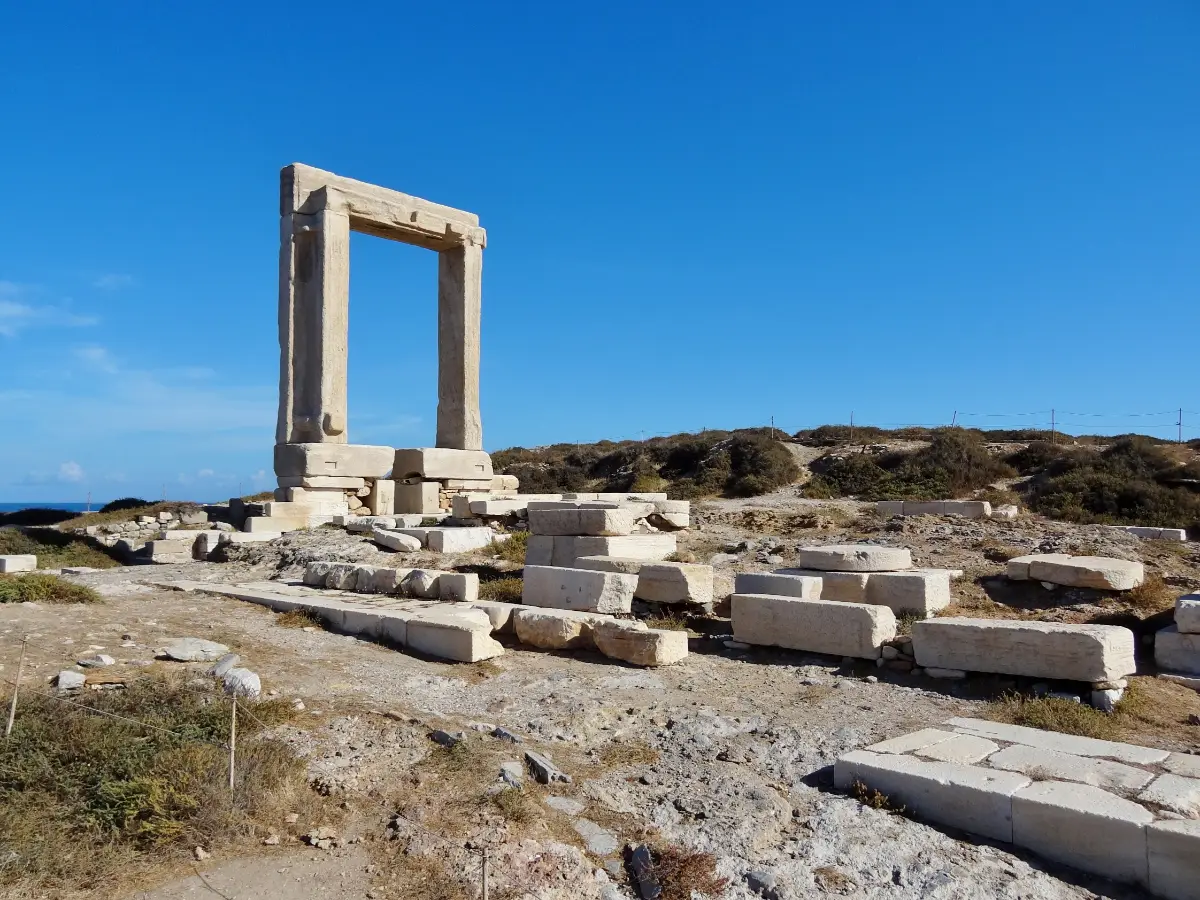
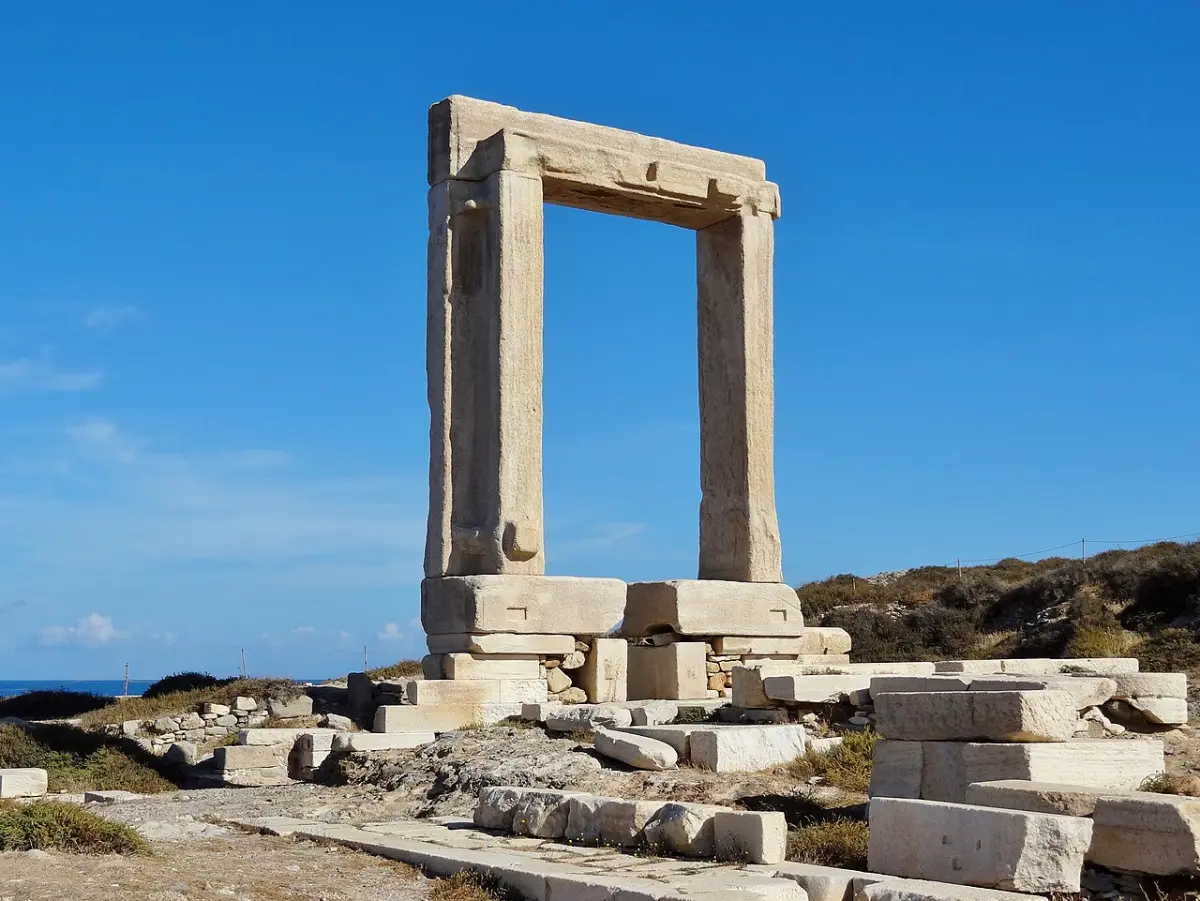
Ferries dock at Naxos town, and the arrival is one of the best in the Cyclades. The Portara - a huge freestanding marble doorway, all that was finished of a temple to Apollo - stands on the islet of Palatia right at the harbour mouth. It is the first thing you see coming in.
The port is in the town. You walk off the boat into the old town’s edge, with the Kastro rising behind it. No cliff road, no transfer required to reach civilisation.
Why people stay longer on Naxos than they planned
This matters for the route decision, because it changes how long you want on the island and therefore whether the crossing is worth it.
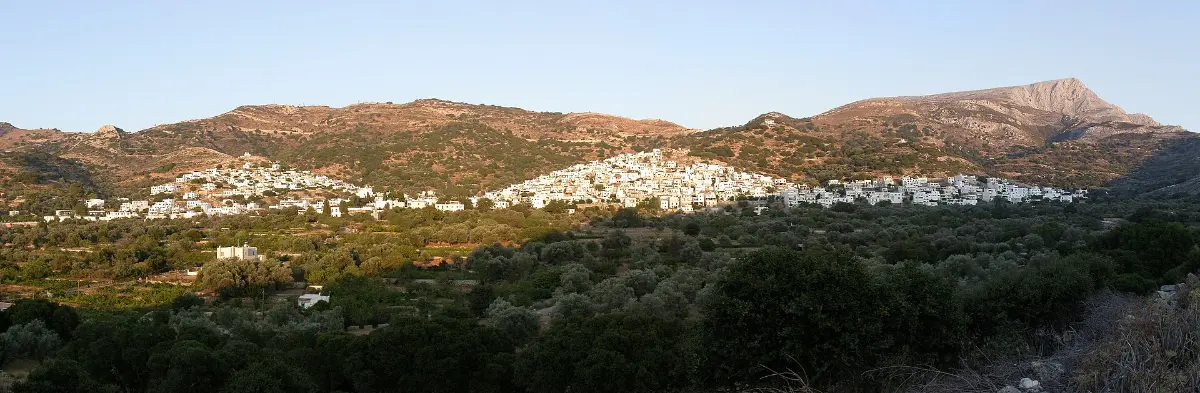
Naxos is big. It has an interior - mountain villages, Mount Zas, marble quarries with unfinished kouroi lying where they cracked - and a west coast of long sandy beaches that shelve gently enough for small children. It grows things: potatoes, citrus, cheese. That agricultural base is why it is cheaper than its neighbours and why it feels less dependent on you being there.
The practical upshot: two nights on Naxos is a waste of the crossing. Four or five is where it starts to pay. If your trip only has room for two nights, Paros is the easier call.
As part of a route
Naxos sits in the middle of the Cyclades, one short hop from Paros and directly connected south to Santorini - a crossing of about two hours on a conventional boat, or roughly an hour and a half on a direct high-speed one.
That makes the classic first-timer’s route obvious: Athens → Paros or Naxos → Santorini, flying home from the far end rather than sailing back. The method is in the island hopping guide.
Deciding between the two middle islands? Naxos vs Paros. Wondering whether to skip the famous one? Santorini vs Naxos.

Diagram by Greece Trips. Free to reuse with credit - CC BY 4.0.
Frequently asked questions
How long is the ferry from Athens to Naxos?
3h20 to 4h20 on a high-speed boat, and about 5 to 5.5 hours on a conventional ferry, from Piraeus.
Is there an airport on Naxos?
Yes - JNX, roughly 40 to 45 minutes from Athens. It is a small airport with a limited schedule, so check what is operating on your dates.
How long is the ferry from Naxos to Santorini?
About two hours on a conventional ferry, and roughly an hour and a half on a direct high-speed service.
Which Athens port do Naxos ferries leave from?
Mainly Piraeus, with some Rafina departures seasonally. Rafina is far closer to Athens airport; Piraeus is far closer to central Athens and is on the metro.
How many nights do you need on Naxos?
More than two. Naxos is the largest of the Cyclades with a real mountain interior as well as a beach coast, and a two-night stop wastes both the island and the crossing. Four or five nights is where it starts to earn its place.
Where does the ferry arrive on Naxos?
In Naxos town, right by the Portara at the harbour mouth. The port is in the town, so there is no transfer needed to reach anywhere.
Next
Read the Naxos travel guide, compare the neighbours in Naxos vs Paros, or plan the run with the island hopping guide.