Patmos
Things to do in Patmos
Patmos holds one of the most significant religious sites in the Aegean, and visiting it well is mostly a matter of understanding two things: that it is one site in two places, and that its hours decide your day.
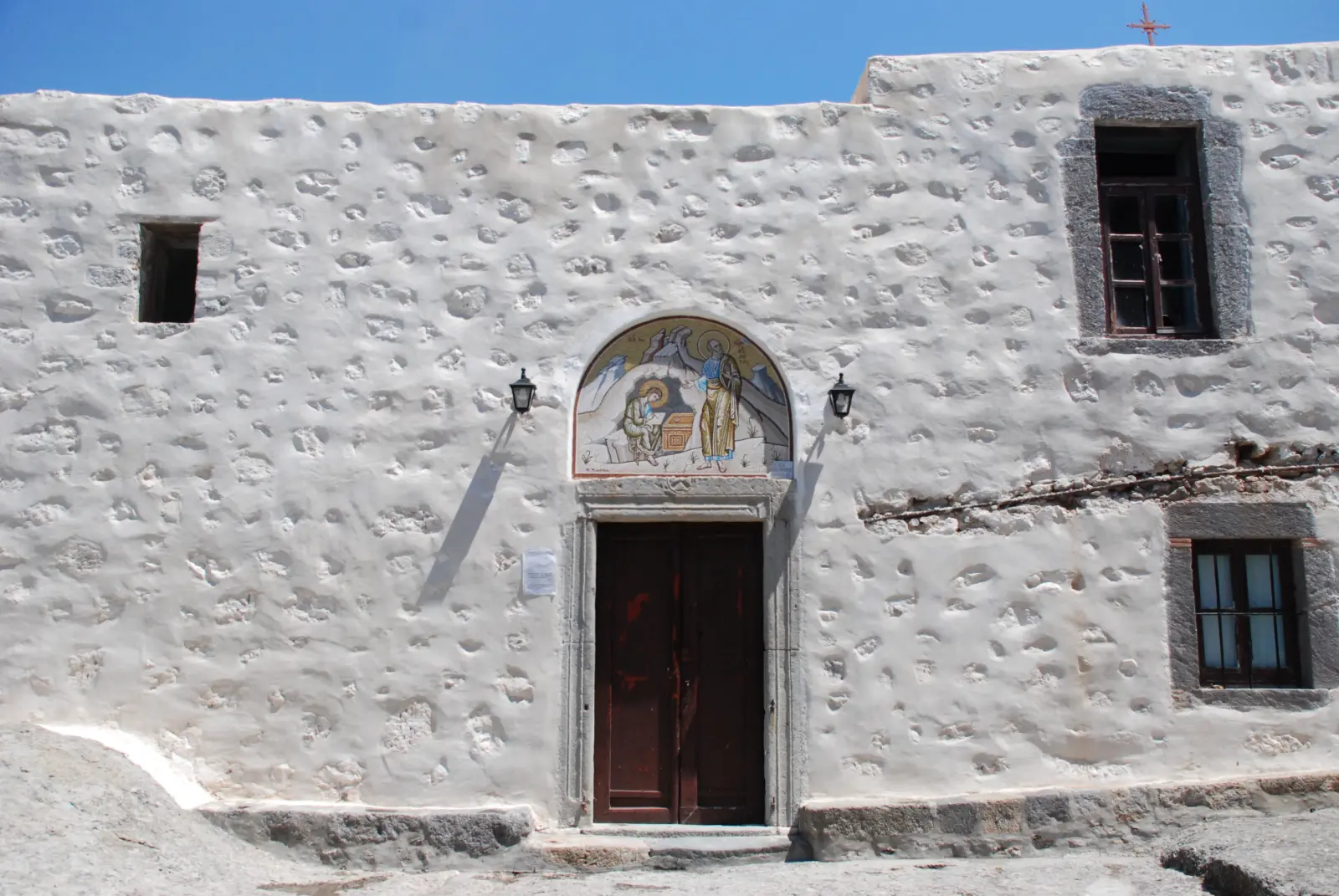
The Cave of the Apocalypse. A small rock grotto on the road between Skala and Chora, roughly halfway up the hill, where Christian tradition holds that John received the visions of Revelation. It is now an Orthodox chapel and an active place of pilgrimage.
Why the cave and the monastery are one thing. Together with the town of Chora they were inscribed on the UNESCO list in 1999 under a single name: the Chora of Patmos with the Monastery of Saint-John the Theologian and the Cave of the Apocalypse. The parts are inseparable, but they are not in the same spot, and that trips up first-time visitors.
What the cave is actually like. Dim, low and small, an active chapel rather than a museum. Guides point out the features that tradition attaches to the story: a hollow in the rock said to be where John rested his head, a ledge that served as a desk for his scribe Prochorus, and a triple fissure in the ceiling read as a sign of the Holy Trinity. You do not come for grandeur. You come because this specific rock is the reason the island holds the place it does in the imagination.
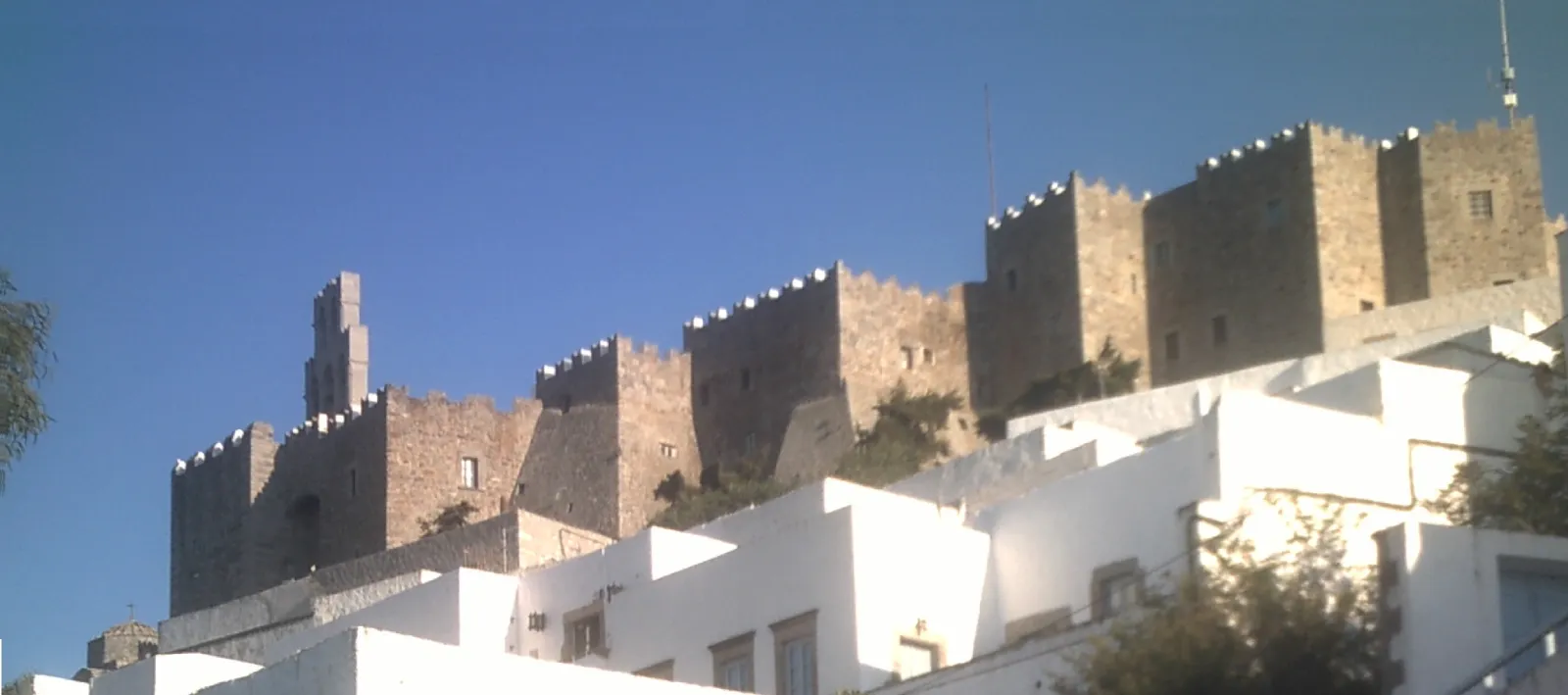
The Monastery of Saint John the Theologian. It crowns the hilltop above and looks the part: a fortress of high, blank walls built from the island’s dark volcanic stone, put up to hold off pirates as much as to house monks. It was founded in the late eleventh century, a date commonly given as 1088, though the sources conflict and you will see other years cited. This page does not settle that.
Dress, on the terms the sites set. Both are living religious sites and they are visited on their terms, not yours. Visitors consistently report a modest dress code applied at the door: shoulders and knees covered, for everyone. Women are commonly expected to wear a skirt or a wrap rather than shorts, and cover-ups are usually lent to anyone who arrives unprepared, though the finer points vary between sources and are worth checking rather than assuming. Greek etiquette and customs covers the general practice.
Timing, which matters as much as dress. The monastery publishes one schedule covering both itself and the cave, and its shape is the thing to plan around: both open in the morning and shut in the early afternoon, and on most days they do not reopen at all, with only a few afternoons a week available. Feast days and the seasons move things again. So the practical rule is simple: go in the morning, and read the current table on the monastery’s own site before you climb rather than trusting a timetable you found in a guidebook.
Chora, which is the reason to stay up the hill. The old capital gathers tight under the monastery walls and is one of the few Greek settlements continuously inhabited since around the twelfth century. The lanes are a dense white weave of chapels, archways and the tall stone mansions that sea captains and merchants built when the monastery made the island rich. In the evening the town draws inward to its main square, where a long dinner and a slow walk are the entertainment on offer.
Skala, the other half. The working port and the practical centre: every ferry lands here, and so do the shops, the cafes, the car-hire desks and the boats out to the beaches. It is pleasant and busy rather than pretty, and if you are here for a day off a cruise it is where you start and probably where you stay.
Our Patmos guide has the practicalities and the beaches cover the island beyond the monastery.