Kos
Things to do in Kos
Kos is flat. That sounds like trivia and it is not: it is the reason a bicycle is real transport here rather than a photo prop, and it shapes a sightseeing day more than anything else on this page. A level waterfront lane runs the coast either side of Kos Town with an inland branch past the archaeological sites, and the sanctuary everyone comes for sits a few kilometres out on the hillside above.
So the sights sort by how far up they are.
The sanctuary. The Asklepion is the one entry below with a page of its own, and it earns the position. It is a healing sanctuary built on three artificial terraces cut into a wooded slope above the town, looking across the strait to the coast of Asia Minor, and it is designed to be walked upward: each terrace is a different thing and the sequence is the point. It also carries the island’s central chronology problem. Kos sells itself as the island of Hippocrates, and the surviving buildings here are later than his lifetime. That makes it a more interesting site than the leaflet version, not a lesser one.
The ancient layer in the middle of the modern town. Kos Town keeps its ruins in the street rather than behind one gate: the Ancient Agora behind the harbour, the Western Archaeological Zone with its mosaic floors and column-lined streets, the restored Roman Odeon, and the Casa Romana, a reconstructed Roman house. Much of that layer is walked through rather than entered. The villa and the museums are ticketed, and the Hellenic Ministry of Culture is where the terms are published.
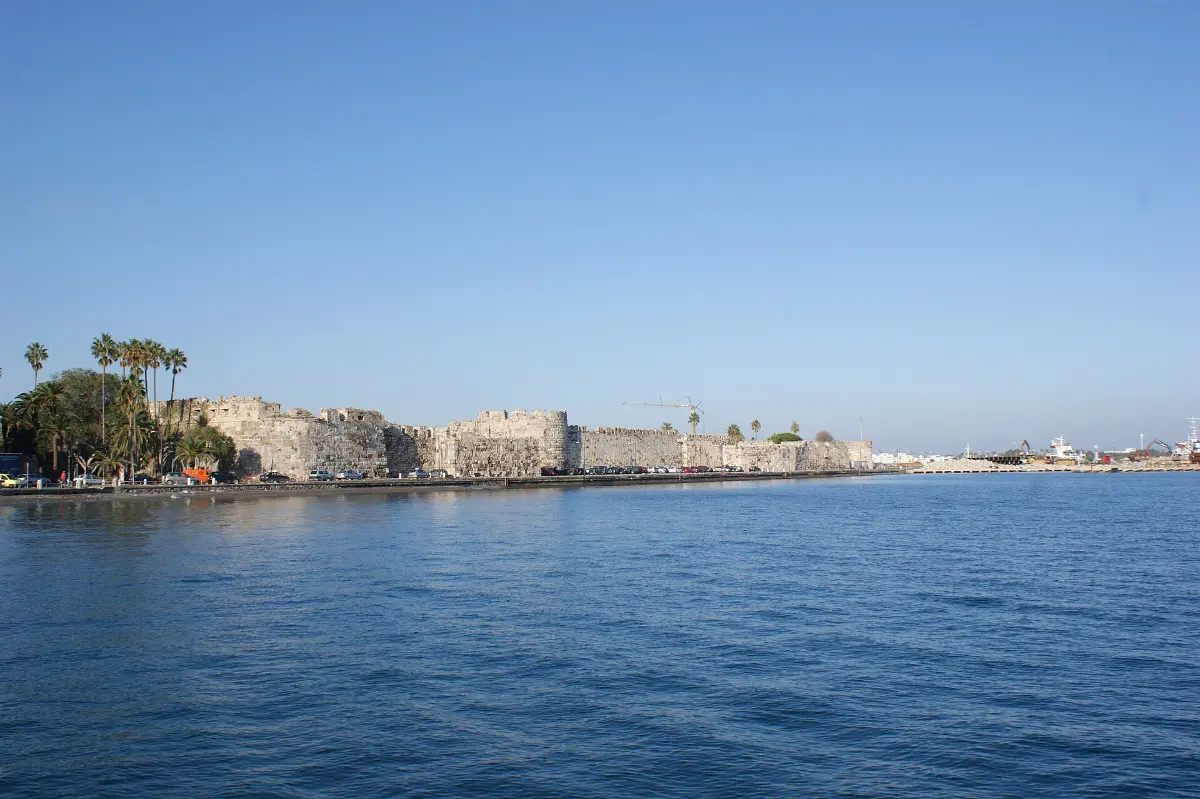
The castle, and the centuries stacked over the Romans. Neratzia Castle, the Knights of St John fortress at the harbour mouth, is the town’s skyline. The July 2017 earthquake damaged it and access has varied in the years since, so take its current position from the ministry before you plan a morning around going inside. Above the ancient layer sit two more: the Ottoman centuries left mosques on the main square and beside the plane tree, and the Italian interwar administration left the boulevards and public buildings that give the modern town its shape. The plane tree by the castle bridge is worth a minute of your time. Tradition puts Hippocrates teaching beneath it, the age claims that circulate are legend wrapped around a genuinely old tree, and it is better enjoyed that way.
The mountain. Zia sits on the slopes of Dikeos and is the island’s sunset ritual, which is exactly its problem, because the coach traffic converges there at dusk. Come for a late lunch instead and use the village as a trailhead. The summit path up Dikeos leaves the crowds within minutes and gives you the whole flat island at your feet with Turkey across the water. The Asfendiou villages below Zia, and the medieval fortress and windmill at Antimachia, fill out the rest of an interior half-day.
Two things govern the plan. Heat is the first: this is the southeast Aegean, the ride out to the sanctuary and the climb through its terraces are both in the open, and in July and August that pushes sensible sightseeing into mornings and evenings. Cruise and excursion traffic is the second, and it arrives in the middle of the day, which is the same reason the town is at its best once it has gone.
We print no admission price, no opening hours and no closed days for anything named here. The ministry sets them, revises them by season, and is the only source that is right on the day you go.
The Kos guide settles bases, days and the beach coasts. Kos against Rhodes is the choice most Dodecanese trips come down to, and the island’s evenings are a separate question again.