
Diagram by Greece Trips. Free to reuse with credit - CC BY 4.0.
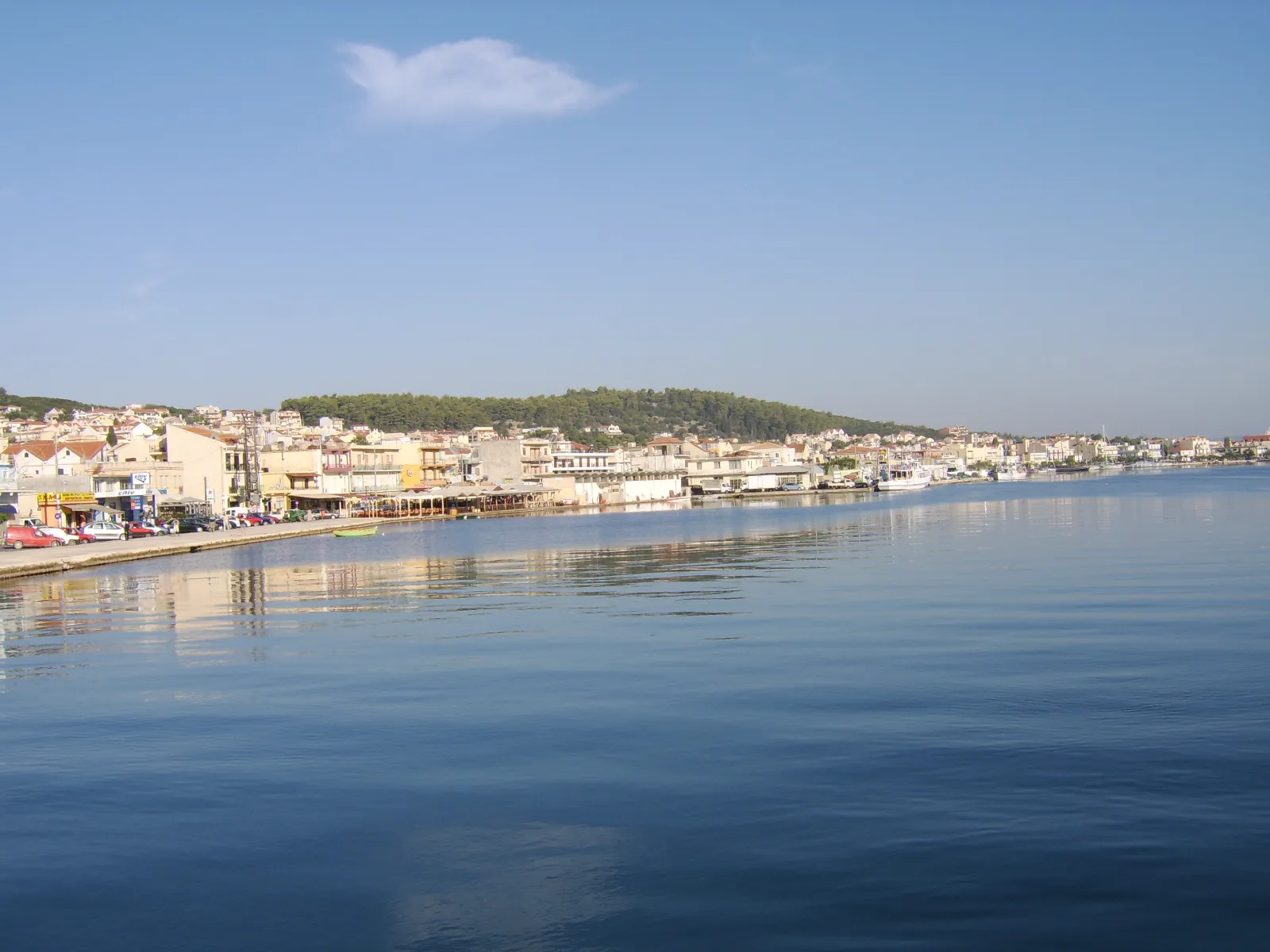
So this is a town to visit for its life rather than its architecture: a working capital with a big square, a market, a waterfront and a ferry link, where a third of the island’s population lives.
What to do
- The Lithostroto, the pedestrian shopping street running through the centre, and Vallianos Square at its end, which fills every evening.
- The fish quay, where loggerhead turtles gather around the boats. It is the most reliable place on the island to see them, and the same rule applies as everywhere: watch, do not feed, do not touch.
- The De Bosset causeway, the long stone bridge across the lagoon, built in the British era and walkable end to end.
- The Katavothres, the sinkholes at the tip of the peninsula where seawater disappears into the rock and, remarkably, re-emerges on the far side of the island.
- The museums, including the collection recording the island before and after the earthquake, which explains the town you are standing in.
Where it sits in a trip
Argostoli is the transport hub as well as the capital: buses radiate from here, and it is the practical base for travellers without a car, which is exactly the argument our where to stay in Kefalonia guide makes.
It is also within reach of the island’s headline sights: Melissani and Drogarati on the east side, Myrtos up the west coast, and Fiskardo in the far north.
Practical notes
- Evenings are the town’s best hours, when the square and the waterfront fill.
- The causeway walk is exposed; go early or late in summer.
- Distances on Kefalonia are long and the roads are mountainous, so plan one main sight per half day rather than three.
Last checked August 2026. Museum hours and bus routes change - see our editorial policy.
Common questions
Why does Argostoli look modern?
The 1953 Ionian earthquake destroyed most of the town, and it was rebuilt afterwards, so its architecture is largely post-war rather than Venetian.
Can you see turtles in Argostoli?
Loggerheads gather around the fish quay, which is the most reliable place on the island to see them. Do not feed or touch them.
What is the De Bosset causeway?
A long stone bridge across the Argostoli lagoon, dating from the British period, which you can walk end to end.
Is Argostoli a good base for Kefalonia?
Yes, particularly without a car, because it is the island’s bus hub and has the widest choice of shops and restaurants.
What are the Katavothres?
Sinkholes near the tip of the Argostoli peninsula where seawater flows into the rock and passes under the island.
Next
Read things to do in Kefalonia, Melissani, or where to stay in Kefalonia.