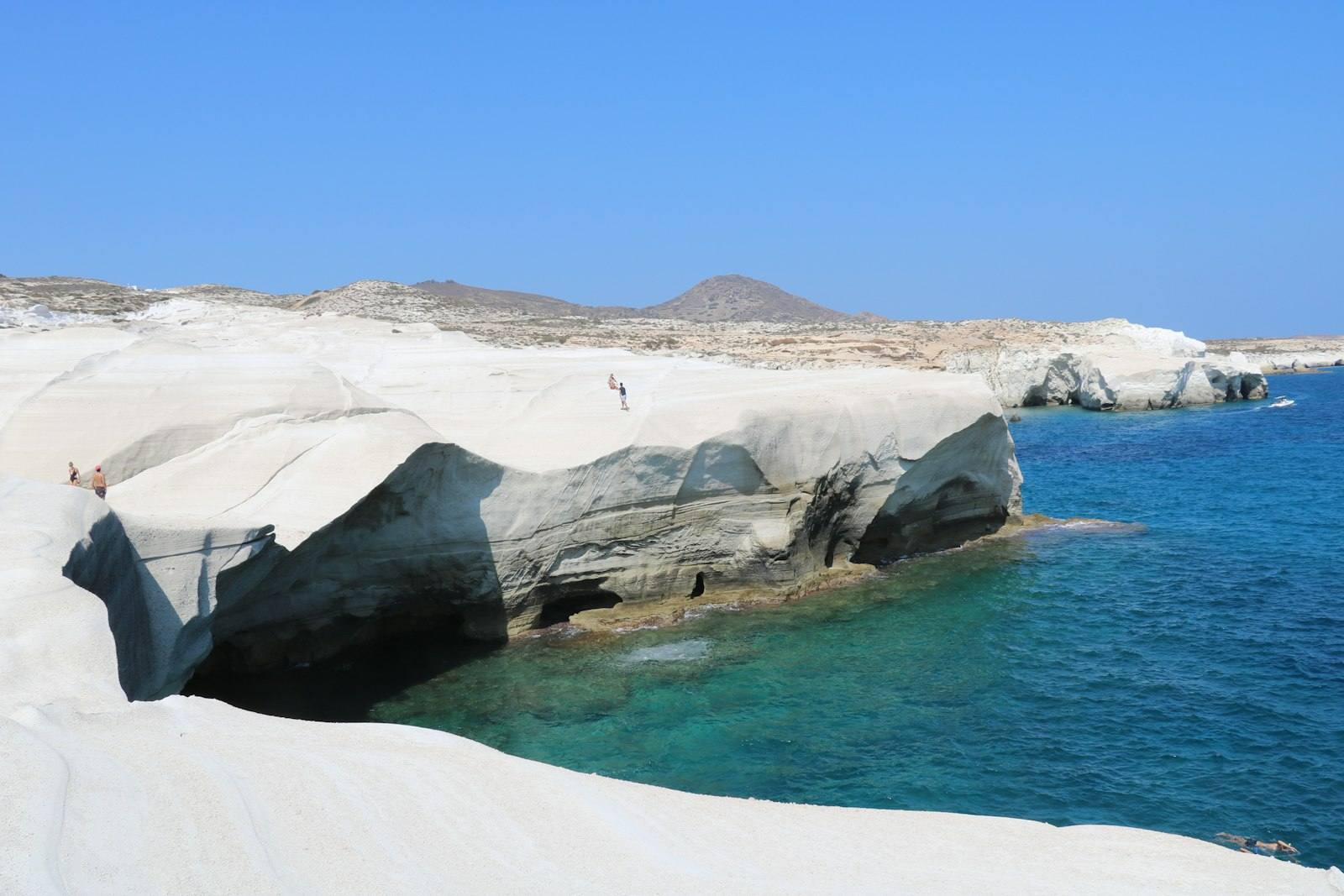
The single real difference is shape, and almost everything else follows from it. Greece is a true archipelago. Croatia is a coast with islands close in. Decide which of those trips you want and the rest mostly settles itself.
The short answer
Choose the Greek islands if island-hopping between distinct worlds is the appeal: sailing or ferrying from one group of islands to another that looks, feels and even sounds different, with the sea as the whole trip rather than a backdrop.
Choose the Croatian coast if you want the islands and the mainland in one reach: a Dalmatian shore you can drive, with islands a short ferry hop offshore, a walled Venetian-Roman history, and famously clear water off pebble beaches.
If you are really asking “which is the easier, prettier sailing holiday,” both are among the best in the Mediterranean, and the honest tie-breaker is whether you want Greece’s scale and variety or Croatia’s compactness.
Greek islands vs Croatia at a glance
The shape of the trip: archipelago, or coast with islands
| Greek islands | Croatian coast | |
|---|---|---|
| Shape of the trip | A true archipelago you hop across distinct groups | A mainland coast with islands close offshore |
| How you travel | Fly to Athens, then ferries and island flights | Fly to Split or Dubrovnik, then short ferries or drive the coast |
| Beaches | Everything from real sand to pebble and volcanic rock | Famously pebble and rock, with strikingly clear water |
| Sailing | World-class, from the sheltered Ionian to the windy Cyclades | World-class, compact and sheltered between the islands |
| History | The ancient Greek world, island by island | Roman and Venetian Dalmatia, walled towns |
| Scale | Hundreds of inhabited islands across several groups | Over a thousand islands, fewer than a hundred inhabited |
| Best for | Variety, island-hopping and the classical layer | Compactness, a coast-and-islands trip, walled cities |
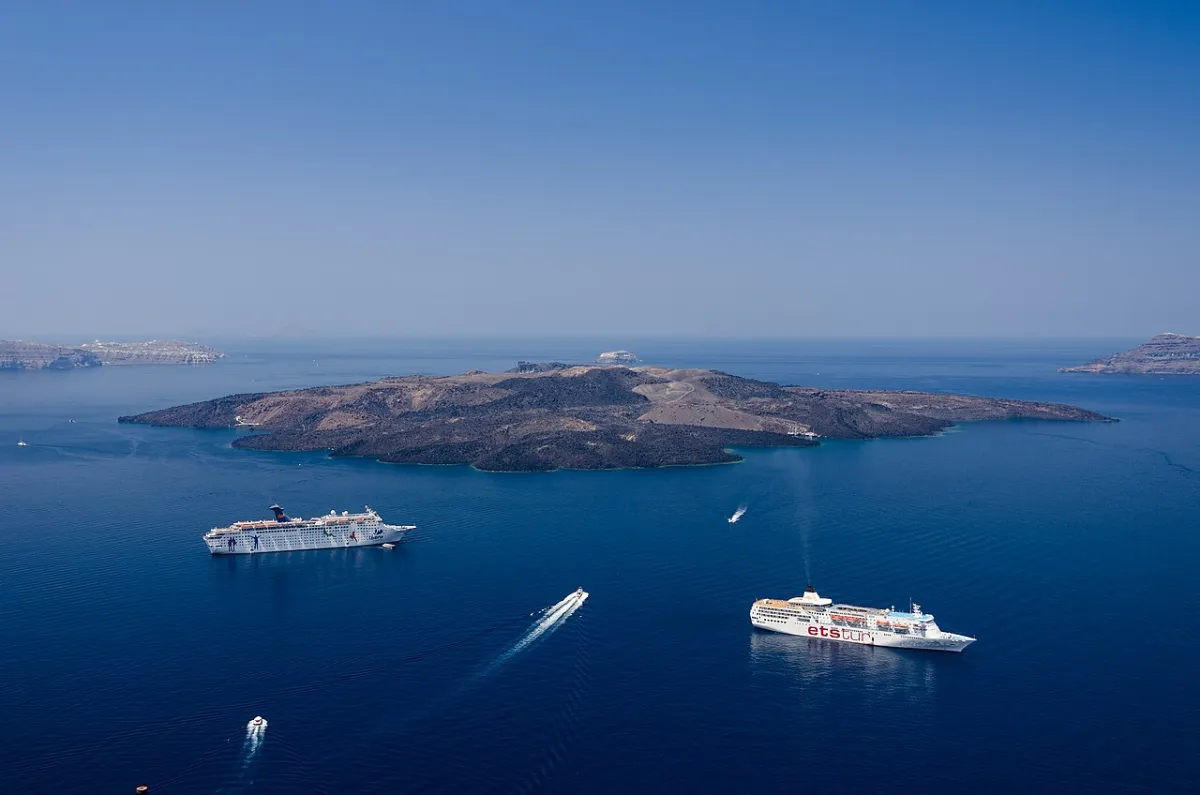
Start here, because it is the fact that decides the rest. Greece is scattered. The islands fall into distinct groups spread across the Aegean and the Ionian, and they are genuinely different from each other: the whitewashed, wind-scoured Cyclades are not the green, Italian-inflected Ionian islands, which are not the Dodecanese near Turkey. A Greek island trip is a trip between worlds, and hopping between them is the point rather than the transport. The islands overview lays out the groups, and the island-hopping guide is how you plan the moves.
Croatia is the opposite geometry. Its islands cluster close along the Dalmatian mainland between Split and Dubrovnik, so the coast and the islands are one region you can take together. Over a thousand islands fill that stretch of Adriatic, though fewer than a hundred are inhabited, and the well-known ones, Hvar, Brac, Korcula, Vis, sit a short ferry hop offshore. Because the mainland runs right alongside, you can also drive the coast, which is a kind of trip Greece’s geography simply does not offer in the same way.
What that means in practice: Greece rewards committing to the sea and to distance, and Croatia rewards staying close to a single beautiful coastline. Neither is better. They are different holidays wearing similar photographs.
Getting there and getting around
Both are easy to reach by air and neither needs much explaining, but the mechanics differ in a way that shapes the days.
Greece funnels through Athens for most trips: you fly into the capital, then the ferries fan out from Piraeus and Rafina and the domestic flights reach the further islands. The sea is slower than a road and it is half the reason the trip feels the way it does. The Greek island ferries guide is the companion to that, and what the sea is like covers the conditions.
Croatia gives you two gateways rather than one, Split and Dubrovnik, and from either you take short ferries out to the islands or drive the coast between them. The state ferry company runs the car ferries and a faster catamaran network runs alongside it. Because the hops are short and the mainland is always close, a Croatian trip can lean on a hire car in a way a Greek island trip usually should not.
Beaches: sand and variety, or pebble and clarity
Here is a real difference, and it is worth being precise rather than sweeping. Croatia’s coast is famous for pebble and rock beaches and for extraordinarily clear water; its single most photographed beach, the spit at Zlatni Rat on Brac, is pebble. Soft sand is the exception there rather than the rule.
Greece has plenty of pebble and rock too, and some of its most dramatic beaches are shingle under cliffs. But Greece also has real sand, a lot of it, from the long shallow west coast of Naxos to the dune beaches of the south, alongside black volcanic shores on Santorini and everything in between. So the honest line is not that one country has better beaches, but that Greece offers more variety of beach and Croatia offers a more consistent kind: clear water over stone.
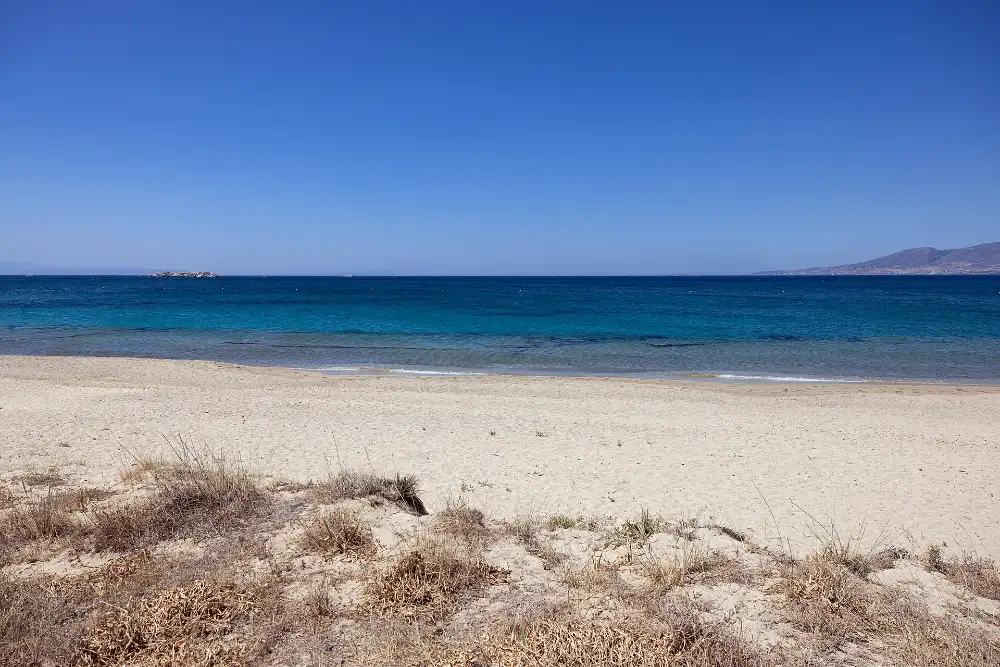
What neither of us will do is rate a given beach for getting into the water. What the sea is doing on any day is weather and conditions, not a fixed property of a beach, and that reading belongs to the flag and any lifeguard on the day rather than to a web page.
Sailing: two of the best grounds in the Mediterranean
If the real question behind “Greek islands or Croatia” is which makes the better sailing holiday, the fair answer is that both are near the top of anyone’s list, for different reasons.
Croatia is prized for being compact and sheltered: the islands sit close together off a single coast, the hops are short, and a classic charter takes in four or five islands over a week to ten days without long open crossings. It is often recommended as one of the easier places to learn or to take a first bareboat week.
Greece offers more range and more choice of character. The Ionian on the west is green, sheltered and gentle, a close cousin of the Croatian experience and a favourite for first-timers and flotillas. The Cyclades are bigger, barer and more exposed, and in high summer the meltemi wind funnels through them, which is what makes them exhilarating for experienced crews and hard work for beginners. So Greece can give you the easy version or the demanding one; Croatia specialises in the easy version and does it beautifully.
History: the ancient Greek world, or walled Dalmatia
Both coasts put the past in front of you, and it is a different past. Greece is the ancient Greek world, and the islands carry their own layer of it: Delos, the sanctuaries, the classical and Byzantine remains scattered island by island. It is the origin story, and it is everywhere.
Croatia’s Dalmatian coast is Roman and Venetian. Its headline sights are a Roman emperor’s palace at the heart of Split and the walled city of Dubrovnik, and the flavour along the coast is medieval and Venetian rather than ancient Greek. If ruins and old towns are a reason for the trip, the question is which civilisation you would rather walk through, not which country has more history.
Cost: contested, and we will not hand you a false verdict
The internet is full of confident claims that one of these is the cheaper holiday, and we are not going to add another, because the honest position is that it depends on the island, the season and the kind of trip, and because a page that hands you a verdict it cannot source is worth less than one that admits the gap.
What is durable: both are Mediterranean-summer destinations whose prices climb steeply in July and August and fall away in the shoulder season, both use the euro, and on both coasts a small, working island costs less than a famous, in-demand one. That mechanism is the useful part, and it survives the season a figure would not. The money question for the Greek side is worked through properly in what a Greece trip costs.
When to go
The seasons rhyme. Both are at their best in late spring and early autumn, when the water is warm, the crowds are thinner and the heat is bearable, and both are hot and busy at the height of summer. The Adriatic side runs a touch greener and a shade cooler than the Aegean; the Cyclades add the summer meltemi, which is a real planning factor in Greece and has no close Croatian equivalent. The best time to visit Greece has the month-by-month detail for our side of it.
Which one is your trip
Choose the Greek islands for variety and for island-hopping as the point of the holiday: distinct island groups, the widest range of beaches, the easy Ionian or the demanding Cyclades under sail, and the ancient Greek world layered through all of it. If it is your first time deciding among the Greek options, the best Greek island for first-timers narrows it down.
Choose the Croatian coast for compactness and for a coast-and-islands trip in one reach: short ferry hops off a drivable shore, water of remarkable clarity over pebble, and the walled towns of Dalmatia.
And if what you are really weighing is Greece against another whole country, the same honest method drives our Greece versus Italy comparison, which is the closest sibling to this page.
Last checked July 2026. What gets re-checked here: the Croatian ferry and gateway detail, which is stated at the durable level rather than by operator or route, and which is the part of this page we hold least tightly because Croatia is not our specialism. No price, fare, sailing time or beach safety rating appears on this page by design.

Diagram by Greece Trips. Free to reuse with credit - CC BY 4.0.
Quick answers
Are the Greek islands or Croatia better?
Neither outright, and the deciding difference is shape. Greece is a true archipelago you hop across distinct island groups, with the widest range of beaches and the ancient Greek world layered through it. Croatia is a coast with islands close offshore, which you can take together with the mainland, with famously clear water over pebble and walled Venetian towns. Choose Greece for variety and island-hopping, Croatia for a compact coast-and-islands trip.
Is Croatia cheaper than the Greek islands?
We will not give you a verdict we cannot source, because it genuinely depends on the island, the season and the trip. Both use the euro, both spike in July and August and ease in the shoulder season, and on both coasts a small working island costs less than a famous one. That mechanism is the durable answer; a single “cheaper” claim dates within a season.
Which is better for a first sailing holiday, Greece or Croatia?
Both are among the best in the Mediterranean. Croatia is compact and sheltered, with short hops between close islands, which makes it a popular first bareboat week. Greece offers both the gentle version, in the green and sheltered Ionian, and the demanding one, in the exposed Cyclades where the summer meltemi blows. If you want the easy option Greece can also give it to you; if you want range, Greece has more of it.
Do the Greek islands have better beaches than Croatia?
They have more variety. Croatia’s coast is consistently pebble and rock with strikingly clear water and little sand. Greece has that kind of beach too, but also a great deal of real sand, from long shallow bays to dune coasts, plus volcanic black shores. So it is not that one country wins, but that Greece offers a wider range of beach and Croatia a more uniform and very clear one.
Can you island-hop in Croatia like in Greece?
You can, but it feels different. Croatia’s islands sit close together off the Dalmatian mainland between Split and Dubrovnik, so hops are short and the coast is always nearby, and many people combine the islands with driving the mainland. Greek island-hopping crosses greater distances between genuinely different island groups, with the sea as the trip itself rather than a short link between coast and island.