What it is
the largest collection of Greek antiquities in the world, in a nineteenth-century neoclassical building north of central Athens
The six to see
the Mycenaean shaft-grave gold; the mask Schliemann named for Agamemnon; the Antikythera mechanism; the Artemision bronze; the Cycladic marble figurines; the Thera wall paintings from Akrotiri
The mask
named by Heinrich Schliemann in the 1870s and roughly three centuries older than any traditional date for a Trojan War. The name is his, not an identification
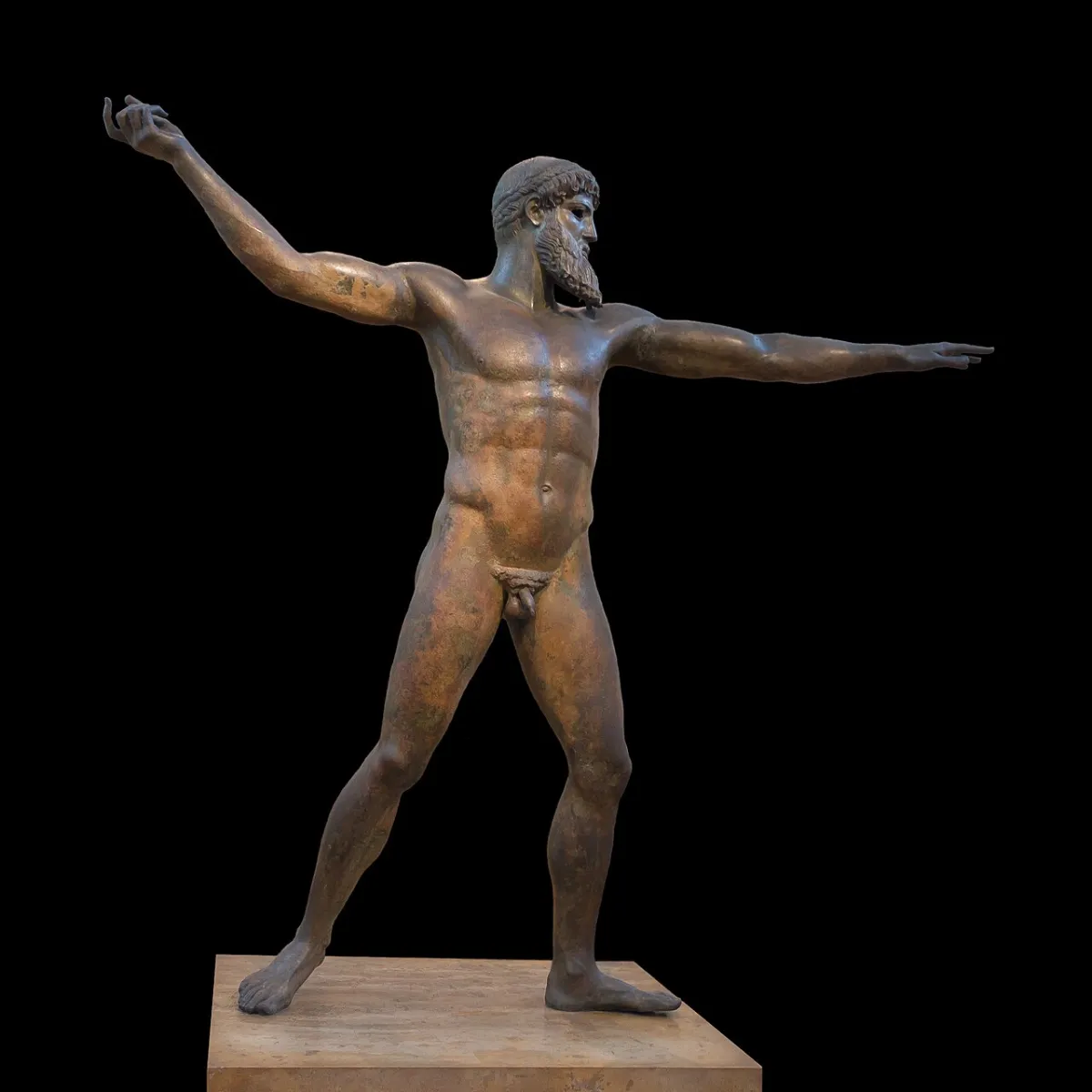
The Artemision bronze
identified as Zeus or as Poseidon depending on which missing object he is throwing. Unsettled, and printed here as unsettled
Building works
a redevelopment and extension programme is under way. No completion date and no gallery status are printed here
How long
two and a half to three hours. Our estimate from the size of the collection; no authority publishes one
Pairs with
Akrotiri on Santorini, where the Thera frescoes were excavated
Tickets and hours
set and published by the Hellenic Ministry of Culture. Deliberately not reprinted here
Travel details last checked July 2026.
The National Archaeological Museum in Athens holds the objects the sites were emptied of. The Mycenaean shaft-grave gold is here, not at Mycenae. The Thera wall paintings are here, not on Santorini. The bronze god pulled out of the sea off Euboea is here. So is a corroded geared machine from a first-century-BC shipwreck that nobody could explain for most of a century.
This page is about the collection rather than the building, because the collection is what you are going for and the building is currently in the middle of a large redevelopment. More on that below, and on why we will not tell you which rooms are open.
Six things, and the argument each one is having
You cannot see this museum properly in one visit, so do not try. Pick a spine and let the rest happen on the way past.
The spine we would walk is six objects, and what makes each of them worth standing in front of is not that it is famous. It is that each one is the middle of an unresolved argument.
The Mycenaean gold. Sheet-gold masks, inlaid daggers, cups and diadems from the shaft graves at Mycenae, dug by Heinrich Schliemann in the 1870s. It is the richest single room in Greek archaeology and the one people walk into and go quiet in.
The mask Schliemann called Agamemnon’s. It is still labelled and sold and printed under that name. It is not Agamemnon. The mask is roughly three centuries older than any traditional date for a Trojan War, so whoever wore it into the ground had been dead a long time before the events the name refers to. Schliemann named it; the dating does not support the name; the name stuck anyway.
The Antikythera mechanism. A lump of corroded bronze and wood from a wreck off the island of Antikythera, found by sponge divers in 1900. It is a geared astronomical calculator, and the density of its gearing has no known parallel for well over a thousand years afterwards. It is small, it is brown, and it is the single most disorientating object in Greece.
The Artemision bronze. A life-size bronze god from the sea off Cape Artemision, arm drawn back to throw something that is missing. The missing object is the whole problem: a thunderbolt makes him Zeus, a trident makes him Poseidon, and the museum’s own label has carried both. Nobody has settled it. Stand at his eye line and the argument is obvious.
The Cycladic figurines. Flat marble figures, folded arms, tilted-back heads, from the islands in the third millennium BC. They look like twentieth-century sculpture, which is why twentieth-century sculptors kept looking at them. They are also almost entirely undocumented, because most were dug up without records.
The Thera wall paintings. Bronze Age frescoes from Akrotiri on Santorini, buried by the eruption that ended that settlement. Seeing them here and then standing in the excavation itself is one of the better pairings in Greek travel, and Akrotiri on Santorini is the other half of it.
Why the mask is not Agamemnon, and why that matters
The label is the most interesting thing in the museum, because it is a fossil of how archaeology used to work.
Schliemann dug at Mycenae looking for Homer. He found extraordinarily rich graves, and he identified them with the characters of the Iliad because that is what he had come for. The gold is real. The graves are real. The identification was a guess made by a man with a strong prior, and it has not survived the dating.
What replaced it is more interesting than the guess. These are the graves of a wealthy warrior elite in a Bronze Age palace culture that ran the southern Greek mainland for centuries and then collapsed. Nobody knows their names. Their gold sits in a case in Athens with a Homeric label attached to it by a nineteenth-century businessman.
We flag this rather than skate past it because it is the kind of thing a travel page normally repeats without checking, and because the museum is more impressive, not less, once you stop needing the mask to be Agamemnon’s.
What we will not tell you: which galleries are open
The museum is in the middle of a redevelopment and extension programme. That is the single most important practical fact about visiting it, and it is also the reason this page is deliberately thin on practicalities.
The programme is real and it is publicly reported: the Hellenic Ministry of Culture approved a museographic study for new exhibitions at the National Archaeological Museum in 2026, and the work is running alongside a comparable project at the Epigraphic Museum. We are attributing that to the reporting rather than asserting it, because the museum’s own website returned a refusal to us every time we asked for it this session, so we have not read the announcement it published.
So this page prints no completion date, names no gallery as open, names none as closed, and gives no room numbers. A museum mid-rehang moves objects, and a page that tells you which room the Antikythera mechanism is in is a page that sends somebody up a staircase for nothing.
Read the museum’s own site on the morning you go. That is not us handing the work back: on a building being rebuilt around its collection, the museum’s own page is the only source that is right on the day, and every travel page claiming otherwise is guessing.
The same applies to admission and hours, which the Ministry sets and revises. We print neither. What does not change is the calendar around them, and public holidays and what closes covers the days when Greek state museums do something different.
Admission is sold by the Hellenic Ministry of Culture, at the museum and through its own e-ticketing service. We sell nothing here and take no commission. Check the museum’s own page before you set off, both for what is on and for what is open.
How to actually walk it
Two and a half to three hours is a real visit. That is our estimate from the size of the collection rather than a published figure, and it assumes you are walking a spine rather than reading every case.
The building is arranged broadly by material and period: prehistoric and Mycenaean, then sculpture in chronological order, then bronzes, then vases and minor arts, with the Egyptian collection and the Stathatos collection of jewellery and metalwork alongside.
Three pieces of practical advice that survive a rehang.
Go early or go late. This is a large museum with a small number of internationally famous objects in it, which means it has crushes rather than crowds, and the crushes form around the same six cases.
Do the prehistoric material first. The Mycenaean and Cycladic rooms are where the emotional weight of this museum is, and they are the rooms you want to arrive at with attention rather than leave for the tail of a long morning.
And treat the sculpture galleries as a corridor rather than a destination on a first visit. There is more classical sculpture here than anyone can absorb in an afternoon, and choosing to walk past most of it is what makes the rest legible.
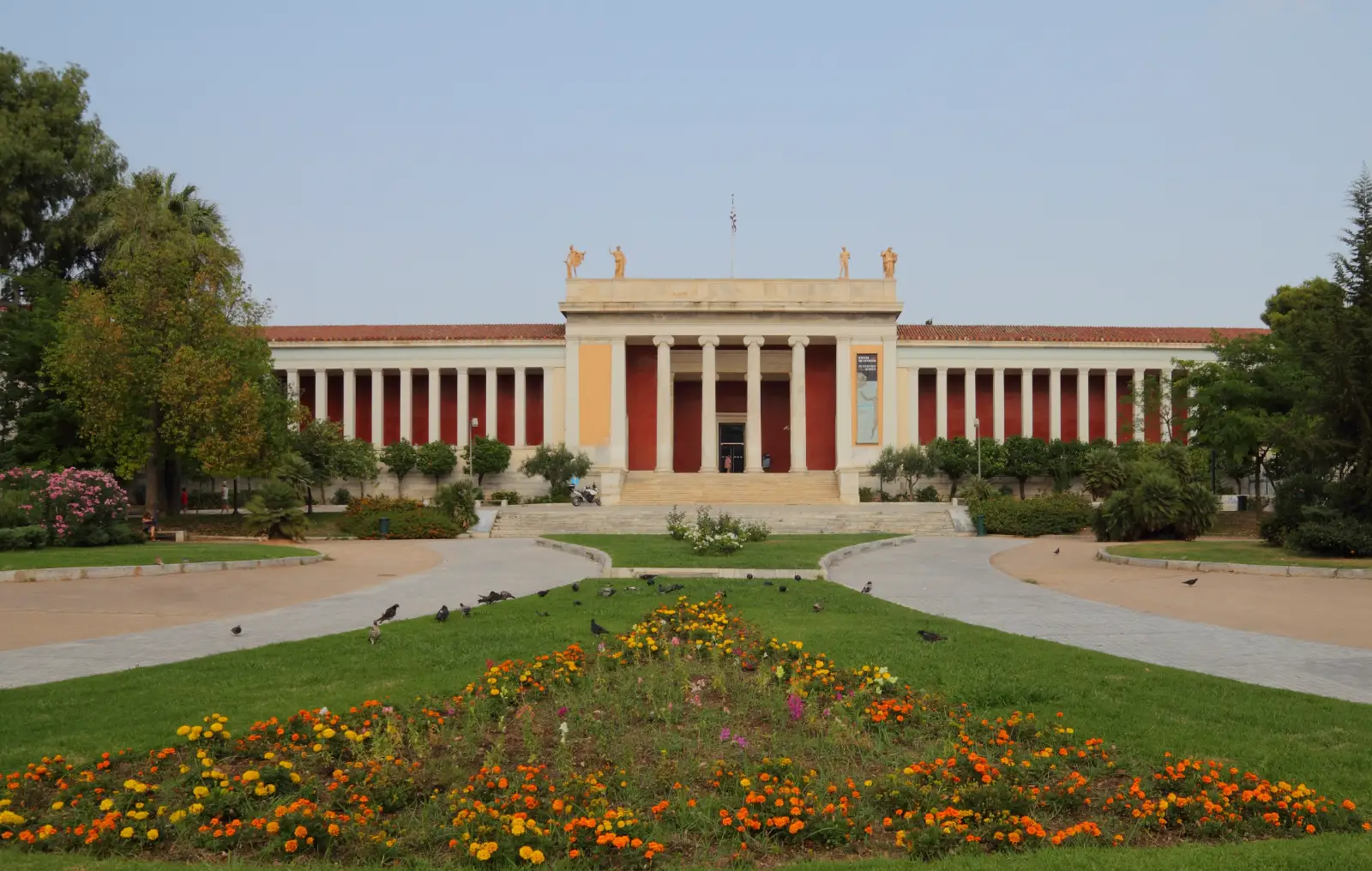
The building itself is a grand nineteenth-century neoclassical museum, Ernst Ziller among the architects who worked on it, and the scale of the halls is part of the experience. It sits north of the centre, away from the Plaka circuit, which is most of why it gets skipped.
If stairs or distance decide your day, accessibility in Greece is the wider guide, and the museum’s own staff are the ones to ask about the current arrangements in a building under works.
Is it worth it next to the Acropolis Museum?
They are not competitors, and the choice people think they are making is not the choice in front of them.
The Acropolis and its museum tell you one story extremely well: a single sanctuary, its sculpture, and a live argument about where that sculpture belongs. The National Archaeological Museum tells you Greece, from the Cycladic islands in the third millennium BC to the Roman period, in one building.
If you have one museum morning in Athens and you have already climbed the rock, take the Acropolis Museum, because it completes something you have just seen. If you have two, this is the second, and it is the one you will talk about afterwards. If you have any interest at all in the Bronze Age, reverse the order.
For how that fits a longer route, the rest of Athens and a first week in Greece both put it in sequence. With children, the Mycenaean gold and the Antikythera mechanism do most of the work in forty minutes, and Athens with children covers the rest of the day.
Last checked July 2026. What we re-read before every update: the museum’s own published status for its redevelopment and its galleries, which we deliberately do not reprint, and the current admission arrangements at the Ministry. How we date and check facts is set out in our editorial policy.
Common questions
What is in the National Archaeological Museum in Athens?
The largest collection of Greek antiquities in the world, arranged broadly by material and period: prehistoric and Mycenaean material, sculpture, bronzes, vases and minor arts, plus an Egyptian collection and the Stathatos collection. Its best-known objects are the Mycenaean shaft-grave gold from Schliemann’s excavations, the Antikythera mechanism, the Artemision bronze, the Cycladic marble figurines and the Bronze Age wall paintings from Akrotiri on Santorini.
Is the mask of Agamemnon really Agamemnon’s?
No. Heinrich Schliemann gave the mask that name after excavating it at Mycenae in the 1870s, because he was looking for the Homeric world and believed he had found it. The mask dates roughly three centuries earlier than any traditional date for a Trojan War, so the identification does not survive the chronology. The name has stuck because it is a good name, not because it is right.
What is the Antikythera mechanism?
A geared bronze astronomical calculator recovered from a first-century-BC shipwreck off the island of Antikythera by sponge divers in 1900. It modelled the movements of the sun, moon and planets through a train of interlocking gears, and nothing of comparable complexity is known again for well over a thousand years. It is physically small and heavily corroded, and it is worth going out of your way for anyway.
Is the Artemision bronze Zeus or Poseidon?
Nobody has settled it. The figure is throwing something, and the something is missing: a thunderbolt would make him Zeus, a trident would make him Poseidon, and the arguments run both ways on stance and proportion. The museum has labelled it both ways over the years. Treating the question as open is the honest position, and it makes the statue better to look at.
How long do you need at the National Archaeological Museum?
Two and a half to three hours for a real visit, which is our estimate from the size of the collection rather than a published figure. That is enough to walk a chosen spine through the prehistoric rooms, the bronzes and the frescoes without reading every case. A focused hour on the Mycenaean and Cycladic material alone is a defensible visit if that is all the time you have.
Is the museum affected by building works?
Yes. A redevelopment and extension programme is under way, publicly reported and attributed to the Hellenic Ministry of Culture, which approved a museographic study for the new exhibitions in 2026. We print no completion date and we name no gallery as open or closed, because we could not read the museum’s own announcement: its website refused our requests throughout. Read the museum’s own page before you go.
Is the National Archaeological Museum better than the Acropolis Museum?
They do different jobs. The Acropolis Museum tells one sanctuary’s story with unusual force and sits at the foot of the monument it belongs to. The National Archaeological Museum covers the whole of Greek antiquity in one building and holds the Bronze Age material that nothing else comes close to. If you have one morning after the rock, take the Acropolis Museum. If the Bronze Age is what you came for, come here first.
Where is the museum, and is it near the Acropolis?
It is north of the centre, well away from the Acropolis and the Plaka circuit, which is most of the reason short-stay visitors skip it. Treat it as its own trip rather than something you fold into a walk between sites, and give it the first half of a morning rather than the tail of one.
Booking
We sell nothing and book nothing for you. Every guide on this page tells you how to arrange each piece yourself - which ferry operator, when to book, what to prebook and what to leave loose.