Alphabet
24 letters. Final sigma is written ς and every other sigma σ. Every word of more than one syllable carries exactly one accent showing the stress, and all-capital signage normally drops it
The six traps
Β is v, Ρ is r, Η and Υ are ee, Χ is the ch of loch, Δ is the th of this and Θ the th of thin, Ξ is ks
Digraphs
ΜΠ is b, ΝΤ is d, ΓΚ and ΓΓ are hard g or ng, ΤΣ is ts, ΤΖ is dz, ΟΥ is oo, ΑΙ is e, ΕΙ and ΟΙ are ee, ΑΥ is av or af, ΕΥ is ev or ef. Greek has no single letter for b or d
Romanisation
ELOT 743, identical to ISO 843, used by the Greek state for road signs, passports, identity cards and certificates, and recognised by the UN and the British and American place-name authorities. It transcribes Χ as “ch”, which is why the official spelling is Chania
Acronyms on signage
ΕΛΤΑ = Ελληνικά Ταχυδρομεία (Hellenic Post); ΚΤΕΛ = Κοινό Ταμείο Εισπράξεων Λεωφορείων (the intercity bus network); ΟΣΕ = Οργανισμός Σιδηροδρόμων Ελλάδος (the railway); ΟΤΕ = Οργανισμός Τηλεπικοινωνιών Ελλάδος (telecoms, letters persisting on older signage); ΕΟΤ = Ελληνικός Οργανισμός Τουρισμού (the national tourism organisation)
Punctuation
the Greek question mark is “;” and the Greek semicolon is the raised dot “·”
The four to memorise
καλημέρα, ευχαριστώ, παρακαλώ, συγγνώμη. Everything else on the page is reference
Accuracy
every Greek string on this page is checked against the ELOT 743 transcription table, but has not yet been proofread by a native speaker
Travel details last checked July 2026.
The alphabet is the higher-value half, and it is the half most phrasebooks bury. Once you can decode letters, ΞΕΝΟΔΟΧΕΙΟ is a hotel, ΠΛΑΤΕΙΑ is a square and ΦΑΡΜΑΚΕΙΟ is a pharmacy, and you can read them off a wall in a village where nothing is signposted twice.
Twenty-four letters, and about half are free
Greek has twenty-four letters. Several are identical to the Latin ones you already read, several are Greek letters you already know from maths and science, and only a handful are genuinely new. Here they are with their names and the sound you need.
| Letter | Name | Sounds roughly like |
|---|---|---|
| Α α | άλφα (alfa) | a in father |
| Β β | βήτα (vita) | v, not b |
| Γ γ | γάμα (gama) | a soft, throaty g; before e and i sounds, close to y in yes |
| Δ δ | δέλτα (delta) | th in this |
| Ε ε | έψιλον (epsilon) | e in bed |
| Ζ ζ | ζήτα (zita) | z |
| Η η | ήτα (ita) | ee, not h |
| Θ θ | θήτα (thita) | th in thin |
| Ι ι | γιώτα (yota) | ee |
| Κ κ | κάπα (kapa) | k |
| Λ λ | λάμδα (lamda) | l |
| Μ μ | μι (mi) | m |
| Ν ν | νι (ni) | n |
| Ξ ξ | ξι (xi) | ks, as in books |
| Ο ο | όμικρον (omikron) | o in got |
| Π π | πι (pi) | p |
| Ρ ρ | ρο (ro) | r, lightly rolled, not p |
| Σ σ ς | σίγμα (sigma) | s |
| Τ τ | ταυ (taf) | t |
| Υ υ | ύψιλον (ipsilon) | ee, not u |
| Φ φ | φι (fi) | f |
| Χ χ | χι (chi) | ch in Scottish loch |
| Ψ ψ | ψι (psi) | ps, as in lapse |
| Ω ω | ωμέγα (omega) | o, the same sound as omicron |
Two housekeeping rules. Sigma is written ς at the end of a word and σ everywhere else, which is why ΟΔΟΣ in capitals becomes οδός in lower case. And every Greek word of more than one syllable carries exactly one accent mark showing where the stress falls, which is far more useful than it sounds: it tells you which syllable to lean on, and leaning on the wrong one is what makes a correctly pronounced word unrecognisable. Capital-letter signage usually drops the accent, so ΞΕΝΟΔΟΧΕΙΟ appears bare while ξενοδοχείο does not.
The six letters that trip English readers
If you learn nothing else, learn these, because they are the ones that make you misread a word you already know.
Ρ is r, not p. ΡΟΔΟΣ is Rodos, which is Rhodes.
Η and Υ are both ee, not h and u. Neither one does what its shape suggests.
Β is v, not b. So ΒΟΛΟΣ is Volos.
Δ is the th of this, and Θ is the th of thin. English uses one letter for two sounds; Greek uses two letters and keeps them apart.
Χ is the ch of loch, not an x. The x sound belongs to Ξ.
Get those six right and you can read most of a sign. Get them wrong and ΧΑΝΙΑ looks like it starts with an X, which is exactly the confusion the next section is about.
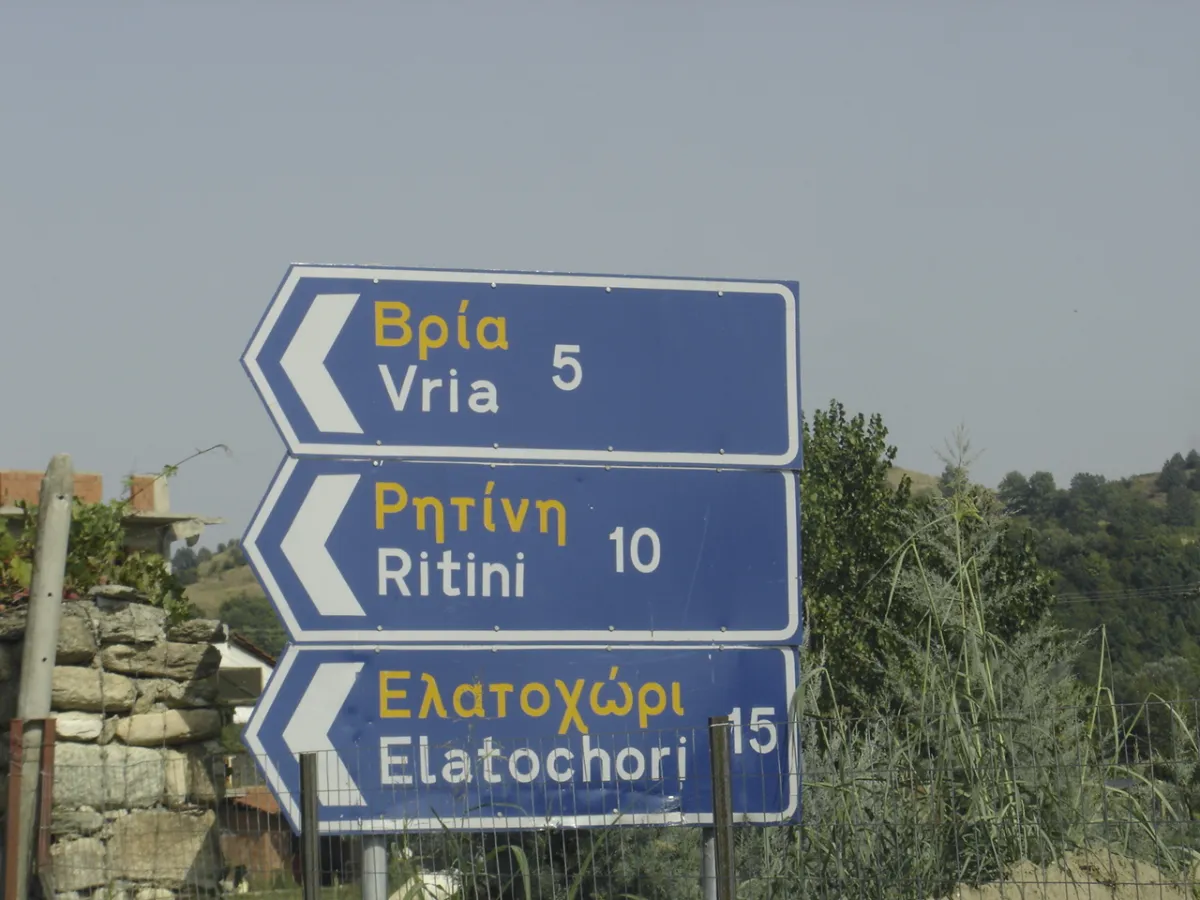
Letter pairs that make a sound of their own
Greek spells some sounds with two letters, and this catches people who have learned the alphabet and then cannot find the letter b anywhere.
| Pair | Sounds like | Example |
|---|---|---|
| ΜΠ μπ | b | ΜΠΑΡ, a bar |
| ΝΤ ντ | d | ΝΤΟΜΑΤΑ, tomato |
| ΓΚ γκ, ΓΓ γγ | hard g, or ng | ΓΚΑΡΑΖ, garage |
| ΤΣ τσ | ts | ΤΣΑΪ, tea |
| ΤΖ τζ | dz | ΤΖΑΤΖΙΚΙ, tzatziki |
| ΟΥ ου | oo | ΟΥΖΟ, ouzo |
| ΑΙ αι | e in bed | ΑΙΓΑΙΟ, the Aegean |
| ΕΙ ει, ΟΙ οι | ee | ΕΙΣΟΔΟΣ, entrance |
| ΑΥ αυ | av or af | ΑΥΓΟ, egg |
| ΕΥ ευ | ev or ef | ΕΥΧΑΡΙΣΤΩ, thank you |
That is the whole system. Greek spells b and d with those pairs rather than with letters of their own, and once you know that, half the menu becomes readable.
Why Chania and Hania are the same place
This is worth ten seconds because it will otherwise cost you an argument with a search box.
Greece has an official standard for turning Greek letters into Latin ones, ELOT 743, which is identical to the international standard ISO 843. The Greek state uses it for road signs, passports, identity cards and certificates, and it is recognised by the UN and by the British and American place-name authorities. Under that standard Χ becomes “ch”, which is why the town is officially Chania rather than Hania.
English habit has never fully complied, so you will meet Hania, Piraeus and Pireas, Rodos and Rhodes, Corfu and Kerkyra, all live and all in use. The practical rule is to expect two spellings of everything and to try both when a booking site or a map cannot find your island.
The letters that stay Greek even in English
Some organisations are known only by their Greek initials, and they appear on signs without translation. These five are the ones a visitor meets.
- ΕΛΤΑ (ELTA), Ελληνικά Ταχυδρομεία, the Hellenic Post. The post office.
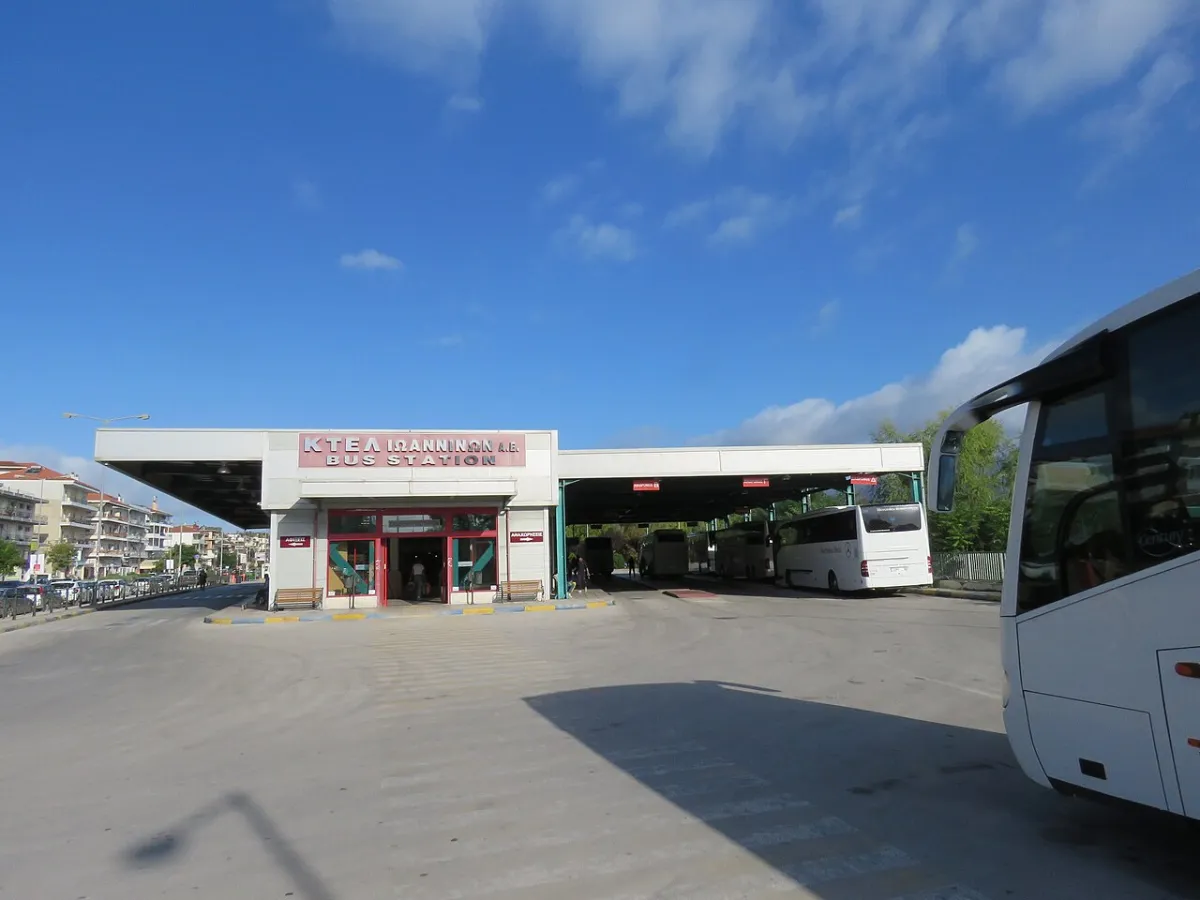
- ΚΤΕΛ (KTEL), Κοινό Ταμείο Εισπράξεων Λεωφορείων, the fund through which Greece’s intercity buses are organised. In practice, the word means the intercity coach network and its stations, and it is what you look for when you need a bus between towns.
- ΟΣΕ (OSE), Οργανισμός Σιδηροδρόμων Ελλάδος, the Hellenic Railways Organisation. The railway.
- ΟΤΕ (OTE), Οργανισμός Τηλεπικοινωνιών Ελλάδος, the Hellenic Telecommunications Organisation. The letters persist on older signage and on telecoms infrastructure, though its shops now trade under a different brand.
- ΕΟΤ (EOT), Ελληνικός Οργανισμός Τουρισμού, the Greek National Tourism Organisation. It appears on official tourism signage and licensing notices.
The one to actually memorise is ΚΤΕΛ, because it is how you find ground transport between towns and it is rarely written any other way.
The signs worth being able to read
These are the words that appear on walls, doors and boards, in capitals, with no accent. Sound them out with the table above and they resolve fast.
| On the sign | Lower case | Means |
|---|---|---|
| ΞΕΝΟΔΟΧΕΙΟ | ξενοδοχείο | hotel |
| ΠΛΑΤΕΙΑ | πλατεία | square |
| ΟΔΟΣ | οδός | street |
| ΛΕΩΦΟΡΟΣ | λεωφόρος | avenue |
| ΚΕΝΤΡΟ | κέντρο | centre |
| ΠΑΡΑΛΙΑ | παραλία | beach |
| ΛΙΜΑΝΙ | λιμάνι | harbour |
| ΛΙΜΕΝΑΡΧΕΙΟ | λιμεναρχείο | port authority |
| ΕΙΣΟΔΟΣ | είσοδος | entrance |
| ΕΞΟΔΟΣ | έξοδος | exit |
| ΑΝΟΙΧΤΑ | ανοιχτά | open |
| ΚΛΕΙΣΤΑ | κλειστά | closed |
| ΩΡΑΡΙΟ | ωράριο | opening hours |
| ΕΙΣΙΤΗΡΙΑ | εισιτήρια | tickets |
| ΤΑΜΕΙΟ | ταμείο | cash desk, ticket office |
| ΑΝΑΧΩΡΗΣΕΙΣ | αναχωρήσεις | departures |
| ΑΦΙΞΕΙΣ | αφίξεις | arrivals |
| ΣΤΑΣΗ | στάση | bus stop |
| ΦΑΡΜΑΚΕΙΟ | φαρμακείο | pharmacy |
| ΝΟΣΟΚΟΜΕΙΟ | νοσοκομείο | hospital |
| ΤΡΑΠΕΖΑ | τράπεζα | bank |
| ΦΟΥΡΝΟΣ | φούρνος | bakery |
| ΤΑΒΕΡΝΑ | ταβέρνα | taverna |
| ΤΟΥΑΛΕΤΕΣ | τουαλέτες | toilets |
| ΑΓΙΟΣ | άγιος | saint, in a great many place names |
ΛΙΜΕΝΑΡΧΕΙΟ is the one worth marking. The port authority is the body that runs a Greek harbour and the body that decides when boats sail, so on a windy morning that word on a door is where the real answer is.
The polite basics
Greek courtesy runs on a small number of words, said often. The default forms below are the polite plural ones, which is what you use with anyone you do not know. Stress is marked in bold in the pronunciation.
| Greek | Transliteration | Say it | Means |
|---|---|---|---|
| Γεια σας | Geia sas | yah sas | hello, and goodbye |
| Καλημέρα | Kalimera | kalimera | good morning |
| Καλησπέρα | Kalispera | kalispera | good evening |
| Καληνύχτα | Kalinychta | kalinichta | good night |
| Παρακαλώ | Parakalo | parakalo | please, and you are welcome |
| Ευχαριστώ | Efcharisto | efcharisto | thank you |
| Ναι | Nai | ne | yes |
| Όχι | Ochi | ochi | no |
| Συγγνώμη | Syngnomi | signomi | sorry, excuse me |
| Μιλάτε αγγλικά; | Milate anglika? | milate anglika | do you speak English |
| Δεν καταλαβαίνω | Den katalavaino | then katalaveno | I do not understand |
| Πού είναι…; | Pou einai? | poo eene | where is |
Two of these are worth a note. Ναι means yes, which trips English speakers hard, because it sounds like “nay”. And παρακαλώ does a lot of jobs: please, you are welcome, and the thing a shopkeeper says to you meaning roughly “can I help”.
One punctuation trap while we are here. The Greek question mark is a semicolon, so a question ends in “;” rather than “?”. The raised dot “·” is the Greek semicolon. A menu that appears to be full of semicolons is not.
At a taverna
Food is where a little Greek is most enjoyable and least risky, because everyone is on your side.
| Greek | Transliteration | Say it | Means |
|---|---|---|---|
| Έναν καφέ, παρακαλώ | Enan kafe, parakalo | enan kafe | a coffee, please |
| Ένα νερό, παρακαλώ | Ena nero, parakalo | ena nero | a water, please |
| Τον λογαριασμό, παρακαλώ | Ton logariasmo, parakalo | ton logariasmo | the bill, please |
| Πόσο κάνει; | Poso kanei? | poso kani | how much is it |
| Χωρίς | Choris | choris | without |
| Καλή όρεξη | Kali orexi | kali orexi | enjoy your meal |
| Γεια μας | Geia mas | yah mas | cheers |
| Ήταν πολύ ωραίο | Itan poly oraio | eetan poli oreo | that was very good |
Χωρίς is the practical one. Paired with a pointed finger it handles most of what you need to exclude from a dish, and it is a great deal more reliable than a complicated sentence. What you are ordering, and how a Greek meal is structured, is the subject of Greek food and drink.
At a ferry desk
The port is where the language gets suddenly consequential, because the information you need is often only in Greek and often only announced.
| Greek | Transliteration | Say it | Means |
|---|---|---|---|
| Ένα εισιτήριο για… | Ena eisitirio gia… | ena eesitirio yah | one ticket to… |
| Τι ώρα φεύγει; | Ti ora fevgei? | ti ora fevyi | what time does it leave |
| Το πλοίο | To ploio | to pleeo | the boat |
| Καθυστέρηση | Kathysterisi | kathisterisi | delay |
| Ακυρώθηκε | Akyrothike | akirothike | it has been cancelled |
Ακυρώθηκε is the word to know. If the wind is up and that word is going around the ticket hall, you have your answer before anyone gets to you in English, and you can start on the alternatives immediately rather than twenty minutes later. What to do next is when a ferry is cancelled.
At a pharmacy
Greek pharmacies handle a great deal that would be a doctor’s appointment elsewhere, and the pharmacist will usually speak English. These are for the times when that does not hold, or when you want to be precise.
| Greek | Transliteration | Say it | Means |
|---|---|---|---|
| Φαρμακείο | Farmakeio | farmakeeo | pharmacy |
| Βοήθεια | Voitheia | voeethia | help |
| Πονάει εδώ | Ponaei edo | ponaee edo | it hurts here |
| Έχω αλλεργία | Echo allergia | echo alleryeea | I have an allergy |
| Νερό | Nero | nero | water |
Point, name the thing, and let the pharmacist take it from there. If you carry a prescription or an allergy, having it written down in advance is worth more than any phrase on this page.
How much of this to actually learn
Be realistic about the return. The alphabet pays back within a day and keeps paying, because you use it every time you look at anything. The greetings pay back constantly and cost nothing. The rest is a reference you look up when you need it.
So the honest ranking is this: learn the six letters that trip you up, learn καλημέρα, ευχαριστώ, παρακαλώ and συγγνώμη until they are automatic, and leave the tables above on your phone for the ferry desk and the pharmacy.
Nobody will judge your pronunciation. Greeks are, in the main, delighted that you tried and entirely unbothered that you got the stress wrong, and the effort is read as courtesy rather than as competence. That is a much lower bar than the one people set themselves.
Greek alphabet and phrases FAQ
What are the most useful Greek phrases for travellers?
Four carry most of the load: καλημέρα (kalimera, good morning), ευχαριστώ (efcharisto, thank you), παρακαλώ (parakalo, please and you are welcome) and συγγνώμη (signomi, sorry or excuse me). Add γεια σας (yah sas) for hello and goodbye, and ναι and όχι for yes and no. Those six cover nearly every everyday exchange a visitor has.
Do I need to speak Greek to visit Greece?
No. English is widely spoken anywhere visitors go, menus are commonly bilingual, and nobody expects a tourist to arrive with the language. What repays the effort is reading rather than speaking: twenty minutes with the alphabet lets you decode street signs, ferry boards and shop fronts in places where the English signage runs out, which is most villages.
How many letters are in the Greek alphabet?
Twenty-four. Several match the Latin letters you already read, several are familiar from maths and science, and only about six behave differently enough to catch you out: Β is v, Ρ is r, Η and Υ are both ee, Χ is the ch of loch, and Δ and Θ split the two th sounds English writes with one pair of letters.
Why do Greek place names have two English spellings?
Because Greece has an official transliteration standard, ELOT 743, which is identical to ISO 843 and is used by the Greek state for road signs, passports and certificates, while English usage never fully adopted it. Under the standard Χ becomes “ch”, giving Chania rather than Hania. Expect two spellings of most places and try both in a search box.
What does ΚΤΕΛ mean on a Greek bus?
ΚΤΕΛ stands for Κοινό Ταμείο Εισπράξεων Λεωφορείων, the fund through which Greece’s intercity bus operators are organised. In practice the letters mean the intercity coach network: ΚΤΕΛ on a building is the coach station, and ΚΤΕΛ on a bus means it runs between towns rather than around one. It is almost never written any other way.
Why does Greek use a semicolon as a question mark?
It is simply the Greek convention: the question mark is written “;” and the semicolon is written as a raised dot, “·”. The first time you see a Greek sentence apparently ending in a semicolon it reads as a typo, and it is not. It matters mainly when you are reading a menu, a notice or a message and trying to work out whether you have been asked something.
How do I say thank you in Greek?
Ευχαριστώ, pronounced efcharisto, with the stress on the last syllable and the “ch” as in the Scottish loch. Everyone uses this one word, in every register, so it is the only version to learn. The reply is παρακαλώ (parakalo), which also means please, and doubles as what a shopkeeper says when they are asking what you would like.
Booking
We sell nothing and book nothing for you. Every guide on this page tells you how to arrange each piece yourself - which ferry operator, when to book, what to prebook and what to leave loose.