The short answer
The crossing runs about two to five hours, with the fastest services around 1h55. It operates year round, which is unusual in the Cyclades, though it thins hard outside the summer.
This is the link that makes a genuinely good pairing possible. Santorini and Milos are both volcanic, and they are volcanic in completely different ways: one is the flooded caldera everyone photographs, the other is a coastline of white rock, ochre cliffs and coves you reach by boat. Seeing both in one trip is a better week than seeing either twice.
Take it if you want the geology without the crowds twice over. Check the season if you are travelling outside June to September.
Santorini to Milos at a glance
Why these two go together
| Crossing time | ~2h to 5h; fastest ~1h55 |
|---|---|
| Runs | Year round, thinning hard in low season |
| Ports | Athinios on Santorini, Adamas on Milos |
| Carries a car | Conventional ferries |
| Weather risk | Real. Fast craft stop first in a meltemi |
Santorini is the rim of a volcano that blew its centre out and let the sea in. You look down into it from a cliff.
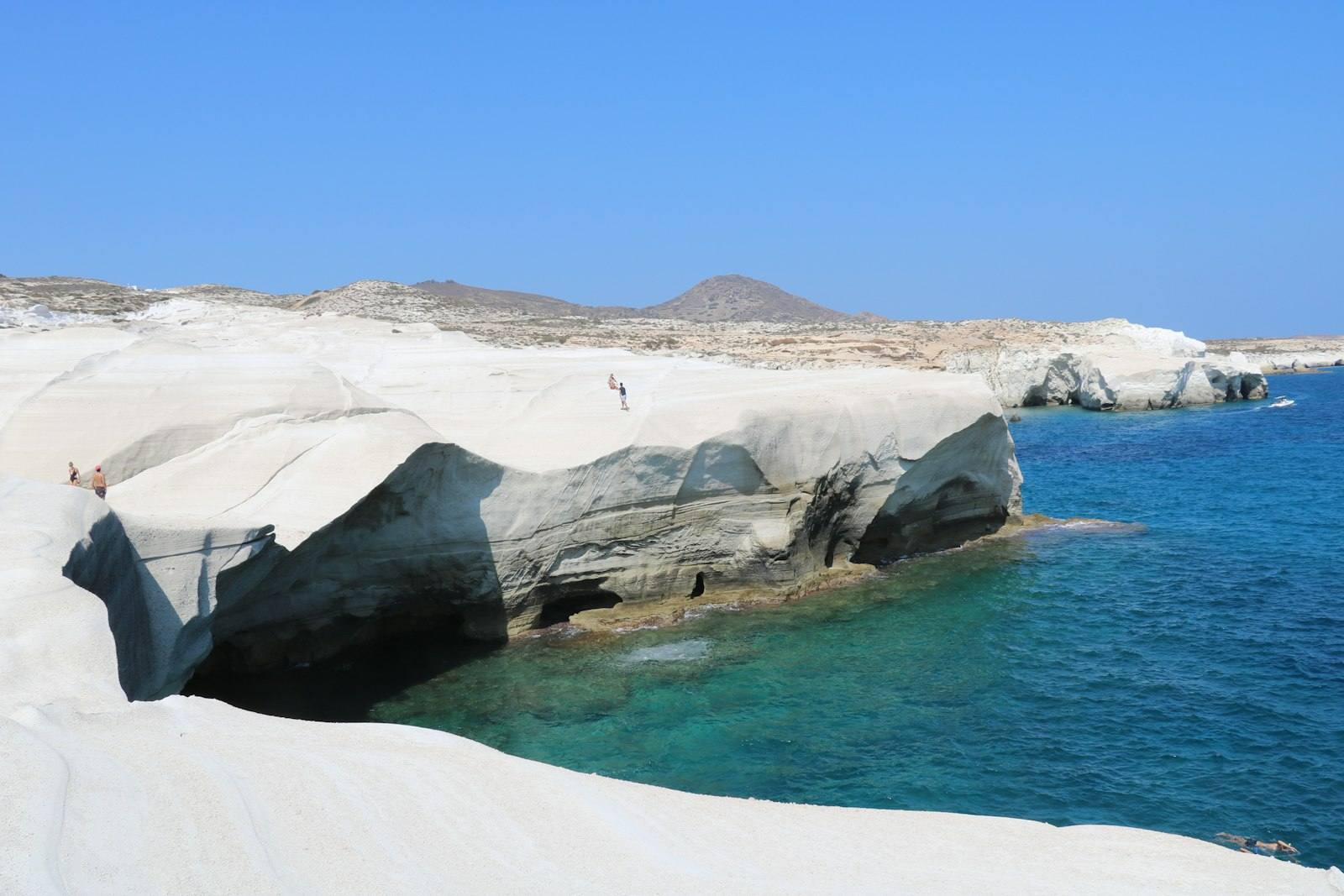
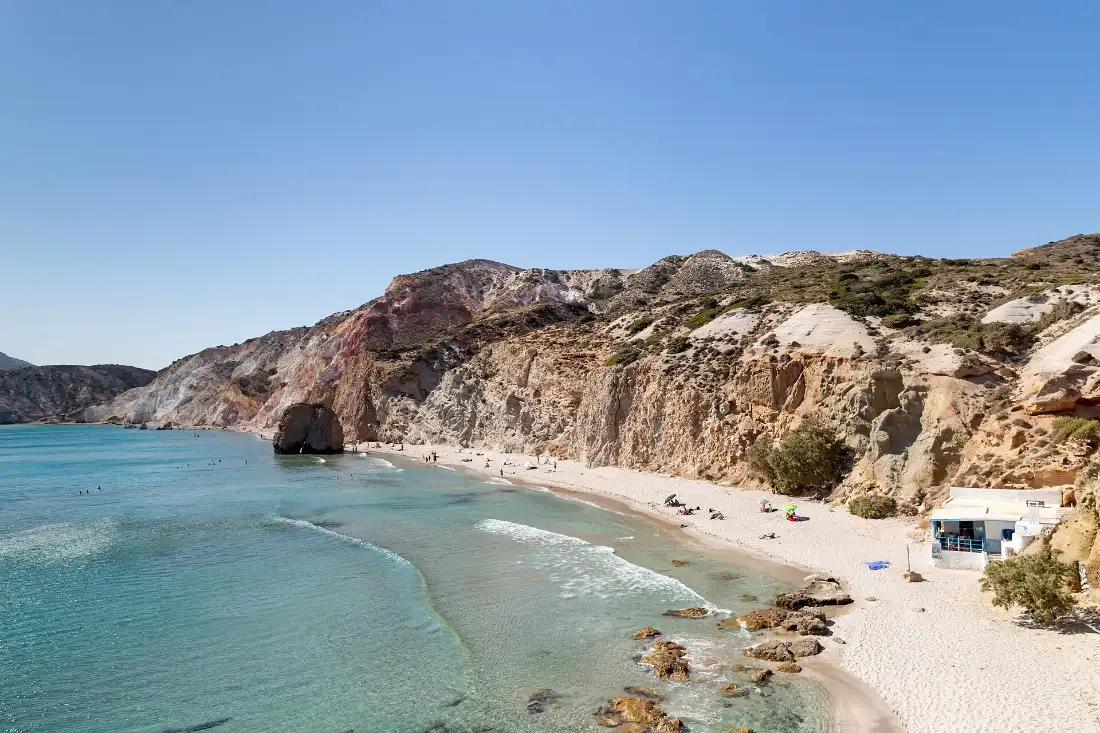
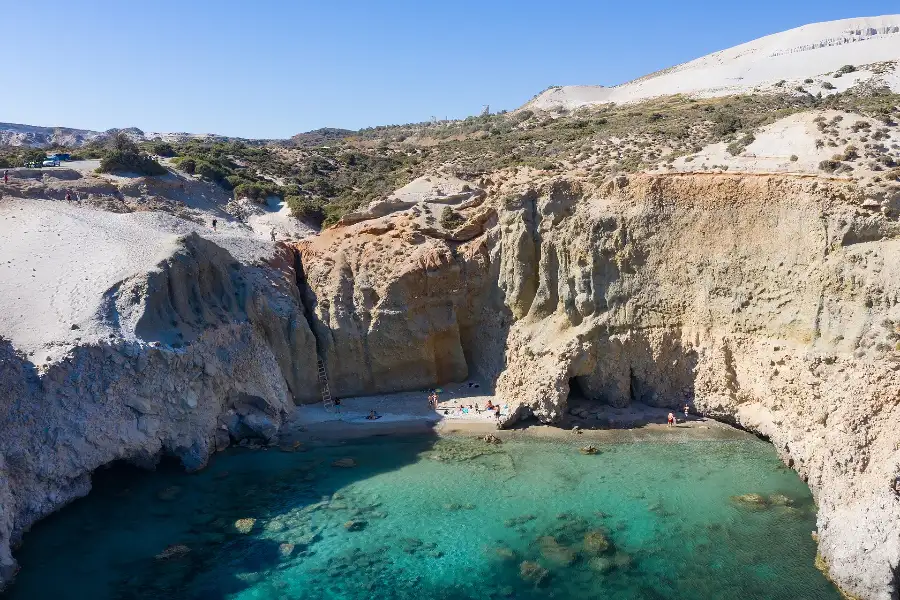
Milos is what happens when the same forces make a coastline instead of a crater. The rock is white and sculpted at Sarakiniko, ochre and banded at Firiplaka, and the best coves are cut into cliffs you reach by boat or by scrambling. There is no caldera and no sunset crowd.
The contrast is the point. If you have a week and you have already committed to Santorini, adding Milos gives you the same geological story told a completely different way, at a fraction of the price and the crowding. The full comparison is in Santorini vs Milos - and this crossing is what turns that page’s “do both” answer into an actual plan.
The seasonal question
Unusually for a Cyclades link, this one runs all year. That is worth knowing, because most inter-island routes simply stop.
But “runs all year” is not “runs conveniently all year”. In high summer there are multiple daily options; in the low season it drops to a handful of weekly crossings. In April or October, the sailing you want may exist twice a week rather than twice a day, which is enough to reshape an itinerary.
So: check the operator for your actual dates, and build the rest of the trip around the crossing rather than the other way round.
Fast boat or conventional
The usual trade, and the range here is wide because some services call elsewhere en route.
High-speed does it in around two hours. Enclosed, pricier, and the first thing stood down in a strong meltemi.
Conventional takes longer, is cheaper and steadier, and carries cars.
Whether you want a car is worth deciding before you book, because Milos genuinely needs one in a way Santorini does not. Its beaches are scattered around a large, indented coastline with several down rough tracks. The standing advice still applies: hire on the island rather than shipping one across. See which islands need a car.
The two ports
On Santorini you sail from Athinios, at the foot of the caldera cliff and a steep switchback road below the towns. Arrange your transfer down before the day you leave.
On Milos you arrive at Adamas, the main port town, which is where most of the island’s rooms and services are and where the port is in the town. An easy arrival by Cyclades standards.
Where it fits in a route
Milos sits on the western Cyclades line with Serifos and Sifnos, while Santorini sits at the bottom of the main chain, so this crossing is the bridge between two different ferry networks. That makes it more useful than its length suggests.
A natural shape: Athens to Santorini, work north or west through Milos, and fly home from the far end. See Athens to Santorini, Athens to Milos and the island hopping guide.

Diagram by Greece Trips. Free to reuse with credit - CC BY 4.0.
Frequently asked questions
How long is the ferry from Santorini to Milos?
About two to five hours, with the fastest services around 1h55. The spread depends on the vessel and whether it calls at other islands on the way.
Does the Santorini to Milos ferry run in winter?
It runs year round, which is unusual in the Cyclades, but frequency drops sharply outside summer - from multiple daily options to a handful of weekly crossings. Check the operator for your dates before building a trip around it.
Is Milos worth adding to a Santorini trip?
If you have the days, yes. Both are volcanic and they look nothing like each other, so you get the same geological story told twice in different ways - and Milos costs and crowds far less.
Do I need a car on Milos?
Effectively yes. The beaches are spread around a big indented coastline, several down rough tracks, and some are reachable only by boat. Hire on the island rather than bringing one across.
Where do the ferries dock?
Athinios on Santorini, below the caldera towns up a steep road, and Adamas on Milos, which is the main town.
Next
Read the Milos travel guide and the Santorini travel guide, settle the choice with Santorini vs Milos, or plan the run with the island hopping guide.