Kavala
Things to do in Kavala
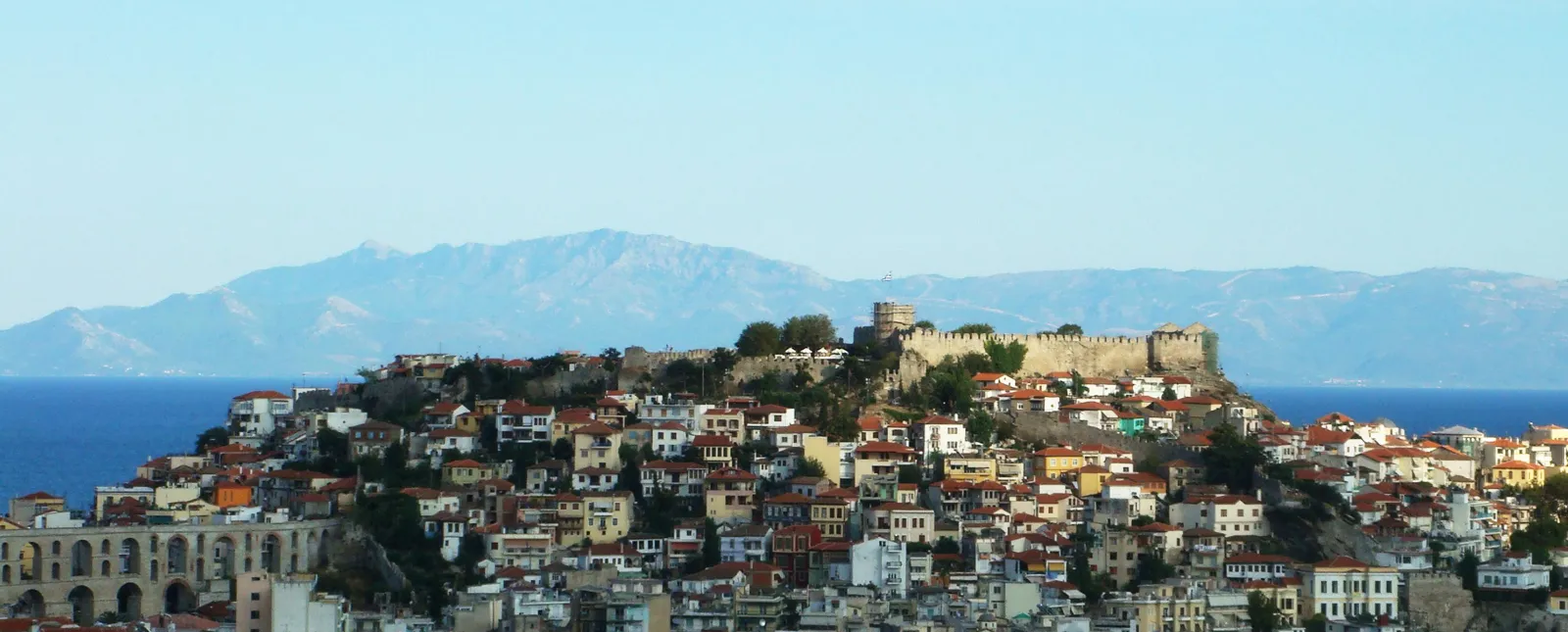
Kavala is the port of eastern Macedonia, built around a bay with the old town climbing a headland on one side, and it has one thing no other Greek city has in quite this way: a monumental aqueduct striding across the middle of it. Everything else here arranges itself around that headland and that arch.
The Kamares, which is the moment people remember. The aqueduct runs on two tiers of arches straight across a modern street between the old town and the new. It follows a Roman line and was rebuilt in the sixteenth century under Suleiman, and the city uses it as a landmark, a meeting point and a roundabout. Walking under it, with traffic going round it, is the thing visitors describe afterwards, because monumental antiquity is normally fenced off and this is not.
Panagia, the old quarter on the headland. Stepped lanes, Ottoman-era houses with overhanging upper storeys, and the castle on the summit, Byzantine in origin, with a round keep you can climb for the view over both bays. Two bays from one keep is the clearest way to understand why a port grew here.
The Imaret. A large Ottoman charitable complex of domes and courtyards, one of the most substantial Ottoman buildings in Greece, now a hotel. Being a hotel is worth knowing: it means the building is maintained and partly accessible rather than shuttered, which is a better fate than most buildings of its kind got.
The archaeological museum, holding finds from Amphipolis and the region, is the town-level counterpart to Philippi below.
The tobacco warehouses, which are the city’s real history. Large early-twentieth-century industrial buildings that were the city’s wealth, with one holding a museum of tobacco. Most Greek cities present antiquity and skip the twentieth century. Kavala’s money came from tobacco and the buildings are still standing, which makes the industrial story legible in a way it rarely is.
The working fishing harbour and the waterfront. Used by the city in the evening, and the counterweight to the monuments.
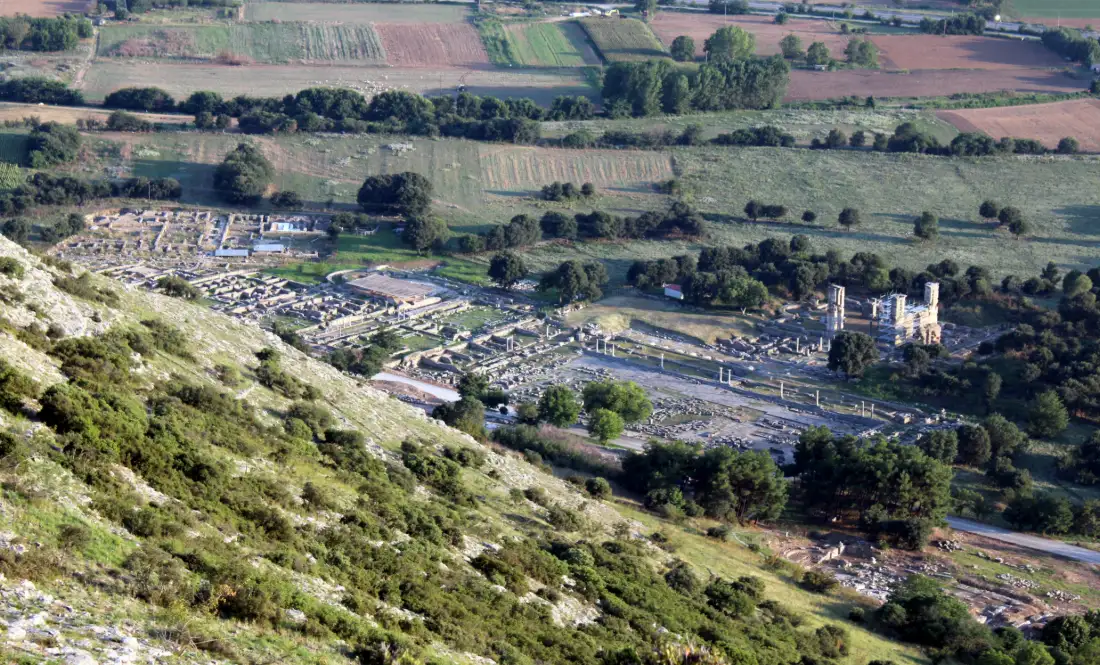
Philippi, twenty minutes inland, which earns its own morning. A major Roman city with a theatre, forum and early Christian basilicas, where Paul preached and where the battle was fought. It is the single strongest reason to give Kavala a second night rather than a stop.
What else it is the base for. Thassos, by ferry from the quay or from Keramoti nearby, and the Nestos delta to the east, a wetland and river gorge. Kavala airport at Chrysoupoli serves the city and Thassos; Thessaloniki is about two hours by road. Two nights, one of them for Philippi. Our Kavala guide has the practicalities and where to stay covers the headland and the front.