Ithaca
Things to do in Ithaca
Ithaca rewards more than a day trip for one reason: the best of it is not a sight you drive to but a network of paths between the villages and up into the hills. The second reason is a question the island has carried for three thousand years and has never settled, and being honest about that makes the walking better rather than worse.
The walking, which is the island’s real subject. Hiking here means joining threads rather than ticking off a summit. A few routes carry most of the walkers: Anogi to Kioni, a medium hillside descent from the old upper village to the northern harbour; Vathy to Filiatro, a gentle coastal stroll to an easy swimming cove; the path over the headland from Vathy toward Gidaki, trading a climb for an empty beach; the climb toward Mount Neritos from the Stavros side, the island’s high walk, for long views over Kefalonia and Lefkada; and the Homer-themed routes in the north.
What the waymarking is actually like. It varies from route to route. Some paths carry painted stones and the occasional signpost, others carry very little, and much of the network is kept clear by local walking guides and enthusiasts rather than by a single signed trail system. The Municipality of Ithaca publishes a walks-and-trails section, but it is a thin page that points you on to local outdoor operators rather than holding the route detail itself. Treat the signage as a help, not a guarantee: carry water and food, wear proper shoes, cover up against the sun, and photograph or download a route before you set off.
When to walk it. A shoulder-season pleasure. The exposed climbs, the Neritos route above all, are hard work in a July or August midday and a joy in May, June or late September when the heat backs off. Trailheads are scattered, so most walkers pair the paths with a rental car. Which islands need a car covers that and hiking in Greece the country picture.
The Odysseus question, and why this page holds it open. By tradition, yes: Homer names Ithaca as the home of Odysseus, and travellers have come here on that basis for the better part of three thousand years. Whether the modern island called Ithaki is the Ithaca of the poems is a different and unsettled question.
The argument is real and it has serious names attached. In the early twentieth century the German archaeologist Wilhelm Dörpfeld put Homer’s Ithaca on nearby Lefkada, not here. A century later, in his 2005 book Odysseus Unbound, Robert Bittlestone argued that the Paliki peninsula of western Kefalonia, perhaps a separate island in the Bronze Age before landslips joined it to the rest, fits Homer’s description better than modern Ithaca does. Against those readings, excavations on the present island, including work associated with the British School at Athens, are taken by many as support for the traditional identification. The question has not been settled, and it may never be.
Which is a reason to walk the sites with curiosity rather than file them as proof. The Cave of the Nymphs above Polis Bay, the ruins near Stavros long called the School of Homer, the hilltop acropolis at Aetos and the finds in Vathy’s small archaeological museum are all worth your time, as places traditionally tied to the Odyssey rather than as verified addresses. Where a sign or a guidebook calls a ruin the palace of Odysseus, read that as tradition speaking, not as a fact anyone has proved.
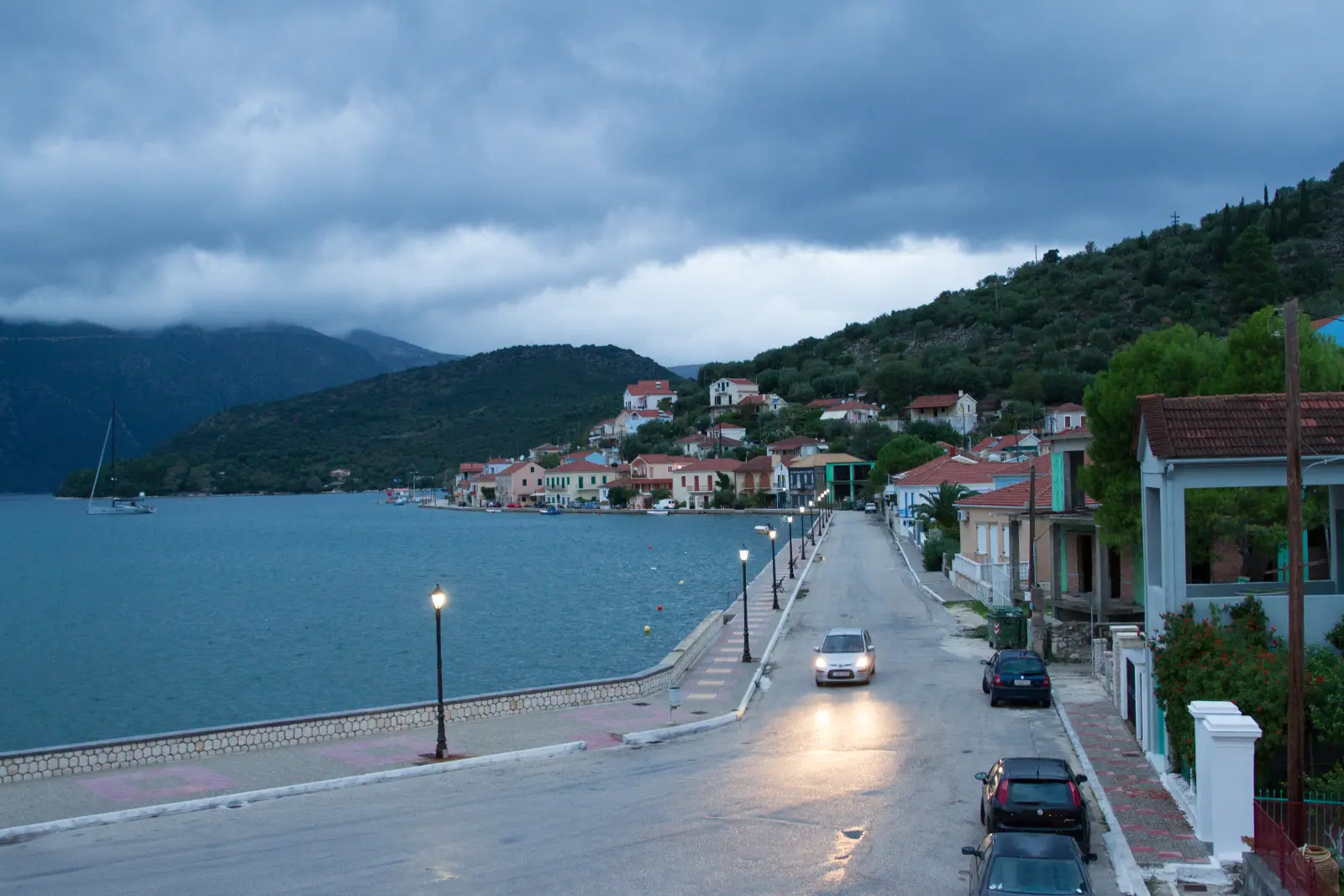
The villages, which are what you walk between. Vathy is the capital and the only town, around its deep bay in the south. Kioni and Frikes are the small northern harbours, working sailing stops whose quays fill on summer evenings with yachts moored stern-to. Stavros and the higher villages, Anogi, Exogi and Perachori, sit up in the walking country, older and more agricultural and closer to the trailheads than to the sea.
Our Ithaca guide has the practicalities and the beaches explain the pebble and the deep entries.