Hydra
Things to do in Hydra
Hydra bans wheeled vehicles, and that single rule shapes everything on this page. There is no road network, no bus and no taxi rank, so the harbour is the island’s one transport hub and your day is built out of three things: your feet, a mule, or a boat. Nothing here is far. Plenty of it is up a lot of steps.
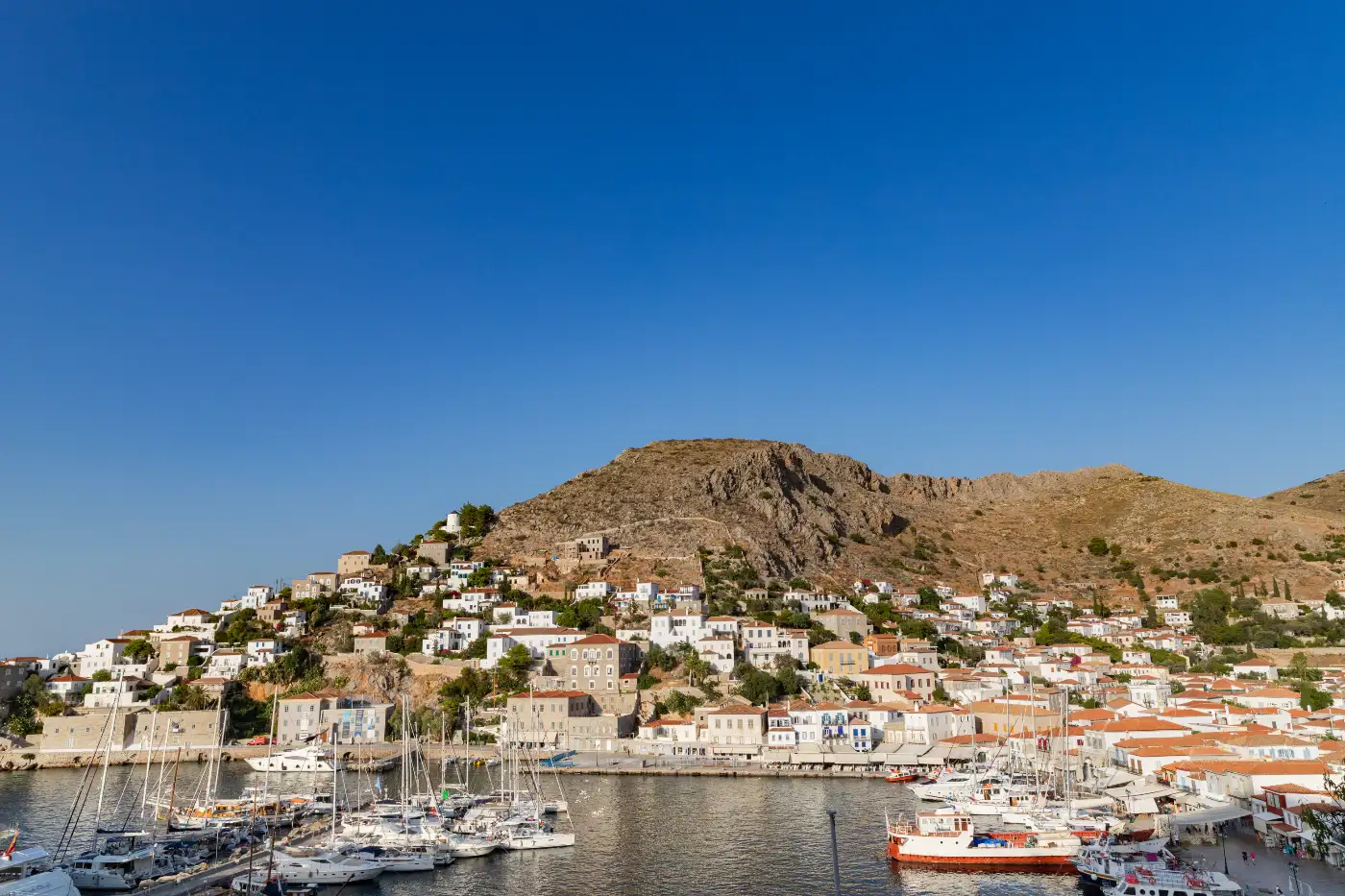
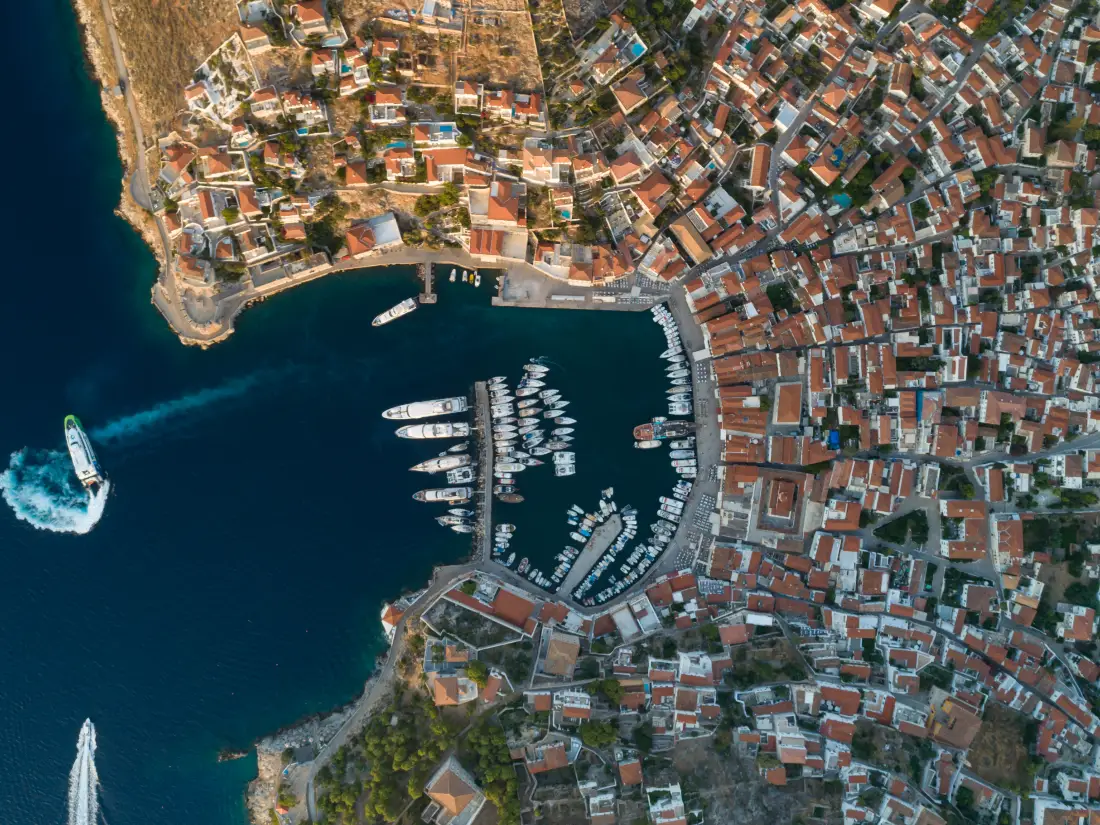
The harbour town, and where the money came from. The stone amphitheatre above the water is not just a view, it is a record. In the eighteenth and early nineteenth centuries Hydra grew rich on a merchant and shipping fleet that traded across the Mediterranean, and its sea captains put that wealth into the tall grey-stone mansions, the archontika, that still ring the port and climb the slope behind it. A small, dry, rocky island ended up with grand houses because it owned ships rather than fields. Once you know that, the town stops being pretty and starts being legible.
The two houses you can actually go into. The Historical Archives Museum, a branch of the General State Archives founded in 1918, sits on the eastern side of the harbour and holds some eighteen thousand documents of the eighteenth and nineteenth centuries alongside paintings, weapons, ship figureheads and models, and a portrait gallery of the island’s revolutionary fighters. It opens daily but publishes no fixed hours, so ring ahead if your day depends on it. The Lazaros Koundouriotis Mansion, a late-eighteenth-century captain’s house on the west side of the harbour, has run as an annex of the National Historical Museum since 2001 and lets you inside one of the archontika to see how these families lived. Its season runs 25 March to 31 October, daily from ten to four, with winter visits by arrangement for groups. Those are the anchors: unlike the restaurants and rooms that come and go around the harbour, the museums stay put.
The war that the harbour paid for. That same fleet put Hydra at the centre of the country’s founding. In the 1821 Greek War of Independence the island’s merchant ships were converted for war, and Hydriot captains and admirals played a leading part in the naval campaign. It is a history the island has never stopped telling about itself, and the museums are where it is told properly rather than on a plaque.
The art, which is present tense rather than nostalgia. Hydra’s bohemian name is usually pinned to one man and it is worth getting past him. In the 1960s the island drew writers, painters and musicians for the light, the quiet and the stone houses you could buy for very little. Leonard Cohen was the most famous of them and lived here on and off through that decade. His house is still a private home you glimpse from the lane rather than a site to visit, so admire it in passing and leave the residents in peace. The more interesting point is that the art did not leave with the sixties. The Athens School of Fine Arts has run an annex since the 1930s in the Tombazis mansion, an admiral’s house on the right-hand side of the port, and since 2009 the DESTE Foundation has staged a contemporary-art exhibition each summer in the former slaughterhouse on the waterfront rocks. That building was granted to the foundation by the municipality in 2008 and now draws the international art world to a place that once butchered livestock.
The mules, which are not a photo prop. The mules and donkeys waiting on the quay are the island’s lorries. They carry building materials, furniture, deliveries and the day’s rubbish up and down the stepped lanes, and, for a fee, your luggage to wherever you are staying. If you are sleeping up in the town, either arrange one at the harbour or be ready to carry your bag up the steps yourself, so pack for that.
Swimming, which happens off rocks rather than sand. Hydra keeps the clear water and loses the beach. You swim off flat rocks, small concrete lido platforms and pebble coves, dropping straight into deep water, so bring a towel and swim shoes rather than a beach-day plan the island cannot fill. Right by the town you get in off the rocks at Spilia and below Hydronetta, where ladders and cut steps take you off the stone. An easy coastal walk west reaches the pebble coves at Kamini and then Vlychos, which are the everyday swims for anyone staying. The quieter coves at the western end, Bisti and Agios Nikolaos among them, are reached mainly by water taxi, which is exactly why they stay quiet. The one exception is Mandraki, about twenty minutes east on foot or a few minutes by boat, where the island’s only sandy beach runs as a serviced one through the warm half of the year. So the accurate line is not zero sand anywhere, it is essentially no natural sand with Mandraki the small exception. What the Greek sea is like sets the rest of the expectation.
The honest part about the terrain. Hydra is steps, slopes and cobbles almost everywhere, with no wheeled transport of any kind, so it is hard going for wheelchair users, for anyone pushing a pram, and for anyone who struggles with stairs. The mules move luggage, not people. If a specific need matters to your trip, check what your accommodation actually provides before booking rather than assuming, and read accessibility in Greece first.
Most people see Hydra between two boats and never leave the waterfront, which is a shame, because the town climbs steeply behind the front into quiet lanes, small chapels and viewpoints where the crowd thins to nothing. The rest of the island is in our Hydra guide, getting here is Athens to Hydra, and the neighbours are in the Saronic islands.