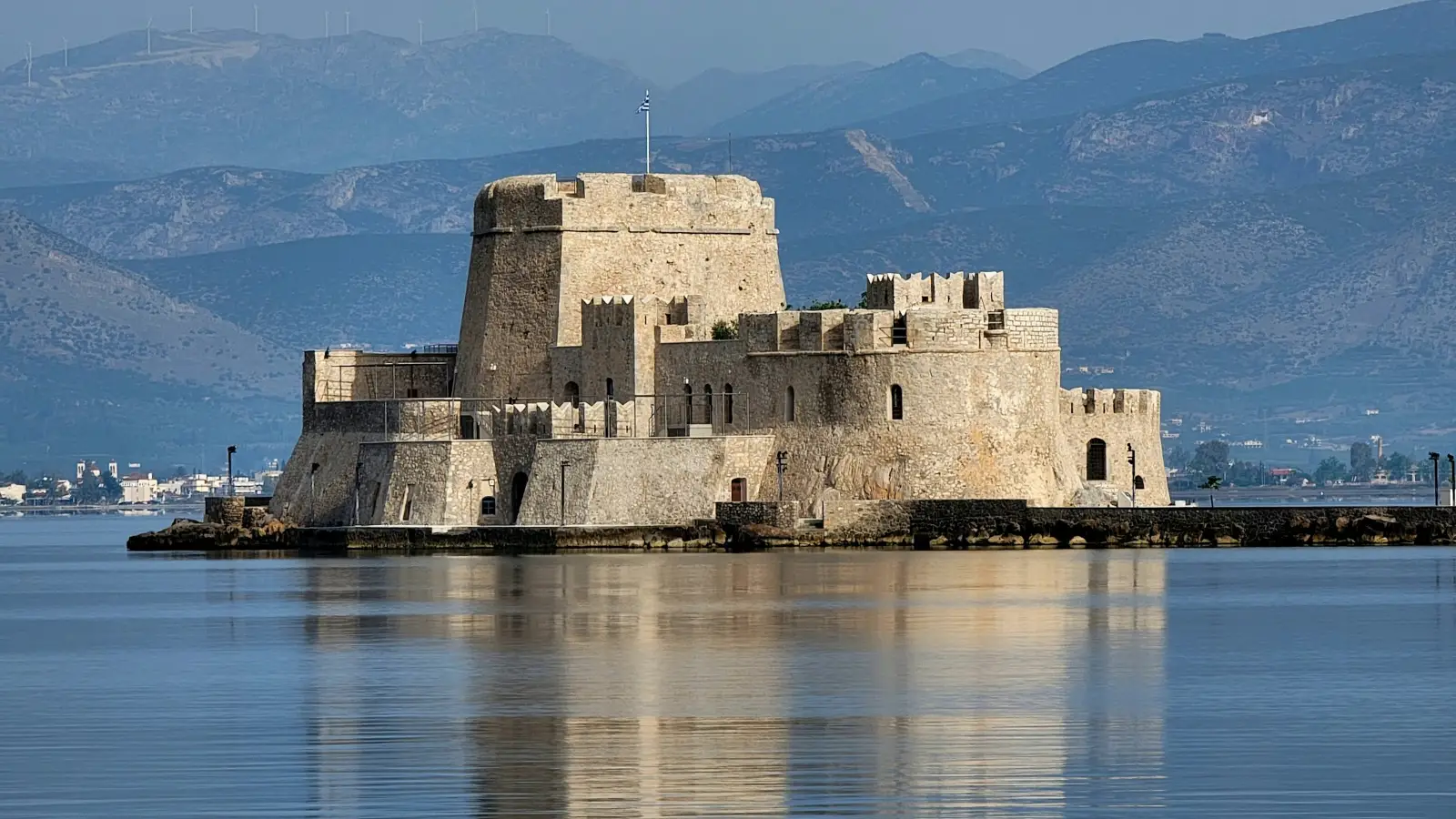
Region
Argolis (Argolida), Peloponnese, on the Argolic Gulf - the ancient port of Argos and Greece’s first capital, 1827-1834
From Athens
About 2 hours by road via the A7 / Moreas motorway in normal traffic; the KTEL Argolida bus from Athens’s Kifisos terminal is commonly timetabled at a little over 2 hours, running through the day. No ferry; the Argos rail branch has been suspended since 2011
The three fortresses
Palamidi (Venetian, completed 1711-1714, eight bastions on a 216 m hill, reached by a long stair or a road), Acronauplia (the oldest, above the old town, on foot), Bourtzi (Venetian, 1473, on a harbour islet, reached by boat)
Best months
April-May and September-October (warm, comfortable for the climb and the beaches, quieter); midweek beats the weekend year-round, when Athenians fill the town
Travel details last checked July 2026.
Where Nafplio is, and why it isn’t an island
The single most useful thing to fix before you plan anything is that Nafplio is not an island. It is a mainland town, built onto a small peninsula that juts into the Argolic Gulf in the northeast Peloponnese, and you reach it by road - car or intercity bus from Athens, about two hours - not by boat. Nothing you plan here needs a ferry or a harbour transfer.
That matters more than it sounds, because most Greece guides default to islands, and the island reflex sends people hunting for crossings that do not exist on this trip. If it helps to see where it sits, the town is southwest of Athens on the map of Greece, tucked into the top of the gulf.
The name travels under several spellings. You will meet Nafplio most often, the older Anglicised Nafplion (as in “Nafplion, Greece”), and the archaic Navplion or Nauplia in older books - all the same town on the same gulf. In antiquity this was the port of Argos, the inland city a few kilometres up the plain, which hints at how long this sheltered corner has been worth holding.
Keep the numbers simple for now: about two hours from Athens by road, and everything in town on foot. Which motorway and which bus come further down.

Diagram by Greece Trips. Free to reuse with credit - CC BY 4.0.
Greece’s first capital, still wearing it
Nafplio governed the new Greek state for barely a decade, and never really let go of it. When the revolution against Ottoman rule succeeded, this was the seat chosen for the young country: from 1827 it was the official capital, and Ioannis Kapodistrias, Greece’s first head of state, ran the fledgling government from here. In 1831 he was assassinated on the steps of the church of Saint Spyridon in the old town, a spot you can still stand on. Two years later the great powers installed the Bavarian prince Otto as king, and in 1834 Otto moved the capital to Athens, where it has stayed since.
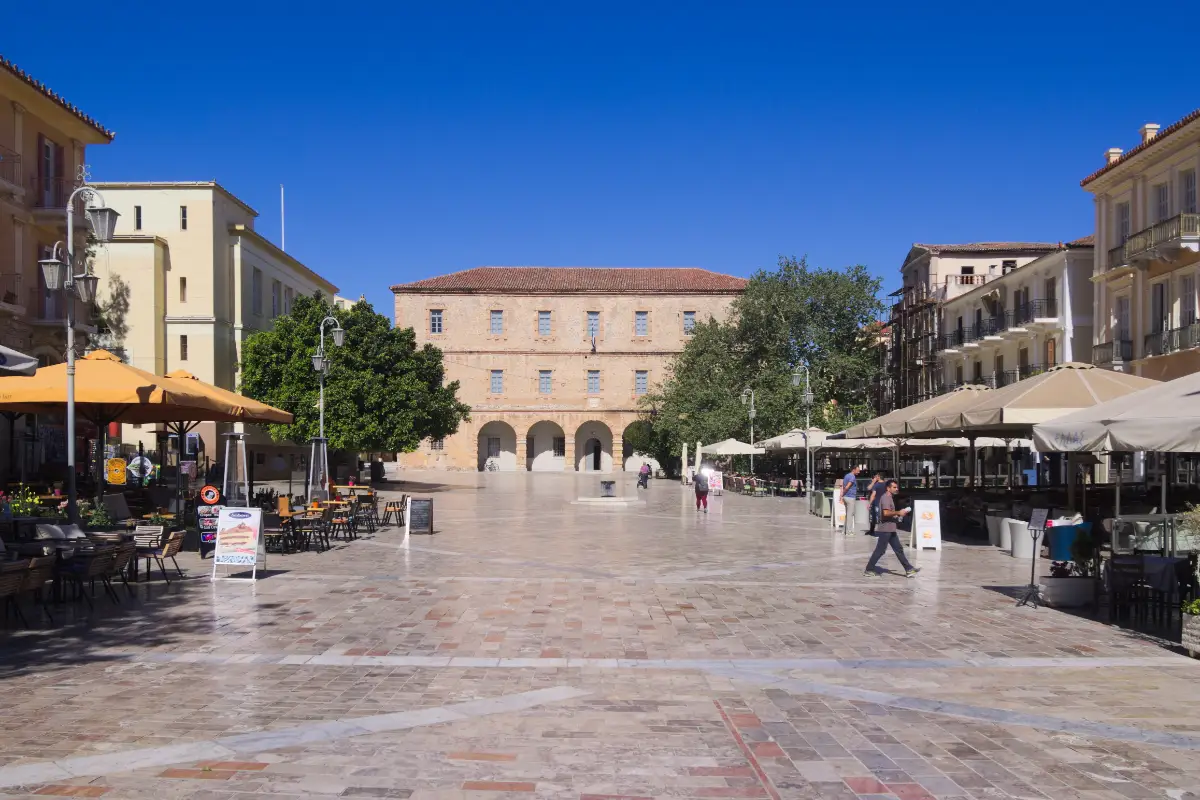
What makes the town worth walking is that the decade never really left. Syntagma Square, the marble-paved heart of the old town, is ringed by Venetian and neoclassical buildings and carries a former Ottoman mosque on its edge. The Land Gate was once the only way in through the walls. The lanes behind the square are cobbled and car-free, lined with Venetian houses, Ottoman fountains and the tall facades of the first capital’s brief grandeur.
The result reads as elegant rather than quaint, and genteel rather than sleepy. It is a real working place - people live and trade in these lanes, not just let rooms in them - and it is small enough to cross on foot in twenty minutes. It is also, by common agreement among travellers who know it, one of the most romantic towns in Greece: the reason couples book a weekend and end up wishing they had taken three nights.
The three fortresses over the town
Three fortresses ring Nafplio, one from each layer of its past, and each is reached a completely different way: one you climb from the edge of town, one you walk into from the lanes, and one you reach only by boat.
Palamidi: the climb and the myth of 999 steps
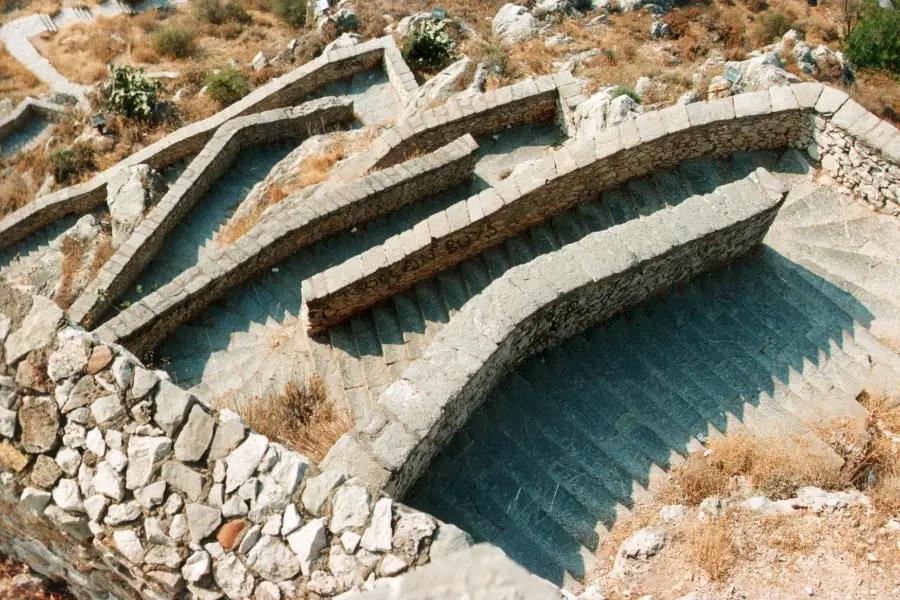
Palamidi is the giant on the skyline: a Venetian fortress completed between 1711 and 1714, its eight linked bastions sprawling across a 216-metre hill above the old town. The reward at the top is the view - the whole town, the gulf and the mountains behind it, laid out at once.
Then the question everyone asks: how many steps? Local legend says 999. Guidebooks tend to print figures nearer 850 to 900. The reference works give no count at all, so treat any number as folklore rather than fact.
What matters is the climb itself, not the tally. It is a long, steep, largely shadeless staircase from the edge of the old town, and in summer it punishes anyone who starts it at midday - go early in the morning or late in the afternoon. If the stairs do not appeal, there is also a road to the top you can drive. Opening hours and the ticket change several times across the year, and the site is run by the Ephorate of Antiquities of Argolida, so take the current times from the Ministry of Culture before you go rather than from a guide.
Acronauplia: the oldest walls, right above the lanes
Acronauplia is the oldest of the three, and the easiest to reach. It is the rocky headland immediately above the old town, crowned by walls that layer pre-classical foundations under Byzantine, Venetian and Ottoman rebuilds - the fortified core the town grew out of. Because it sits right over the lanes, you get to it on foot rather than by a long climb or a boat, and the payoff is the view straight down over the tiled roofs and out across the Argolic Gulf.
Bourtzi: the fort on the water
Bourtzi is the one on the water, and the image on every postcard of the town. The Venetians built it in 1473 on a small islet in the harbour, a few hundred metres offshore, to guard the entrance to the port. Over the centuries it served as a fortress, then a prison, and at one point the residence of the town’s executioner. Today it is the emblem you photograph from the waterfront and visit on a short boat trip from the quay, a crossing of a few minutes that small boats run through the day in season and more sparsely in winter, weather permitting.
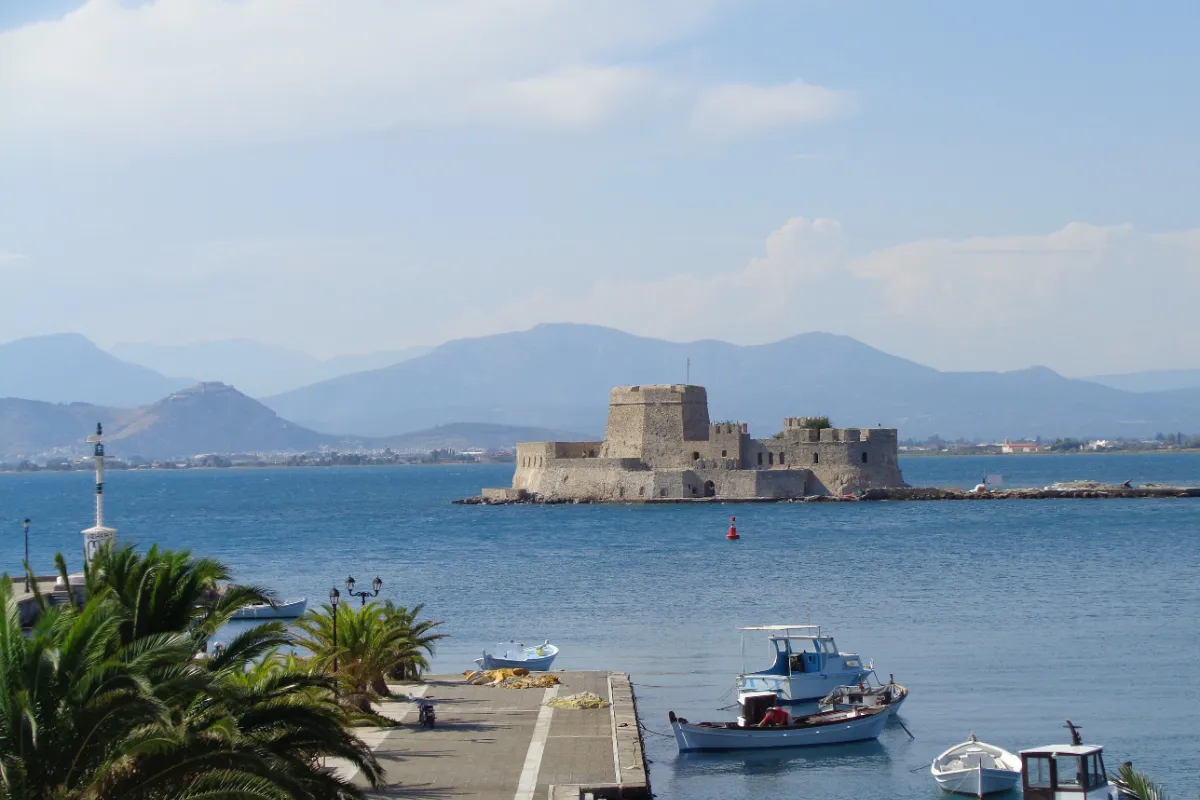
The old town on foot, and the water beyond it
Nafplio rewards walking more than it rewards ticking off sights. Start at Syntagma Square, the marble-paved centre of the old town, and let the lanes take you: the Psaromachalas quarter climbing the slope behind it, the stepped alleys locals call the Dromoskales cutting up toward Acronauplia, the harbour front running out toward the lighthouse. It is flat until you choose to climb, and car-free throughout, which is the whole reason it is a pleasure on foot.
The water is never far. Arvanitia is the small organised pebble beach tucked right beneath the Acronauplia walls, about a ten-minute walk from Syntagma Square, where you swim under the fortifications with the open gulf in front of you. Karathona is the longer sandy bay a couple of kilometres round the headland, with shallow water and room to spread out.
The best thing to do in Nafplio costs nothing and dates never. The Arvanitia promenade is a flat, paved coastal path that hugs the base of the Acronauplia rock, running roughly three kilometres from the edge of the old town round to Karathona. It is open to the sea the whole way and busy at sunset with locals walking it end to end. Do it in the cool of the day.
If you would rather trade the historic town for a beach base, Tolo is a small seaside resort a short drive south, all sand and waterfront tavernas. For the months when the swimming is at its best, see how the shoulder season plays out across Greece.
A base for Mycenae, Epidaurus and the ancient Argolid
The reason to sleep in Nafplio rather than tick it off in an afternoon is everything within a short drive of it. The town sits in the middle of the ancient Argolid, the plain that holds some of the greatest sites in Greece, and from your room you can reach most of them before the tour coaches from Athens arrive.
Mycenae is the headline: the citadel of Agamemnon, the Lion Gate and the beehive tombs, half an hour up the plain. Tiryns, with its massive Cyclopean walls, sits closer still, between the town and Argos. The theatre at Epidaurus - among the best-preserved ancient theatres anywhere, famous for acoustics that carry a whisper from the stage to the back row - is about forty minutes east. Ancient Corinth and the towering Acrocorinth above it are an easy morning further north. Mycenae and Tiryns are inscribed by UNESCO as World Heritage, as is the Sanctuary of Asklepios at Epidaurus, which is the credential these places carry rather than any review score.
The rhythm this buys you is the whole argument for staying. Drive out early, be first through the gate while the light is low and the stone is cool, and be back on the Nafplio waterfront by evening. Repeat with a different site the next morning. The more ambitious extensions - Mystras and Monemvasia, deeper into the Peloponnese - are long days rather than short hops.
Be honest about the catch: you need a car for most of this. The KTEL bus and organised tours reach Mycenae and Epidaurus, but a hire car is what makes the base work. Doing the same sites as a single day trip from Athens is possible, but it is a long day on the road for a fraction of the time on the ground.
Getting there from Athens
Two ways in from Athens, and both put you in town in about two hours.
- Drive. Head southwest out of Athens on the A7, the Moreas motorway, which carries you most of the way across the Peloponnese before the last stretch of local road into Nafplio. Reckon on roughly two hours in normal traffic, and longer on a summer Friday evening. More on the drive and the Greek motorways if you are hiring a car.
- KTEL bus. The KTEL Argolida intercity buses run from the Kifisos (Leoforou Kifisou) terminal in Athens and are commonly timetabled at a little over two hours, with departures running through the day roughly every couple of hours.
The nearest airport is Athens International (ATH); from there it is the same two-hour road journey in, whether you pick up a hire car at the airport or connect to the bus.
On rail: the old branch line up from Argos has been suspended since 2011, so a train is not a practical way in today, whatever a journey planner suggests.
Once you are in Nafplio, put the car keys away. The town is a walking town; you only need a vehicle for the day trips out to the ancient sites, not for anything inside it.
When to go, and the weekend problem
Spring and autumn are Nafplio at its best. Aim for April and May or September and October: warm enough for the promenade and a swim, comfortable for the Palamidi climb, and without the crush. July and August are hot, and the old-town stone holds the heat well into the evening. The country-wide reasoning behind those windows is in the best time to visit Greece.
Then the honest part no tourism page will tell you. Nafplio is where Athens goes for the weekend. It is close enough for a two-hour drive on a Friday night, so from spring onwards the town and the beaches near it fill with Athenians on Saturdays and Sundays, even outside the summer peak. Come midweek and the same town is noticeably quieter, the lanes calmer and the parking easier. If your dates can bend, bend them away from the weekend.
Winter is quiet and atmospheric, the fortresses under low light and the cafes turned inward, though the days are short and some places close for the season.
Who it suits follows from all of that. Couples come for the romance and the walkability. History-minded travellers come for the Argolid on the doorstep. Families come for the compact, car-free lanes, the castles to climb and the beaches to cool off in. And anyone who wants mainland Greece without a single ferry has come to the right town.
Who should think twice: if you are after a big beach-resort scene or a serious night out, this genteel town is not built for it. And the town itself is small - two or three nights covers it comfortably, unless you are using it as a base to range across the Argolid, which is exactly what it does best.
Practicalities: staying, parking and paying
The choices that shape a Nafplio trip are about area, not address - where you sleep, where you leave the car, and how you pay.
Where to stay comes down to three areas. Sleeping inside the old town buys you the lanes, the square and the evening atmosphere on your doorstep, but the old town is largely pedestrianised: you park at its edge and walk your bags in over the cobbles. The newer town and the seafront just beyond it are easier for parking and still an easy walk to everything historic. And Tolo, the beach resort a short drive south, is the pick if you want sand outside your door more than stone under your feet. That is the honest way to answer “where are the best hotels in Nafplio” - by the trade-off between areas, because the specific rooms change hands and rename from one season to the next.
Parking follows from that: the old town is closed to through traffic, so plan to leave the car in the new town whatever you do.
Paying is straightforward. Cards work in most places, but carry some cash for a small taverna or the boat out to Bourtzi. Independent ATMs on the street charge a fee they must show you before you accept it - the details are in the money guide.
The mainland trip that needs no ferry
Give Nafplio two or three nights and use it as the base it was built to be, and it becomes the easiest good trip in Greece that involves no boat at all: the first capital under its castles, the ancient Argolid at the door, and Athens two hours back up the road. It pairs neatly with the other mainland drives - Delphi and the monasteries of Meteora - among all of Greece’s destinations.
Nafplio FAQ
Is Nafplio worth visiting?
Yes, if you want mainland Greece without ferries: a Venetian old town under three castles, an easy base for Mycenae and Epidaurus, and one of the country’s most walkable, romantic towns, two hours from Athens. The caveat is that it is small and genteel, not a beach-resort or nightlife town. It suits couples, history-minded travellers and families.
How many days do you need in Nafplio?
Two to three nights is the sweet spot: one for the town itself - the old town, a fortress and the promenade - and one or two more to base yourself here for Mycenae, Epidaurus and the wider Argolid. The town alone is a comfortable day. More than three nights only pays off if you are day-tripping widely.
How do you get to Nafplio from Athens?
Drive the A7 / Moreas motorway in about two hours, or take the KTEL Argolida intercity bus from Athens’s Kifisos terminal, commonly timetabled at a little over two hours and running through the day. There is no ferry, and no useful train since the Argos branch line was suspended in 2011. The nearest airport is Athens International.
How many steps are there up to Palamidi fortress?
Nobody can give you a sourced number. Locals say 999 steps and guidebooks quote figures nearer 850 to 900, but the reference works record no count at all. What matters is the climb: a long, steep, shadeless staircase from the old town, best done early or late to beat the heat - and there is a road to the top if you would rather drive up.
Is Nafplio a good base for Mycenae and Epidaurus?
Yes - it is the classic base for the ancient Argolid. Mycenae, Tiryns, ancient Corinth and the theatre at Epidaurus are all short drives, so you can be first through the gate in the morning and back on the waterfront by evening. A hire car makes it easy; some sites are also reachable by tour or bus. Mycenae, Tiryns and Epidaurus are UNESCO World Heritage sites.
What is the best time to visit Nafplio?
April and May or September and October: warm, uncrowded and comfortable for the Palamidi climb and the beaches. Summer is hot and busy. Whenever you come, prefer weekdays - Nafplio is the weekend escape for Athens, so Saturdays and Sundays fill the town and the nearby beaches. Winter is quiet and atmospheric, with shorter days.
Where should you stay in Nafplio?
By area, not by name. The old town gives you the lanes and the evening atmosphere, but it is car-free, so you park at the edge and carry your bags in. The newer town and seafront are easier for parking and still walkable to everything. Tolo, a short drive south, is the choice if you want a beach base over a historic-town one.
Plan by category
The Nafplio guides
4 guides, each scoped to a decision you actually have to make.
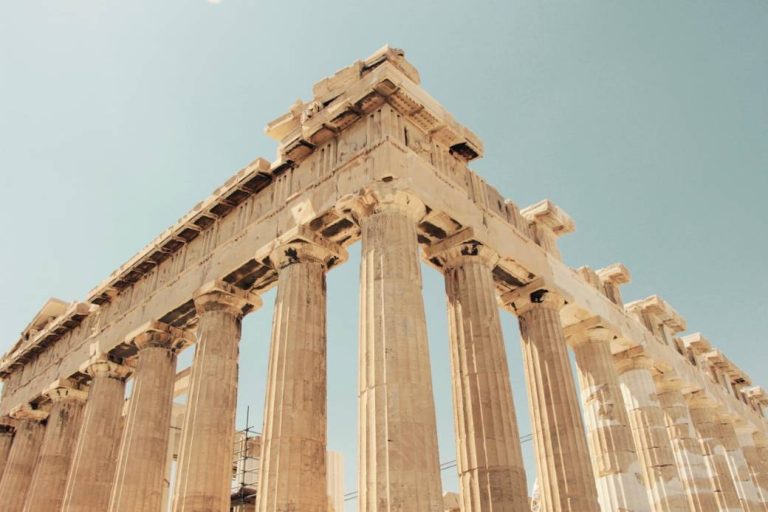 Attractions
Things to do
See the attractions →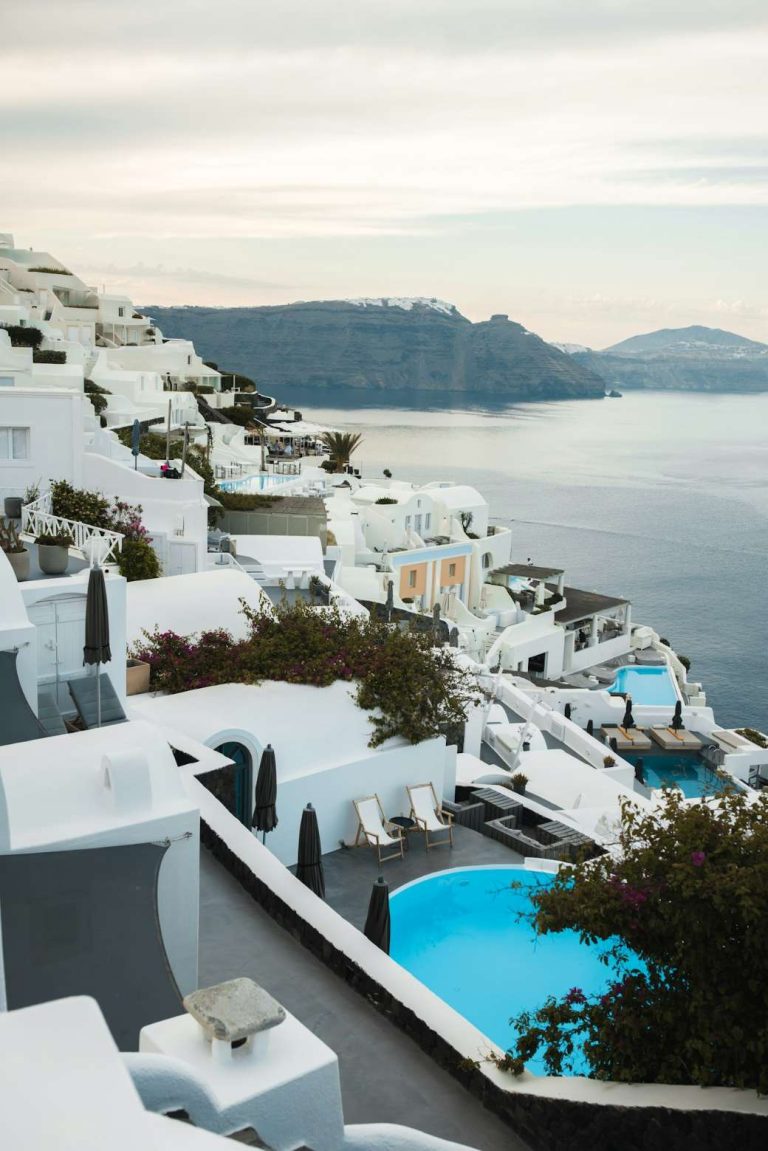 Hotels
Where to stay
Compare the areas → Itinerary
Day by day
See the itinerary →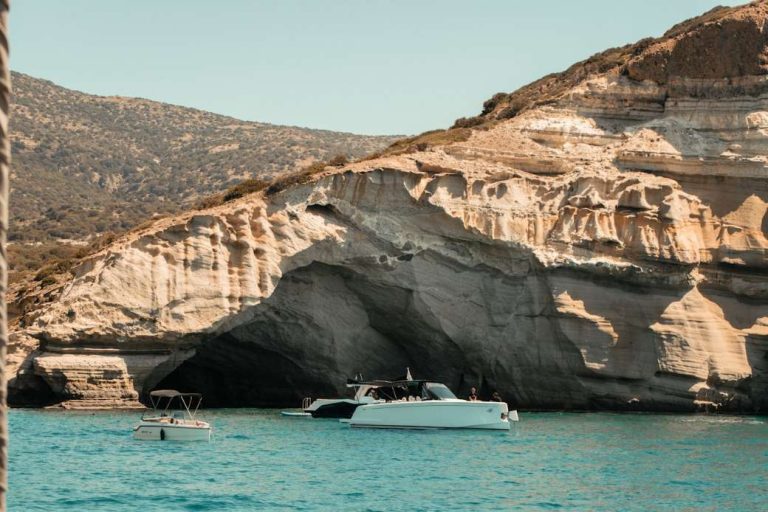 Day trips
Day trips
See the day trips →
Booking
We sell nothing and book nothing for you. Every guide on this page tells you how to arrange each piece yourself - which ferry operator, when to book, what to prebook and what to leave loose.